Source SS316L Gas Pressure Regulator for Oxygen, Argon, Nitrogen
Find 30 SS316L Gas Pressure Regulator options from verified suppliers. Compare specifications like inlet pressure, port size, and material grades including SS316 and SS304 for industrial gas applications.
Key considerations
Products List
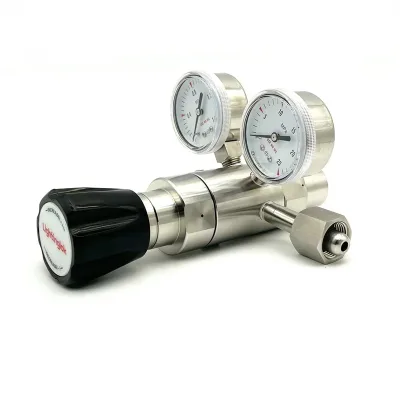
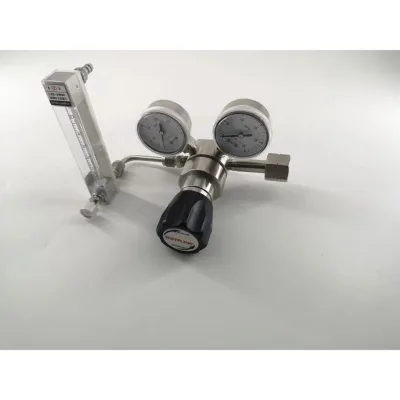
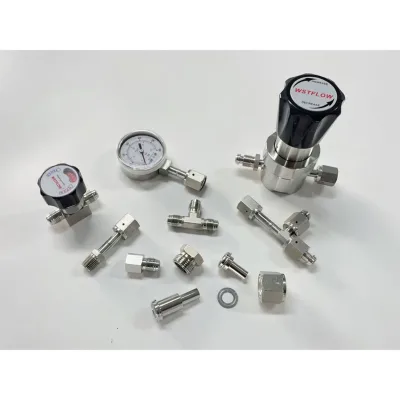
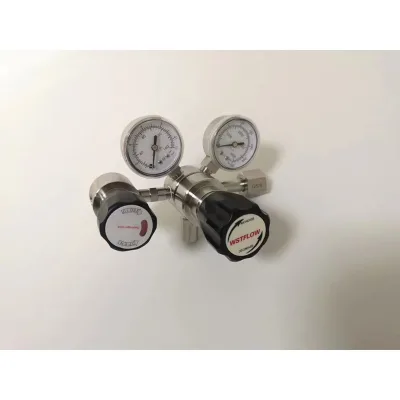
High Pressure Regulator Valve Diaphragm Pressure Regulator/Pressure Reducer
$160.00 - $185.00
MOQ: 5 pieces
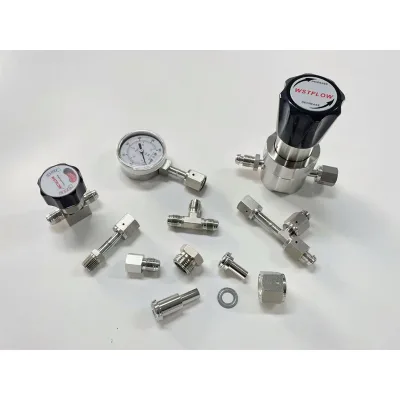
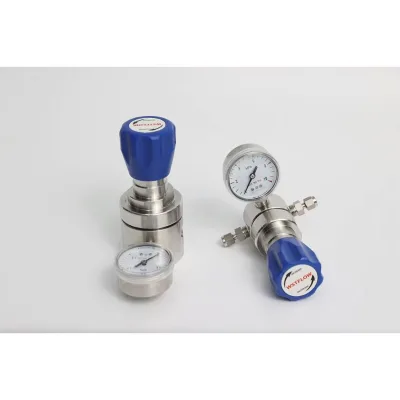
American Adjustable 150 psi CO2 1-Stage Pressure Regulator With Dual Gauges
$163.07 - $188.55
MOQ: 5 pieces


$45.98 - $79.98
MOQ: 5 Pieces


Comprehensive Sourcing Guide
Strategic Sourcing Guide for SS316L Gas Pressure Regulators
Understanding Material Specifications and Corrosion Resistance
When sourcing a gas pressure regulator with the core keyword "ss316l," buyers must first distinguish between the specific alloy designation and the broader material categories often listed in supplier catalogs. The supplied product data indicates a mix of material grades, including SS316, SS304, and SS306. It is critical to understand that while SS316L (Low Carbon) is the industry standard for high-purity gas applications due to its superior corrosion resistance and weldability, the provided facts list "SS316" and "SS304" as distinct entries. A procurement strategy must explicitly verify if the "SS316" listed in a supplier's inventory meets the "L" (Low Carbon) requirement, as the "L" designation prevents carbide precipitation during welding, which is vital for maintaining integrity in oxygen and argon service.
The observed product attributes confirm that stainless steel is a primary material choice for these devices, with specific mentions of SS316 and SS304. However, the presence of "SS306" in the data suggests a need for rigorous verification, as this is not a standard commercial grade designation in the same vein as 304 or 316. Buyers should treat the material listing as an observation that requires confirmation against the actual mill test certificate (MTC). The regulator's suitability for gases such as Oxygen, Argon, Nitrogen, LPG, Propane, Acetylene, and Natural Gas implies that the material must withstand varying chemical interactions. For oxygen service, the material must be oil-free and compatible with high-pressure oxidation, a requirement that SS316L typically satisfies better than standard carbon steel or lower-grade stainless alloys. The "Valve Seat" material is listed as PTFE in some entries, which is a standard compatible pairing with stainless steel bodies for gas regulation, ensuring a tight seal and chemical inertness.
Technical Performance and Operational Parameters
The technical specifications for gas pressure regulators vary significantly across the market, as evidenced by the wide range of observed data points. Buyers must evaluate the Maximum Inlet Pressure, which in the provided facts ranges from 150 psi to 6000 psi. This variance indicates that a single "SS316L Gas Pressure Regulator" product does not exist with a universal rating; instead, the rating is specific to the model and intended application. For high-pressure applications involving industrial gases, the 6000 psi rating is a critical threshold that requires robust engineering, whereas the 150 psi rating may suffice for lower-pressure distribution systems.
Flow capacity is another pivotal technical parameter. The data cites a specific flow capacity of Cv=0.06, which represents a relatively low flow rate suitable for precision control or laboratory applications. In contrast, other entries suggest a "Single package size" of 32*26cm, implying a larger, higher-flow unit. The "Port Size" is observed as 1/4 inch in one context, while another entry lists "DN20" (which is approximately 3/4 inch), and a third mentions "4ports." This discrepancy highlights the necessity of matching the regulator's port size and flow coefficient (Cv) to the specific piping system and gas consumption rate of the end application.
Operating temperature ranges also differ, with observed values spanning from -40°C to 74°C and another range of -26°C to 74°C. These ranges define the environmental limits of the regulator. For applications involving cryogenic gases or extreme ambient conditions, the buyer must ensure the selected unit's temperature rating exceeds the operational extremes. The "Accuracy" is listed as both "1/4" (likely referring to port size or a typo in the source) and "±1%," indicating that precision models are available but must be distinguished from general-purpose units. The "Structure" is identified as "Pressure Reducing," and the "Driving Mode" is "Manual," which are standard configurations but must be confirmed against automated system requirements.
Compliance, Certification, and Safety Standards
In the realm of gas regulation, compliance is not merely a formality but a safety imperative. The supplied facts mention "ISO" certification and a low-confidence reference to "ISO 13485." It is important to note that ISO 13485 is specific to medical devices, and while some gas regulators are used in medical oxygen systems, this standard is not universal for all industrial gas regulators. The presence of "ISO" generally suggests adherence to international quality management systems, but buyers must verify the specific ISO standard applicable to the product, such as ISO 9001 for general quality or specific gas equipment standards like CGA (Compressed Gas Association) in the US or EN standards in Europe.
The "Certification" field in the data is sparse, listing only "ISO." This absence of specific gas safety certifications (such as CE, UL, or CGA) in the provided facts necessitates a proactive verification step by the buyer. For applications involving oxygen or acetylene, specific cleaning and certification standards are often required to prevent combustion hazards. The "Warranty" is listed as 1 year, which is a standard industry offering, but the scope of this warranty regarding material defects versus operational wear must be clarified in the contract. Furthermore, the "Place of Origin" is consistently listed as "Shaanxi, China" or generally "China," which directs the buyer to evaluate the manufacturing capabilities and export compliance history of suppliers in this region.
Cost Drivers and Procurement Economics
The cost of an SS316L Gas Pressure Regulator is influenced by several factors visible in the product data, including material grade, pressure rating, and packaging complexity. The observed price range is vast, spanning from $2.9 to $5000. This extreme variance is likely driven by the difference between a small, low-pressure laboratory regulator and a large, high-pressure industrial unit with multiple ports and specialized fittings. The "Selling Units" are listed as "Single item," suggesting that these are typically sold as individual components rather than bulk kits, though the "MOQ" (Minimum Order Quantity) ranges from 1 to 5000.
Material costs are a primary driver; SS316L is more expensive than SS304 due to the addition of molybdenum, which enhances corrosion resistance. The "Weight" of the units varies from 0.9kg to 2.0kg, and the "Single gross weight" is listed as 1.500 kg and 2.000 kg. Heavier units often indicate more robust construction and higher pressure ratings, which directly correlates to higher cost. Additionally, the "Single package size" varies from 11x16x9 cm to 12x15x21 cm, affecting shipping costs. Buyers should consider the "Customized support" (OEM) as a potential cost factor; custom branding or specific port configurations may incur additional tooling or setup fees. The "Manufacturing" process involves "Forging and CNC," which are more expensive than casting but offer superior structural integrity for high-pressure applications.
Typical Applications and Industry Usage
The versatility of the SS316L Gas Pressure Regulator is evident from the diverse list of "Suitable gases" and "Application" fields. The data explicitly mentions Oxygen, Argon, Nitrogen, LPG, Propane, Acetylene, and Natural Gas. This breadth suggests that these regulators are used in a wide array of sectors, including welding and cutting (Acetylene, Propane), medical gas systems (Oxygen, Nitrogen), and industrial manufacturing (Argon, Natural Gas). The "Application" field lists "Industrial Usage" and "Water Industrial Usage," indicating that while primarily designed for gases, some models may be adapted for liquid services or dual-purpose environments, though the "Media" is predominantly listed as "gas."
The "Type" of regulator is specified as "Gas Regulator" and "Air Regulator," with some models featuring "Panel mounting" capabilities. This suggests that these units are suitable for both portable cylinder applications and fixed panel installations in control rooms or processing plants. The "Channel" is described as "Straight Through Type," which is common for minimizing pressure drop in high-flow applications. The "Nominal Pressure" ranges from PN1.0 to 32.0 MPa, covering everything from low-pressure distribution to high-pressure process lines. Buyers must match the specific gas type and pressure requirements to the regulator's rated capacity to ensure safety and efficiency.
Supplier Evaluation and Quality Assurance
Evaluating a supplier for ss316l gas pressure regulators requires a multi-faceted approach that goes beyond the basic product listing. The "Brand Name" "FENGYU" is observed in the data, but buyers should not limit their search to a single brand. Instead, the focus should be on the supplier's ability to provide verifiable material certificates and adherence to the "prod_standard" of 1/4" FNPT (Female National Pipe Thread) or other relevant thread standards. The "Connection Form" is listed as "Thread," but the specific thread type and size must be confirmed to ensure compatibility with existing piping.
Quality control is paramount, especially given the "High Temperature" and "Ordinary Temperature" classifications in the data. Buyers should request test reports that verify the "Operating Temperature" ranges and the "Maximum Inlet Pressure" ratings. The "Accuracy" of ±1% is a specific claim that should be validated through calibration certificates. The "Single package size" and "Weight" data can be used to verify the consistency of the supplier's manufacturing process; significant deviations in these metrics between batches may indicate quality control issues. The "Place of Origin" being Shaanxi, China, is a known manufacturing hub, but buyers should verify the specific factory's audit status and export history to ensure reliability.
Long-Term Procurement and Lifecycle Management
Long-term procurement considerations for gas pressure regulators involve planning for maintenance, replacement, and supply chain continuity. The "Warranty" of 1 year is a baseline, but buyers should negotiate extended warranties or service level agreements for critical applications. The "Customized support" (OEM) indicates that suppliers may offer long-term partnerships for branding and specific engineering needs, which can streamline future procurement. The "Model Number" (e.g., FR11, NR11) serves as a unique identifier for reordering; maintaining a consistent model number across different batches ensures compatibility and reduces the risk of ordering incorrect parts.
The "Selling Units" being "Single item" suggests that inventory management should account for the potential need for spare parts or immediate replacements. The "MOQ" range of 1 to 5000 allows for flexibility, but buyers should consider the "Lead Time" (not explicitly provided in the facts but implied by the manufacturing process) when planning stock levels. The "Manufacturing" method of "Forging and CNC" implies a robust product with a long service life, but regular inspection of the "Valve Seat" (PTFE) and seals is necessary to prevent leaks. Finally, the "Accuracy" and "Flow Capacity" should be re-verified periodically to ensure the regulator continues to meet the operational requirements of the gas system over its lifespan.
FAQs
What materials are used for ss316l gas pressure regulators?
Stainless steel is the primary material, with specific grades including SS316, SS304, and SS306 listed in product data. Buyers must verify if the SS316 designation meets the low-carbon L requirement for oxygen service. The valve seat is often made of PTFE to ensure chemical inertness and a tight seal.
Which gases are compatible with these regulators?
These regulators are suitable for Oxygen, Argon, Nitrogen, LPG, Propane, Acetylene, and Natural Gas. The material must be oil-free and compatible with high-pressure oxidation for oxygen service. Always confirm the specific gas compatibility with the supplier before purchase.
What is the maximum inlet pressure rating?
The maximum inlet pressure ranges from 150 psi up to 6000 psi depending on the specific model. High-pressure applications require units rated for 6000 psi, while lower-pressure distribution systems may use 150 psi units. Verify the exact rating for your application.
How is the flow capacity defined for these units?
Flow capacity is defined by the Cv value, with observed data showing a Cv of 0.06 for precision applications. Port sizes vary from 1/4 inch to DN20, affecting the overall flow rate. Match the Cv and port size to your specific piping system requirements.
Can I find regulators with ISO certification?
ISO certification is listed in the product data, though specific standards like ISO 13485 for medical devices are not universally confirmed. Buyers should verify the exact ISO standard, such as ISO 9001, and check for additional gas safety certifications like CGA or CE.
What is the warranty period for these regulators?
The standard warranty period is 1 year for material defects and manufacturing issues. The scope of the warranty regarding operational wear must be clarified in the contract. Extended warranties may be negotiable for critical industrial applications.
Where are these regulators manufactured?
The place of origin is consistently listed as Shaanxi, China or generally China. Buyers should evaluate the manufacturing capabilities and export compliance history of suppliers in this region. Verify the specific factory audit status to ensure reliability.