Source Stackable Modern Storage Box for Warehouse, Garage, Stockroom
Find 30 listings for the Stackable Modern Storage Box designed for warehouse, garage, and stockroom use. Buyers can compare specifications, customization options, and pricing for these plastic storage bins.
Key considerations
Products List


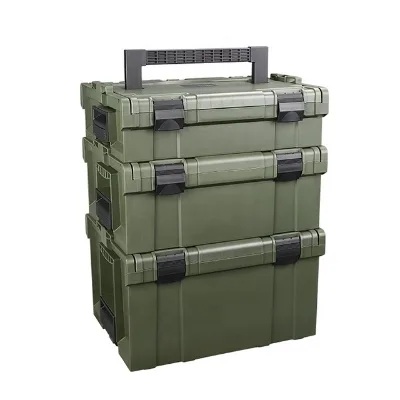


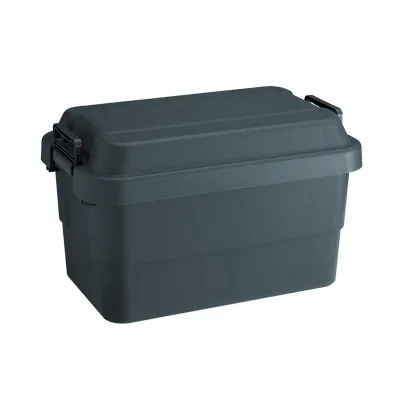


Comprehensive Sourcing Guide
Strategic Sourcing Guide for Stackable Modern Storage Boxes
Understanding Product Specifications and Material Composition
When sourcing stackable modern storage boxes, the primary objective is to identify units that balance structural integrity with versatile utility. Based on current market observations, the dominant material composition for these units is Polypropylene (PP). This plastic variant is selected for its durability, chemical resistance, and ability to withstand repeated stacking without deformation. The physical form factor of these boxes varies significantly to accommodate different inventory needs. Buyers will encounter models designated as "Small," "Medium," and "Large," with specific dimensions observed in the market ranging from compact units under 10 liters to larger industrial containers with capacities between 20 and 40 liters.
The geometric design is a critical specification for stackability. The most common shapes observed are square and rectangular, which facilitate efficient space utilization in warehouses, garages, and stockrooms. The "Square" configuration often aligns with specific model numbers such as SF6420, while "Rectangular" variants like SF5120 are tailored for linear storage systems. A key functional attribute is the "Stackable" feature, which allows multiple units to be secured vertically. This design element is essential for maximizing vertical storage space in industrial environments. Furthermore, the "Unfolded" state indicates that these are rigid, permanent structures rather than collapsible fabric bins, ensuring they maintain their shape under load. The standard color palette typically includes Red, Yellow, and Blue, though customization options allow for "Any Color" to match specific facility branding or organizational coding systems.
Compliance Standards and Certification Verification
In the B2B procurement of plastic storage solutions, verifying compliance with international safety and environmental standards is non-negotiable. The supply chain for these items frequently references adherence to RoHS (Restriction of Hazardous Substances) and REACH (Registration, Evaluation, Authorization and Restriction of Chemicals) regulations. These standards ensure that the plastic materials used do not contain restricted hazardous substances, which is particularly important for products intended for use in food-adjacent environments or areas with strict environmental controls. Additionally, ISO9001:2000 certification is a common benchmark for the manufacturing process, indicating that the supplier maintains a quality management system capable of consistent production.
Buyers must exercise caution when interpreting these certifications. While the data indicates these standards are present in the market, they should be treated as observations of specific listings rather than universal guarantees for every product encountered. The verification process should involve requesting current, valid certificates from the supplier for the specific batch or model being purchased. For applications involving sensitive materials, such as pharmaceuticals or food, the buyer must confirm that the specific plastic grade used meets the necessary food-contact regulations, which may extend beyond the general RoHS and REACH compliance mentioned in general product descriptions. The presence of an "ESD Type" option suggests that suppliers can produce Electrostatic Discharge-safe variants, which is a critical specification for electronics manufacturing or storage environments where static damage is a risk.
Cost Drivers and Economic Parameters
The economics of sourcing stackable storage boxes are influenced by several distinct variables, including material costs, customization levels, and order volume. The observed price range in the market is broad, spanning from $0.30 to $82.57 USD. This variance is not arbitrary but is driven by the specific model, capacity, and feature set. A small, standard-colored box will naturally fall at the lower end of this spectrum, while a large, custom-colored, or ESD-rated unit will command a higher price point.
Minimum Order Quantity (MOQ) is another significant cost driver. The market data shows an MOQ range from 1 to 2000 units. However, specific listings indicate an MOQ of 1000 units for certain models, suggesting that bulk purchasing is often required to access the most competitive pricing tiers. Buyers should be aware that ordering below the standard MOQ may result in higher per-unit costs or require the payment of setup fees for custom colors or logos. The packaging method also impacts the final landed cost. Products are typically shipped in cartons, with a standard packing quantity of 18 units per carton for certain models. Understanding the "Qty/CTN" is vital for logistics planning, as it determines the number of pallets required and the overall shipping volume.
Typical Applications and Functional Versatility
The utility of stackable modern storage boxes extends across a wide array of industrial and commercial sectors. The primary application is for general storage and packaging in environments such as warehouses, garages, and stockrooms. However, the specific use cases are highly diverse. The product attributes indicate suitability for organizing sundries, apparel, tools, bedding, cosmetics, parts, toys, jewelry, and pharmacy items. This versatility makes them ideal for mixed-use facilities where different departments require distinct organizational solutions.
For industrial applications, the boxes are often utilized for managing spare parts and tools in maintenance areas. The "Industrial Wastewater" application listed in some specifications suggests that certain models are designed to withstand harsh chemical environments, although this specific claim requires careful verification against the actual material composition. In retail and e-commerce settings, these boxes serve as efficient solutions for inventory management, with the "Square" and "Rectangular" shapes allowing for seamless integration into shelving systems. The inclusion of accessories such as dividers, clear label holders, and label paper further enhances their functionality, allowing for precise categorization and rapid retrieval of items. The "Logo" feature, which can include riser rods, plastic covers, and custom labeling, supports brand visibility in corporate environments or specialized storage facilities.
Supplier Evaluation and Logistics Considerations
Selecting a reliable supplier for stackable storage boxes requires a thorough evaluation of their logistical capabilities and production transparency. The geographic origin of these products is predominantly China, with specific ports of shipment identified as Qingdao or other major Chinese ports. This location data is crucial for calculating freight costs and transit times. The standard delivery time observed is 15 days after receiving payment, which serves as a baseline for supply chain planning. However, buyers should verify if this timeline holds true for custom orders, as the addition of custom colors or logos may extend the production lead time.
When evaluating potential suppliers, buyers should look for evidence of consistent production capacity and a clear communication channel. The availability of "After-sales Service" for a period of one year is a positive indicator of supplier confidence in product durability. It is essential to confirm that the supplier can meet the specific MOQ requirements without compromising on quality. Additionally, the ability to provide samples before bulk production is a recommended practice to verify the physical attributes, such as the "Folded" or "Unfolded" state and the actual stacking mechanism. Buyers should also inquire about the packaging integrity to ensure that the cartons are robust enough to protect the boxes during international transit, especially given the potential for stacking damage if the boxes are not properly secured.
Quality Control and Long-Term Procurement Strategy
Implementing a robust quality control (QC) strategy is essential for maintaining the integrity of the storage system over time. The "Eco-Friendly" and "Eoc-Friendly" attributes suggest a focus on sustainable manufacturing practices, but buyers must verify the specific environmental claims through third-party testing if sustainability is a core procurement goal. The structural integrity of the boxes, particularly their ability to stack without collapsing, should be tested under load conditions relevant to the intended application. For example, a box intended for a warehouse with heavy pallet racking must withstand significant vertical pressure.
Long-term procurement considerations involve establishing a relationship with a supplier who can scale with the buyer's needs. As inventory requirements grow, the ability to maintain consistent color matching, material quality, and dimensional accuracy becomes paramount. Buyers should consider the modularity of the system; ensuring that boxes from different batches fit together seamlessly is critical for maintaining an organized storage environment. The "Sets" attribute, which can range from 1 piece to 3-5 pieces, indicates that suppliers may offer bundled solutions for specific organizational needs. Procurement strategies should also account for the replacement cycle of these items. Given the "1 Year" after-sales service, buyers should have a clear protocol for handling defective units or damaged stock to minimize operational disruption. By focusing on these technical and logistical details, buyers can ensure a sustainable and efficient storage solution that meets their specific operational demands.
FAQs
What materials are used for stackable modern storage boxes?
These boxes are primarily made of Polypropylene (PP) plastic. This material offers durability and chemical resistance, making it suitable for industrial and warehouse environments where repeated stacking is required without deformation.
Which certifications do these storage boxes typically meet?
Common certifications include RoHS, REACH, and ISO9001:2000 standards. These ensure the products comply with environmental regulations and quality management systems, though buyers should verify specific certificates for their batch.
Can I customize the color and logo on these boxes?
Yes, customization is available for any color and includes options for logos with riser rods or plastic covers. This allows facilities to match specific branding or organizational coding systems for their storage needs.
What is the typical lead time for delivery after payment?
The standard delivery time is 15 days after receiving payment. This timeline serves as a baseline, but custom orders involving specific colors or logos may require additional production time beyond this standard period.
How are these boxes packaged for shipping?
Products are typically packed in cartons with a standard quantity of 18 units per carton for certain models. Understanding the packing quantity is vital for logistics planning and determining the total shipping volume required.
What capacities are available for these storage containers?
Available capacities range from under 10 liters for small units to 20-40 liters for larger industrial containers. These varying sizes accommodate different inventory needs in warehouses, garages, and stockrooms effectively.