Source Stackable Plastic Conference Chair for Schools, Offices, Hotels
Explore 30 options for the Stackable Plastic Conference Chair, featuring metal and PP materials with modern designs. Compare models like D011 and 4003PS(P) for school, home, or training institution use, noting fixed or rotary bases and various color options.
Key considerations
Products List


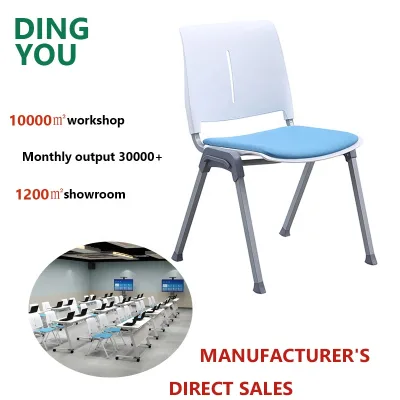
China Furniture School Study Training Chair New Conference Plastic Office Chair
$20.00 - $23.00
MOQ: 10 Pieces

High Back Plastic Office Conference Chair Best Price School Furniture Chair
$20.00 - $23.00
MOQ: 10 Pieces




Comprehensive Sourcing Guide
Stackable Plastic Conference Chair Sourcing Guide
Procuring stackable plastic conference chairs requires a clear understanding of the specific material composition and structural design that defines this category. Based on observed market listings, these units frequently utilize Polypropylene (PP) for the seat and frame, often paired with metal components for the base or legs to ensure stability. Buyers must distinguish between models featuring a fixed rotary mechanism and those designed for static use, as the intended application dictates the necessary mechanical properties. The observed product range includes variations in base finishes, such as chrome or white options, which influence both the aesthetic integration and the durability of the finish in high-traffic environments.
The commercial landscape for these chairs presents a wide variance in pricing and minimum order quantities, reflecting differences in customization levels and production complexity. Listings indicate a price range from approximately 5.84 to 66 USD, with Minimum Order Quantities (MOQs) spanning from single units to 200 pieces. This disparity suggests that buyers can source basic, non-customized units in small batches or invest in larger orders for custom branding and specific design modifications. Understanding these commercial variables is essential for budgeting, as the cost per unit often decreases significantly with volume, but the initial investment for custom molds or specific color options can be substantial.
Product Scope and Observed Listing Signals
The product scope for stackable plastic conference chairs encompasses a variety of configurations suitable for schools, training institutions, and home offices. Observed listings highlight a "Modern" design style with square shapes and specific model identifiers like D011, D002, and EMI, indicating a diverse catalog of available options. These chairs are typically sold as new items with a condition that implies immediate readiness for deployment. The presence of "Color Option" attributes suggests that buyers can select finishes to match existing interior schemes, while the "Without Armrest" specification points to a design focused on space efficiency and ease of stacking.
Listing signals also reveal critical details regarding the physical state and packaging of the units. Many products are listed as "Unfolded" or ready for immediate assembly, with packaging options ranging from individual boxes to bulk cartons containing six units. The "Disassembly" attribute indicates that some models may require partial assembly upon arrival, which impacts logistics planning and on-site labor requirements. Furthermore, the "Folded" status being listed as "Unfolded" confirms that the primary selling point is the chair's ability to be stacked for storage, a feature that is central to the utility of conference and training room furniture.
Technical Specifications to Verify
Buyers must rigorously verify the mechanical properties of the chair, specifically the adjustability and the base mechanism. While some listings specify an "Unadjustable Mechanism" and "Fixed" rotary features, others may offer different configurations that require confirmation before purchase. The seat material is consistently noted as PP, but the thickness and reinforcement of the plastic, along with the metal frame construction, are critical for load-bearing capacity. It is essential to confirm whether the base is chrome-plated or painted white, as these finishes have different resistance profiles against wear and tear in commercial settings.
Dimensional accuracy and stacking compatibility are equally vital technical parameters that require verification against the supplier's data sheets. Observed standards mention specific dimensions such as 50cm57cm85cm, which define the footprint and height of the chair. Buyers should ensure that the "Bench Connector" or stacking mechanism aligns with their specific furniture layout needs, particularly if the chairs are intended for multi-row seating arrangements. The "Shape" being square is a common trait, but the exact tolerance of the stacking interface must be confirmed to prevent instability when chairs are piled high during storage or transport.
Compliance and Safety Documentation
Safety and compliance documentation are non-negotiable for commercial procurement, particularly for furniture used in educational and public spaces. The observed listings reference certifications such as BIFMA, EN1335, and CE, which are critical indicators of structural integrity and safety standards. Buyers must request valid, up-to-date certificates for these specific standards to ensure the chairs meet the regulatory requirements of their target market. The presence of a "5 Years" warranty on some models further underscores the manufacturer's confidence in the product's durability, but this warranty must be backed by verifiable documentation and clear terms of service.
Beyond physical safety, environmental and material compliance should be scrutinized to ensure the products meet corporate sustainability goals. The use of PP and metal components suggests a focus on recyclability, but buyers should verify that the materials are free from harmful substances and meet relevant environmental regulations. The "Customized" standard attribute implies that some manufacturers may offer bespoke compliance solutions, but the baseline safety data must be consistent across all units. Ensuring that the supplier can provide a full compliance dossier, including material safety data sheets and test reports, is a prerequisite for mitigating liability risks in the supply chain.
Cost Drivers and Commercial Terms
The cost of stackable plastic conference chairs is driven by several factors, including the complexity of the mold, the quality of the raw materials, and the level of customization required. While basic models with standard colors and finishes may fall at the lower end of the price spectrum, custom branding, specific color matching, or unique structural modifications will increase the unit cost. The observed price range of 5.84 to 66 USD reflects these variables, with higher prices often correlating with enhanced durability features or specialized certifications. Buyers should analyze the total cost of ownership, considering that a slightly higher initial investment may yield significant savings through reduced replacement frequency.
Commercial terms, including lead times and payment structures, play a pivotal role in the procurement strategy. Listings indicate a delivery time of 7 to 15 days, which is relatively short but can vary based on order volume and customization needs. The MOQ range of 1 to 200 units offers flexibility for different procurement scales, allowing buyers to test the market with small orders or secure bulk pricing for large deployments. It is crucial to clarify the packaging details, such as "6 Unit/ CTN" or "Box" packing, as these affect shipping costs and storage efficiency. Clear agreements on these terms prevent unexpected delays and cost overruns during the fulfillment process.
Supplier Qualification and Quality Control
Supplier qualification is a critical step in ensuring the reliability of the supply chain for stackable plastic conference chairs. Buyers should prioritize suppliers located in established manufacturing hubs like Guangdong Province or Foshan, China, where the furniture industry is concentrated. These regions offer access to a robust ecosystem of raw material suppliers and specialized manufacturing expertise, which often translates to higher quality control standards. Verifying the supplier's production capacity and history of delivering on time is essential, as the "7-15 days" lead time is only achievable if the supplier has sufficient inventory and streamlined production lines.
Quality control processes must be explicitly defined and agreed upon before production begins. Buyers should request a detailed quality assurance plan that includes in-process inspections and final random sampling based on AQL standards. The "New" condition of the products and the "Durable" advantages listed in the attributes suggest a focus on longevity, but this must be validated through independent testing or third-party audits. Establishing a clear protocol for handling defects and returns is also necessary to protect the buyer's interests. A supplier that proactively offers quality documentation and transparent communication is better positioned to deliver consistent results.
Long-Term Procurement Checks
Long-term procurement success depends on establishing a framework for continuous performance monitoring and supplier relationship management. Buyers should implement a system to track the performance of the chairs over time, noting any issues related to wear, breakage, or fading of the finish. The "5 Years" warranty mentioned in some listings provides a benchmark for expected longevity, but actual field performance may vary based on usage intensity. Regular feedback loops with the end-users in schools or offices can provide valuable insights into the durability of the product and highlight areas for improvement in future orders.
Maintaining a strategic relationship with the supplier is also vital for adapting to changing market needs and ensuring supply continuity. Buyers should negotiate terms that allow for flexibility in order quantities and lead times, especially during peak seasons or when facing supply chain disruptions. The ability to customize products, as indicated by the "Customized" attribute, offers a competitive advantage for buyers looking to differentiate their offerings. By fostering a collaborative partnership, buyers can leverage the supplier's expertise to innovate and improve the product line, ensuring that the stackable plastic conference chairs remain a reliable and cost-effective solution for their specific needs.
FAQs
What certifications do stackable plastic conference chairs typically carry?
Many models are listed with ISO certification, and some carry BIFMA and En1335 CE certificates covering commercial seating safety and strength. Certification varies by listing, so confirm the exact certificate for the specific model before ordering. Ask the supplier for certificate copies applicable to your destination market, since importers and institutional buyers such as schools and training institutions often require documented compliance evidence.
What is the typical delivery time for Stackable Plastic Conference Chair orders?
Listed delivery time ranges from 7 to 15 days, covering production and preparation before shipment. Actual timing depends on order quantity, customization requirements, and the supplier's production schedule at the time of ordering. If you need chairs for a fixed event or term start date, confirm the current lead time in writing and factor in additional transit time after dispatch.
Can stackable plastic conference chairs be customized in color or configuration?
Yes, customization is available on listed models, including color options, and some products are offered as customized to order. Common customization covers seat color, frame finish, and packaging arrangement, with PP seats and chrome or white bases mentioned in specifications. Customized orders usually require longer production time and higher minimum quantities, so confirm scope, cost, and lead time with the supplier before placing an order.
Which materials are used in the seat and frame of these chairs?
Listed models commonly use PP plastic for the seat and shell, with metal used in frames on several products. One specification mentions a PP frame with a chrome or white base option. Material choice affects weight, stackability, and durability, so check the material breakdown for the exact model. Schools and training institutions often prefer PP seats for easy cleaning and long-term durability.
How are stackable plastic conference chairs packed for shipping?
Packing methods listed include box packing, carton packing, and cartons holding 6 units per carton. Stackable design keeps volume low, reducing freight cost per unit. Packing arrangement affects container loading efficiency and per-unit shipping cost, so confirm carton dimensions, units per carton, and gross weight with the supplier. Buyers ordering mixed colors or customized models should also confirm how units are separated within cartons.
What is the minimum order quantity for stackable plastic conference chairs?
Observed minimum order quantities range from 1 to 200 units across listings, so low-volume buyers can find suitable options. Lower MOQs usually apply to standard models in stock, while customized colors or configurations often require larger quantities. Since these chairs stack, even small orders ship efficiently. Confirm the specific MOQ for your chosen model, finish, and customization level before requesting a quotation.