Source Standard Hydraulic Cylinder Seal Kit for Excavators, Valves, Pumps
Find a Standard Hydraulic Cylinder Seal Kit from 30 verified suppliers offering NBR and FKM materials. Compare specifications, prices, and customization options for excavators, valves, and pumps to ensure durable performance.
Key considerations
Products List


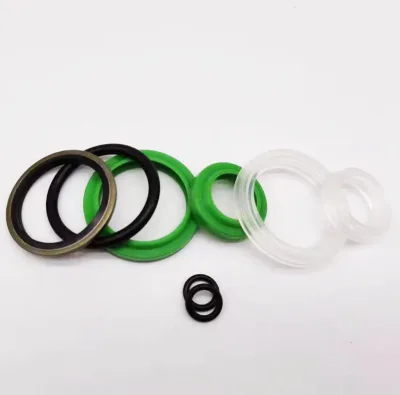


Comprehensive Sourcing Guide
Strategic Sourcing Guide for Standard Hydraulic Cylinder Seal Kits
Understanding Technical Specifications and Material Composition
When sourcing a Standard Hydraulic Cylinder Seal Kit, the primary objective is to identify components that align precisely with the operational demands of the specific hydraulic system. The market offers a diverse array of configurations, but the core technical attributes must be verified against the equipment's original specifications. Based on available product data, seal kits are frequently categorized by their structural composition and the specific parts they replace. Common structural identifiers include single lip designs and multi-component assemblies such as Tc, Tb, Htcr, Htcl, and Sc configurations. These designations often refer to the specific arrangement of seals, wipers, and bearings within the kit, which must match the cylinder's internal geometry to ensure effective sealing.
Material selection is the second critical technical pillar. The performance of a seal kit is heavily dependent on the polymer or composite used. The observed market data indicates a prevalence of Polyurethane (PU) and Nitrile Butadiene Rubber (NBR) as primary materials. PU is often selected for its durability and resistance to wear, while NBR is widely recognized for its oil resistance and cost-effectiveness in general applications. Some advanced kits may incorporate FKM (Viton) or combinations of rubber and metal components to handle more extreme conditions. Buyers must verify the specific material composition listed for each kit, as the choice between NBR and FKM can significantly alter the seal's resistance to chemical degradation and temperature extremes.
The operating environment dictates the required performance characteristics. Standard kits are often engineered to withstand a working temperature range of -35°C to +120°C. This range is crucial for applications operating in variable climates or high-heat industrial settings. Furthermore, the hardness of the seal material is a vital specification, typically measured on the Shore A scale. Observed data suggests a hardness range of 20-90 Shore A, allowing for flexibility in softer seals for low-pressure applications or rigidity in harder seals for high-pressure containment. The seal type itself is often classified as a "Pressure Type" or "Haplotype," indicating its function in managing fluid pressure dynamics within the cylinder.
Compliance, Standards, and Certification Verification
In the B2B procurement of hydraulic components, compliance with industry standards is non-negotiable for ensuring safety and interoperability. While specific certification bodies like ISO 9001:2015 are often cited in general industry contexts, buyers must exercise caution and verify actual certification status rather than assuming it based on general market knowledge. The supplied product data highlights specific standard identifiers such as "093-8388/093-6167" and references to "Standard Component" classifications. These codes often correspond to OEM part numbers or internal manufacturer standards that ensure the seal kit fits the intended hydraulic cylinder model.
Buyers should prioritize verifying that the product standard matches the original equipment manufacturer (OEM) requirements. The data indicates that some kits are available in "Standard or Customized size" and adhere to "Standard" specifications, while others are explicitly linked to part numbers like "457-6093." This suggests that a "standard" seal kit is not a monolithic product but rather a category containing various sub-standards tailored to specific cylinder models such as PC200-5, PC200-8, or PC220. It is essential to cross-reference the part number on the seal kit with the cylinder's service manual to avoid compatibility issues.
Certification checks should extend beyond generic quality claims. While the market data mentions "Superior Quality" and "100% Professional Test," these are qualitative assertions. A rigorous procurement process requires buyers to request specific test reports or documentation that validates the seal's performance under the claimed conditions. This includes verifying pressure ratings, as some kits are marketed for "High Pressure" applications. The absence of explicit certification numbers in the provided data means buyers must actively request proof of compliance from the supplier, ensuring that the "Standard" designation is backed by documented testing rather than mere marketing terminology.
Cost Drivers and Pricing Dynamics
The pricing of hydraulic cylinder seal kits is influenced by a complex interplay of material costs, manufacturing complexity, and order volume. The observed market data reveals a significant price variance, with listed prices ranging from $0.20 to $3,000 USD. This wide spectrum reflects the difference between simple single-lip seals and comprehensive, multi-component seal kits for large industrial machinery. A kit priced at the lower end of the scale likely contains basic NBR seals for smaller, lower-pressure applications, whereas a kit approaching the higher price points may include specialized FKM materials, metal reinforcement, and complex assembly for heavy-duty excavators or industrial presses.
Minimum Order Quantity (MOQ) is another critical factor affecting the total cost of ownership. The observed MOQ range spans from 1 to 200 units. For buyers requiring immediate replacement parts for a single machine, suppliers offering an MOQ of 1 provide essential flexibility, albeit potentially at a higher unit cost. Conversely, buyers managing large fleets or engaging in long-term maintenance contracts can leverage higher MOQs to negotiate better pricing. The "Rich in Size and Quantity" stock status mentioned in the data suggests that suppliers with extensive inventory may offer more competitive terms for standard sizes, reducing lead times and storage costs for the buyer.
Customization is a significant cost driver. While "Customization: Available" is a standard feature in this sector, bespoke seal kits require specific tooling and production runs, which inevitably increase the unit price and lead time. Buyers must weigh the benefits of a custom-fit seal against the cost premium. In many cases, utilizing a "Standard" kit that closely matches the OEM specifications is more cost-effective than commissioning a fully custom solution, unless the application involves unique pressure or temperature constraints that standard kits cannot meet.
Typical Applications and Operational Context
Standard hydraulic cylinder seal kits are ubiquitous across various industries, serving as critical maintenance components for machinery that relies on hydraulic power. The primary application identified in the data is the "Hydraulic Cylinder," but the scope extends to other fluid control systems such as "Valves." The versatility of these kits allows them to be used in construction equipment, agricultural machinery, and industrial manufacturing lines. Specific model references like PC200-5 and PC200-8 point to their common use in excavators and heavy construction vehicles, where reliability is paramount.
The operational context of the seal kit is defined by its ability to prevent fluid leakage and maintain system pressure. In high-pressure environments, the seal must resist extrusion and deformation. The "Oil-Resistant," "Heat Resistant," and "Dustproof" features listed in the product attributes are essential for maintaining performance in harsh environments. For instance, a seal kit used in an outdoor construction site must be dustproof to prevent abrasive particles from damaging the cylinder rod and seals. Similarly, heat resistance is vital for machinery operating in hot climates or near heat-generating engines.
The "Single Lip" and "Assembled" types indicate specific functional roles. Single lip seals are often used for basic sealing duties, while assembled kits provide a complete solution for cylinder overhaul. The "Transmission" usage attribute suggests that these seals also play a role in power transmission systems where fluid dynamics are critical. Buyers should assess the specific application environment, including the type of hydraulic fluid used, the operating pressure, and the exposure to external contaminants, to select the most appropriate seal kit configuration.
Supplier Evaluation and Geographic Considerations
Evaluating suppliers for hydraulic seal kits requires a focus on origin, consistency, and service capabilities. The data indicates that a significant portion of these products originates from Hebei, China, and Xingtai City, China. These regions are known hubs for rubber and mechanical component manufacturing. While the geographic origin provides insight into the supply chain, buyers should not rely solely on location as a proxy for quality. Instead, the focus should be on the supplier's ability to meet the specific technical and quality requirements outlined in the procurement plan.
Key evaluation criteria include the supplier's inventory depth, as indicated by the "Rich in Size and Quantity" attribute. A supplier with a robust stock can reduce lead times and ensure continuity of operations. Additionally, the availability of "After Sale Service: 12 Months" is a critical differentiator. This warranty period demonstrates the supplier's confidence in their product quality and provides the buyer with a safety net against premature failures. Buyers should also verify the "Condition" of the products, ensuring they are "100% New" and not refurbished or remanufactured unless explicitly stated.
Packaging is another aspect of supplier evaluation that impacts product integrity. The data shows varied packaging methods, including "Box+Carton," "Paper or Plastic Film + Carton," and "PP Bag, Carton, Wooden Cx." For international shipping, the choice of packaging is crucial to prevent damage during transit. Suppliers offering "Customized" packaging options can better protect the seals from moisture, dust, and physical impact, ensuring they arrive in perfect condition. Buyers should request packaging specifications as part of their supplier assessment to ensure the seals are protected according to the rigors of the intended logistics chain.
Quality Control and Long-Term Procurement Strategy
Ensuring the quality of hydraulic seal kits is essential for minimizing downtime and maintaining system efficiency. The observed attributes such as "High Quality, 100% Professional Test" and "Superior Quality" suggest that reputable suppliers employ rigorous quality control measures. However, buyers must verify these claims through independent testing or by requesting detailed quality assurance documentation. The "100% Professional Test" claim implies that every unit undergoes inspection, but the specifics of this testing—such as pressure testing, leak testing, or dimensional verification—should be clarified with the supplier.
Long-term procurement strategies should focus on building relationships with suppliers who offer consistent quality and reliable support. The availability of "Standard or Customized size" options allows buyers to adapt their procurement strategy as their machinery fleet evolves. For standard applications, maintaining a stock of common seal kits can reduce emergency procurement costs. For specialized applications, establishing a partnership with a supplier capable of custom manufacturing ensures a steady supply of tailored solutions.
The "Working Temperature" range of -35°C to +120°C and the "Hardness" range of 20-90 Shore A provide a baseline for quality expectations. Buyers should ensure that the seals they procure consistently meet these specifications. Regular audits of incoming seal kits, checking for defects in color, texture, and dimensions, can help maintain high standards. Additionally, monitoring the performance of seals in the field can provide valuable feedback to suppliers, fostering a cycle of continuous improvement. By integrating these quality control measures into the procurement process, buyers can ensure the longevity and reliability of their hydraulic systems.
Conclusion
Sourcing a Standard Hydraulic Cylinder Seal Kit requires a meticulous approach that balances technical specifications, cost considerations, and supplier reliability. The market offers a wide range of options, from basic NBR seals to complex, multi-component kits designed for high-pressure and extreme temperature applications. Buyers must carefully verify material composition, standard compliance, and performance ratings to ensure compatibility with their specific machinery. By focusing on suppliers with robust quality control, clear after-sales support, and flexible packaging options, organizations can secure a reliable supply chain for their hydraulic maintenance needs. Ultimately, the goal is to select seal kits that not only fit the immediate technical requirements but also contribute to the long-term efficiency and safety of the hydraulic systems they serve.
FAQs
What materials are used for standard hydraulic cylinder seal kits?
Standard kits typically use Polyurethane (PU) or Nitrile Butadiene Rubber (NBR). Some advanced options incorporate FKM or rubber-metal combinations for enhanced durability and chemical resistance in demanding hydraulic applications.
Which structural configurations are available for these seal kits?
Common structures include single lip designs and multi-component assemblies like Tc, Tb, Htcr, Htcl, and Sc. These configurations ensure the kit matches the specific internal geometry of the hydraulic cylinder for effective sealing.
Can these seal kits be customized for specific machinery models?
Yes, customization is available for various models such as PC200-5, PC200-8, and PC220. Buyers can request standard or customized sizes to ensure precise fitment and optimal performance for their specific equipment.
What is the working temperature range for these hydraulic seals?
The standard operating temperature range is from -35°C to +120°C. This range supports applications in variable climates and high-heat industrial settings while maintaining seal integrity and preventing fluid leakage.
How is the hardness of the seal material measured and rated?
Hardness is measured on the Shore A scale, typically ranging from 20 to 90 Shore A. This allows selection of softer seals for low-pressure flexibility or harder seals for high-pressure containment and extrusion resistance.
What packaging options are provided for shipping these seal kits?
Packaging includes Box+Carton, Paper or Plastic Film + Carton, or PP Bag with Carton. Customized packaging options are also available to protect seals from moisture, dust, and physical impact during international transit.
What after-sale service is included with the purchase of a seal kit?
A 12-month after-sale service is typically included with the purchase. This warranty period demonstrates supplier confidence in product quality and provides buyers with a safety net against premature failures in hydraulic systems.