Source Steel Cable Pulley for Cable Pulling, Lifting, and Conduit Work
Compare 30 verified Steel Cable Pulley options featuring pultruded profiles, nylon wheels, and insulation properties. Buyers can evaluate specifications like diameter, temperature range, and bearing types for cable protection and lifting applications.
Key considerations
Products List


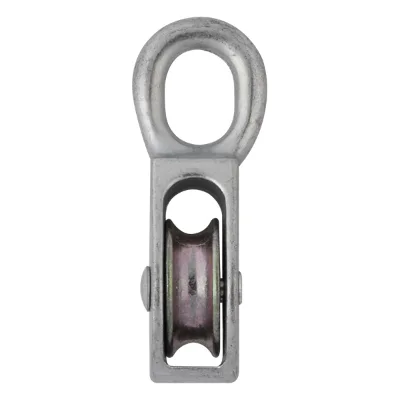

Heavy Duty Straight Line Steel Cable Pulling Roller Electric Cable Pulley
$22.00 - $25.00
MOQ: 5 Pieces


Cable Guide Roller Electrical Power Cable Pulley Roller Steel Cable Roller
$12.55 - $15.20
MOQ: 100 Pieces


Customized OEM Support Industrial Grade Aluminium Steel Wire Cable Pulley Roller
$10.00 - $25.00
MOQ: 10 Pieces


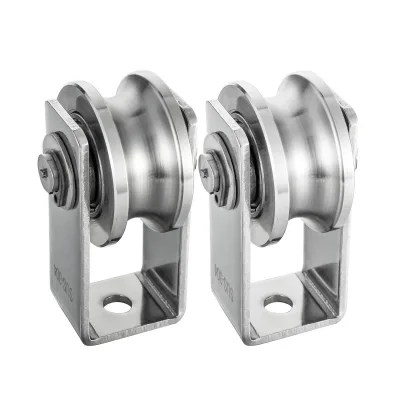


Cable Pulley Cable Roller with Aluminum Nylon Wheel/Cable Pulling Roller
$20.00 - $25.00
MOQ: 10 Pieces


Comprehensive Sourcing Guide
Strategic Sourcing Guide for Steel Cable Pulleys
Understanding Technical Specifications and Material Composition
When sourcing steel cable pulleys, buyers must first establish a clear understanding of the technical parameters that define product performance and suitability for specific industrial environments. The core keyword "Steel Cable Pulley" encompasses a broad category of equipment, ranging from simple rotating wheels to complex systems designed for heavy-duty lifting and cable management. Based on observed market data, the material composition is a primary differentiator. High-quality units typically feature a steel frame combined with wheels constructed from aluminum and nylon. This hybrid approach leverages the structural integrity of steel while utilizing the low-friction and corrosion-resistant properties of nylon wheels. In some configurations, the entire rolling body may be an alloy, designed to withstand specific load directions and environmental stresses.
The physical dimensions of these pulleys vary significantly to accommodate different cable diameters and application ranges. Observed specifications indicate that the diameter of the cable handling components can range from 3mm to 5.2mm, suggesting a need for precise matching between the pulley groove and the cable thickness. Furthermore, the outer dimensions of the units are categorized into medium and large sizes, specifically falling within the 120mm to 190mm range. Standardized product models, such as "Cable Pulley 02," "Cable Pulley 10," and "Cable Pulley 16," demonstrate that manufacturers offer distinct profiles for varying load capacities. The overall standard dimensions for certain units are recorded as 300230260mm or 310230150mm, while others may be as compact as 160*165mm. Buyers must verify these exact measurements against their existing infrastructure to ensure proper fitment.
The bearing system is another critical technical specification. The observed data highlights the use of roller bearings, specifically single-row, non-aligning spherical bearings designed for axial load directions. This configuration is essential for applications involving lifting or pulling cables where the load is not perfectly aligned. The presence of a brake mechanism in certain models, such as "Cable Pulley 10," indicates that some units are designed for controlled descent or holding loads, adding a layer of safety and operational control. The surface treatment process, often electrophoresis, plays a vital role in protecting the steel frame from corrosion, which is particularly important for outdoor or humid environments. The operating temperature range for these units can extend up to 800°C, a specification that suggests suitability for high-heat industrial processes, although this must be cross-referenced with the specific material properties of the nylon or aluminum components.
Compliance, Certification, and Regulatory Standards
In the B2B procurement landscape, verifying compliance and certification is not merely a formality but a critical risk mitigation strategy. The supply chain for steel cable pulleys is global, with origins reported in regions such as Hebei and Taiwan, China. This geographic diversity necessitates a rigorous check of the certifications held by potential suppliers to ensure that the products meet international safety and quality standards. Observed product attributes indicate that many units carry certifications including RoHS, ISO, CE, and CCC. The RoHS (Restriction of Hazardous Substances) certification is particularly relevant for electronics and electrical applications, ensuring that the materials used do not contain specific hazardous substances. The ISO certification, often linked to ISO 9001:2015 quality management systems, suggests that the manufacturer adheres to standardized processes for quality control, though buyers should request specific audit reports to confirm the scope of this certification.
The CE marking is a mandatory conformity mark for products sold within the European Economic Area, indicating that the pulley meets EU safety, health, and environmental protection requirements. Similarly, the CCC (China Compulsory Certification) is a critical standard for products manufactured and sold in China, ensuring that the goods meet national safety standards. When sourcing from suppliers in China, the presence of these certifications provides a baseline level of assurance regarding product safety. However, buyers must be cautious not to assume that all listed products automatically satisfy every certification claim. The presence of a certification on a product listing should be treated as an observation of that specific item's status, requiring independent verification through valid certificates of conformity.
Beyond the listed certifications, buyers should verify the specific standards applied to the manufacturing process. While the general standard ISO 9001:2015 is a trusted background reference for quality management, it does not guarantee the mechanical performance of the pulley itself. Buyers should inquire about specific testing standards for load capacity, bearing life, and material tensile strength. The "300230260mm" and similar dimensions listed as "prod_standard" likely refer to physical product dimensions rather than international engineering standards. Therefore, procurement teams must distinguish between physical specifications and regulatory compliance standards. Requesting third-party test reports for load testing and material analysis is essential to validate the claims made by the supplier. This due diligence ensures that the purchased pulleys will perform safely under the intended load conditions and comply with local regulations in the buyer's region.
Cost Drivers and Pricing Dynamics
The pricing of steel cable pulleys is influenced by a complex interplay of factors, including material costs, manufacturing complexity, customization requirements, and logistics. The observed price range in the market spans from $0.05 to $1000, a vast disparity that reflects the diversity of products available. At the lower end of the spectrum, prices likely correspond to simple, non-customized units with standard dimensions and basic materials. Conversely, the upper end of the price range suggests complex systems, such as those with integrated braking mechanisms, specialized bearings, or custom-engineered frames. The "Cable Pulley 10" with a brake and the "Cable Pulley 16" with specific alloy compositions are examples of higher-value items that would command a premium price.
Material costs are a primary driver of pricing. The use of steel frames, aluminum wheels, and nylon components involves different raw material market fluctuations. Steel prices are subject to global commodity trends, while aluminum and nylon prices are influenced by petrochemical markets and supply chain availability. The surface treatment process, such as electrophoresis, adds an additional cost layer that enhances durability but increases the final price. Customization is another significant cost factor. The availability of customization options allows buyers to tailor products to specific needs, but this process involves additional engineering, tooling, and production time. Products labeled as "Customized" or "OEM" (Original Equipment Manufacturer) often carry higher unit costs due to the bespoke nature of the manufacturing process.
The Minimum Order Quantity (MOQ) also impacts the effective cost per unit. The observed MOQ range is from 1 to 1000 units. Buyers ordering small quantities, perhaps for prototyping or maintenance, may face higher per-unit costs due to the lack of economies of scale. Conversely, bulk orders can significantly reduce the unit price, making the procurement more cost-effective. However, high MOQs may tie up capital and storage space. Logistics costs, including packing and shipping, are also critical. The observed packing methods include cartons, with shipping options via air, DHL, sea, or train. Air freight and express services like DHL are faster but more expensive, while sea freight is cost-effective for large, heavy shipments but involves longer lead times. Buyers must balance the urgency of the order against the budget constraints, considering the total landed cost rather than just the unit price.
Typical Applications and Industry Use Cases
Steel cable pulleys are versatile components used across a wide range of industries, primarily for cable management, lifting, and protection. The observed applications include pulling cables, protecting cables from friction, and lifting operations. In construction and infrastructure projects, these pulleys are essential for managing heavy cables during installation, ensuring that the cables do not suffer from abrasion or damage. The "Bridge Cable Rollers" and "Underground Conduit Cable Rollers" are specifically designed for these environments, where the cable must be guided smoothly over long distances or through tight conduits. The application range of ≤150mm suggests that these units are suitable for cables of varying thicknesses, providing flexibility in different project scenarios.
The "Electric Cable Hanging Roller" indicates a specific use case in electrical installations, where cables need to be suspended and supported without tension. The "Round Belt" product type suggests applications in conveyor systems or machinery where belt-driven mechanisms are used. The classification of these products as "simple machines" underscores their fundamental role in mechanical advantage and force redirection. In industrial settings, the ability to handle axial loads is crucial for lifting equipment, where the pulley must support vertical forces without failure. The "Lifting" application confirms their use in hoists and cranes, where reliability is paramount.
The color coding of the pulleys, such as yellow, orange, and green, serves both aesthetic and functional purposes. Yellow is noted as "Widely Used," likely for visibility and safety in industrial environments. These colors help workers quickly identify the equipment and distinguish between different types of pulleys or load capacities. The "Insulation" feature is particularly relevant for electrical applications, preventing electrical conductivity through the pulley frame and ensuring the safety of personnel working with live cables. The "Unseparated" status of some units indicates that they are delivered as complete, ready-to-install assemblies, reducing the need for on-site assembly and minimizing the risk of installation errors.
Supplier Evaluation and Selection Criteria
Selecting the right supplier for steel cable pulleys requires a comprehensive evaluation of their capabilities, reliability, and commitment to quality. The supply base includes manufacturers from China, with specific origins noted in Hebei and Taiwan. While the geographic location can influence logistics and lead times, it should not be the sole determinant of supplier selection. Buyers should prioritize suppliers who demonstrate a strong track record of meeting technical specifications and maintaining consistent quality. The availability of OEM services is a key indicator of a supplier's flexibility and ability to meet custom requirements. Suppliers offering OEM options are typically more experienced in handling bespoke orders and can provide tailored solutions for specific project needs.
The customization capabilities of the supplier are another critical factor. The observed attribute "Customization: Available" suggests that many suppliers are willing to adapt their products to buyer specifications. However, buyers must verify the extent of this customization. Can the supplier modify the bearing type, wheel material, or frame dimensions? Can they adjust the surface treatment or color coding? The ability to customize is valuable, but it must be balanced against the potential for increased lead times and costs. Suppliers with a robust engineering team can provide technical support during the design phase, ensuring that the final product meets all performance requirements.
Quality control processes are essential for evaluating a supplier's reliability. Buyers should inquire about the supplier's internal quality assurance protocols, including in-process inspections and final testing. The presence of certifications like ISO and CE is a positive sign, but it is important to verify that these certifications are current and applicable to the specific products being purchased. Suppliers who are transparent about their quality control measures and willing to share test reports or audit results are generally more trustworthy. Additionally, the supplier's response time and communication style are important indicators of their professionalism and commitment to customer service. A supplier that is responsive and willing to answer technical questions is more likely to provide a smooth procurement experience.
Quality Control and Long-Term Procurement Considerations
Ensuring the quality of steel cable pulleys is a continuous process that extends beyond the initial purchase. Buyers must implement rigorous quality control measures to verify that the products meet the specified standards. This includes checking the material composition, dimensions, and surface treatment upon delivery. The use of non-destructive testing methods, such as visual inspection and dimensional measurement, can help identify any defects or deviations from the specifications. For critical applications, destructive testing or load testing may be necessary to validate the performance of the pulleys under extreme conditions.
Long-term procurement considerations involve building a sustainable relationship with the supplier. This includes establishing clear communication channels, defining service level agreements, and setting expectations for delivery times and quality standards. The lead time for these products can vary based on the complexity of the order and the supplier's production capacity. While specific lead times are not provided in the observed data, buyers should anticipate that customized orders may require longer lead times than standard products. Planning for these delays is essential to avoid project disruptions.
The maintenance and lifecycle of the pulleys are also important factors. The use of high-quality materials and surface treatments, such as electrophoresis, can extend the lifespan of the pulleys and reduce the frequency of replacements. Buyers should consider the total cost of ownership, including maintenance costs and the potential for downtime, when evaluating the value of a supplier's product. The availability of spare parts and technical support from the supplier can also impact the long-term success of the procurement. A supplier that offers a comprehensive warranty and responsive after-sales service is a valuable partner in ensuring the reliability of the cable pulley systems.
Final Procurement Recommendations
In conclusion, sourcing steel cable pulleys requires a strategic approach that balances technical requirements, cost considerations, and supplier reliability. Buyers must carefully evaluate the technical specifications, ensuring that the pulleys meet the specific needs of their applications. Compliance and certification checks are essential to mitigate risks and ensure that the products meet international standards. Understanding the cost drivers and pricing dynamics allows buyers to make informed decisions that optimize their budget. Identifying the typical applications and industry use cases helps in selecting the right product for the job. Supplier evaluation and selection criteria should focus on quality, customization capabilities, and communication. Finally, implementing robust quality control measures and considering long-term procurement factors will ensure a successful and sustainable sourcing strategy. By following these guidelines, buyers can secure high-quality steel cable pulleys that enhance the efficiency and safety of their operations.
FAQs
What certifications do steel cable pulleys typically have?
Steel cable pulleys typically carry RoHS, ISO, CE, and CCC certifications. These marks indicate compliance with safety and environmental standards, though buyers must verify specific certificates for each item rather than assuming all listed products hold every certification.
Can I find steel cable pulleys with customized dimensions?
Yes, customization is available for steel cable pulleys to meet specific project needs. Buyers can request tailored specifications, but custom orders often involve additional engineering costs and may require higher minimum order quantities compared to standard models.
Which bearing types are used in steel cable pulleys?
These pulleys commonly use roller bearings, specifically single-row, non-aligning spherical bearings designed for axial loads. This configuration supports lifting and pulling applications where the load direction may not be perfectly aligned with the wheel axis.
How do I choose the right diameter for a Steel Cable Pulley?
Select a pulley based on the cable diameter, which ranges from 3mm to 5.2mm in observed models. The outer dimensions of the units also vary, with medium and large sizes falling between 120mm and 190mm to accommodate different cable thicknesses.
What material is used for the frame and wheels of these pulleys?
Frames are typically made of steel while wheels combine aluminum and nylon for low friction. Some units feature an alloy rolling body, and surface treatments like electrophoresis protect the steel frame from corrosion in various industrial environments.
Are steel cable pulleys available with braking mechanisms?
Yes, certain models like Cable Pulley 10 come equipped with a brake for controlled descent or load holding. This feature adds safety and operational control, making these units suitable for lifting applications where precise load management is required.
What is the typical price range for steel cable pulleys?
Prices range from 0.05 to 1000 USD depending on complexity and customization. Simple standard units cost less, while models with brakes, specialized bearings, or custom engineering command higher prices due to increased material and manufacturing costs.