Find Steel Braid Concrete Vibrator Hose for construction sites
Source 30 listings for Steel Braid Concrete Vibrator Hose suitable for deep foundation work, tunneling, and dam construction. Compare specifications including diameter, length, and vibration frequency to select the right equipment for your project needs.
Key considerations
Products List


50mm Flexible Concrete Vibrator Shaft Hose – Indian Type for Cement Work
$21.80 - $35.60
MOQ: 5 Pieces


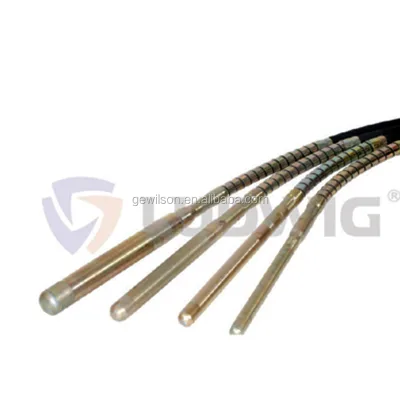


25mm Concrete Pump Hose Cement Vibrate Bar Concrete Vibrating Bar Hose Flexible Shaft
$28.00 - $60.00
MOQ: 10 Pieces


Comprehensive Sourcing Guide
Strategic Sourcing Guide for Steel Braid Concrete Vibrator Hoses
The procurement of steel braid concrete vibrator hoses represents a critical decision point in construction equipment sourcing. These components serve as the vital link between the power source and the immersion vibrator, transmitting high-frequency mechanical energy to compact fresh concrete. A failure in this hose can lead to project delays, compromised structural integrity, and safety hazards. This guide synthesizes observed market data and technical attributes to provide a disciplined framework for evaluating suppliers and specifications. Buyers must navigate a landscape where product attributes vary significantly between models, requiring rigorous verification of every claim against actual supply chain capabilities.
Technical Specifications and Performance Parameters
When evaluating steel braid concrete vibrator hoses, the primary focus must be on the dimensional and mechanical compatibility with the specific vibrator model. The supplied data indicates a diverse range of specifications, suggesting that "one size fits all" is rarely applicable in this category. Buyers should prioritize the verification of diameter, length, and flexibility metrics.
Observed market listings reveal specific dimensional constraints. For instance, certain models feature an outside diameter of the flexible hose at 30mm, with an inner diameter of 10mm. Other configurations list a standard diameter of 50mm, while some specifications denote a flexible shaft diameter of 10mm. The length of these hoses is equally variable, with observed ranges extending from 3 to 10 meters, and other listings indicating lengths of 4 to 8 meters or even 1 to 12 meters. The absence of a single universal standard means that procurement teams must match the hose to the specific vibrator head and shaft requirements of their machinery.
The structural integrity of the steel braid is paramount. While specific tensile strength values are not universally listed in the provided context, the presence of attributes like "Rotor Type" and "Semi-Dry" or "Wet" shotcrete compatibility suggests that the hose must withstand different material densities and flow rates. The vibration frequency is another critical technical parameter. Data points indicate operating frequencies ranging from 150 to 210 Hz, with specific models showing frequencies of 183 Hz. The vibrating amplitude, which dictates the efficiency of concrete consolidation, is observed at values such as 1.1mm, 1.13mm, and 1.3mm. A hose that cannot sustain these specific amplitudes without fatigue or delamination will fail prematurely.
Furthermore, the weight of the assembly is a logistical consideration. One observed specification notes a weight of 15.5kg for a 6-meter length, while another lists a total unit weight of 18kg. These figures influence the ease of handling on a construction site and the load requirements for the power unit. Buyers should verify that the hose weight aligns with the capacity of the vibrator engine, whether it is an electric motor, gasoline engine, or diesel engine, as listed in the available power options.
Compliance and Certification Verification
In the global construction equipment market, compliance is not merely a formality but a prerequisite for market access and liability protection. The supplied product data highlights specific certifications that buyers should request as proof of quality management and safety standards. The most frequently observed certifications include CE (Conformité Européenne) and ISO9001. These are not optional add-ons but indicators that the manufacturing process adheres to international quality management systems and safety directives.
The data also references SONCAP, a certification standard relevant to specific import markets, particularly in Nigeria. This suggests that the supply chain is accustomed to navigating complex regulatory environments. However, buyers must treat these certifications as observations of specific product batches rather than universal guarantees for every item in a category. It is essential to verify that the specific hose model being purchased carries the valid certification documents for the destination country.
Additionally, the condition of the product is consistently listed as "New." This is a fundamental requirement for safety-critical components. Used or refurbished hoses may have hidden fatigue in the steel braid or degradation in the inner rubber lining, which could lead to catastrophic failure under pressure. The presence of "Export Carton" or "Carton" packing indicates that the products are prepared for international shipping, but the buyer must ensure that the packaging protects the hose from kinking or crushing during transit, which could compromise the steel braid integrity.
Cost Drivers and Pricing Dynamics
Understanding the cost structure of steel braid concrete vibrator hoses requires an analysis of the observed price ranges and material inputs. The market data indicates a wide price spectrum, with observed listed prices ranging from 0.1 to 279 USD. This significant variance is likely driven by differences in hose length, diameter, material quality, and the inclusion of accessories like flexible shafts or specific connectors.
The price of 0.1 USD likely represents a component part or a very short, specialized accessory, whereas the 279 USD figure likely corresponds to a complete assembly or a high-specification unit with extended length and heavy-duty construction. Buyers should be wary of prices that seem disproportionately low, as they may indicate substandard materials or a lack of necessary certifications. Conversely, the highest prices may include value-added services such as custom manufacturing or specific compliance documentation.
Minimum Order Quantity (MOQ) is another critical cost driver. The observed MOQ range spans from 1 to 500 units. This flexibility allows small contractors to purchase single units for replacement, while large construction firms can leverage bulk purchasing to reduce per-unit costs. However, the high-end MOQ of 500 suggests that some suppliers may require significant volume commitments to offer their best pricing tiers. Buyers must balance their immediate inventory needs against the potential savings from bulk orders, considering the storage costs and the risk of obsolescence for specialized hose sizes.
Typical Applications and Operational Context
Steel braid concrete vibrator hoses are designed for specific applications within the concrete industry. The product attributes point to their use in both "Semi-Dry" and "Wet" shotcrete operations. This versatility is crucial for contractors who may switch between different concrete delivery methods. The hoses must be robust enough to handle the abrasive nature of wet concrete while maintaining flexibility for semi-dry applications where material flow characteristics differ.
The "Dynapac Type" designation in the data suggests compatibility with specific industry-standard vibrator heads, likely referencing a well-known brand or a widely adopted mechanical configuration. The "Concrete Vibrator Shaft" and "Concrete Vibrator Hose" are often sold as integrated systems or compatible components. The feeding height of 1370mm mentioned in the data relates to the overall machine setup, implying that the hose length must be sufficient to reach the required depth of the concrete pour without excessive bending.
The productivity rates of 50m³/h to 75m³/h associated with the machinery indicate that these hoses are used in high-volume construction projects. Whether for foundation work, road construction, or structural columns, the hose must maintain its integrity under continuous operation. The "Rotor Type" structure mentioned in the data further implies that these hoses are part of a system designed for efficient material processing, where the hose acts as a conduit for high-energy vibration.
Supplier Evaluation and Origin Analysis
When selecting a supplier, the origin of the product is a key factor. The data consistently identifies "China" and "Ningbo" as the points of origin. Ningbo is a major port city in China known for its manufacturing and export capabilities, particularly in machinery and hardware. This concentration of suppliers in a specific region can offer buyers access to a competitive market with a high density of specialized manufacturers.
However, the presence of multiple origin points, including "China, Ningbo" and "Ningbo, China," suggests that buyers should verify the specific factory location rather than relying on general country-of-origin labels. The "Customization: Available" attribute indicates that many suppliers are willing to tailor products to specific client needs, such as custom lengths or diameters. This flexibility is a significant advantage for buyers with non-standard equipment requirements.
Buyers should evaluate suppliers based on their ability to provide consistent quality across different batches. The observation of varying certifications and standards across different product listings suggests that not all suppliers maintain the same level of compliance. A robust supplier evaluation process should include requests for factory audits, quality control reports, and references from previous international clients. The "Export Carton" packing standard is a positive indicator of experience in international logistics, but it should be verified against the specific needs of the buyer's supply chain.
Quality Control and Long-Term Procurement
Ensuring the long-term reliability of steel braid concrete vibrator hoses requires a proactive quality control strategy. The observed attributes, such as "Vibrating Amplitude" and "Max. Vibration Force," provide benchmarks for performance testing. Buyers should request test results that verify these parameters before finalizing large orders. The "Condition: New" status is a baseline, but it does not guarantee the absence of manufacturing defects.
Long-term procurement considerations involve the lifecycle of the hose. The steel braid is subject to wear and tear from constant flexing and exposure to concrete abrasion. Buyers should inquire about the expected service life and the availability of replacement parts. The "Standard Lengths" of 4, 5, and 6 meters suggest that standardization is possible, but the "Length: 3~10mtr" and "4-8m" options indicate that custom lengths are also common. Maintaining a stock of standard lengths can reduce downtime, while having access to custom manufacturing ensures flexibility for unique projects.
The "Packing Size" of 75075055 mm and "50MM" standard references highlight the importance of storage and handling. Proper storage conditions are essential to prevent degradation of the rubber lining and corrosion of the steel braid. Buyers should establish a storage protocol that protects the hoses from direct sunlight, extreme temperatures, and physical damage.
Comparative Analysis of Key Attributes
To facilitate decision-making, the following table summarizes the key technical and logistical attributes observed in the market data. This comparison helps buyers identify the specific requirements for their projects and match them with available supplier offerings.
| Attribute Category | Observed Values | Procurement Consideration |
|---|---|---|
| Hose Diameter | 10mm (Inner), 30mm (Outer), 50mm (Standard) | Must match vibrator head and shaft specifications. |
| Length Range | 3m to 12m (Various: 3-10m, 4-8m, 1-12m) | Select based on pour depth and site accessibility. |
| Certifications | CE, ISO9001, SONCAP | Verify validity for destination country and project specs. |
| Origin | China, Ningbo | Assess logistics, lead times, and supplier proximity. |
| Power Compatibility | Electric, Gasoline, Diesel Engines | Ensure hose handles the torque and vibration of the engine. |
| Productivity | 50m³/h to 75m³/h | Match hose durability to project volume requirements. |
| Vibration Specs | 150-210 Hz, Amplitude 1.1mm to 1.3mm | Critical for concrete consolidation efficiency. |
| MOQ | 1 to 500 units | Balance inventory needs with bulk pricing benefits. |
By adhering to these evidence-based guidelines, buyers can navigate the complexities of sourcing steel braid concrete vibrator hoses. The focus remains on verifying specific technical attributes, ensuring compliance with relevant standards, and evaluating suppliers based on their ability to deliver consistent quality. This disciplined approach minimizes risk and ensures that the procurement process supports the operational success of construction projects.
FAQs
What certifications do steel braid concrete vibrator hoses typically have?
These hoses commonly carry CE and ISO9001 certifications to ensure safety and quality management. Some listings also reference SONCAP for specific import markets like Nigeria. Buyers must verify that the specific batch holds valid documents for their destination country.
Which hose diameters are available for concrete vibrator systems?
Available diameters include 30mm outside diameter with 10mm inner diameter, as well as 50mm standard sizes. Flexible shaft diameters of 10mm are also observed in specific configurations. Procurement teams must match these dimensions to their specific vibrator head requirements.
How long are the standard lengths for these hoses?
Standard lengths vary significantly, with observed ranges from 3 to 10 meters and 4 to 8 meters. Some specifications list lengths of 1 to 12 meters or standard options of 4, 5, and 6 meters. Customization is available for non-standard length requirements.
Can these hoses operate with different power sources?
Yes, the hoses are compatible with electric motors, gasoline engines, and diesel engines. The specific power unit must align with the hose weight, which ranges from 15.5kg for 6 meters to 18kg for the full unit. This ensures the engine can handle the load effectively.
What is the typical vibration frequency for these hoses?
Operating frequencies generally range from 150 to 210 Hz, with specific models showing 183 Hz. The vibrating amplitude is observed at values like 1.1mm, 1.13mm, and 1.3mm. These parameters dictate the efficiency of concrete consolidation and must be matched to the application.
Where are these hoses typically manufactured and shipped from?
Products originate from China, with Ningbo being a primary port city for manufacturing and export. The consistent origin point allows buyers to access a competitive market with specialized manufacturers. Customization options are available for clients with specific needs.