Find Submersible Level Transmitter for Water Tanks, Wells, and Sewage
Source 30 Submersible Level Transmitter units from verified Chinese manufacturers. Buyers can compare models like PL301 and PL315, checking accuracy, pressure ratings, and output signals to find the right device for liquid level monitoring.
Key considerations
Products List


Liquid Level Transmitter Water Tank Pressure Transmitter Sensor Liquid Level Sensor
$360.00 - $419.00
MOQ: 1 Pieces


Customized Factory Submersible Water Tank Level Transmitter with Display
$160.00 - $245.00
MOQ: 1 Pieces
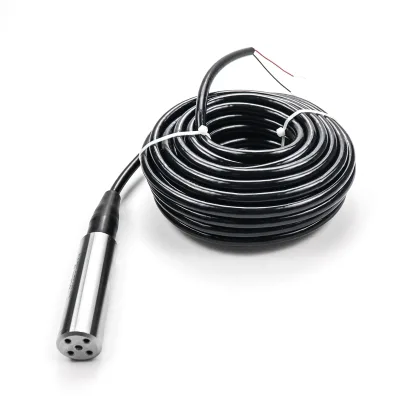

Advanced Submersible Level Transmitter for Accurate River Pool Measurement
$79.00 - $409.00
MOQ: 1 Pieces


Comprehensive Sourcing Guide
Strategic Sourcing Guide for Submersible Level Transmitters
Understanding Core Technical Specifications and Performance Metrics
When sourcing submersible level transmitters, buyers must first establish a clear understanding of the device's fundamental architecture and measurement capabilities. The market offers various configurations, but the most prevalent design for deep-water or tank applications is the split-type structure, which often integrates a silicon piezoresistive sensing element. This specific sensor type is chosen for its robustness and ability to convert hydrostatic pressure into a precise electrical signal. The accuracy of these devices is a critical differentiator; observed data indicates that high-performance units can achieve an accuracy of 0.25%, while others may specify a measurement accuracy of ±3mm depending on the range and application requirements.
The operational range is another primary specification that dictates suitability. Units are frequently available with a measurement range extending from 0 to 30 meters, allowing them to serve both shallow sump applications and deep well monitoring. The pressure type is typically gage pressure, though some specialized models support absolute pressure ranges, such as 0-0.1 to 1.1 MPa. It is essential to verify the pressure resolution, which can be as fine as 0.01% of the full scale (Fs), ensuring that minute changes in liquid levels are captured accurately. Furthermore, the stability of the sensor is paramount for long-term reliability; typical specifications suggest a stability of less than 0.2% Fs per year, which minimizes the need for frequent recalibration.
The physical construction of the transmitter must align with the medium being measured. Stainless steel, specifically 316L grade, is the standard material of construction for the wetted parts, offering excellent corrosion resistance for a wide variety of liquids. The protection grade is equally critical; a robust IP68 rating is standard for submersible units, ensuring they can withstand continuous immersion and harsh environmental conditions. The cable material is another variable that requires attention, with options including PUR, PE, or PTFE, each offering different levels of flexibility and chemical resistance. Buyers should also consider the power supply requirements, which can range from standard external power sources to integrated solutions like 3.6V/2400mAh lithium batteries, particularly for remote or wireless deployment scenarios.
Compliance, Certification, and Regulatory Standards
Navigating the regulatory landscape is a non-negotiable aspect of B2B procurement for industrial instrumentation. Buyers must verify that the supplied products meet the necessary international safety and environmental standards. In the context of submersible level transmitters, the presence of CE and RoHS certifications is a primary indicator of compliance with European Union directives regarding safety, health, and environmental protection. These certifications ensure that the device does not contain hazardous substances and meets electromagnetic compatibility requirements.
Beyond general certifications, specific industry standards and testing protocols must be reviewed. While some product listings may reference specific standards such as "505050" or weight specifications like "1KG," these often refer to packaging dimensions or net weight rather than industry performance standards. Buyers should not assume that a listed standard code implies a specific industry certification without verification. Instead, the focus should be on verifying the product's adherence to recognized international norms for pressure sensors and electronic instrumentation.
The warranty period is also a tangible metric of the manufacturer's confidence in their product's compliance and durability. A standard warranty of one year is commonly observed in the market, serving as a baseline for after-sales support. However, buyers should scrutinize the terms of this warranty, specifically regarding what constitutes a defect versus normal wear and tear. Additionally, the origin of the product, typically China for many of these industrial components, does not preclude high quality, but it necessitates a rigorous verification of the supplier's quality management systems to ensure consistent adherence to the claimed certifications.
Cost Drivers and Pricing Dynamics
The pricing of submersible level transmitters is influenced by a complex interplay of technical specifications, material costs, and order volume. The observed market price range spans from approximately $25 to $2,000 USD, reflecting the vast diversity in product capabilities. Entry-level units, which may offer basic functionality with standard accuracy and shorter ranges, typically occupy the lower end of this spectrum. Conversely, high-end models featuring advanced digital output signals, such as RS485, high-precision accuracy grades (e.g., 0.2G), and extended temperature compensation ranges, command premium prices.
Material composition is a significant cost driver. The use of 316L stainless steel for the housing and wetted parts, along with high-grade cable materials like PTFE, increases the manufacturing cost compared to units using standard stainless steel or PVC cables. Furthermore, the complexity of the internal electronics plays a role; units with integrated data logging capabilities, such as those capable of storing 50,000 recordings with timestamps and temperature data, require more sophisticated microcontrollers and memory, thereby increasing the unit cost.
Minimum Order Quantity (MOQ) is another critical factor affecting the total cost of ownership. The market exhibits an MOQ range from 1 to 100 units. For small-scale projects or pilot deployments, buyers may find suppliers willing to accept orders as low as a single unit, though the per-unit cost will likely be higher. For large-scale industrial deployments, negotiating MOQs in the range of 50 to 100 units can often unlock volume discounts, significantly reducing the average cost per device. Buyers should also consider the packaging requirements; while standard paper boxes or cartons are common, customized packaging solutions may incur additional fees.
Typical Applications and Operational Environments
Submersible level transmitters are versatile instruments deployed across a wide array of industrial and environmental sectors. Their primary function is to monitor liquid levels in tanks, wells, reservoirs, and open channels. The ability to measure up to 30 meters makes them ideal for deep water applications, such as monitoring groundwater levels in boreholes or liquid levels in large storage tanks for the chemical and pharmaceutical industries. The compatibility with 316L stainless steel ensures they can handle corrosive liquids, making them suitable for wastewater treatment plants and chemical processing facilities.
The operational environment dictates the specific features required. In applications where temperature fluctuations are significant, the temperature compensation range of -10℃ to 60℃ (or customized ranges) becomes a critical selection criterion. Units with a standard operating temperature range of -20℃ to 80℃ are suitable for most general industrial applications, but extreme environments may require customized thermal specifications. The vibration and shock resistance, typically rated at 20g for both vibration (20 to 5000Hz) and shock (11ms), ensure that the transmitters can withstand the mechanical stresses found in pumping stations or near heavy machinery.
The output signal type is another determinant of application suitability. Analog output signals are common for integration with traditional PLCs and SCADA systems, while digital outputs like RS485 offer advantages in long-distance transmission and noise immunity, making them preferable for large-scale facilities with complex wiring infrastructures. Additionally, the presence of an LED or LCD display allows for local monitoring and troubleshooting, which is valuable in remote locations where constant connectivity to a central control room is not feasible.
Supplier Evaluation and Quality Assurance Protocols
Selecting a reliable supplier for submersible level transmitters requires a rigorous evaluation process that goes beyond price comparison. Buyers should prioritize suppliers who provide transparent documentation regarding their manufacturing processes and quality control measures. The origin of the product, often China, should be verified against the supplier's reputation and track record in the global market. A key indicator of supplier reliability is the consistency of their product attributes; for instance, verifying that the claimed IP68 rating and 316L stainless steel construction are consistently applied across batches.
Quality control should be a collaborative effort between the buyer and the supplier. Buyers must request detailed test reports that validate the performance claims, such as the 0.25% accuracy and 0.2% Fs/year stability. It is crucial to verify the insulation resistance and the specific cable types used, as these components are prone to failure in harsh environments. The supplier's ability to offer customization, such as specific pressure ranges or temperature compensation, is also a strong indicator of their technical capability and flexibility.
The warranty terms and after-sales support are essential components of the supplier evaluation. A standard one-year warranty provides a baseline, but buyers should inquire about the process for handling defects and the availability of replacement parts. Suppliers who offer comprehensive technical support, including installation guides and troubleshooting assistance, add significant value to the procurement process. Additionally, the packaging standards, whether standard cartons or custom boxes, should be evaluated to ensure that the products are protected during transit, minimizing the risk of damage before installation.
Long-Term Procurement and Lifecycle Management
Sourcing submersible level transmitters is not merely a transactional activity but a strategic decision that impacts long-term operational efficiency. Buyers should consider the lifecycle costs, including maintenance, calibration, and potential replacement. The stability of the sensor, typically less than 0.2% Fs per year, suggests that recalibration intervals can be extended, reducing long-term maintenance costs. However, the actual frequency of maintenance will depend on the specific application environment and the quality of the installation.
Data management is another long-term consideration. Units with data logging capabilities, such as the ability to store 50,000 recordings, provide valuable historical data for trend analysis and predictive maintenance. Buyers should ensure that the data format and communication protocols are compatible with their existing IT infrastructure to facilitate seamless data integration. The power supply requirements, whether battery-operated or line-powered, also influence long-term costs; battery-operated units may require periodic replacement, adding to the operational expenses.
Finally, the scalability of the procurement strategy is crucial. As operational needs grow, the ability to source additional units with consistent specifications and performance is vital. Buyers should establish relationships with suppliers who can support volume scaling without compromising quality. The availability of customized solutions allows for future-proofing the instrumentation, ensuring that the system can adapt to changing requirements without the need for complete replacement. By focusing on these long-term factors, buyers can ensure a reliable and cost-effective deployment of submersible level transmitters.
Comparative Analysis of Key Product Attributes
To assist buyers in making informed decisions, the following table summarizes the key attributes observed in the market for submersible level transmitters. This comparison highlights the variability in specifications and helps identify the features that align with specific project requirements.
| Attribute Category | Standard Specification | High-Performance Variation | Application Implication |
|---|---|---|---|
| Accuracy | ±3mm | 0.25% | High-precision processes require 0.25% accuracy. |
| Material | Stainless Steel | 316L Stainless Steel | Corrosive environments demand 316L grade. |
| Protection | IP68 | IP68 | Essential for continuous submersion. |
| Output Signal | Analog | RS485 Digital | Digital preferred for long-distance/noisy environments. |
| Range | 0-30m | Customized | Deep wells require extended or custom ranges. |
| Temperature | -10℃~60℃ | -20℃~80℃ | Extreme climates need wider operating ranges. |
| Power | External | Lithium Battery (3.6V) | Remote sites may require battery power. |
| Certification | CE, RoHS | CE, RoHS | Mandatory for EU market entry. |
| Warranty | 1 Year | 1 Year | Standard industry baseline for support. |
This comparative overview underscores the importance of matching specific technical requirements to the available product attributes. By carefully evaluating these factors, buyers can select the most appropriate Submersible Level Transmitter for their specific application, ensuring optimal performance and reliability.
FAQs
What certifications do submersible level transmitters typically have?
Most units carry CE and RoHS certifications to ensure compliance with European safety and environmental standards. These certifications verify that the device meets electromagnetic compatibility requirements and does not contain hazardous substances, which is essential for industrial procurement.
How accurate are submersible level transmitters in measuring liquid levels?
High-performance models achieve an accuracy of 0.25% or a measurement accuracy of ±3mm depending on the specific range. This precision ensures reliable monitoring of liquid levels in applications ranging from shallow sumps to deep wells up to 30 meters.
Which materials are used for the housing of these transmitters?
The wetted parts are typically constructed from 316L stainless steel to ensure excellent corrosion resistance. This material allows the device to be compatible with a wide variety of liquids, including those found in wastewater treatment and chemical processing facilities.
Can these devices operate in extreme temperature conditions?
Standard units operate within a temperature range of -20℃ to 80℃ with compensation for -10℃ to 60℃. Customized temperature ranges are available for specific applications requiring operation in more extreme thermal environments beyond the standard specifications.
What output signal types are available for integration?
Devices offer both analog output signals and digital RS485 outputs for flexible system integration. Analog signals suit traditional PLCs, while RS485 provides noise immunity and long-distance transmission capabilities for complex industrial infrastructures.
What is the typical minimum order quantity for these products?
The market exhibits an MOQ range from 1 to 100 units depending on the supplier and product configuration. Small projects may accept single-unit orders, while larger industrial deployments often benefit from negotiating volume discounts at higher quantities.