Source Super Elastic Nitinol Wire for Medical, Industrial, and Aviation
Find 30 listings for Super Elastic Nitinol Wire suitable for medical, industrial, and aviation applications. Buyers can compare specifications like diameter, surface finish, and standards including ASTM F2063 to identify the right supplier for their needs.
Key considerations
Products List


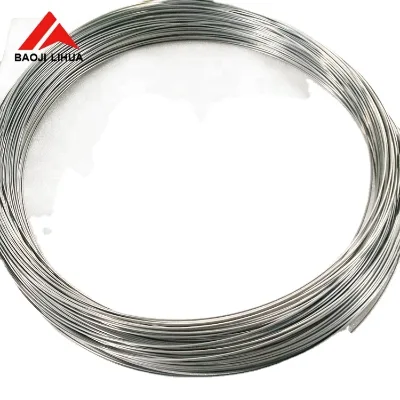
Superlastic Nitinol Wire Shape Memory Alloy Ni-Ti Wire for Surgical Needle
$0.75 - $8.00
MOQ: 1000 Meters

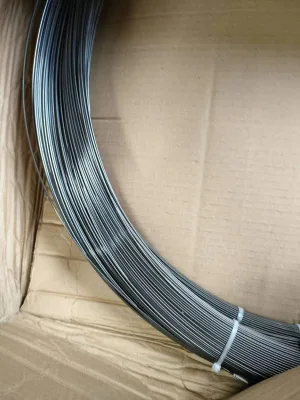




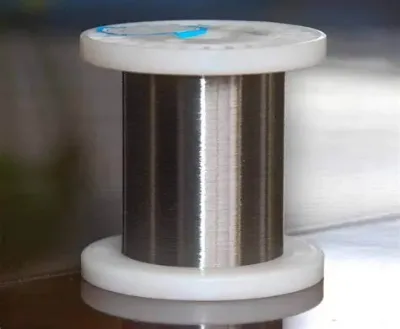
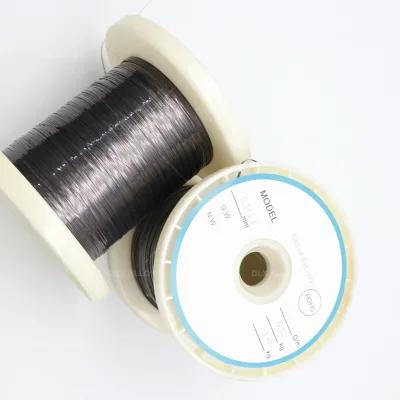


Comprehensive Sourcing Guide
Strategic Sourcing Guide for Super Elastic Nitinol Wire
Understanding Technical Specifications and Material Properties
When sourcing Super Elastic Nitinol Wire, the primary objective is to align material characteristics with precise application requirements. The core material in question is a Nickel-Titanium (NiTi) alloy, often identified simply as Nitinol. This alloy is distinct from standard stainless steels due to its unique shape memory and superelastic properties, which allow it to undergo significant deformation and return to its original shape. Buyers must verify that the supplier explicitly lists the grade as Nitinol Alloy or NiTi, as generic "Alloy" designations may not guarantee the necessary phase transformation temperatures.
The physical form of the wire is a critical specification. In the observed market data, the shape is consistently described as Round Wire or Round, with specific model numbers such as BKNT-M, BKNT-I, and BKNW-M indicating different product variants. The diameter range observed spans from 0.1mm to 2.5mm, a narrow window that suggests these products are tailored for high-precision applications rather than heavy industrial structural uses. Tolerance is equally vital; the observed data indicates a diameter tolerance of ±0.001mm. This level of precision is non-negotiable for medical stents or micro-electronics where fit and function depend on exact dimensions. Buyers should request mill test reports to confirm that the actual diameter falls within this tight tolerance band, as variations can lead to failure in deployment mechanisms.
The manufacturing technique significantly influences the final properties. The wire is produced using Cold Rolled and Drawing techniques. Cold working is essential for developing the superelastic phase, while drawing determines the final diameter and surface finish. The surface finish options observed include Black Oxidized, Lightly Oxidized, Bright, and Ultra Bright. The choice of finish impacts biocompatibility and friction characteristics. For medical applications, a Bright or Ultra Bright finish is often preferred to minimize tissue adhesion, whereas Black Oxidized finishes might be selected for specific aesthetic or coating adhesion requirements in industrial settings. The density of the material is observed at 6.5g/cm³, a figure that buyers should use for weight calculations in aerospace or portable device designs.
Compliance, Standards, and Certification Verification
Navigating the regulatory landscape for Nitinol is complex because the material is used in diverse sectors ranging from consumer electronics to life-saving medical devices. The supplied context highlights several key standards that serve as benchmarks for quality and safety. The most prominent standard cited is ASTM F2063, which specifically covers the standard specification for Nickel-Titanium wire, rod, and bar for surgical implants and devices. This standard is critical for any buyer targeting the medical sector, as it defines the chemical composition, mechanical properties, and testing requirements for NiTi used in implants.
In addition to ASTM F2063, the data references GB/T 24627-2023 and GB 24627, which are Chinese national standards for Nickel-Titanium alloys. While these standards provide a baseline for domestic manufacturing, international buyers must ensure that the supplier can demonstrate compliance with both local and international requirements. The observed list also includes AISI, ASTM, JIS, DIN, and BS standards, indicating that the supplier claims adherence to a broad spectrum of international norms. However, buyers must treat these as claims to be verified rather than guaranteed attributes.
Certification status is another area requiring rigorous verification. While ISO9001:2015 is mentioned in the background context, it is not explicitly confirmed as a current certification for every listed product. Buyers should not assume that a supplier is ISO9001 certified based on general market knowledge; instead, they must request valid, up-to-date certificates from the specific factory. For medical applications, additional certifications such as ISO 13485 (Medical Devices) are typically required, even if not explicitly listed in the initial product data. The absence of specific certification data in the provided facts means that the procurement team must include a verification step in their supplier evaluation process to confirm that the supplier holds the necessary regulatory approvals for the intended market.
Cost Drivers and Pricing Structure Analysis
The pricing of Super Elastic Nitinol Wire is influenced by several dynamic factors, including raw material costs, processing complexity, and order volume. The observed price range in the market data spans from $0.03 to $565 per unit. This vast discrepancy suggests that the "unit" may refer to different metrics depending on the supplier, such as per meter, per gram, or per spool. Buyers must clarify the pricing unit before comparing quotes. The lower end of the range likely corresponds to standard grades or larger diameter wires with less stringent tolerances, while the higher end may reflect custom specifications, ultra-precise diameters, or specialized surface treatments.
Minimum Order Quantity (MOQ) is a significant cost driver. The observed MOQ range varies from 1 to 6100 units, with a specific mention of an MOQ of 10kg for certain product lines. This variability indicates that suppliers are flexible for small-batch prototyping but may require bulk commitments for production runs. For buyers testing new designs, an MOQ of 1 unit or 10kg might be acceptable, but for mass production, the higher MOQs could impact cash flow and inventory costs.
Payment terms also affect the total cost of ownership. The observed terms include T/T 30% deposit and 70% before shipment, which is a standard practice in the industry but requires buyers to manage their working capital effectively. Additionally, price terms such as EXW (Ex Works), FOB (Free on Board), and CIF (Cost, Insurance, and Freight) dictate who bears the shipping and insurance costs. Buyers should calculate the landed cost by adding freight, insurance, and customs duties to the EXW price to get a true comparison. The lead time, observed as 10-15 days for delivery, is relatively short, which can reduce inventory holding costs but may require expedited shipping fees if the timeline is tight.
Typical Applications and Industry Alignment
The versatility of Super Elastic Nitinol Wire allows it to serve in a wide array of industries, each with unique performance requirements. The observed application areas include Medical, Industrial, Chemical, Electronics, and Aviation. In the medical sector, the wire is commonly used for stents, guidewires, and orthodontic archwires, where the superelasticity allows for minimally invasive deployment. The ASTM F2063 standard is particularly relevant here, ensuring the material is safe for internal use.
In the industrial and chemical sectors, the wire's corrosion resistance and ability to withstand repeated stress cycles make it suitable for sensors, actuators, and sealing components. The "Chemical" application note suggests resistance to harsh environments, though buyers should verify the specific corrosion resistance data against the chemicals they intend to use. The Electronics sector utilizes the wire for micro-switches and connectors, leveraging its precise shape memory. In Aviation, the weight-to-strength ratio and fatigue resistance are critical, making Nitinol ideal for actuators in control systems.
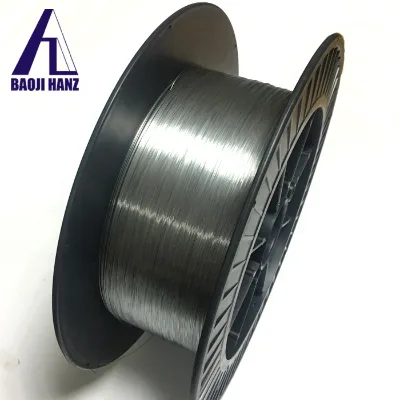
The supply form, observed as Spool Wound or Straight, also dictates the application. Spool wound wire is ideal for automated feeding in manufacturing processes, while straight wire is often used for manual assembly or specific cutting requirements. The customization availability noted in the data allows suppliers to tailor the wire for niche applications, such as specific heat treatment profiles or unique surface finishes. Buyers should match the application's mechanical demands with the observed strength ranges, which vary from 850 to 1000-1600 MPa depending on the processing and grade.
Supplier Evaluation and Operational Capabilities
Evaluating a supplier for Nitinol wire requires looking beyond the product specifications to their operational capabilities and logistical reliability. The origin of the products is a key factor, with observed locations including Changzhou, Shanghai, and Jiangsu, all in China. These regions are known for their manufacturing clusters, but buyers should verify the specific factory location to assess logistics and potential supply chain risks. The presence of multiple origin points suggests a network of suppliers rather than a single factory, which can be beneficial for diversification but requires careful vetting of each entity.
The supplier's ability to handle customization is a critical differentiator. The data confirms that ODM (Original Design Manufacturer) and OEM (Original Equipment Manufacturer) services are acceptable, and customization is available. This implies that the supplier can adjust the alloy composition, heat treatment, or dimensions to meet specific needs. However, buyers must ensure that the customization process does not compromise the material's core properties. The processing services listed, such as Bending, Welding, and Cutting, indicate that the supplier offers value-added services that can streamline the buyer's manufacturing process.
Packaging is another operational consideration. The observed packaging methods include Wood Case, Wooden Case, and Carton. For international shipping, especially to regions with strict phytosanitary regulations, wooden cases may require treatment certification. The choice of packaging also affects the protection of the wire during transit; Nitinol wire is sensitive to mechanical damage, so robust packaging is essential to prevent kinking or deformation before it reaches the buyer.
Quality Control and Long-Term Procurement Considerations
Ensuring consistent quality in Nitinol wire requires a robust quality control (QC) framework. The observed purity is listed as >99.5%, which is a high standard, but buyers should request detailed chemical composition reports to verify the exact Nickel-to-Titanium ratio. Variations in this ratio can significantly alter the transformation temperature and mechanical properties. The diameter tolerance of ±0.001mm is a stringent requirement that necessitates advanced measurement equipment, such as laser micrometers, which the supplier should possess.
Long-term procurement considerations involve establishing a reliable supply chain that can scale with demand. The lead time of 10-15 days is favorable, but buyers should plan for potential delays due to raw material shortages or geopolitical factors. The payment terms, requiring a 30% deposit, are standard but should be negotiated based on the order volume and relationship history. Buyers should also consider the supplier's capacity for continuous improvement and their willingness to engage in joint quality initiatives.
Finally, the environmental and regulatory compliance of the supplier is increasingly important. While specific environmental certifications are not explicitly listed in the data, buyers should inquire about the supplier's adherence to environmental regulations regarding waste disposal and chemical usage, particularly in the surface treatment processes like oxidation and polishing. By focusing on these comprehensive factors, buyers can secure a reliable supply of Super Elastic Nitinol Wire that meets their technical, regulatory, and operational needs.
Comparative Analysis of Product Attributes
To facilitate a clearer understanding of the variations in the market, the following table summarizes the key attributes observed in the product data. This comparison helps buyers identify which product lines align best with their specific requirements.
| Attribute | Observed Value/Range | Relevance to Buyer |
|---|---|---|
| Material Grade | Nitinol Alloy, NiTi | Determines superelastic properties and biocompatibility. |
| Shape | Round Wire | Essential for fitting into specific channels or devices. |
| Diameter | 0.1 ~ 2.5mm | Critical for matching device dimensions and flow rates. |
| Diameter Tolerance | ±0.001mm | High precision required for medical and micro-electronic apps. |
| Surface Finish | Black Oxidized, Bright, Ultra Bright | Affects friction, biocompatibility, and coating adhesion. |
| Standard | ASTM F2063, GB/T 24627 | Mandatory for medical compliance and international trade. |
| Strength | 850 MPa to 1000-1600 MPa | Indicates load-bearing capacity and fatigue resistance. |
| MOQ | 1 to 6100 units (or 10kg) | Impacts initial investment and inventory strategy. |
| Lead Time | 10-15 Days | Influences production scheduling and time-to-market. |
| Origin | Changzhou, Shanghai, Jiangsu (China) | Affects logistics, tariffs, and supply chain risk. |
This table serves as a quick reference for buyers to filter suppliers based on their non-negotiable requirements. By cross-referencing these attributes with their internal specifications, buyers can efficiently narrow down their supplier pool and focus their evaluation efforts on the most promising candidates.
FAQs
What standards apply to Super Elastic Nitinol Wire?
Super Elastic Nitinol Wire complies with ASTM F2063 and GB/T 24627-2023 standards. These specifications define the chemical composition and mechanical properties required for surgical implants and industrial devices, ensuring material safety and performance.
How is the diameter tolerance specified for this wire?
The diameter tolerance is specified as ±0.001mm for high-precision applications. This tight tolerance ensures the wire fits exact requirements for medical stents and micro-electronics without requiring extensive post-processing adjustments.
Can suppliers customize the wire dimensions and finish?
Yes, customization is available for dimensions and surface finishes like Bright or Black Oxidized. Buyers can request specific diameters between 0.1mm and 2.5mm along with tailored processing services such as bending or welding.
What is the typical delivery time for orders?
The typical delivery time ranges from 10 to 15 days for most orders. This lead time applies to standard specifications, though custom requests or large volume orders may require additional processing time.
Which locations are the primary manufacturing origins?
Primary manufacturing origins include Changzhou, Shanghai, and Jiangsu in China. These regions host factories capable of producing Nitinol Alloy wire with various supply forms like spool wound or straight configurations.
What are the common payment terms for purchase?
Common payment terms require a 30% deposit via T/T with the remaining 70% paid before shipment. Buyers should also consider price terms like EXW, FOB, or CIF when calculating total landed costs.