Source Super Chrome Shifting Chameleon Pigment for Paint, Cosmetics, and Ink
Browse 15 listings of Super Chrome Shifting Chameleon Pigment and compare particle size, packing, certifications, MOQ, and pricing. Filter options suitable for paint, cosmetics, ink, and plastic applications, then contact suppliers directly to request samples and quotations for your production needs.
Key considerations
Products List


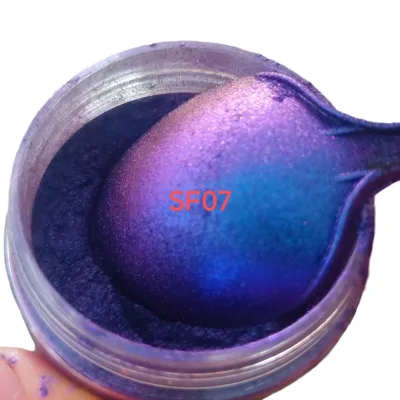
Chameleon Chrome Powder Color Shifting Chameleon Gorgeous Pigment for Car Paint
$2.40 - $3.20
MOQ: 10 Grams




Comprehensive Sourcing Guide
Super Chrome Shifting Chameleon Pigment Sourcing Guide
Sourcing super chrome shifting chameleon pigments requires a nuanced understanding of how inorganic colorants interact with light and substrate. These materials are distinct from standard organic dyes because they rely on physical light interference and reflection rather than simple absorption. Buyers must recognize that the visual effect—often described as shifting or chameleon-like—is heavily dependent on particle size distribution, coating thickness, and the base color of the underlying surface. The procurement process begins with identifying suppliers who can provide consistent particle morphology, as variations in flake shape or size can drastically alter the final aesthetic outcome in applications ranging from automotive coatings to cosmetic formulations.
The market for these pigments is characterized by a wide variance in technical specifications and commercial terms. Observed listings indicate a broad price range from $0.10 to $210.00 USD, reflecting differences in purity, particle fineness, and packaging formats. Minimum Order Quantities (MOQs) also vary significantly, ranging from small trial quantities of 100 grams to bulk orders of 1,000 units. This disparity suggests that buyers should not assume uniform pricing structures across suppliers. Instead, procurement strategies must account for the specific volume requirements of the production line, balancing the cost efficiency of bulk barrel shipments against the flexibility of smaller bag quantities for R&D or limited-run projects.
Product Scope and Observed Listing Signals
The product scope for super chrome shifting chameleon pigments encompasses a diverse array of industrial and consumer applications. Based on observed usage data, these pigments are utilized in textiles, paper, leather, ink, paint, plastic, cosmetics, and ceramics. The versatility of these inorganic materials allows them to be integrated into spray methods, finish coats, and various manufacturing processes. Buyers should note that the primary ingredient is classified as chemical, with specific components often identified as pigments such as iron blue, lead chrome green, or iron oxide yellow. This diversity in base colors and chemical compositions means that the "chameleon" effect is not a single uniform product but a category of materials with varying optical properties.
Observed listing signals reveal critical technical attributes that define the quality and suitability of these pigments for specific end-uses. Key specifications include particle sizes ranging from 10-30 microns up to 60-500 microns, with some products offering mesh sizes of 400 or 650. The appearance is consistently noted as a powder, and solubility is generally described as insoluble or exhibiting insolubility, which is typical for inorganic pigments used in coatings and plastics. Additionally, features such as being odorless, non-toxic, and free of heavy metals are highlighted in several listings, indicating a market trend toward safer, more environmentally conscious formulations. Buyers must carefully match these physical attributes to their application requirements, as coarse particles may be suitable for plastics but unsuitable for high-gloss automotive finishes.
Technical Specifications to Verify
Verifying particle size distribution is the most critical technical step in sourcing these pigments. The observed data shows a wide range of particle sizes, from 10-150 microns to specific narrow bands like 10-30 microns or 40-200 microns. The choice of particle size directly impacts the color shift intensity and the smoothness of the final finish. For instance, finer particles (10-30 microns) are often preferred for cosmetic and high-end automotive applications where a smooth, uniform appearance is required, while coarser particles may be used in plastics or ceramics for a more textured or intense metallic effect. Buyers should request detailed particle size analysis reports to ensure the supplier’s batch matches the specific optical requirements of the product being manufactured.
Model numbers and packaging standards provide additional layers of verification for product consistency. Specific models such as OCROWN 88328, 888, 88810, and 88661-88662 are observed in the market, each potentially corresponding to different color shifts or particle distributions. Packaging is typically described as bags or barrels, with standard dimensions like 4540cm or 3848cm, and weights often cited as 25kg per carton or bag. However, buyers should verify if these packaging standards are rigid or negotiable, as some listings indicate that packing can be customized. Understanding the exact model number and its associated technical data sheet (TDS) is essential to avoid receiving a product that does not meet the precise color or texture specifications required for the final application.
Compliance and Safety Documentation
Compliance and safety documentation are paramount when sourcing inorganic pigments, particularly for applications involving cosmetics, food-adjacent packaging, or automotive interiors. Observed certifications include MSDS (Material Safety Data Sheet), ISOCCC, FDA, and SGS approval. The presence of an MSDS is a baseline requirement for handling and storage, providing critical information on chemical hazards and first-aid measures. However, buyers must distinguish between general safety data and specific regulatory approvals. For example, FDA approval is crucial if the pigment is intended for use in products that may come into contact with food or human skin, while SGS approval often indicates third-party verification of quality and safety standards.
Safety features such as being odorless, non-toxic, and free of heavy metals are frequently cited in product descriptions. These attributes are not merely marketing claims but essential safety parameters that must be verified through documentation. Buyers should request specific test results or certificates of analysis (COA) that confirm the absence of prohibited heavy metals and other toxic substances. Additionally, the "Level: Finish Coat" attribute suggests that these pigments are often used in top-layer applications, where exposure to users or the environment is more direct. Therefore, ensuring that the supplier can provide up-to-date compliance documentation for the specific model being purchased is a non-negotiable step in the procurement process to mitigate legal and health risks.
Cost Drivers and Commercial Terms
Cost drivers for super chrome shifting chameleon pigments are influenced by particle fineness, purity, and packaging complexity. Finer particle sizes, such as those in the 10-30 micron range, typically command higher prices due to the more intensive grinding and classification processes required. Similarly, pigments certified for cosmetic or food-grade applications (e.g., FDA approved) often carry a premium over industrial-grade equivalents. Buyers should analyze the price range of $0.10 to $210.00 USD in the context of these technical differentiators. A lower price may indicate a coarser particle size or a lack of stringent safety certifications, which could lead to higher rejection rates or compliance issues downstream.
Commercial terms, including MOQs and delivery times, significantly impact the total cost of ownership. Observed MOQs range from 100g to 1,000 units, allowing for flexibility in initial testing versus bulk production. Delivery times vary from 3-7 business days to 5-20 days, depending on the exact amount and supplier capacity. Buyers should negotiate these terms based on their production schedule and inventory strategy. For instance, a 3-7 day delivery time is advantageous for just-in-time manufacturing, while longer lead times may require larger safety stocks. Additionally, the negotiability of packaging (e.g., 25kg per carton vs. custom bags) can affect logistics costs, so buyers should clarify these details early in the sourcing process to avoid unexpected expenses.
Supplier Qualification and Quality Control
Supplier qualification for inorganic pigments requires a rigorous assessment of manufacturing capabilities and quality control processes. Buyers should verify the supplier’s origin, with many listings indicating production in Jiangsu, China (Mainland), a hub for chemical and pigment manufacturing. However, geographic origin alone is not a guarantee of quality. Suppliers must demonstrate consistent batch-to-batch consistency, which is critical for maintaining uniform color shifts in mass production. Buyers should request samples to test the pigment’s performance in their specific application, checking for attributes like odorlessness, solubility, and the accuracy of the color shift under different lighting conditions.
Quality control measures should include the verification of technical data sheets (TDS) and material safety data sheets (MSDS) for each batch. Buyers should also assess the supplier’s ability to provide custom packaging and labeling if required for their supply chain. The observed "Sample: Available" attribute is a positive indicator, suggesting that suppliers are willing to engage in pre-purchase testing. However, buyers should ensure that the sample provided is representative of the bulk production quality. Establishing a clear quality agreement that defines acceptable tolerances for particle size, color shift, and impurity levels is essential to prevent disputes and ensure that the sourced pigments meet the stringent requirements of the final product.
Long-Term Procurement Checks
Long-term procurement of super chrome shifting chameleon pigments requires ongoing monitoring of supplier performance and market trends. Buyers should establish regular review cycles to assess the consistency of product quality, delivery reliability, and compliance documentation. As regulations evolve, particularly regarding heavy metals and toxic substances in cosmetics and automotive materials, suppliers must be able to adapt their formulations and certifications accordingly. Buyers should maintain open communication with suppliers to stay informed about any changes in product specifications or safety standards that could impact their operations.
Additionally, buyers should diversify their supplier base to mitigate risks associated with supply chain disruptions. Given the observed lead times of 3-20 days and varying MOQs, relying on a single supplier may pose risks if production volumes fluctuate or if quality issues arise. Developing relationships with multiple qualified suppliers can provide flexibility and bargaining power. Furthermore, buyers should continuously evaluate the cost-effectiveness of different particle sizes and packaging options to optimize their total cost of ownership. By maintaining a proactive approach to supplier management and quality control, buyers can ensure a stable and reliable supply of high-quality super chrome shifting chameleon pigments for their manufacturing needs.
FAQs
What particle sizes are available for Super Chrome Shifting Chameleon Pigment?
Listed particle sizes range from 10-30um and 10-60 microns up to 40-200um and 60-500um, depending on the grade. Finer grades around 10-30 microns suit spray coatings and cosmetic applications, while coarser 40-200um grades give stronger sparkle effects. Confirm the exact size distribution and mesh rating, such as 400 or 650 mesh, with the supplier before ordering samples.
Can I get a sample of Super Chrome Shifting Chameleon Pigment before bulk purchase?
Yes, samples are available and one listing states an MOQ of 100g for trial quantities. For automotive spray use, roughly 50g per car is cited as a typical use quantity. Sample delivery is often quoted at 3-7 business days, while larger orders depend on the exact amount. Always request MSDS or TDS technical data together with the sample.
What applications does Super Chrome Shifting Chameleon Pigment work in?
The listed usage covers textile, paper, leather, ink, paint, plastic, cosmetic, and ceramic applications, plus nail art, eyeshadow, garment decoration, and car painting. The pigment is an inorganic, insoluble powder used as a pigment component in finish coats and applied by spray. Check whether the specific grade is approved for cosmetics, since FDA and SGS approval is stated only for certain listings.
How is Super Chrome Shifting Chameleon Pigment packed for shipping?
Common packing is a bag or barrel, and several grades are packed at 25kg per carton or bag, with terms negotiable. Standard bag dimensions cited include 45*40cm and 38*48cm. Because the powder is inorganic and insoluble, keep packaging sealed and dry during transport. Confirm packing format and labeling requirements with the supplier for your destination market before confirming an order.
What certifications and safety documentation come with this pigment?
Available documentation varies by listing. One grade states MSDS certification, another states FDA and SGS approval, and one lists ISOCCC. Technical data sheets in MSDS and TDS form are offered, and features cited include odorless, non-toxic, and free of heavy metal. Request the specific certification documents for the exact grade you intend to purchase, since approvals are not uniform across all products.
Where is Super Chrome Shifting Chameleon Pigment manufactured and how fast is delivery?
Listed origin is China, with one supplier located in Jiangsu, China mainland. Stated delivery times range from 3-7 business days or work days to 7-10 days and 5-20 days, depending on the exact order quantity. Small sample quantities ship fastest, while bulk volumes require confirmation. Build buffer time into your schedule when planning production runs around pigment delivery.
Which color families are offered in this chameleon pigment range?
Documented color options include iron blue, lead chrome green, and iron oxide yellow pigments, with one grade listing a black base color. Chameleon grades model numbers such as 888, 88661-88662, 88810, 88816, and 88328 appear on the page. When selecting a color, ask the supplier for the base color, color-shift description, and particle size of the specific model you plan to test.
How much pigment do I need per application area?
One automotive listing cites approximately 50g of pigment per car as the use quantity for spray application, which is a practical benchmark for coating work. Actual dosage depends on the substrate, coating system, and desired color-shift intensity, so trial panels are recommended. Since the pigment is a finish-coat component applied by spray, factor blending and overspray losses into your calculation.