Source Surface Mount Switching Power Supply for LED Lighting
Find reliable Surface Mount Switching Power Supply options for LED lighting, industrial control, and consumer electronics. Compare 30 models with varying input voltages, output types, and certifications to match your specific project requirements efficiently; compare the available evidence and request quotations based on your requirements.
Key considerations
Products List


Comprehensive Sourcing Guide
Surface Mount Switching Power Supply Sourcing Guide
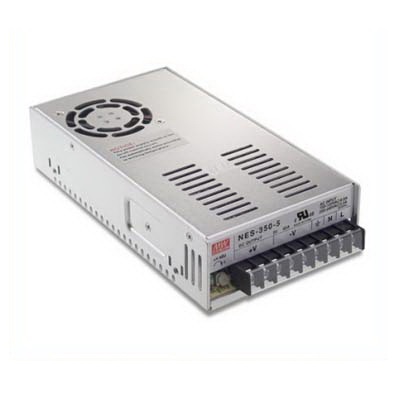
Buyers evaluating surface mount switching power supplies must first distinguish between discrete components and complete adapter units, as the observed market data reveals a mix of DIN rail power supplies and regulated multi-voltage adapters. The available listings indicate specific models like the YSI-240 and YSV1000, which feature steel plate shells and varying output types ranging from single DC outputs to multi-voltage configurations. This distinction is critical because surface mount technology typically applies to internal circuit boards, whereas the listed products often present as plug-in or DIN rail units with external enclosures.
Procurement teams should verify whether the "surface mount" requirement refers to the internal PCB assembly or the final product form factor, as the observed inventory includes both 12W regulated adapters and 20W single-output DIN rail units. The data shows products with input voltages spanning 110V to 220V and specific lamp power ratings of 350W, suggesting a broad application range from general lighting to industrial control systems. Understanding this variance ensures that the selected component matches the intended mounting method and electrical load requirements without necessitating unnecessary redesigns of the host system.
Product Scope and Observed Listing Signals
The observed product scope encompasses a diverse array of power solutions, including regulated multi-voltage adapters and constant current LED drivers designed for specific lighting applications. Listings explicitly mention usage for LED power supplies and drivers, with models such as the YSL12 and YSI-30L featuring electronic step-down transformer structures. Buyers must carefully map these observed attributes to their specific needs, noting that some units are packaged in polybags while others utilize robust white boxes or outer cartons for bulk shipping.
Signal analysis of the listings reveals that customization is available for many of these units, allowing for tailored solutions regarding shell material and output specifications. The presence of models with dimensions like 9345.573mm and 1204630mm indicates that physical footprint is a key variable in the selection process. Procurement teams should prioritize verifying the exact output voltage ranges, such as 7-36V or fixed 12V/24V, to ensure compatibility with the target load, as the market offers both single and multi-output configurations.
Technical Specifications to Verify
Technical verification must begin with input voltage compatibility, as the observed data lists both 220V specific inputs and a broader 110V-220V range. Buyers should confirm that the selected unit's input voltage matches the local grid standards to prevent immediate failure or the need for additional transformers. Additionally, the lamp power rating of 350W observed in some listings suggests high-capacity applications, requiring careful thermal management planning for the steel plate shell and internal electronic components.
Output characteristics are equally critical, with observed models offering DC output types and frequencies of 50Hz or 50/60Hz. The driving method for LED applications is specified as constant current, which is essential for maintaining consistent light output and longevity. Procurement teams must validate the physical dimensions and weight, such as the 135g weight for certain adapters, to ensure the unit fits within the mechanical constraints of the final assembly without compromising structural integrity or cooling efficiency.
Compliance and Safety Documentation
Compliance verification requires a rigorous review of the certifications listed, which include CCC, VDE, ISO9001, CE, RoHS, CB, UL, and TUV. The presence of these certifications indicates that the products have undergone various safety and environmental assessments, but buyers must confirm that the specific model they intend to purchase holds the exact certification status claimed. The data notes that certification details can vary by product attribute, such as shell material, necessitating a direct request for the certificate of conformity for the specific batch.
Safety standards like EN60335-1 and IEC 60950-1 are mentioned in the background context, but buyers should not assume these apply to every listed item without explicit confirmation. Instead, the focus should be on verifying that the product meets the regulatory requirements of the destination market, particularly regarding electrical safety and electromagnetic compatibility. The observed mix of certifications suggests that suppliers may offer different compliance levels depending on the target region, making it essential to request documentation that aligns with local legal mandates.
Cost Drivers and Commercial Terms
Cost drivers for these power supplies are heavily influenced by the shell material, which is frequently specified as steel plate, and the level of customization required. The availability of OEM and ODM services suggests that pricing will vary significantly based on branding, packaging, and specific electrical modifications requested by the buyer. Buyers should anticipate that units with higher power ratings, such as the 350W models, or those with complex output configurations like multi-voltage adapters, will command a premium over standard single-output units.
Commercial terms must be scrutinized regarding the observed minimum order quantities, which range from 1 to 1000 units, and the diverse packaging options from single polybags to bulk cartons. The listing data indicates that packing standards can vary, with some units shipped in 20PCS/CTN configurations while others use individual boxes. Procurement teams should negotiate lead times and shipping terms carefully, as the origin locations in Ningbo and Zhejiang, China, may impact logistics costs and delivery schedules depending on the final destination.
Supplier Qualification and Quality Control
Supplier qualification should prioritize manufacturers who demonstrate a clear track record in producing switching power supplies with the specific certifications observed, such as ISO9001 and UL. The presence of multiple certification types in the data suggests that suppliers are capable of meeting diverse international standards, but buyers must verify that the quality control processes are consistent across all production batches. It is advisable to request sample units for independent testing to validate the claimed specifications, including output voltage stability and frequency response.
Quality control protocols must address the structural integrity of the steel plate shells and the reliability of the electronic step-down transformers. Buyers should inquire about the testing procedures used to ensure that the constant current driving method performs consistently under varying load conditions. Given the observed variation in product models and dimensions, establishing a clear acceptance criteria for physical and electrical performance is essential to prevent defects in the final assembled products.
Long-Term Procurement Checks
Long-term procurement success depends on establishing a robust relationship with suppliers who can maintain consistent quality and supply continuity over time. Buyers should monitor the supplier's ability to sustain the observed customization capabilities and certification statuses as production scales up or as product lines evolve. Regular audits of the manufacturing process in Ningbo or Zhejiang can help ensure that the steel plate construction and internal circuitry remain consistent with the initial samples.
Continuous verification of compliance documentation is necessary to adapt to changing regulatory landscapes in the target markets. Buyers should maintain a proactive approach to updating their knowledge of standards like RoHS and CE, ensuring that future orders remain compliant without interruption. By tracking performance metrics such as failure rates and lead times, procurement teams can make data-driven decisions to optimize their supply chain and mitigate risks associated with component obsolescence or regulatory changes.
FAQs
What certifications are available for these power supplies?
Certifications include CCC, VDE, ISO9001, RoHS, CE, CB, UL, and TUV. These standards ensure compliance with international safety and quality requirements. Buyers can select models based on specific regional mandates. The product line supports various certification combinations to meet diverse regulatory needs for global distribution and industrial applications.
Can I customize the power supply for my project?
Yes, customization is available for OEM and ODM services. Buyers can request specific voltage, current, or dimensional adjustments. The manufacturer supports tailored solutions to fit unique application requirements. This flexibility allows for precise integration into specialized electronic systems while maintaining standard quality controls and safety protocols.
What is the typical output voltage range?
Output voltages range from 7-36V DC, with specific models offering 12V or 24V. Input voltage supports 110V-220V AC. This wide range accommodates various electronic devices. The constant current driving method ensures stable performance for LED applications. Buyers should verify the exact model specifications to match their device power requirements accurately.
What is the minimum order quantity for bulk purchases?
The minimum order quantity ranges from 1 to 1000 units depending on the model. Standard packaging includes boxes, polybags, or cartons. Bulk orders often benefit from optimized shipping configurations. Buyers can negotiate MOQs based on their production volume and storage capabilities. Flexible ordering supports both small prototype runs and large-scale manufacturing needs.
Where are these power supplies manufactured?
Products are manufactured in China, specifically in Ningbo and Zhejiang regions. These locations are known for robust electronics manufacturing infrastructure. The supply chain is established for efficient production and logistics. Buyers can expect consistent quality control measures aligned with international standards throughout the manufacturing process in these industrial hubs.
What types of power supply structures are offered?
Structures include protection types, DIN rail mounts, and switching power supplies. Models feature steel plate shells for durability. Options range from single output to multi-voltage adapters. The designs support various installation methods and environmental conditions. Buyers can choose structures that best fit their equipment mounting requirements and space constraints.