Source Swiss Style Mini Handheld Stakeout Rod with Adapter for Surveying, Construction, and Mapping
Find 30 suppliers offering a Swiss Style Mini Handheld Stakeout Rod with Adapter for precise field measurements. Compare models like CLS013 and XM-G3-H with aluminum handles, varying lengths, and customizable options to match your project needs.
Key considerations
Products List

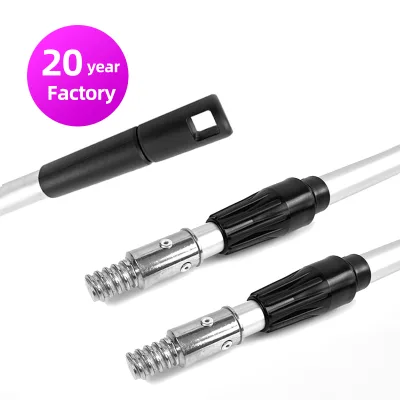
New Handheld Mini Stakeout Rod 1.2m Cls013 Prism Mini Pole with Adapter
$11.00 - $13.00
MOQ: 10 Pieces


Ultra-Short Section Pocket-Sized Stream-Locating Carp and Crucian Mini Hand Rod
$1.71 - $4.65
MOQ: 200 Pieces

Cross-Border Export Exclusive Spinning Rods for Beginners in Southeast Asia
$1.49 - $1.88
MOQ: 200 Pieces


Hot Sell on Ebay Mini Sea Spinning Rod and Casting Rod Processing Custom
$1.67 - $3.96
MOQ: 200 Pieces









Comprehensive Sourcing Guide
Sourcing Strategy for Swiss-Style Mini Handheld Stakeout Rods with Adapters
The procurement of surveying equipment, specifically the Swiss-style mini handheld stakeout rod with an adapter, requires a nuanced understanding of the intersection between precision engineering and field durability. In the global B2B market, this category of equipment is often characterized by its compact design, telescopic functionality, and the ability to interface with various surveying instruments through standardized adapters. Buyers entering this market must navigate a landscape where product attributes vary significantly between manufacturers, ranging from DIY-grade components to professional-grade alloy constructions. The following guide outlines the critical factors for sourcing these instruments, grounded in observed market data and technical realities.
Technical Specifications and Material Composition
When evaluating a mini handheld stakeout rod, the primary technical differentiator lies in the material composition and the structural integrity of the pole itself. The market data indicates a divergence in material quality, with some listings specifying "Aluminum" as the handle material, while others utilize "Alloy" or "Plastic" for specific components. For a Swiss-style rod, which implies a high degree of precision and lightweight handling, aluminum or high-grade alloys are generally preferred over plastic for the main shaft to ensure rigidity and resistance to bending under load.
The physical dimensions of the rod are equally critical. Observed specifications reveal that standard lengths can vary, with some units listed at 3FT (90.5cm) and others defined by specific metric or imperial ranges such as 30.00cm * 30.00cm * 30.00cm for packaging or 5/8" to 1-1/2" for thread standards. The thickness of the pole is a key indicator of durability, with observed ranges falling between 0.7mm and 1.2mm. Thinner poles may offer portability but can compromise stability in windy conditions, whereas thicker poles provide better rigidity at the cost of weight. The weight of the unit is another vital specification; a typical observed weight for these units is around 440g, which serves as a benchmark for a balance between portability and stability.
Furthermore, the telescopic nature of the rod must be verified. The attribute "Folded" suggests that the product is designed for compact storage, a hallmark of the "mini" classification. Buyers should verify the extension mechanism's locking system to ensure it maintains vertical alignment without slippage. The presence of an adapter is a mandatory requirement for the "with adapter" portion of the keyword. This adapter must be compatible with the specific thread standards of the surveying instrument, which the data suggests can range from 5/8" to 1-1/2", including specific sizes like 7/8".
Manufacturing Processes and Surface Treatments
The longevity of a stakeout rod is heavily dependent on the manufacturing processes employed. The observed data highlights several distinct production methods, including "Casting," "CNC Milling," and "Stamping." For the precision components required in a Swiss-style rod, CNC milling is often the superior choice, as it allows for tighter tolerances on the adapter interfaces and the telescopic joints. Casting may be used for heavier, less precise components, while stamping is typically associated with simpler metal parts.
Surface treatment is the next critical factor in determining the product's resistance to environmental degradation. The market data lists "Polishing," "Galvanized," and "Atmospheric Pressure" (likely referring to operating conditions rather than treatment) as relevant attributes. Galvanization is a highly recommended process for surveying equipment used in outdoor environments, as it provides a robust layer of protection against rust and corrosion. Polishing may be applied to aesthetic surfaces or specific contact points to reduce friction in moving parts. Buyers must explicitly verify that the surface treatment matches the intended operating environment, particularly if the equipment will be used in coastal or high-humidity regions.
Compliance, Standards, and Certification Verification
In the realm of surveying equipment, compliance is not merely a formality but a prerequisite for accuracy. While specific certification bodies are not universally mandated for all generic rods, the adherence to dimensional standards is non-negotiable. The observed data references various standards, including "30.00cm * 30.00cm * 30.00cm" and thread standards like "5/8, 3/4, 7/8" and "1"-1-1/2"". These dimensions must align with international surveying norms to ensure the rod functions correctly with standard tripods and total stations.
Buyers should not assume that a product labeled as "Swiss-style" automatically meets specific ISO or DIN standards unless explicitly stated. Instead, the procurement process must involve a verification step where the buyer requests documentation confirming that the rod's thread pitch, length calibration, and weight distribution meet the required tolerances. The "Quality Grade" observed in the market data ranges from "DIY Level" to potentially higher grades, indicating that not all products are suitable for professional surveying. It is essential to distinguish between equipment intended for hobbyist use and that designed for commercial or engineering applications. The "Operation Pressure" being listed as "Atmospheric Pressure" suggests that these are not pressure vessels, but it reinforces the need to verify the mechanical limits of the rod under standard atmospheric conditions.
Cost Drivers and Pricing Dynamics
The pricing of mini handheld stakeout rods with adapters is influenced by a complex matrix of factors, including material costs, manufacturing complexity, and customization requirements. The observed price range in the market is extensive, spanning from $0.01 to $264.63. This vast disparity indicates that the market includes everything from basic, unbranded components to high-precision, branded instruments. The lower end of the spectrum likely corresponds to products with simpler manufacturing processes, such as stamping or basic casting, and potentially lower-grade materials like plastic or thin aluminum.
Conversely, the higher price points are driven by the use of CNC milling for precision parts, high-grade alloys, and advanced surface treatments like galvanization. Customization is a significant cost driver; the data confirms that "Customization" is available for attributes such as color, logo, and potentially dimensions. Products with customized logos or specific color schemes often carry a premium, particularly when the Minimum Order Quantity (MOQ) is met. The MOQ itself varies, with observed values ranging from 2 pieces to 1000 pieces, and specific listings showing an MOQ of 500 pieces. Buyers must balance their order volume against the unit cost, understanding that higher customization and lower MOQs often result in a higher per-unit price.
Supplier Evaluation and Origin Analysis
Evaluating suppliers requires a careful examination of their geographical origin and logistical capabilities. The data indicates that the majority of these products originate from China, with specific mentions of "Zhejiang, China" and "Shandong, Dongying." These regions are known for their manufacturing clusters, particularly in metalworking and plastic molding. However, the specific address "No.37qilianshan Road" suggests that buyers should verify the legitimacy of the supplier's physical location to avoid intermediaries or drop-shippers who may not have direct control over quality.
Supplier evaluation should also focus on their ability to meet specific packaging and shipping requirements. The observed packing methods include "Carton," "OPP Bag+Carton," "Box," "Bulk," and "Wooden Case." The choice of packaging is indicative of the supplier's attention to detail and the fragility of the product. For high-precision instruments, a "Wooden Case" or "Box" with internal cushioning is preferable to "Bulk" or simple "OPP Bag" packaging to prevent damage during transit. Furthermore, the "As Export Standard Packing" attribute suggests that some suppliers adhere to international shipping norms, which is a positive indicator of reliability.
Quality Control and Inspection Protocols
Implementing a robust quality control (QC) protocol is essential when sourcing surveying equipment. Given the variability in "Quality Grade" and the wide range of manufacturing processes, buyers should establish clear acceptance criteria before production begins. Key inspection points should include the verification of the telescopic mechanism's smoothness, the accuracy of the thread pitch for the adapter, and the integrity of the surface treatment.
For products with a "Folded" attribute, the folding mechanism must be tested for repeatability and stability. The weight specification of 440g should be verified to ensure consistency across the batch. Additionally, the "Manufacturing Process" should be confirmed; for instance, if the contract specifies CNC milling, random sampling should be conducted to ensure that casting or stamping has not been substituted to cut costs. Visual inspections for surface defects, such as uneven galvanization or polishing marks, are also necessary. Buyers should request pre-shipment inspection reports that document these checks, ensuring that the final product matches the agreed-upon specifications.
Long-Term Procurement and Maintenance Considerations
Beyond the initial purchase, long-term procurement considerations involve the lifecycle management of the stakeout rods. The "DIY Level" classification suggests that some products may have a shorter lifespan or require more frequent maintenance compared to professional-grade alternatives. Buyers should assess the availability of replacement parts, such as adapters or telescopic locks, to ensure that the equipment can be repaired rather than replaced entirely.
The "Customized Color" and "Customized Logo" options offer branding opportunities but also introduce complexity in the supply chain. Maintaining a consistent brand image requires a reliable supplier who can reproduce the custom specifications accurately over multiple orders. Additionally, the "As required" standard for some products indicates a high degree of flexibility, which can be advantageous for specialized projects but requires clear communication to avoid misunderstandings regarding the final product specifications.
In conclusion, sourcing a Swiss-style mini handheld stakeout rod with an adapter involves a careful balance of technical verification, supplier due diligence, and cost management. By focusing on material quality, manufacturing precision, and adherence to dimensional standards, buyers can secure equipment that meets the rigorous demands of surveying applications. The extensive range of observed specifications and prices underscores the importance of a disciplined procurement process that prioritizes quality and reliability over the lowest possible unit cost.
FAQs
What materials are used for the handle and shaft?
The handle material is aluminum, while the shaft can be made of alloy or plastic depending on the specific model. Some units are classified as DIY level, whereas others use high-grade alloys for better rigidity and durability in professional surveying applications.
Can the product be customized with a specific logo?
Yes, customization is available for the logo and color of the mini telescopic pole. Buyers can request customized logos and colors, though this often requires meeting a minimum order quantity, which can range from 2 pieces to 500 pieces depending on the supplier.
What are the standard packaging options for this equipment?
Packaging options vary and include carton, OPP bag plus carton, box, bulk, and wooden case. High-precision instruments often use wooden cases or boxes with export standard packing to ensure safety during transit, while basic units may arrive in bulk or simple bags.
How does the telescopic mechanism function for storage?
The product is designed to be folded for compact storage, featuring a telescopic nature that allows for easy transport. The pole thickness ranges from 0.7mm to 1.2mm, balancing portability with the structural stability needed to maintain vertical alignment during field use.
Which manufacturing processes ensure the best precision?
CNC milling is the superior process for precision components like adapter interfaces and telescopic joints. Other methods include casting and stamping, but for Swiss-style rods requiring tight tolerances, CNC milling combined with surface treatments like galvanization is recommended for longevity.
What is the typical weight and size of the rod?
A typical observed weight for these units is around 440g, providing a balance between portability and stability. Standard lengths can vary, with some units listed at 3FT or 90.5cm, while others are defined by specific thread standards ranging from 5/8 inch to 1-1/2 inch.
Where are the primary manufacturing locations for these rods?
The majority of these products originate from China, with specific manufacturing clusters in Zhejiang and Shandong, Dongying. Buyers should verify the physical location, such as addresses like No.37qilianshan Road, to ensure they are dealing with direct manufacturers rather than intermediaries.