Source Switching Exhaust Gas Temperature Sensor for HVAC, Automotive, and Industrial Systems
Explore 30 verified listings for the Switching Exhaust Gas Temperature Sensor to compare specifications like IP ratings, output signals, and certifications. Buyers can evaluate options from manufacturers in Jiangsu, Zhejiang, and Guangdong with varying MOQs and shipping terms.
Key considerations
Products List


$3.50 - $4.00
MOQ: 10 Pieces
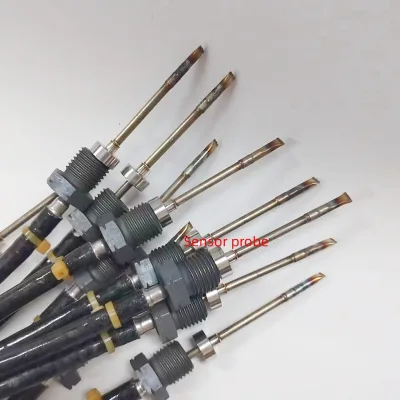


High Performance Temperature Sensor for Temperature Monitor and Control
$30.00 - $150.00
MOQ: 1 Pieces


Comprehensive Sourcing Guide
Strategic Sourcing Guide for Switching Exhaust Gas Temperature Sensors
Understanding Technical Specifications and Core Attributes
When sourcing a Switching Exhaust Gas Temperature Sensor, buyers must first distinguish between the specific operational requirements of the application and the generic capabilities of the market. The core keyword implies a device designed to monitor thermal conditions within an exhaust system, often triggering a switching action based on temperature thresholds. Based on available product data, the market offers sensors with varying sensing types, including thermocouples and capillary thermostats. For instance, specific listings identify the part name as an "EGR Exhaust Gas Temperature Sensor" with a model number corresponding to OE codes like 55254789. This indicates that for automotive or heavy-duty applications, the sensor must interface with existing Engine Control Units (ECU) or Exhaust Gas Recirculation systems.
The technical architecture varies significantly across suppliers. Some units utilize a "Normal Wirewound" production process, while others employ "Injection" molding for the housing or terminal components. The material composition is critical for exhaust environments; high-grade stainless steel, specifically 316 St.Steel, is observed in several listings, offering necessary corrosion resistance against harsh exhaust gases. Conversely, some components feature brass terminals, which may be suitable for lower-temperature control applications or specific electrical interfaces. The output signal type is another critical differentiator. Buyers should verify whether the sensor provides a "Digital Type" output, a "Digital Sensor" signal, or a simple mechanical switch status such as "Normally Closed." The presence of a "capillary thermostat" model suggests that some solutions rely on thermal expansion mechanisms rather than purely electronic resistance changes.
The physical form factor is equally important. Listings indicate "Duct Type" and "Wall-Mounted Type" installation configurations, which dictate how the sensor integrates into the exhaust manifold or piping. The probe type is explicitly noted as "Probe Type" in certain contexts, requiring precise insertion depth and thermal contact. Furthermore, the "Length of Capillary/Sensor" is often listed as "Customized," meaning buyers cannot assume a standard off-the-shelf length and must provide exact dimensional requirements to the supplier. The functional scope is generally defined as "Temperature Control," but the specific application context—whether for an "Electric Appliance" or a vehicle exhaust system—determines the necessary durability and response time.
Compliance, Certification, and Regulatory Standards
Navigating the compliance landscape is essential for ensuring that the purchased sensors meet international safety and environmental regulations. The supplied data reveals a mix of certifications, with "CE" appearing frequently across different product listings. Some entries also list "RoHS" compliance, which is crucial for electronic components to ensure they are free of hazardous substances. The "ISO" certification is another high-confidence fact observed in the market, suggesting that many manufacturers adhere to international quality management systems. However, buyers must be cautious; the presence of a certification in a general listing does not guarantee that every specific unit ordered will carry that certification. Verification of the specific batch or model's certification status is a mandatory step before finalizing a procurement order.
Standards and specifications also vary. While some products reference "CE" as a standard, others list physical dimensions like "10105" or generic terms like "capillary type thermostat" as their standard designation. This inconsistency highlights the need for buyers to request explicit documentation of the standards the product meets, rather than relying on marketing keywords. For automotive applications, the OE number 55254789 serves as a reference point for compatibility, but buyers should verify if this part number aligns with the specific vehicle model or engine configuration they are servicing. The "1pcs" standard mentioned in some listings likely refers to packaging or minimum order unit rather than a technical standard, requiring clarification from the supplier.
Regional origins also play a role in compliance. Products originate from various locations including "Jiangsu Changzhou," "Zhejiang China," "Shenzhen, China," and "Guangdong." While these regions are known for manufacturing hubs, the specific regulatory environment of the destination market must be matched with the supplier's certification claims. For instance, if the target market requires specific automotive industry standards beyond CE, the buyer must explicitly request evidence of those standards, as the provided data does not confirm universal adherence to all possible regional regulations.
Cost Drivers and Pricing Dynamics
The pricing landscape for switching exhaust gas temperature sensors is highly variable, with observed ranges spanning from $0.16 to $165,600. This vast disparity is not indicative of a single product category but rather reflects the diversity of applications, from simple industrial components to complex, high-performance automotive systems. The lower end of the spectrum likely corresponds to basic industrial thermostats or generic temperature probes, while the upper end may involve specialized, high-volume, or custom-engineered solutions for heavy-duty or aerospace applications.
Several factors drive these costs. Customization is a primary driver; listings explicitly state that "Customization" and "Customized" options are available. Customizing the length of the capillary, the material of the terminal, or the specific output signal type will inevitably increase the unit price. The material quality also influences cost; sensors constructed from 316 stainless steel will generally command a higher price than those with brass terminals or standard plastic housings. Additionally, the production process matters. "Normal Wirewound" processes may differ in cost structure compared to "Injection" molding, depending on the volume and complexity of the tooling required.
Minimum Order Quantity (MOQ) is another significant cost factor. The observed MOQ range is 1 to 1000 units. Buyers seeking small quantities can access the market with an MOQ of 1, but this often comes with a higher per-unit cost. Conversely, ordering at the higher end of the MOQ spectrum (e.g., 1000 units) may yield significant volume discounts, bringing the price closer to the lower observed range. The "High-Performance" quality attribute also suggests a premium segment where buyers pay for enhanced durability, such as a "Life Usage" of 100,000 cycles, which justifies a higher price point compared to standard life-cycle components.
Typical Applications and Operational Environments
The versatility of switching exhaust gas temperature sensors allows them to serve a wide array of industries. The most prominent application identified in the data is the automotive sector, specifically for "EGR Exhaust Gas Temperature Sensor" systems. In this context, the sensor monitors the temperature of exhaust gases to optimize the EGR valve operation, ensuring efficient combustion and reduced emissions. The specific OE number 55254789 points to a direct replacement or integration into existing vehicle systems, where reliability and precise temperature switching are critical for engine management.
Beyond automotive, the data indicates applications in "Electric Appliance" sectors. Here, the sensor functions as a "Temperature Control" mechanism, likely protecting appliances from overheating or regulating heating elements. The "capillary thermostat" model suggests use in appliances where mechanical switching based on thermal expansion is preferred, such as in industrial ovens or HVAC systems. The "Gas" specification and "Temperature Control" function further imply use in gas-fired equipment where precise thermal monitoring is required for safety and efficiency.
The installation type provides further insight into the environment. "Duct Type" sensors are designed for integration into airflow systems, such as ventilation ducts or exhaust pipes, where they measure the temperature of the moving gas stream. "Wall-Mounted Type" sensors are typically used in enclosed spaces or on the exterior of equipment, measuring ambient or surface temperatures. The "IP Rating" and "Installation Type" combinations suggest that some units are designed for harsh environments, requiring protection against dust and moisture, while others may be intended for controlled indoor environments. The "Normally Closed" output status is a common configuration for safety switches, ensuring that the system defaults to a safe state if the sensor fails or the temperature exceeds the threshold.
Supplier Evaluation and Sourcing Strategy
Evaluating suppliers for switching exhaust gas temperature sensors requires a rigorous approach to verifying capabilities and reliability. The supply base is geographically diverse, with manufacturers located in "Jiangsu Changzhou," "Zhejiang China," "Shenzhen, China," and "Guangdong." While these regions are established manufacturing centers, buyers should not assume uniform quality across all locations. Instead, the focus should be on the specific capabilities of the supplier relative to the buyer's technical requirements.
Key evaluation criteria include the supplier's ability to handle customization. Since "Customization" is a listed attribute, buyers should assess the supplier's flexibility in modifying capillary lengths, terminal materials, and output signals. The production process is another indicator of capability; a supplier offering both "Normal Wirewound" and "Injection" processes demonstrates versatility in manufacturing techniques. The "100% Tested" attribute is a strong quality signal, indicating that the supplier has a dedicated quality control process to ensure every unit functions correctly before shipment. Buyers should request evidence of this testing protocol, such as test reports or quality certificates, to validate the claim.
Packaging and logistics are also critical considerations. Listings mention various packing methods, including "White Box, Then in Carton," "Carton," and "Standard Export Packing." For international shipments, "Standard Export Packing" is often preferred to ensure protection during transit. The shipping period of "3 to 35 Days" suggests variability in lead times, which buyers must account for in their supply chain planning. Payment terms such as "T T, Paypal, Credit Card" offer flexibility, but buyers should negotiate terms that align with their financial policies and risk tolerance.
Quality Control and Performance Verification
Ensuring the quality of switching exhaust gas temperature sensors is paramount, as failures in these components can lead to system inefficiencies or safety hazards. The "100% Tested" attribute is a foundational quality control measure, implying that every unit undergoes functional testing. However, buyers should go beyond this general claim and request specific test data relevant to their application. For instance, if the sensor is intended for high-temperature environments, verification of its thermal stability and response time is necessary.
The "Life Usage" of "100,000 Cycles" is a specific performance metric that should be verified through independent testing or supplier-provided lifecycle data. This metric is particularly relevant for applications requiring frequent switching, such as in industrial heating systems or automotive engines. Buyers should also verify the "High-Performance" claim by requesting sample units for rigorous testing under actual operating conditions. The material quality, such as the use of "316 St.Steel," should be confirmed through material certificates to ensure the sensor can withstand the corrosive nature of exhaust gases.
Quality control should also extend to the packaging and shipping process. The "Standard Export Packing" and "2000PCS/Carton" specifications suggest a focus on bulk handling, but buyers must ensure that the packaging protects the sensors from physical damage and environmental exposure during transit. The "IP Rating" and "Installation Type" should be verified to ensure the sensor meets the environmental protection requirements of the installation site.
Long-Term Procurement and Supply Chain Considerations
Sourcing switching exhaust gas temperature sensors is not merely a transactional activity but a strategic decision that impacts long-term operational stability. The "Customization" capability of suppliers offers a pathway to securing components that are tailored to specific needs, reducing the risk of compatibility issues. However, this also introduces complexity in managing inventory and ensuring consistent quality across different production batches. Buyers should establish clear communication channels with suppliers to maintain consistency in specifications, especially when dealing with custom orders.
The "Shipping Period" of 3 to 35 days highlights the need for robust supply chain planning. Buyers should maintain safety stock levels to mitigate the risk of delays, particularly for critical applications where sensor failure could halt production. The "Express, by Air, by Sea" shipping options provide flexibility, but the choice of shipping method should be balanced against cost and urgency. For time-sensitive projects, air freight may be necessary, while bulk orders can be optimized for sea freight to reduce costs.
Payment terms and financial stability are also long-term considerations. The availability of "T T, Paypal, Credit Card" offers various options, but buyers should consider the implications of each method on cash flow and risk management. Establishing a long-term partnership with a reliable supplier can lead to better pricing, priority support, and consistent quality. The "Contact" attribute suggests that direct communication is encouraged, and buyers should leverage this to build strong relationships with suppliers.
In conclusion, sourcing switching exhaust gas temperature sensors requires a comprehensive understanding of technical specifications, compliance requirements, cost drivers, and supplier capabilities. By carefully evaluating these factors and maintaining a focus on quality control and long-term supply chain stability, buyers can secure reliable components that meet their operational needs. The diversity of the market offers numerous options, but success depends on rigorous due diligence and strategic decision-making.
FAQs
What certifications are available for these sensors?
Many listed products carry CE and RoHS certifications, while others hold ISO certification. Buyers should verify the specific batch status as certifications vary by listing and are not guaranteed for every unit.
Can I order a customized capillary length?
Yes, customization is available for the length of the capillary or sensor. Suppliers offer tailored dimensions to fit specific installation requirements rather than relying solely on standard off-the-shelf lengths.
What is the typical lead time for shipping?
The shipping period ranges from 3 to 35 days depending on the supplier and method. Buyers must account for this variability when planning their procurement schedule and inventory needs.
Which material is used for the sensor case?
Some units are constructed from 316 stainless steel to resist harsh exhaust environments. Other components may feature brass terminals, so the specific material depends on the selected product model.
What is the minimum order quantity for these parts?
The minimum order quantity ranges from 1 to 1000 units based on the supplier. Small buyers can order single units, while volume discounts may apply for orders reaching the higher end of this range.
How are these sensors tested before shipment?
Products are described as 100% tested to ensure functionality before delivery. Buyers should request specific test reports to validate the quality control protocols used by the manufacturer.
Can I find sensors with digital output signals?
Yes, digital type output signals are available for these switching sensors. This feature allows for direct integration with digital systems, distinct from mechanical switch statuses like normally closed.