Source Synthetic Polycrystalline Diamond Powder for Grinding Polishing
Find 30 listings for Synthetic Polycrystalline Diamond Powder suitable for grinding, polishing, and lubricant additives. Compare particle sizes ranging from 0.05 to 60um, purity levels above 99%, and various packaging options from suppliers in China.
Key considerations
Products List


Black Polycrystalline Diamond Powder Made by Detonation for Surface Polishing
$0.69 - $0.99
MOQ: 500 Carat


Hot-Sale Industrial Synthetic Diamond Powder with High Quality Reasonable Prices
$0.03 - $0.17
MOQ: 2000 carats
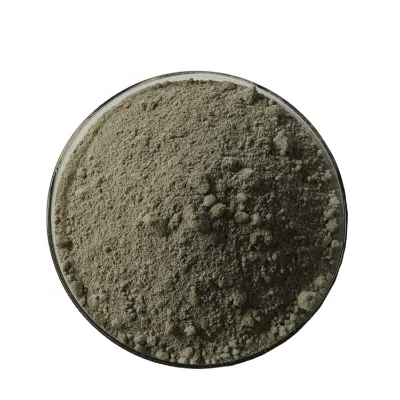
Comprehensive Sourcing Guide
Strategic Sourcing Guide for Synthetic Polycrystalline Diamond Powder
Procuring synthetic polycrystalline diamond (PCD) powder requires a disciplined approach that balances technical precision with supply chain reliability. The market for superabrasives is vast, yet the specific requirements for polycrystalline structures demand rigorous verification of particle morphology, purity, and coating integrity. Buyers must navigate a landscape where product attributes vary significantly between suppliers, even when the core material classification remains consistent. This guide outlines the critical factors for sourcing synthetic diamond powder, focusing on technical specifications, compliance verification, and supplier evaluation strategies based on observable industry data.
Technical Specifications and Material Classification
The foundation of any successful procurement strategy lies in a precise understanding of the material's physical and chemical properties. In the context of synthetic diamond powder, the distinction between single-crystal and polycrystalline structures is paramount. While some market listings identify products as "Single Crystal Synthetic Diamond," the specific application of polycrystalline diamond powder often necessitates different performance characteristics, particularly regarding fracture toughness and wear resistance. Buyers must verify the "Diamond Type" attribute explicitly. Is the product a single crystal, or does it possess a polycrystalline structure? The supplied data indicates a prevalence of "Single Crystal Sythetic Diamond" and "Single Crystal" classifications in the current market inventory, suggesting that buyers must be vigilant to ensure the specific "polycrystalline" requirement is met by the supplier, as this distinction is not universal across all listings.
Particle size distribution is another critical specification that dictates the powder's utility. The observed market data reveals a wide range of particle sizes, from ultra-fine powders like "0.05- 60um" to specific mesh ranges such as "35/40mesh - 500/600mesh" and "0-0.5um to 700/800". For applications requiring high precision, such as nanodiamond dust or lubricant additives, the "Particle Size" must be tightly controlled. The data also notes classifications like "Detonation Ash, Powder," which implies a specific synthesis method that may differ from traditional high-pressure high-temperature (HPHT) methods. When sourcing, the buyer must confirm that the "Particle Size" specification aligns exactly with the application's tolerance levels, as a mismatch can lead to equipment damage or subpar product performance.
Compliance, Certification, and Quality Standards
In the B2B procurement of industrial abrasives, compliance with international standards is a non-negotiable baseline. The supplied context highlights "ISO9001" and "ISO 9001" as recurring certification attributes. While these certifications indicate a supplier's commitment to quality management systems, they do not guarantee the specific chemical purity or physical performance of the diamond powder itself. Buyers should treat these certifications as a prerequisite for supplier eligibility rather than a direct measure of product quality.
Purity is a frequently cited attribute, with observed values ranging from ">99%" to "99.9%". However, without specific test reports or batch analysis certificates, these figures should be treated as claims rather than guaranteed facts. The "CAS No." 7782-40-3 is listed for synthetic diamond products, which serves as a chemical identifier. Buyers must verify that the supplier provides batch-specific certificates of analysis (CoA) that confirm the actual purity levels against the advertised claims. Furthermore, the "Standard" attribute in the data includes various mesh and micron specifications (e.g., "500cts/bag, 1000cts/bag" or "0-60um"). These are often internal or industry-specific standards rather than universal regulatory benchmarks. Procurement teams must establish clear acceptance criteria for purity and particle distribution in their contracts, ensuring that the supplier's "prod_standard" matches the buyer's technical requirements.
Cost Drivers and Pricing Dynamics
The pricing of synthetic diamond powder is influenced by a complex interplay of factors, including raw material costs, synthesis technology, particle size, and packaging. The observed price range in the market spans from $0.03 to $200 USD, a variance that reflects the diversity of product grades and quantities. The lower end of this spectrum likely corresponds to coarser, less purified, or bulk-grade powders, while the higher end may represent ultra-fine, high-purity, or specialized coated variants.
The "MOQ" (Minimum Order Quantity) range of 1 to 2000 units further complicates cost analysis. Buyers seeking small quantities for R&D or prototyping may face a higher per-unit cost due to the low MOQ flexibility of some suppliers. Conversely, large-volume buyers can leverage economies of scale, but they must be prepared to commit to higher MOQs. The "prod_packing" options, which include "Bag, Bottle or Customized Packing," "Plastic, Bottle, Carton," and "Plastic Bag+Carton," also impact the final landed cost. Specialized packaging, such as custom bags or bottles designed to prevent contamination or moisture absorption, adds to the unit price. Additionally, the "Coated Material" attribute, listing options like "Ni/Ti/Cu/Si/W/Cr/Co," indicates that coated diamond powders will command a premium over uncoated variants due to the added processing steps and material costs.
Typical Applications and Usage Scenarios
Understanding the intended application is essential for selecting the correct grade of synthetic diamond powder. The supplied data lists diverse usage scenarios, including "Grind, Polishing," "for Lubricants Additive," and general "Product Type: Grinding Powder." The "Characteristics of Natural Diamond" mentioned in the data, such as "Compressive Strength," are often leveraged in industrial applications where high durability is required.
For grinding and polishing applications, the "Hardness" attribute, described as "Superabrasives," is the primary driver. The particle size and shape (e.g., "Round") determine the finish quality and material removal rate. In the context of lubricant additives, the "other_name" of "nanodiamond dust" suggests that ultra-fine particles are utilized to reduce friction and wear in mechanical systems. The "application" field explicitly mentions "for Lubricants Additive," highlighting a niche but growing market segment. Buyers must ensure that the "Product Color" (observed as "Black," "Yellow," "Dry,Grey,Black," or "Gold, Yellow") does not indicate contamination or a specific grade that is unsuitable for their specific end-product. For instance, a yellow or gold hue might indicate specific impurities or coating types that could affect the performance of a lubricant.
Supplier Evaluation and Verification
Evaluating a supplier for synthetic diamond powder requires a multi-faceted approach that goes beyond simple price comparison. The "prod_origin" is consistently listed as "China," with specific locations like "Zhengzhou China" and general origins like "China." While this provides a geographical baseline, it does not indicate the specific manufacturing capabilities or quality control infrastructure of the supplier. Buyers should verify the "Raw Material" source, as the data mentions "Zhongnan Company" as a potential raw material provider. Understanding the supply chain of the raw material can provide insights into the consistency and quality of the final product.
The "Customization" attribute is marked as "Available" and "Customized" in the data, indicating that many suppliers offer tailored solutions. This is a significant advantage for buyers with unique requirements. However, the ability to customize does not guarantee the quality of the customization. Buyers must assess the supplier's technical support capabilities and their willingness to provide samples for testing. The "Shipping Method" options, including "FedEx, DHL, UPS, TNT etc.," suggest a global reach, but buyers must evaluate the reliability of these logistics partners to ensure timely delivery. The "Delivery Time" of "3-5 Business Days" is a notable observation, but it should be treated as a standard estimate rather than a guaranteed SLA, especially for international shipments or custom orders.
Quality Control and Long-Term Procurement Considerations
Implementing a robust quality control (QC) protocol is essential for mitigating risks associated with synthetic diamond powder procurement. Given the variability in "Particle Size" and "Purity" observed in the market, buyers should insist on pre-shipment inspections and third-party testing. The "prod_model" codes, such as "HPDP," "PDP," "HID PD," "Ni/Ti/Cu," and "CDG-E," serve as internal identifiers for different product lines. Buyers must ensure that these model codes correspond to the exact specifications required, as the same model number might be used for different grades by different suppliers.
Long-term procurement considerations involve building a relationship with suppliers who can maintain consistency over time. The "prod_standard" and "prod_packing" attributes suggest that suppliers have established protocols, but these must be aligned with the buyer's long-term needs. For example, if a buyer requires "Customized Packing" for a specific application, the supplier must demonstrate the capability to maintain this standard across multiple batches. The "Lead Time" and "Delivery Time" are also critical for supply chain planning. While the data suggests a quick turnaround of "3-5 Business Days," buyers should factor in potential delays due to customs, raw material shortages, or production bottlenecks. Establishing clear communication channels and regular quality audits will help ensure that the supply of synthetic diamond powder remains stable and reliable over the long term.
Comparative Analysis of Product Attributes
To facilitate decision-making, the following table summarizes key product attributes observed in the market, highlighting the variability that buyers must navigate.
| Attribute Category | Observed Variations | Procurement Implication |
|---|---|---|
| Diamond Type | Single Crystal, Artificial, Synthetic | Must verify if "Polycrystalline" is explicitly required, as "Single Crystal" is common. |
| Particle Size | 0.05-60um, 0-0.5um, 35/40mesh-500/600mesh | Critical for application fit; requires strict specification in contracts. |
| Purity | >99%, 99.9% | Verify via CoA; do not rely solely on marketing claims. |
| Color | Black, Yellow, Grey, Gold, Dry | May indicate coating or impurities; verify against application needs. |
| Coating | Ni/Ti/Cu/Si/W/Cr/Co | Adds cost; verify coating uniformity and adhesion. |
| Packaging | Bag, Bottle, Carton, Customized | Impacts logistics and storage; confirm compatibility with handling equipment. |
| Origin | China, Zhengzhou | Standard for this market; verify specific factory capabilities. |
| Certification | ISO9001, ISO 9001 | Baseline requirement; does not guarantee product-specific quality. |
In conclusion, sourcing Synthetic Polycrystalline Diamond Powder requires a meticulous approach that prioritizes technical verification over marketing claims. By focusing on the specific attributes of particle size, purity, and diamond structure, and by rigorously evaluating supplier capabilities and quality control measures, buyers can secure a supply chain that meets their demanding industrial requirements. The variability in the market data underscores the importance of clear specifications and ongoing supplier engagement to ensure consistent performance and reliability.
FAQs
What particle sizes are available for Synthetic Polycrystalline Diamond Powder?
Available particle sizes range from 0.05 to 60 micrometers and include specific mesh grades like 35/40 to 500/600. Buyers must verify exact micron or mesh requirements against their specific grinding or polishing application needs.
Can suppliers provide customized packaging for synthetic diamond powder orders?
Yes, customized packaging is available alongside standard options like bags, bottles, or cartons. Buyers should confirm if their specific packaging requirements, such as moisture protection or custom labeling, are supported by the manufacturer.
What certifications do synthetic diamond powder manufacturers typically hold?
Many manufacturers hold ISO 9001 certification to demonstrate quality management system compliance. This certification is a baseline requirement but does not guarantee specific batch purity or physical performance metrics without additional test reports.
How long does delivery take for Synthetic Polycrystalline Diamond Powder?
Standard delivery time is typically 3 to 5 business days for processed orders. International shipping methods like FedEx or DHL are used, but actual arrival times depend on customs clearance and the specific destination port.
Which coating materials are used on synthetic diamond powder products?
Coated variants utilize materials such as Nickel, Titanium, Copper, Silicon, Tungsten, Chromium, or Cobalt. These coatings enhance bonding and wear resistance, adding to the cost compared to uncoated powder options.
What is the minimum order quantity for synthetic diamond powder?
Minimum order quantities vary widely from 1 unit up to 2000 units depending on the supplier and product grade. Buyers seeking small samples for R&D should verify if the supplier accepts low MOQs for specific models.
Where are Synthetic Polycrystalline Diamond Powder manufacturers located?
Most manufacturers are located in China, with specific hubs in Zhengzhou, Tianjin, Shanghai, and Qingdao. Buyers should confirm the exact origin to understand logistics costs and potential supply chain lead times.