Source Syntholube Heat Transfer Fluid for Cooling, Lubrication, and Sealing
Compare 30 listings of Syntholube Heat Transfer Fluid from verified Chinese manufacturers. Buyers can evaluate specifications like flash point, viscosity, and packaging options for applications in temperature control, lubrication, and sealing.
Key considerations
Products List
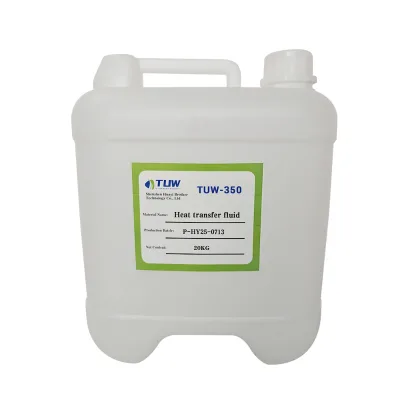

Low Viscosity High Thermal Conductivity Hydronic Heat Transfer Fluid
$37550.00 - $51200.00
MOQ: 1 Tons


Non-Corrosive Chemically Stable Medium Temperature Heat Transfer Fluid
$2350.00 - $3250.00
MOQ: 1 Tons


Jintherm-701 Factory Price High Performance Synthetic Heat Transfer Fluid
$1300.00 - $2300.00
MOQ: 1 Tons

Jintherm-701 Wholesale Synthetic Heat Transfer Fluid Industrial Heat Transfer Oil
$1300.00 - $2300.00
MOQ: 1 Tons

Jintherm-701 Factory Direct Sales Antioxidant Synthetic Heat Transfer Fluid Oil
$1300.00 - $2300.00
MOQ: 1 Tons

Jintherm-602 High Performance Heat Transfer Fluid Industrial Conducting Thermal Oil
$2600.00 - $3600.00
MOQ: 1 Tons




Comprehensive Sourcing Guide
Strategic Sourcing Guide for Syntholube Heat Transfer Fluid Procurement
Understanding the Product Category and Technical Identity
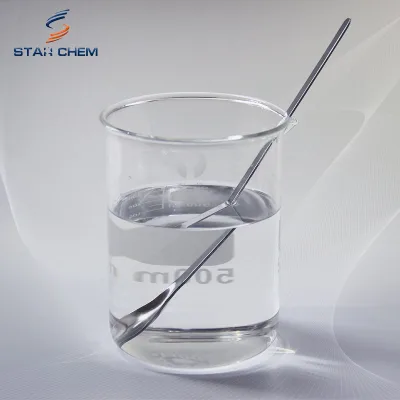
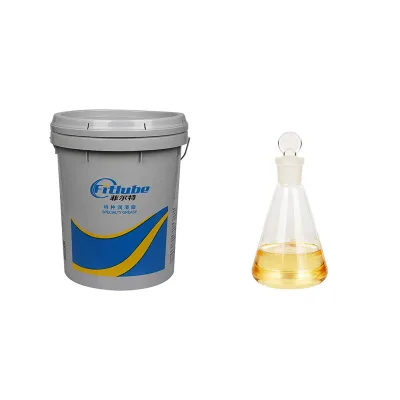
When sourcing heat transfer fluids under the category of syntholube intermediates, buyers must first distinguish between general thermal oils and specialized synthesis material intermediates. The market offers a diverse array of products, ranging from colorless, odorless, transparent liquids to yellow-colored viscous fluids. The core identity of these products often centers on their function as thermal oil or heat conduction fluid, designed specifically for temperature control applications. A critical observation in the current supply landscape is the variation in physical appearance; while some listings describe a clear, transparent liquid, others specify a yellow hue. This discrepancy suggests that "syntholube" in this context may refer to a broad class of base oils or intermediates rather than a single monolithic product.
The chemical composition is a primary differentiator. Some products are defined by their base oil content, with specific references to bio-based oils, while others are characterized by their carbon content as the chief constituent. The viscosity at 40°C is a pivotal technical parameter, with observed values ranging significantly from 22 centistokes (cst) to 60 cst. This variance directly impacts the fluid's flow characteristics and heat transfer efficiency at operating temperatures. Furthermore, the specific gravity is noted at 0.91 for certain variants, which is essential for calculating system volume and pump requirements. Buyers must verify the exact viscosity and specific gravity for their specific application, as a fluid with 22 cst viscosity will behave differently in a high-shear environment compared to one with 60 cst.
Technical Specifications and Performance Parameters
The technical performance of heat transfer fluids is governed by a suite of physical and chemical properties that dictate their suitability for industrial use. Flash point is a critical safety metric, with observed data indicating values such as 215°C and 140°C (284°F). These figures determine the maximum safe operating temperature and the risk of ignition in the event of a leak or overheating. The average molecular weight, observed at 186 for certain formulations, influences the volatility and thermal stability of the fluid. A lower molecular weight might suggest higher volatility, whereas a higher weight generally correlates with better thermal stability but potentially higher viscosity.
Thermal expansion is another vital specification. The expansion coefficient is recorded at 9.0 x 10^-4 1/°C, a figure that must be accounted for in the design of expansion tanks and piping systems to prevent pressure surges during heating cycles. The fluid's ability to withstand high temperatures is often highlighted as a key feature, with specific mentions of high-temperature resistance. This attribute is crucial for applications involving industrial heating, where the fluid must maintain its integrity without breaking down or forming sludge.
Additives play a significant role in enhancing performance. The supply data indicates the presence of viscosity index improvers, friction modifiers, dispersants, anti-wear additives, and antioxidants. These components are not merely optional; they are essential for extending the fluid's service life and protecting system components from corrosion and wear. The production method, often cited as oxidation, suggests a specific chemical synthesis pathway that affects the final purity and stability of the product. Buyers should request detailed technical data sheets that explicitly list the concentration and type of additives to ensure compatibility with their existing system materials.
Compliance, Certification, and Environmental Standards
Navigating the regulatory landscape is a non-negotiable aspect of sourcing industrial fluids. The market data confirms that many suppliers offer products with RoHS and Reach certifications. These certifications are indicative of compliance with European Union regulations regarding the restriction of hazardous substances and the registration, evaluation, authorization, and restriction of chemicals. However, the presence of these certifications on a product page does not guarantee that every batch or every model number carries the same status. Buyers must verify that the specific model they intend to purchase, such as the LM-14F or Bd22, is covered under the active certification.
Environmental protection is another key attribute, with several listings explicitly stating "Yes" for environmental protection. This suggests that the products are formulated to minimize ecological impact, potentially through biodegradability or reduced toxicity. However, the term "environmental protection" is broad. To ensure true compliance, buyers should demand third-party test reports that validate the environmental claims, specifically looking for data on biodegradability rates, aquatic toxicity, and soil contamination potential.
The production origin is consistently listed as Guangdong, China, with a broader designation of China for the place of origin. While this provides a geographical baseline, it does not inherently confirm the quality of the manufacturing process. The standards for these products are often described as "support customization," indicating that there may not be a single rigid international standard (like ASTM or ISO) that applies universally to all listed items. Instead, the standard is likely tailored to the buyer's specific requirements. This flexibility is a double-edged sword; it allows for customization but requires the buyer to define the exact quality standards they require, rather than relying on a default industry standard.
Cost Drivers and Pricing Dynamics
The pricing structure for syntholube heat transfer fluids exhibits a wide range, observed from $0.60 to $71,700 USD. This massive disparity is not indicative of a single product line but rather reflects the diversity of the market, encompassing small laboratory quantities to bulk industrial shipments. The minimum order quantity (MOQ) varies significantly, ranging from 1 unit to 6,000 units. This suggests that the market caters to both small-scale testing and large-scale industrial procurement.
Several factors drive the cost of these fluids. First, the base oil type is a primary cost driver. Bio-based oils often command a premium over conventional petroleum-based oils due to the cost of raw materials and the complexity of the refining process. Second, the level of customization affects pricing. Products that support customization in packaging, standard, or model number often incur higher costs due to the need for specialized production runs. Third, the complexity of the additive package influences the price. Fluids with a comprehensive suite of additives, including anti-wear and antioxidant agents, are more expensive than base oils with minimal treatment.
Packaging also plays a role in the final cost. Options range from cartons to drums (18 liters/barrel or 200L/drum) and tank containers. The choice of packaging affects the unit price, with bulk tank containers typically offering a lower cost per liter compared to individual drums or cartons. Buyers should calculate the total cost of ownership, including shipping and handling, rather than focusing solely on the unit price. The port of departure, including Shanghai, Ningbo, Xiamen, and Shenzhen, can also influence logistics costs depending on the buyer's location.
Typical Applications and Industry Use Cases
The versatility of syntholube heat transfer fluids allows them to be utilized across a broad spectrum of industries. The primary application is temperature control, which is fundamental to processes requiring precise thermal management. Specific use cases include building materials, raw material processing, and fuel applications. The fluid's role in rubber tire manufacturing and candle production highlights its utility in industries where heat is applied to shape or cure materials.
In the automotive and machinery sectors, the fluid serves multiple functions beyond simple heat transfer. It is used for shock absorption, sealing, rust prevention, lubrication, and cooling. This multi-functionality makes it an attractive option for systems that require a single fluid to handle both thermal regulation and mechanical protection. The high and low-temperature lubricating oil properties suggest that these fluids are suitable for environments with extreme temperature fluctuations, such as outdoor machinery or processes involving rapid heating and cooling cycles.
The production methods, such as oxidation, and the chief constituents, like carbon content, indicate that these fluids are often used in heavy industrial settings. The application in wrapper industries suggests use in packaging machinery where heat is used for sealing or shrinking. Buyers should align the fluid's specific properties, such as flash point and viscosity, with the specific demands of their application. For instance, a high-temperature resistance fluid is essential for processes exceeding 200°C, while a fluid with a lower flash point might be suitable for lower-temperature applications where safety is less of a concern.
Supplier Evaluation and Quality Assurance
Evaluating suppliers in this sector requires a rigorous approach to ensure product consistency and reliability. The brand name "huayi" is observed in the data, but buyers should not rely on brand recognition alone. Instead, they must focus on the supplier's ability to provide consistent quality across different models, such as LM-14F, LM-16C, and Bd22. The fact that the product is described as a "Syntheses Material Intermediate" implies that the supplier is likely a manufacturer or a specialized distributor of chemical intermediates, which may offer better technical support than a general chemical trader.
Quality control is paramount. Buyers should verify the supplier's production methods and ensure that the oxidation process is tightly controlled to prevent impurities. The availability of customization services is a positive indicator of a supplier's flexibility, but it also requires clear communication of specifications to avoid errors. The packaging support, including options for drums and tank containers, should be evaluated based on the buyer's logistical capabilities.
To mitigate risk, buyers should request samples for testing before committing to large orders. The sample should be tested for viscosity, flash point, and specific gravity to ensure they match the technical data provided. Additionally, buyers should verify the supplier's ability to provide consistent lead times and their capacity to handle the required order volumes, given the observed MOQ range of 1 to 6,000 units. The port of departure options (Shanghai, Ningbo, Xiamen, Shenzhen) should be considered in the context of the buyer's supply chain strategy to optimize shipping costs and times.
Long-Term Procurement and Lifecycle Management
Sourcing heat transfer fluids is not a one-time transaction but a long-term partnership that requires careful lifecycle management. The fluid's service life is influenced by its thermal stability, which is determined by the molecular weight and the presence of antioxidants. Over time, the fluid may degrade, leading to the formation of sludge or acids that can damage the system. Buyers should plan for regular fluid analysis and replacement schedules to maintain system efficiency.
The customization aspect of the product allows for long-term adaptability. As a buyer's process requirements change, the ability to customize the fluid's properties or packaging can provide a competitive advantage. However, this also means that the buyer must maintain a close relationship with the supplier to ensure that any changes in the fluid formulation do not negatively impact the system.
Environmental considerations will become increasingly important in the future. As regulations tighten, the demand for bio-based and environmentally friendly fluids will likely grow. Buyers who prioritize sustainability now will be better positioned to meet future regulatory requirements. The "Environmental Protection: Yes" attribute observed in the data is a good starting point, but buyers should stay informed about evolving standards and ensure their suppliers can adapt to new regulations.
In conclusion, sourcing syntholube heat transfer fluids requires a deep understanding of the technical specifications, compliance requirements, and cost drivers. By carefully evaluating suppliers, verifying product quality, and planning for long-term lifecycle management, buyers can secure a reliable supply of high-performance fluids that meet their specific industrial needs. The diversity of the market offers numerous options, but success depends on the buyer's ability to navigate this complexity with precision and diligence.
FAQs
What certifications do syntholube heat transfer fluids have?
Many products hold RoHS and Reach certifications for regulatory compliance. Buyers must verify that specific models like LM-14F or Bd22 are covered under active certification documents before purchase.
How does the viscosity affect fluid performance?
Viscosity at 40°C ranges from 22 cst to 60 cst, directly impacting flow characteristics. A lower viscosity fluid behaves differently in high-shear environments compared to one with higher viscosity.
Can buyers customize packaging and standards?
Yes, customization is available for packaging, standards, and model numbers. Options include drums, cartons, or tank containers, allowing tailored solutions for specific logistical needs.
What is the flash point range for these fluids?
Observed flash points include 215°C and 140°C, determining safe operating temperatures. These figures are critical for assessing ignition risks during industrial heating processes.
Which applications utilize syntholube heat transfer fluids?
Primary uses include temperature control, lubrication, and cooling in building materials and rubber tire industries. The fluid also supports shock absorption and rust prevention in machinery.
What is the typical minimum order quantity?
MOQ values range from 1 unit to 6000 units depending on the supplier. This flexibility accommodates both small-scale testing and large industrial procurement requirements.