Source T Head Bearing Mooring Bollard for Ships, Ports, and Yachts
Compare 30 listings for the T Head Bearing Mooring Bollard designed for steeper rope angles and heavy-duty protection. Buyers can evaluate options with Lr/Lbs/BV/Dnv class certificates, SWL ranging from 5t to 1000t, and customizable finishes like black painted or galvanized surfaces.
Key considerations
Products List


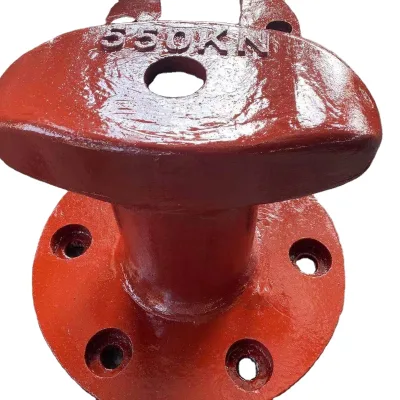
High Load Capacity Marine Mooring Deck Fitting T Head/Double Bitts Bollard
$50.00 - $500.00
MOQ: 1 Pieces


$1.00 - $999.00
MOQ: 1 Pieces


Comprehensive Sourcing Guide
Strategic Sourcing Guide for T-Head Bearing Mooring Bollards
Understanding the T-Head Bearing Mooring Bollard Configuration
The T-head bearing mooring bollard represents a specialized class of marine hardware designed to manage high-tension loads while accommodating specific vessel mooring geometries. In the context of modern port infrastructure and vessel docking, the "T-head" designation refers to the specific top configuration of the bollard, which is engineered to facilitate secure line attachment. This design is particularly noted for its suitability for steeper rope angles, a critical feature in environments where vessels may dock at varying angles or where the mooring lines are subject to significant vertical and horizontal stress components. The structural integrity of these units relies heavily on the casting method employed, with thermal gravity casting and gravity casting being the primary techniques observed in high-quality manufacturing. These processes ensure that the metal matrix is dense and free from voids, which is essential for withstanding the dynamic loads generated by moving vessels. The material composition is predominantly steel, providing the necessary tensile strength and durability required for harsh marine environments.
Technical Specifications and Performance Parameters
When evaluating T-head bearing mooring bollards, buyers must scrutinize the specific technical parameters that define the unit's operational limits. The load-bearing capacity is a primary metric, with observed specifications ranging from 5 tons to 1000 tons in various configurations. Specific models are often categorized by their Safe Working Load (SWL), which can span from 5 tons up to 400 tons or higher, depending on the intended application and the structural design of the bollard. The physical dimensions and model numbers vary significantly; for instance, specific model identifiers such as "Type a," "Double Head16," or numerical codes like "11," "14," and "150KN" indicate different load ratings and geometric profiles. The standard load ratings often align with specific kilonewton values, including 150KN, 300KN, 450KN, and 650KN, which serve as benchmarks for engineering calculations.
The manufacturing precision is equally critical. High-performance bollards often adhere to machining tolerances of +/-0.15mm, ensuring that mating surfaces and bearing points function without excessive friction or wear. The surface finish is another vital specification, with options including black painted, galvanized, or bitumen painted finishes. Some units undergo a baking paint process to enhance corrosion resistance, while others may feature a polished finish for specific aesthetic or functional requirements. The surface roughness is typically controlled to a Ra12.5 standard, which balances friction requirements with ease of cleaning. The standard production models are available in a variety of shapes, including Y, T, Br, Tee, Horn, and Kidney configurations, allowing for customization based on the specific mooring layout of the facility.
Compliance, Certification, and Standard Verification
Ensuring that a T-head bearing mooring bollard meets international maritime and industrial standards is a non-negotiable aspect of the procurement process. The supply chain for these critical safety components is heavily regulated, and buyers must verify that the manufacturer holds valid classification certificates from recognized maritime societies. High-confidence data indicates that suppliers often possess Class Certificates from major organizations such as Lr (Lloyd's Register), Lbs, BV (Bureau Veritas), and Dnv (Det Norske Veritas). These certifications are essential for proving that the bollard has been designed, manufactured, and tested according to rigorous safety protocols.
In addition to maritime classification, general quality management and environmental compliance are often required. Many suppliers operate under ISO 9001 quality management systems, ensuring consistent production processes. Environmental and safety standards such as RoHS and CE marks are also frequently observed, indicating compliance with European directives regarding hazardous substances and product safety. The products may also adhere to specific national and international standards, including JIS (Japanese Industrial Standards), DIN (Deutsches Institut für Normung), GB (Guobiao), and AISI (American Iron and Steel Institute) standards. Buyers should explicitly request documentation proving that the specific model ordered conforms to the relevant standard, whether it is a custom drawing or a standardized specification like SWL: 5-400T. It is crucial to note that while some standards like DIN 82607 may be referenced in broader industry contexts, the specific compliance of a unit must be verified against the actual documentation provided by the supplier rather than assumed.
Cost Drivers and Pricing Dynamics
The pricing structure for T-head bearing mooring bollards is influenced by a complex interplay of factors, resulting in a wide observed price range from $0.10 to over $8,200 USD per unit. This variance is not arbitrary but reflects the differences in material volume, load capacity, customization level, and finishing requirements. The base cost is driven by the material weight, as the bollards are typically cast from cast iron or steel, with the weight directly correlating to the SWL rating. A bollard rated for 1000 tons will naturally command a significantly higher price than one rated for 5 tons due to the sheer mass of metal required.
Customization is a major cost driver. While standard models are available, many projects require bespoke dimensions, specific SWL ratings, or unique surface treatments. The "Customized" attribute is prevalent, with options for custom sizes, colors (black, blue, red painted), and specific shapes. The cost of tooling, such as mold fees, can also impact the final price, although some suppliers offer free mold fees for certain production runs. The packaging method, ranging from simple trays to export-grade wooden boxes and metal pallets, adds to the logistics cost. Furthermore, the complexity of the casting process, such as investment casting versus thermal gravity casting, affects the manufacturing cost. Buyers should expect that higher precision requirements, such as tighter machining tolerances or specialized surface preparations like polishing, will increase the unit price. The minimum order quantity (MOQ) also plays a role, with ranges observed from 1 to 100,000 units, meaning that bulk purchasing can significantly reduce the per-unit cost.
Supplier Evaluation and Production Capabilities
Selecting the right supplier for T-head bearing mooring bollards requires a thorough assessment of their manufacturing capabilities and logistical readiness. The origin of the product is a significant factor, with the majority of high-volume production coming from China (Mainland). Buyers should verify the supplier's production capacity to ensure they can meet project timelines. Delivery times are variable, with observed lead times as short as 15 days for standard orders, though complex customizations may extend this period.
The supplier's ability to handle the full lifecycle of the product is essential. This includes their proficiency in the casting process, from the initial mold creation to the final surface treatment. Suppliers should demonstrate expertise in thermal gravity casting and investment casting, as these methods are critical for producing high-integrity components. The availability of customization services is another key evaluation point; suppliers must be able to accommodate specific design requirements, such as the "T head type" configuration or specific SWL ratings. Packaging capabilities are also vital, as the product must be protected during transit. Options include tray packaging, bracket and plastic film packages, and standard export packages featuring wooden boxes and metal pallets. Buyers should inquire about the supplier's experience with international shipping and their ability to provide the necessary documentation for customs clearance.
Quality Control and Long-Term Procurement Considerations
Quality control (QC) is paramount when sourcing marine hardware, as the failure of a mooring bollard can lead to catastrophic vessel damage or safety incidents. The QC process should encompass material verification, dimensional inspection, and non-destructive testing. Buyers should insist on proof of machining tolerance compliance, specifically the +/-0.15mm standard, to ensure that the bearing surfaces function correctly. Surface preparation and treatment are also critical areas for inspection. The finish, whether black painted, galvanized, or bitumen painted, must be uniform and free from defects that could compromise corrosion resistance.
Long-term procurement considerations extend beyond the initial purchase price. Buyers should evaluate the supplier's track record for after-sales support and warranty provisions. The "Protection" usage attribute highlights the critical role these bollards play in safeguarding vessels and infrastructure; therefore, the longevity of the product is a key concern. The surface treatment and material quality directly influence the service life of the bollard in corrosive marine environments. Buyers should also consider the availability of spare parts or replacement units, especially for custom models where standardization is not guaranteed. The ability of the supplier to provide consistent quality over multiple orders is essential for maintaining the safety and operational efficiency of the port or facility. Finally, buyers should verify that the supplier's production processes are aligned with the latest industry standards and that they are committed to continuous improvement in their manufacturing techniques.
Application Scenarios and Installation Requirements
T-head bearing mooring bollards are designed for a wide array of applications, primarily within the maritime and port infrastructure sectors. Their suitability for steeper rope angles makes them ideal for berths where vessels approach at sharp angles or where the mooring lines are subject to significant vertical forces. These bollards are commonly used in commercial ports, shipyards, and industrial facilities where heavy vessels require secure mooring. The "Boat" application category confirms their use in various marine environments, from small craft to large cargo ships.
Installation requirements are dictated by the specific model and load rating. The bollards must be securely anchored to the quay or dock structure to withstand the full SWL. The installation process often involves precise alignment to ensure that the T-head configuration aligns correctly with the mooring lines. The surface preparation of the installation site is crucial to ensure a stable foundation. The product's application as "Electronic Accessories" suggests potential integration with monitoring systems or automated mooring equipment, although the primary function remains mechanical protection. Buyers should ensure that the installation plan accounts for the specific dimensions and weight of the bollard, as well as the required foundation depth and anchoring method. The variety of shapes available, including Y, T, Br, Tee, Horn, and Kidney, allows for flexible installation designs that can adapt to the unique layout of any docking facility.
Summary of Key Sourcing Criteria
To summarize, sourcing T-head bearing mooring bollards requires a meticulous approach that balances technical performance, regulatory compliance, and cost efficiency. Buyers must prioritize suppliers who can demonstrate robust manufacturing capabilities, particularly in casting and surface treatment processes. Verification of class certificates from Lr, Lbs, BV, and Dnv is essential for ensuring safety and compliance. The wide range of specifications, from 5 tons to 1000 tons SWL, necessitates a clear understanding of the specific operational requirements of the project. By carefully evaluating the supplier's customization options, lead times, and quality control measures, buyers can secure high-quality mooring bollards that ensure the safety and efficiency of their maritime operations. The final selection should be based on a comprehensive review of the product's technical data, certification status, and the supplier's ability to deliver consistent, high-performance hardware tailored to the specific needs of the application.
FAQs
What certifications do t head bearing mooring bollards have?
Most products hold primary classification certificates from Lr, Lbs, BV, and Dnv. Additional compliance often includes ISO 9001, RoHS, and CE marks for quality and safety.
Which surface treatments are available for these bollards?
Options include black painted, galvanized, bitumen painted, or customized finishes. Some units undergo baking paint processes or polishing to achieve specific roughness levels.
Can I order custom sizes for t head bearing mooring bollards?
Yes, customization is available for size, shape, and color requirements. Buyers can request specific dimensions or shapes like Y, T, Br, Tee, Horn, or Kidney configurations.
What is the typical delivery time for these bollards?
Standard delivery time is approximately 15 days for ready orders. Complex customizations or large quantities may extend the lead time depending on production capacity.
How are t head bearing mooring bollards packaged for shipping?
Packaging options include trays, brackets with plastic film, or standard export packages. Export shipments often utilize wooden boxes and metal pallets for secure transit.
What materials are used to manufacture these bollards?
The primary material is steel or cast iron, selected for high tensile strength. Thermal gravity casting and gravity casting methods ensure dense, void-free structural integrity.