Source Taiwan Pencil Case for school, office, and hotel use
Explore 30 listings for Taiwan Pencil Case options featuring leather, plastic, and fabric materials in various shapes and colors. Buyers can compare specifications like dimensions, customization availability, and pricing from suppliers in Guangdong, Zhejiang, and Ningbo.
Key considerations
Products List
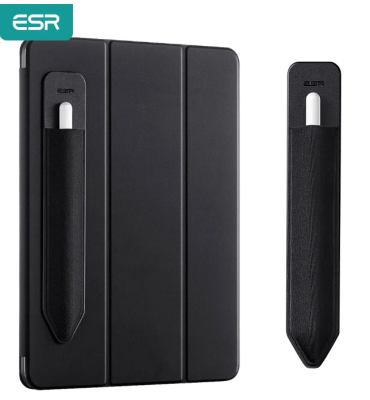

Large Capacity Pencil Case Cute Pencil Bag Customized Canvas Pencil Case
$0.25 - $0.33
MOQ: 500 Pieces


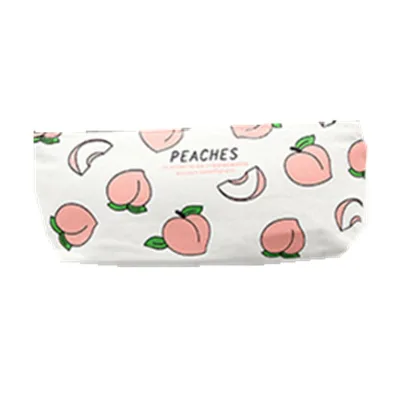


Hot Selling Zipper Kawaii Circular Pencil Bag Pencil Case for School & Office
$1.50 - $2.20
MOQ: 20 Pieces


Comprehensive Sourcing Guide
Strategic Sourcing Guide for Pencil Case Procurement
Understanding the Product Landscape and Core Specifications
When sourcing pencil cases, particularly under the broad search term "Taiwan Pencil Case," buyers must first recognize that the global supply chain for these items is highly diversified, with significant manufacturing hubs in mainland China, including Guangdong, Zhejiang, and Ningbo. The product category encompasses a wide array of designs, from single-layer storage solutions to complex multilayer systems. The core functional definition of these items remains consistent: they are storage units designed for school and office environments, often categorized as pencil bags or pencil boxes.
The technical specifications for these products vary significantly based on the intended application and material composition. Observed data indicates that pencil cases are available in diverse shapes, including square, rectangular, and triangular forms. Dimensions are equally variable, with specific standard sizes observed ranging from compact 1764.5cm units to larger 2311cm configurations. Some listings specify imperial measurements, such as 8.66 x 4.13 x 2.56 inches, while others use metric standards like 19.51012cm or 18.921.1*8.5cm. Buyers should not assume a single standard size applies to all inventory; rather, the procurement strategy must align with the specific dimensional requirements of the end-user.
Material selection is a critical differentiator in this category. The supply base offers options in leather, plastic, and fabric. Each material brings distinct properties: leather often implies a more premium aesthetic suitable for office or promotional gifts, while plastic and fabric may be preferred for durability and cost-efficiency in school settings. The manufacturing technique also plays a role, with sewing and heating processes being noted methods for assembly. These technical attributes directly influence the product's durability, aesthetic appeal, and suitability for specific use cases, such as hotel amenities or general school supplies.
Compliance, Certification, and Regulatory Verification
In the realm of B2B procurement, verifying compliance and certification status is paramount, especially when dealing with products intended for educational or promotional use. While certain background information may reference certifications such as FSC (Forest Stewardship Council) or BSCI (Business Social Compliance Initiative), these should be treated as potential background attributes rather than guaranteed facts for every listed product. Buyers must explicitly verify the certification status of the specific supplier and product batch before placing an order.
The absence of a specific certification on a product listing does not necessarily indicate non-compliance, but it does require active verification. For instance, if a buyer requires FSC certification for paper-based components or BSCI for labor standards, this must be confirmed through direct supplier communication and valid documentation. Relying on general category knowledge without specific product confirmation can lead to procurement failures. Furthermore, the "private mold" attribute observed in some listings suggests that unique designs may be involved, which could complicate standard compliance checks if the mold itself has not been previously vetted for safety or material standards.
Buyers should also consider the "Password Lock" attribute, where some products are listed as "Without Password Lock." This is a functional specification rather than a safety standard, but it is crucial for inventory planning. If security is a requirement for the target market, the absence of this feature in the standard product line necessitates a search for alternative models or a discussion with the supplier regarding custom modifications. The verification process should extend to the "Customization" capabilities, ensuring that any custom logos or branding do not violate intellectual property rights or local advertising regulations in the destination market.
Cost Drivers and Pricing Structure Analysis
The pricing structure for pencil cases is influenced by a complex interplay of materials, customization levels, and order volumes. The observed price range in the market spans from $0.25 to $14.90 USD, a wide variance that reflects the diversity in product quality and complexity. The lower end of this spectrum typically corresponds to basic plastic or fabric models with standard dimensions and minimal customization. Conversely, the higher end often involves leather materials, complex multilayer structures, or products with private molds and custom branding.
Minimum Order Quantity (MOQ) is another significant cost driver. The observed MOQ range extends from 20 units to 5,000 units. A low MOQ of 20 units may be suitable for sampling or small promotional campaigns but often carries a higher unit cost due to the lack of economies of scale. In contrast, an MOQ of 300 or higher, as seen in specific product listings, usually indicates a more favorable unit price but requires a larger capital outlay and storage capacity. Buyers must balance their budget constraints with their inventory needs to determine the optimal order size.
Customization is a primary factor that elevates costs. The availability of "Customed Logo" and "Customer Logo" options implies additional setup fees and potentially higher per-unit costs. The "Selling Units" attribute, often listed as "Single item," suggests that while the product is sold individually, the transactional unit for the buyer is likely a bulk quantity. The "prod_packing" attribute, such as "1PC/Poly Bag" or "Single Commodity," also impacts the final landed cost, as packaging requirements can vary significantly based on the destination market's retail standards.
Typical Applications and Market Segmentation
Pencil cases serve a broad spectrum of applications, ranging from educational institutions to corporate promotional campaigns. The "Usage" attribute frequently lists "School & Office," indicating that these products are versatile tools for daily organization. In the school sector, the focus is often on durability, affordability, and engaging designs, such as the "Lovely" or "Fashion" styles observed in the market. The "Style" attribute, which includes options like "Office" or "Lovely," suggests that buyers should align the product aesthetic with the specific demographic of the end-user.
The "Application" attribute also highlights "Hotel" as a specific use case. This suggests that pencil cases can be utilized as amenities or welcome gifts in hospitality settings. In this context, the material quality and branding are often more critical than in the general school market. The "Feature" attribute, listed as "School Supply," reinforces the primary market segment but does not preclude other uses. Additionally, the "Usage" attribute mentioning "Promotion Gift" indicates that these items are frequently used as branded merchandise for marketing campaigns, where the "Customed Logo" capability is essential.
The shape and design of the pencil case also dictate its application. Square and rectangular shapes are standard for general storage, while triangular shapes may offer unique storage solutions or novelty appeal. The "Pencil Box" attribute, distinguishing between "Single Layer" and "Multilayer," further segments the market. Single-layer cases are ideal for simple storage needs, whereas multilayer cases offer organization for pens, pencils, erasers, and other small stationery items, making them suitable for professional office environments or students with extensive supplies.
Supplier Evaluation and Sourcing Strategy
Evaluating suppliers for pencil case procurement requires a careful assessment of their capabilities, location, and production capacity. The "place of origin" data indicates that manufacturers are primarily located in Guangdong, Zhejiang, and Ningbo, all of which are established manufacturing hubs in China. Buyers should verify the specific location of the supplier to understand the logistics implications, including shipping times and potential tariffs. The "prod_origin" attribute, which may list specific cities like Ningbo or Zhejiang, provides insight into the regional specialization of the manufacturer.
The "Private Mold" attribute is a significant indicator of a supplier's capability to offer unique designs. Suppliers with private molds can provide exclusive products that differentiate a buyer's brand from competitors. However, this also requires a thorough review of the mold ownership and usage rights. The "Customization" availability confirms that most suppliers are willing to adapt products, but the extent of this customization—whether limited to logo printing or extending to shape and material changes—must be clarified.
Supplier reliability can be gauged by their "Sample" support. The ability to provide samples is a positive indicator of a supplier's confidence in their product quality and their willingness to engage in a trial phase. Buyers should request samples to verify the physical attributes, such as the "Technic" of sewing or heating, and to ensure the "Color" and "Shape" match the visual representations. Additionally, the "Brand Name" attribute, which may range from specific brands like "ESR" to "OEM," indicates the supplier's flexibility in working with private labels or established brands.
Quality Control and Long-Term Procurement Considerations
Implementing a robust quality control (QC) process is essential for maintaining product standards in pencil case procurement. Buyers should focus on verifying the "Material" consistency, ensuring that leather, plastic, or fabric meets the expected durability and safety standards. The "Technic" of assembly, whether sewing or heating, should be inspected for defects such as loose threads or weak bonds. The "Standard" dimensions, such as 2311CM or 176*4.5cm, must be measured to ensure they align with the product specifications and customer expectations.
Long-term procurement considerations involve establishing a sustainable relationship with suppliers that can adapt to changing market demands. The "MOQ" flexibility is a key factor here; suppliers who can accommodate varying order volumes, from small batches to large-scale production, offer greater supply chain resilience. The "prod_packing" standards should also be reviewed to ensure they meet the destination market's requirements for retail presentation and protection during transit.
Buyers should also consider the "Feature" of the product, such as "School Supply," to ensure that the items remain relevant and useful over time. The "Style" and "Color" trends should be monitored to prevent inventory obsolescence. Finally, the "Password Lock" attribute, while currently listed as "Without Password Lock" for many items, represents a potential area for future product development. Buyers interested in security features should engage with suppliers early to discuss the feasibility of integrating such features into future production runs.
Comparative Analysis of Product Variants
To facilitate informed decision-making, buyers should compare the key attributes of different pencil case variants. The following table summarizes the observed differences in specifications, materials, and applications based on the provided data.
| Attribute | Variant A | Variant B | Variant C |
|---|---|---|---|
| Material | Leather | Plastic | Fabric |
| Shape | Square | Triangle | Rectangular |
| Layers | Single Layer | Multilayer | Single Layer |
| Dimensions | 23*11CM | 1764.5cm | 19.51012cm |
| Style | Lovely | Fashion | Office |
| Color | Black | Pink | Yellow |
| Origin | Guangdong | Ningbo | Zhejiang |
| Usage | School & Office | School & Office | Promotion Gift |
| MOQ | 300 | 20 | 5000 |
| Customization | Available | Available | Available |
| Technic | Sewing | Heating | Sewing |
This comparison highlights the diversity within the pencil case market. Variant A, with its leather material and square shape, may be better suited for premium office or hotel applications. Variant B, featuring a triangular shape and plastic material, offers a unique design for school supplies. Variant C, with its rectangular shape and fabric material, provides a versatile option for promotional gifts. Buyers must weigh these attributes against their specific requirements for cost, aesthetics, and functionality to select the most appropriate product for their needs.
Final Procurement Recommendations
In conclusion, sourcing pencil cases requires a meticulous approach that balances technical specifications, compliance requirements, and cost considerations. Buyers should prioritize verifying the material quality, dimensions, and customization capabilities of potential suppliers. The wide range of observed prices and MOQs necessitates a clear understanding of the buyer's budget and volume requirements. By focusing on the specific attributes such as shape, style, and application, buyers can identify products that align with their target market's needs.
Ultimately, the success of a pencil case procurement strategy depends on thorough supplier evaluation and rigorous quality control. Buyers should leverage the available data on origins, materials, and production techniques to make informed decisions. While the market offers a vast array of options, the key lies in selecting the right combination of features that deliver value and meet the specific demands of the end-user. By adhering to these guidelines, buyers can navigate the complexities of the pencil case market and establish a reliable supply chain for their business.
FAQs
What materials are available for taiwan pencil cases?
Available materials include leather, plastic, and fabric. Buyers should verify the specific material composition for each model, as options range from premium leather suitable for office use to durable plastic and fabric for school supplies.
Which customization options exist for taiwan pencil cases?
Customization is available for logos and branding. Suppliers support custom logos and private molds, allowing buyers to create unique designs while ensuring the product meets specific aesthetic or functional requirements for their target market.
Can I find taiwan pencil cases with multilayer storage?
Yes, multilayer pencil boxes are available alongside single-layer options. These multilayer designs offer enhanced organization for pens and stationery, making them suitable for professional office environments or students with extensive supply needs.
What are the typical MOQ values for taiwan pencil cases?
Minimum Order Quantities range from 20 to 5000 units. Lower MOQs like 20 are suitable for sampling, while higher volumes such as 300 or more often indicate better unit pricing and are common for bulk promotional campaigns.
How do dimensions vary for taiwan pencil cases?
Dimensions vary significantly based on the model and intended use. Standard sizes observed include 23*11CM, 17*6*4.5cm, and 19.5*10*12cm, with some models specified in inches, requiring buyers to match dimensions to their storage needs.
Which shapes are offered for taiwan pencil cases?
Common shapes include square, rectangular, and triangular forms. The shape selection depends on the design style, with square and rectangular shapes being standard for general storage and triangular shapes offering unique novelty appeal.
Can I source taiwan pencil cases from specific Chinese regions?
Yes, products originate from Guangdong, Zhejiang, and Ningbo. Buyers should verify the specific place of origin for each supplier, as these regions are established manufacturing hubs with varying capabilities in production and logistics.