Source Multilayer Plastic Pencil Box for Schools Offices and Travel
Explore 30 listings for the Multilayer Plastic Pencil Box designed for students, office workers, and travelers. Buyers can compare customization options, material specs, and pricing from verified suppliers in China.
Key considerations
Products List
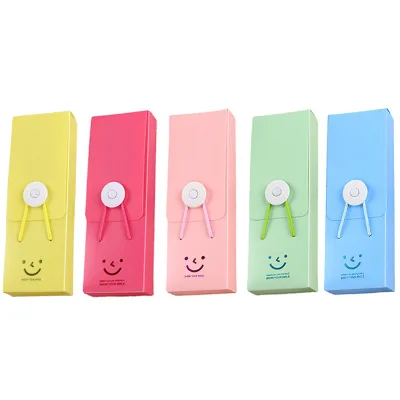


Creative Simple Ins PP Plastic Storage Box Pencil Box with Divided Storage
$0.27 - $0.35
MOQ: 200 Pieces

Multifunctional Double Layer Primary School Student Stationery Pencil Case
$2.00 - $2.60
MOQ: 500 Pieces


Multifunctional Transparent Cute Primary School Creative Student Pencil Case
$1.00 - $1.50
MOQ: 500 Pieces


Comprehensive Sourcing Guide
Strategic Sourcing Guide for Multilayer Plastic Pencil Boxes
Understanding Product Specifications and Material Composition
When sourcing a Multilayer Plastic Pencil Box, buyers must first distinguish between the core material composition and the structural design. The market offers products where the primary body is constructed from durable plastic, often reinforced with internal inserts such as EVA, sponge, paper card, plastic, foam, or EPE (Expanded Polyethylene). These inserts are critical for the "multilayer" functionality, providing cushioning and organization for writing instruments, electronic accessories, or small craft items. The structural integrity of these boxes often relies on a rectangular or double-layer design, which maximizes storage capacity while maintaining a compact footprint.
Dimensional consistency is a primary technical requirement. While some suppliers offer fully customized dimensions, standard observations in the market indicate specific size profiles, such as a single package size of approximately 23x12x6.5 cm. For buyers seeking a "middle" size category, verifying the exact internal and external dimensions is essential to ensure compatibility with existing stationery sets or school supply kits. The weight of the finished product is another critical specification; observed data suggests a single gross weight ranging from 0.1 kg to 0.3 kg, with many units falling under the 0.5 kg threshold. This lightweight characteristic is advantageous for shipping logistics, particularly when ordering in high volumes.
The manufacturing process for these items often involves heating techniques to mold the plastic components, ensuring a seamless finish. Surface handling is equally important, with options ranging from offset printing to more advanced finishes like embossing, hot stamping, or spot UV coating. These surface treatments not only enhance the aesthetic appeal but also protect the printed graphics from wear and tear. Buyers should note that while some listings mention cardboard thickness (1~3mm) for specific variants, the core keyword "plastic pencil box" implies a primary construction of molded plastic, potentially with cardboard inserts or packaging. Clarifying the exact ratio of plastic to other materials is a necessary step before placing a bulk order.
Compliance, Certification, and Safety Standards
In the B2B procurement of stationery and school supplies, regulatory compliance is non-negotiable. Buyers must verify that suppliers possess valid certifications that attest to the safety and environmental standards of their products. The supply chain for these items often references specific third-party certifications, including FSC (Forest Stewardship Council), SGS, and BV (Bureau Veritas). These certificates are vital for ensuring that the materials used, particularly if any paper or cardboard components are present, meet sustainable sourcing requirements.
The FSC certification, in particular, indicates that any paper-based elements in the product or its packaging are sourced from responsibly managed forests. This is a growing requirement for educational institutions and corporate offices that have strict sustainability mandates. SGS and BV certifications typically cover quality control, material safety, and production process audits. Buyers should request current copies of these certificates to verify that the specific production batch they intend to purchase has been tested and approved. It is important to distinguish between general company certifications and product-specific test reports; the latter provide concrete evidence that the specific pencil box model meets safety standards for children's products, if applicable.
While some industry standards like ISO 27001 are mentioned in broader supply chain contexts, they primarily relate to information security rather than physical product safety. Therefore, procurement teams should focus their verification efforts on the tangible product certifications. Additionally, buyers should inquire about the absence of hazardous substances. Although specific chemical test results are not always listed in general product descriptions, the presence of a "Recyclable" feature suggests a commitment to environmental safety. However, this claim must be backed by the aforementioned certifications to be considered a verified fact rather than a marketing assertion.
Cost Drivers and Pricing Dynamics
The pricing structure for multilayer plastic pencil boxes is influenced by several variable factors, primarily driven by customization levels and order volume. The observed market price range for these items spans from $0.10 to $5.20 USD per unit. This wide variance is largely attributable to the complexity of the design, the quality of the plastic material, and the extent of surface finishing required. A basic, single-color box with minimal branding will naturally fall at the lower end of this spectrum, while a double-layer box featuring custom printing, hot stamping, and specialized inserts will command a premium price.
Minimum Order Quantity (MOQ) is another significant cost driver. The market data indicates an MOQ range of 10 to 5,000 pieces, with a high-confidence observation of 1,000 pieces as a standard threshold for many suppliers. Ordering below the standard MOQ often results in a higher unit cost due to the setup costs for molding and printing being amortized over fewer units. Conversely, ordering in larger volumes can significantly reduce the per-unit price, making it a strategic lever for buyers with large-scale distribution needs.
Customization is a primary determinant of cost. Options such as custom logos, specific color combinations (e.g., pink, blue, green, yellow, purple, rose red), and unique dimensions add to the production complexity. Suppliers offering "Originality" in style or "Customized Designs Printing" will typically charge more than those providing standard, off-the-shelf inventory. Furthermore, the choice of surface finish impacts the final price; processes like embossing and spot UV require additional machinery time and labor compared to standard offset printing. Buyers must balance their budget constraints against the marketing value of these customizations to determine the optimal cost-to-value ratio.
Typical Applications and Target Markets
Multilayer plastic pencil boxes serve a diverse range of applications beyond simple stationery storage. The primary market segment includes schools and offices, where the demand for durable, organized storage solutions is constant. These products are specifically designed for use by teens, girls, adults, and students, making them versatile for both educational and professional environments. The "Double Layer" feature is particularly valuable for users who need to separate writing instruments from erasers, sharpeners, or small electronic accessories.
Beyond the traditional stationery market, these boxes are increasingly utilized for packaging and organizing a wide array of items. The product usage data highlights applications in arts and crafts, electronic products, jewelry, food, garments, greeting cards, letters, gifts, cosmetics, and health care products. This versatility makes them an attractive option for promotional campaigns, corporate gifting, and retail packaging. For instance, a company might commission a custom-branded pencil box to serve as a gift for clients, utilizing the "Recyclable" feature to align with corporate social responsibility goals.
The "Novelty" aspect of these products also plays a role in their application. Some designs are marketed specifically as novelty items for students, featuring unique shapes or vibrant colors to appeal to younger demographics. However, other variants are designed with a more utilitarian "Originality" style, focusing on functionality and durability for adult professionals. Understanding the end-user profile is crucial for selecting the right product variant. A school district purchasing for elementary students might prioritize colorful, novelty designs, whereas a corporate office might prefer a sleek, rectangular box with a professional logo finish.
Supplier Evaluation and Verification Process
Selecting the right supplier requires a rigorous evaluation process that goes beyond the initial product listing. Buyers should prioritize suppliers who demonstrate transparency in their production capabilities and location. The supply chain for these items is heavily concentrated in specific manufacturing hubs, with high-confidence data pointing to origins in Zhejiang and Dongguan, Guangdong, China. These regions are known for their established infrastructure in plastic molding and stationery manufacturing.
When evaluating a potential supplier, buyers must verify their ability to meet specific customization requirements. The market data indicates that suppliers generally accept customized logos, colors, sizes, and models. However, the ability to deliver on these promises depends on the supplier's technical capabilities. Buyers should request samples to verify the quality of the plastic, the precision of the double-layer construction, and the durability of the surface finishes. The sample time, which typically ranges from 3 to 15 days, serves as an indicator of the supplier's responsiveness and production efficiency.
Lead time is another critical factor in supplier selection. The observed delivery time for these products is often within 8 days for standard orders, though custom orders may require longer production cycles. Buyers must ensure that the supplier's lead time aligns with their own supply chain requirements. Additionally, the packing method, such as "1pc/opp Bag" or "Carton Box," should be evaluated to ensure it meets the buyer's logistics and storage needs. A supplier that offers robust packaging solutions can help reduce damage rates during transit, which is a significant cost saver in the long run.
Quality Control and Long-Term Procurement Considerations
Implementing a robust quality control (QC) strategy is essential for maintaining product integrity in the Multilayer Plastic Pencil Box market. Buyers should establish clear acceptance criteria based on the product specifications, including dimensions, weight, and material composition. The presence of inserts like EVA or sponge must be verified to ensure they provide the intended cushioning and organizational benefits. Surface defects, such as uneven printing or incomplete embossing, should be rejected immediately during the inspection phase.
Long-term procurement considerations involve building a sustainable relationship with suppliers who can consistently deliver high-quality products. Buyers should look for suppliers who offer continuous improvement in their manufacturing processes, such as adopting more eco-friendly materials or refining their surface finishing techniques. The "Recyclable" feature is a strong indicator of a supplier's commitment to sustainability, but buyers should verify this claim through third-party audits or certifications.
Furthermore, buyers should consider the scalability of the supplier's operations. As demand grows, the supplier must be able to increase production without compromising quality or extending lead times excessively. The ability to handle large order volumes, such as the 5,000-piece upper limit observed in the market, is a key indicator of a supplier's capacity. Finally, maintaining open communication channels regarding design changes, material updates, and market trends will help buyers stay ahead of the curve and ensure their product offerings remain competitive in the evolving stationery and packaging landscape.
Comparative Analysis of Product Variants
To assist buyers in making informed decisions, the following table compares key attributes of common Multilayer Plastic Pencil Box variants found in the market. This comparison highlights the differences in specifications, customization options, and typical use cases.
| Feature | Standard Variant | Customized Variant | Premium/Double Layer |
|---|---|---|---|
| Primary Material | Plastic | Plastic with Inserts (EVA/Sponge) | Plastic with Multi-Material Inserts |
| Dimensions | Fixed (e.g., 23x12x6.5 cm) | Customized | Customized |
| Surface Finish | Offset Printing | Custom Logo/Color | Embossed/Hot Stamping/Spot UV |
| MOQ | 1,000 pcs | 1,000 - 5,000 pcs | 1,000 - 5,000 pcs |
| Sample Time | 3-5 Days | 7-15 Days | 7-15 Days |
| Certification | FSC/SGS/BV (if applicable) | FSC/SGS/BV (if applicable) | FSC/SGS/BV (if applicable) |
| Target Use | School & Office | Gifts, Promotional | Arts, Electronics, Jewelry |
| Weight | <0.5 kg | <0.5 kg | <0.5 kg |
This comparison underscores that while the base material and weight remain consistent across variants, the level of customization and surface finishing significantly impacts the product's value proposition and intended application. Buyers should select the variant that best aligns with their specific operational needs and brand requirements.
FAQs
What materials are used for multilayer plastic pencil boxes?
The primary material is plastic, often reinforced with internal inserts like EVA, sponge, or foam. Some variants may include cardboard components, but the core structure relies on durable molded plastic for organization and protection.
Can I customize the logo and colors on these boxes?
Yes, customization is available for logos, colors, sizes, and models. Buyers can choose from standard colors like pink, blue, or green, or request specific designs and printing methods such as offset printing or hot stamping.
What is the typical minimum order quantity for these items?
The standard minimum order quantity is 1000 pieces, though ranges from 10 to 5000 are observed in the market. Ordering below the standard threshold may affect unit pricing due to setup costs for molding and printing.
How long does it take to receive a sample?
Sample times typically range from 3 to 15 days depending on the supplier and customization level. Standard samples may be ready within 3 to 5 days, while complex custom designs requiring specific molds might take up to two weeks.
Which certifications verify the safety and sustainability of these boxes?
High-confidence facts indicate the availability of FSC, SGS, and BV certificates for these products. These documents verify that materials meet environmental standards and that production processes adhere to quality and safety audits required for school supplies.
What is the estimated delivery time for bulk orders?
Delivery time is typically within 8 days for standard orders from suppliers in China. Customized orders may require additional time for production, so buyers should confirm specific lead times based on their design requirements before placing an order.
How are these pencil boxes packaged for shipping?
Individual items are often packed in OPP bags, while bulk shipments use carton boxes. The single package size is approximately 23x12x6.5 cm, and the gross weight per unit ranges from 0.1 to 0.3 kg for efficient logistics.