Source Telescopic Beak Pruning Shears for Tree Branch, Plant Cutting, and Hedge Trimming
Compare 30 Telescopic Beak Pruning Shears from verified Chinese suppliers. These garden tools feature anti-slip grips, folding designs, and carbon or stainless steel blades for efficient tree branch pruning and plant cutting tasks.
Key considerations
Products List


Heavy Duty Aluminum Handle Pruning Shears Telescopicr Bypass Lopper Shear
$9.00 - $22.00
MOQ: 1000 Pieces


1.2-1.6 Meter Portable Telescopic Pole Tree Wood Saw Pruning Fruit Picker Long Reach Pruner
$13.80 - $14.55
MOQ: 1000 Pieces


Garden Pruning Shears Tree Trimmer Hand Pruner Branch Hedge Shrub Bush Secateurs
$2.60 - $3.30
MOQ: 200 Pieces


Comprehensive Sourcing Guide
Strategic Sourcing Guide for Telescopic Beak Pruning Shears
The global market for professional and semi-professional gardening tools has seen a significant shift toward multi-functional, space-saving designs. Among these, Telescopic Beak Pruning Shears have emerged as a critical category for landscape maintenance, arboriculture, and large-scale agricultural operations. These tools combine the reach of a telescopic handle with the precision of a beak-shaped blade, allowing operators to access high branches or dense foliage without the need for ladders. For B2B procurement officers, sourcing these specific instruments requires a nuanced understanding of the underlying technical specifications, material science, and supply chain variables. This guide provides an evidence-based framework for evaluating suppliers and products within this niche, ensuring that procurement decisions are grounded in verified data rather than marketing assertions.
Technical Specifications and Design Architecture
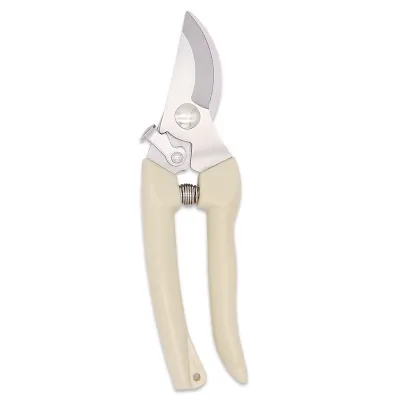
The core differentiator of Telescopic Beak Pruning Shears lies in their mechanical architecture. Unlike standard hand pruners, these tools must integrate a locking mechanism for the telescopic extension with a specialized blade geometry. The "beak" shape refers to a curved, often narrow blade profile designed to slide into tight spaces between branches or leaves, minimizing damage to surrounding vegetation. When evaluating product listings, buyers must scrutinize the specific model numbers and dimensions provided. For instance, observed specifications indicate models such as the MF-1C2001 and XL series (XL1014, XL0208, XL0108) which feature varying standard lengths, including 87cm and 25-inch configurations.
The telescopic feature is not merely a length extension; it is a critical safety and performance component. The mechanism must withstand the torque generated during cutting without slipping or collapsing. In the observed product data, specific attributes highlight the "Folding" capability, which is often synonymous with or complementary to telescopic designs in terms of portability. A folded or telescopic state must lock securely in both the extended and retracted positions. Furthermore, the blade material is a primary determinant of durability. The supply data distinguishes between Carbon Steel and Stainless Steel options. Carbon steel offers superior edge retention and hardness, making it ideal for heavy-duty pruning, while stainless steel provides corrosion resistance, which is vital for tools exposed to moisture and sap. The finishing process also varies, with some units noted as "Not Coated" while others feature PTFE or Plastic coatings to reduce friction and prevent sap adhesion.
Compliance, Certification, and Safety Standards
In the B2B sector, compliance is as important as functionality. Buyers must verify that the Telescopic Beak Pruning Shears meet relevant safety and environmental standards. While specific certification numbers are not universally standardized across all suppliers, the presence of "FSC" (Forest Stewardship Council) in product features suggests a commitment to sustainable forestry practices, particularly if the tool is marketed for professional arboriculture. Additionally, the "Anti-Slip Grip" feature is a critical safety standard. This attribute ensures that operators maintain control even when hands are wet or covered in sap, reducing the risk of accidental injury.
When assessing supplier claims, procurement teams should look for evidence of quality management systems. Although specific ISO certifications are not explicitly listed in the provided product attributes, the existence of "OEM & ODM" support implies that the manufacturer has the capacity to adhere to specific client requirements and potentially custom quality protocols. Buyers should request documentation regarding the blade hardness and the tensile strength of the telescopic tubes. The "Custom Logo" and "Customize" color options indicate a level of manufacturing flexibility, but they should not come at the expense of structural integrity. It is essential to verify that the customization process does not compromise the anti-slip properties or the locking mechanism of the telescopic handle.
Cost Drivers and Pricing Dynamics
Understanding the cost structure of Telescopic Beak Pruning Shears is vital for budgeting and margin analysis. The price range observed in the market spans from $0.51 to $33.00 USD. This wide disparity is driven by several factors, primarily material composition, manufacturing complexity, and order volume. The lower end of the spectrum typically corresponds to basic models with plastic handles and standard carbon steel blades, often produced in high volumes with minimal finishing. Conversely, the higher price points reflect advanced features such as stainless steel blades, PTFE coatings, aluminum handles, and complex telescopic locking mechanisms.
The Minimum Order Quantity (MOQ) is another significant cost driver. The observed MOQ range is 1 to 3000 pieces. Suppliers offering an MOQ of 1 piece are often positioned as sample providers or small-batch manufacturers, which may carry a higher per-unit cost. For large-scale procurement, negotiating MOQs closer to the 3000-piece threshold can significantly reduce the unit price. The "Supply Ability" data indicates that some manufacturers can produce up to 1,000,000 pieces per month, suggesting that volume discounts are available for large orders. However, buyers must balance this with lead times and inventory costs. The "Sample" lead time of 2-3 days is favorable for rapid prototyping, but bulk production lead times must be clarified during the negotiation phase to avoid supply chain disruptions.
Typical Applications and Operational Use Cases
Telescopic Beak Pruning Shears are designed for specific operational scenarios where reach and precision are paramount. The primary application is "Tree Branch Pruning," as noted in the product attributes. The telescopic handle allows arborists and landscapers to reach heights that are otherwise inaccessible, reducing the need for ladders and improving safety. The beak-shaped blade is particularly effective for "Plant Cutting" and trimming dense hedges, where a standard straight blade might struggle to navigate through thick foliage.
The versatility of these tools is further enhanced by their multifunctional nature. Some models are described as "Garden Tools Pruner" with "Multifunction Hedge Shear" capabilities, indicating they can handle both fine trimming and heavier branch cutting. The "Ratchet" and "Anvil" pruner types observed in the data suggest different cutting mechanisms suitable for various wood densities. A ratchet mechanism provides mechanical advantage, making it easier to cut through thick, hard branches with less physical effort, while an anvil style is often preferred for clean cuts on softer, green wood. The "Application" field explicitly mentions "Tree Branch Pruning," confirming the tool's primary role in maintaining tree health and structure.
Supplier Evaluation and Manufacturing Capabilities
Evaluating a supplier for Telescopic Beak Pruning Shears requires a deep dive into their manufacturing capabilities and logistical reliability. The "Place of Origin" is consistently listed as "Zhejiang, China," a region known for its robust manufacturing ecosystem for garden tools. However, the specific factory location and capacity vary. Buyers should verify the "Supply Ability" claims, which range from 100,000 to 1,000,000 pieces per month. A supplier claiming a capacity of 1,000,000 pieces must have the infrastructure to maintain quality control at that scale.
The "Payment" terms are listed as "Negotiable," which is standard in B2B trade but requires careful structuring to mitigate risk. Buyers should consider using letters of credit or escrow services for large orders. The "Customization" attribute is a key differentiator; suppliers offering "Custom Logo" and "Color" customization must have the flexibility to manage small batch runs without disrupting mass production schedules. Additionally, the "Packing" methods vary, with options ranging from "1PC/PVC Bag" to "120PCS/CTN." The choice of packaging affects shipping costs and product protection. For international shipments, robust carton packaging is essential to prevent damage during transit.
Quality Control and Long-Term Procurement Considerations
Quality control (QC) is the linchpin of successful procurement in this category. Given the mechanical complexity of telescopic handles and the precision required for beak blades, QC protocols must be rigorous. Buyers should insist on pre-shipment inspections that test the telescopic locking mechanism for slippage and the blade sharpness for cutting efficiency. The "Finishing" process, whether "Not Coated," "PTFE Coated," or "Plastic Coated," must be consistent across the batch to ensure uniform performance and corrosion resistance.
Long-term procurement considerations extend beyond the initial purchase. The "Weight" of the tool, observed at 1.135kg for certain models, impacts operator fatigue over long shifts. Lighter materials like aluminum handles can reduce this fatigue but may come at a higher cost. Buyers should also consider the availability of replacement parts, such as blades or locking pins, to extend the product lifecycle. The "Sample" availability of 2-3 days allows for rapid testing of these factors before committing to a large order. Finally, the "Feature" set, including "Anti-Slip Grip" and "Folding," should be validated through field testing to ensure they meet the specific demands of the end-user environment.
Comparative Analysis of Product Attributes
To facilitate decision-making, the following table summarizes the key attributes observed in the market for Telescopic Beak Pruning Shears. This comparison highlights the variability in specifications that buyers must navigate.
| Attribute Category | Observed Variations | Strategic Implication |
|---|---|---|
| Blade Material | Carbon Steel, Stainless Steel | Carbon steel for hardness/edge retention; Stainless for corrosion resistance. |
| Handle Material | Plastic, Aluminum | Aluminum offers lighter weight and durability; Plastic is cost-effective. |
| Finishing | Not Coated, PTFE Coated, Plastic Coated | Coatings reduce friction and sap adhesion; critical for maintenance frequency. |
| Pruner Type | Ratchet, Anvil | Ratchet for thick branches; Anvil for clean cuts on green wood. |
| Telescopic/Folding | Folded, Unfolded, Telesco | Folding enhances portability; Telescopic enhances reach. |
| MOQ | 1 PCS to 3000 PCS | Low MOQ for sampling; High MOQ for cost reduction. |
| Supply Ability | 100,000 to 1,000,000 Pieces/Month | Indicates manufacturer scale and capacity for large orders. |
| Origin | Zhejiang, China | Established manufacturing hub with competitive labor and logistics. |
In conclusion, sourcing Telescopic Beak Pruning Shears requires a balanced approach that weighs technical specifications against cost and supplier reliability. By focusing on verified attributes such as blade material, finishing processes, and supply capacity, buyers can make informed decisions that align with their operational needs. The market offers a wide range of options, from basic models to high-end, customized solutions, but the key to success lies in rigorous due diligence and clear communication of requirements with the supplier.
FAQs
What blade materials are available for Telescopic Beak Pruning Shears?
Blade materials include carbon steel and stainless steel options. Carbon steel offers superior edge retention for heavy-duty pruning, while stainless steel provides essential corrosion resistance for tools exposed to moisture and sap.
Can these tools be customized with logos and colors?
Yes, customization is available for both logos and colors. Suppliers offer custom logo printing and color options like red or customized shades, allowing buyers to brand the tools without compromising structural integrity.
What is the typical minimum order quantity for these shears?
The minimum order quantity ranges from 1 piece to 3000 pieces. Low MOQs allow for sampling, while higher volumes near 3000 pieces often secure better unit pricing and leverage the supplier's monthly capacity.
Which finishing processes are used on the blades?
Finishing processes include not coated, PTFE coated, and plastic coated options. These coatings reduce friction and prevent sap adhesion, ensuring smoother cutting performance and easier maintenance during extended use.
How long does it take to receive samples?
Sample lead times are typically 2 to 3 days. This rapid turnaround allows buyers to quickly test product quality, blade sharpness, and telescopic locking mechanisms before committing to larger bulk orders.
What is the maximum monthly supply capacity of manufacturers?
Manufacturers can supply up to 1,000,000 pieces per month. This high capacity indicates robust production infrastructure capable of handling large-scale B2B orders while maintaining consistent quality and delivery schedules.
Are these shears suitable for tree branch pruning applications?
Yes, they are specifically designed for tree branch pruning and plant cutting. The telescopic handle extends reach for high branches, while the beak-shaped blade navigates dense foliage with precision.