Source Temperature Control Gooseneck Electric Kettle for Brewing, Pouring, and Testing
Find 30 options for the Temperature Control Gooseneck Electric Kettle with features like intelligent controllers and corded or cordless designs. Compare specifications including heating types, materials, and model numbers from Chinese manufacturers offering OEM services.
Key considerations
Products List
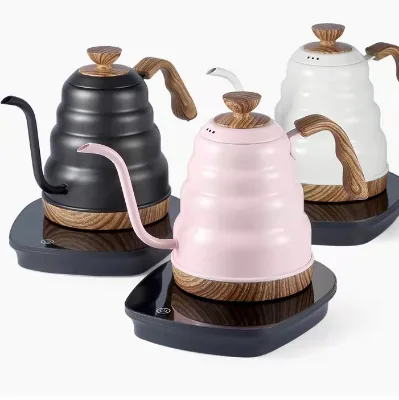
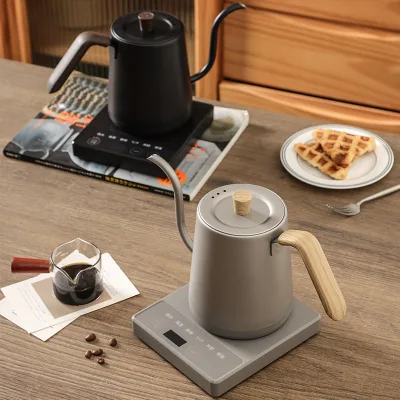
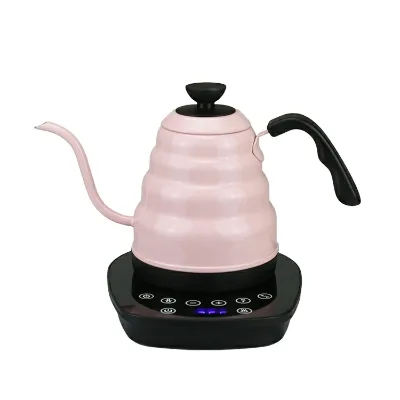
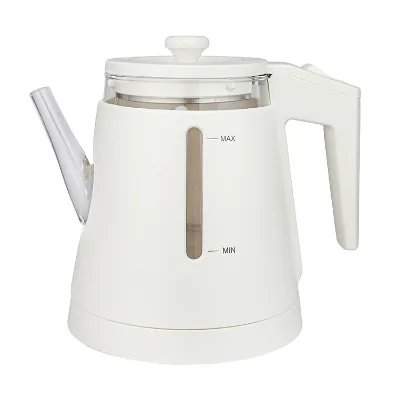
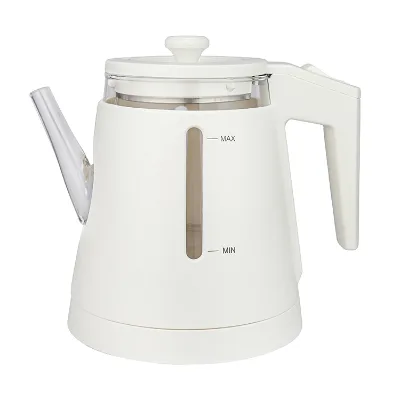
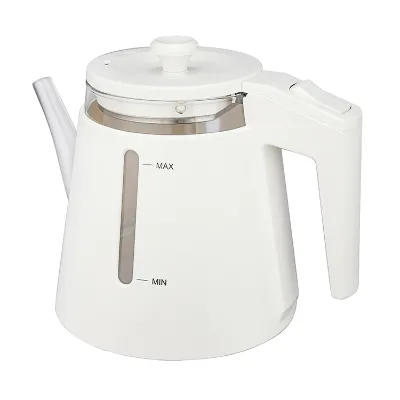


Stainless Steel Gooseneck Kettle – Ecoffee Precision Pour with Temp Control
$8.99 - $13.99
MOQ: 100 Pieces

Premium Electric Gooseneck Coffee Kettle with Precise Temperature Control
$43.00 - $48.00
MOQ: 4 Pieces

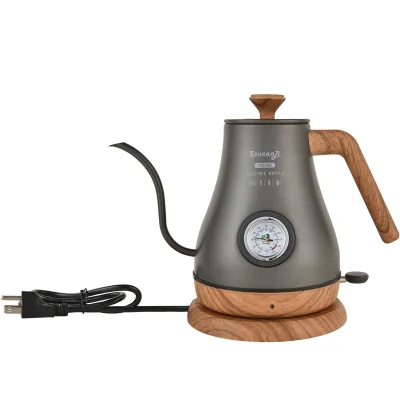


High Quality 1.8L Stainless Steel Electronic Kettle with Keep Warm Function
$2.90 - $3.20
MOQ: 3000 Pieces


Stainless Steel Metal Electric Kettle Tea Pots Kettle with Tea and Coffee
$6.45 - $6.65
MOQ: 3300 Pieces


Fashionable Automatic Electric Gooseneck Temperature Control Stainless Steel Tea Kettle
$13.01 - $13.05
MOQ: 80 Pieces

Fashionable Gooseneck Coffee Tea Brewing Temperature Variable Water Boiler Electric Kettle
$10.70 - $10.80
MOQ: 95 Pieces
Comprehensive Sourcing Guide
Strategic Sourcing Guide for Temperature Control Gooseneck Electric Kettles
The global demand for precision brewing equipment has elevated the Temperature Control Gooseneck Electric Kettle from a niche coffee accessory to a staple in professional and enthusiast kitchens. For B2B procurement professionals, sourcing these units requires a nuanced understanding of the intersection between heating technology, material science, and supply chain logistics. The following guide synthesizes available product data and industry standards to provide a disciplined framework for evaluating suppliers and selecting the right equipment for your business needs.
Technical Specifications and Heating Architecture
When evaluating temperature control gooseneck electric kettles, the primary differentiator lies in the heating architecture and control precision. The supplied product data indicates a diverse range of heating types available in the current market, specifically distinguishing between "Chassis heating" and "Coil heating." Chassis heating, often referred to as flat-bottom heating, distributes heat across the entire base of the kettle, which is generally preferred for gooseneck designs to ensure uniform temperature distribution and prevent hot spots that can scorch delicate coffee grounds. In contrast, coil heating elements are visible and may offer faster boil times but can sometimes create uneven heating profiles if not engineered correctly.
The control mechanism is equally critical. The observed product attributes highlight "Intelligent" temperature controllers and "Digital Control" systems as key features. These systems allow buyers to set specific temperatures, which is essential for brewing different coffee varietals that require precise thermal windows. The presence of "Corded" and "Cordless" options in the data suggests that procurement strategies must account for power source requirements. Corded models typically offer continuous power for high-volume commercial use, while cordless models provide portability and convenience, often utilizing a base station for charging. The "Single package size" of 35x35x30 cm and a "Single gross weight" of 1.500 kg observed in specific listings provide a baseline for logistics planning, though these figures will vary by model.
Material Composition and Durability Standards
Material selection is a fundamental determinant of product longevity, safety, and taste profile. The data reveals a strong preference for stainless steel, with specific grades such as "201 stainless steel," "Stainless steel 304," and general "Stainless steel" being common. For applications where water quality and taste purity are paramount, 304 stainless steel is the industry standard due to its superior corrosion resistance and food-grade safety. The presence of "Borosilicate glass" as a material option indicates a segment of the market catering to visual aesthetics, allowing users to monitor water levels and boiling states, though this may trade off against the durability of metal bodies.
Additionally, the product attributes list "Ceramic, Enamel, Stainless steel" as a combined material category, suggesting that some units may feature composite construction. For instance, a "stainless steel & wood" combination is noted, which adds an aesthetic appeal suitable for minimalist or modern design styles. The "Body material" is explicitly listed as "Stainless Steel" in several entries, reinforcing the dominance of metal construction in this category. Buyers must verify the specific grade of stainless steel used, as 201 grade is less resistant to rust and corrosion compared to 304 grade, which could impact the product's lifespan in high-humidity environments. The "Color" options, including "White, Black, Grey," and the ability for "Custom Colors" indicate that finish quality is a significant factor in the final product's marketability.
Compliance, Certification, and Safety Verification
Navigating the regulatory landscape is a critical step in B2B procurement. While the supplied data mentions "Ce" as a low-confidence background fact, it is essential to treat this as a verification point rather than a guaranteed attribute. The "Ce" marking indicates conformity with health, safety, and environmental protection standards for products sold within the European Economic Area. However, buyers should not assume that every listed product carries this certification without explicit documentation.
Procurement teams must request valid test reports and certification documents from suppliers before placing orders. The origin of the products is consistently listed as "China," which necessitates rigorous due diligence regarding export compliance. Buyers should verify that the electrical components meet the safety standards of the destination market, such as UL for the United States or GS for Germany, in addition to CE. The "Feature" attribute listing "Eco-Friendly" suggests that some manufacturers are focusing on energy efficiency, but this claim requires validation against specific energy consumption metrics. Without concrete test data provided in the source material, buyers must treat eco-friendly claims as marketing statements that require independent verification through third-party testing.
Cost Drivers and Pricing Dynamics
The observed price range for these products spans from $2 to $83.44 USD, reflecting a wide spectrum of quality, feature sets, and brand positioning. This significant variance is driven by several factors, including the complexity of the temperature control system, the grade of materials used, and the presence of additional features like "Digital Control" or "Intelligent" controllers. The lower end of the price spectrum likely corresponds to basic models with simple heating elements and standard stainless steel construction, while the higher end likely includes advanced digital interfaces, premium materials like borosilicate glass or high-grade 304 steel, and specialized designs.
The Minimum Order Quantity (MOQ) is another critical cost driver, with observed values ranging from 1 to 3800 units. The "Small Orders: Accepted" attribute indicates that many suppliers are flexible, allowing buyers to test the market with lower volumes. However, the presence of high MOQs up to 3800 suggests that economies of scale are available for large-scale procurement. Buyers should analyze the total cost of ownership, which includes not just the unit price but also shipping costs, which are influenced by the "Single gross weight" and package dimensions. The "Selling Units" being listed as "Single item" implies that the pricing is per unit, but bulk discounts may apply based on the negotiated MOQ.
Supplier Evaluation and Manufacturing Capabilities
Evaluating suppliers requires a focus on their manufacturing capabilities and flexibility. The data indicates that many suppliers offer "OEM" (Original Equipment Manufacturer) and "ODM" (Original Design Manufacturer) services, with "ODM: YES" and "OEM: Welcome" explicitly noted. This flexibility allows buyers to customize products with their own branding, as evidenced by the "Logo: customized" attribute. The "Private mold: NO" attribute in one listing suggests that some suppliers may rely on existing molds, which can limit customization options, while others likely offer private mold services for unique designs.
The "Brand Name" field shows a mix of OEM, specific brands like "Gelin / Peskoe," "ZHUNE/OEM," and "M-FLOV." This variety indicates a fragmented market with both white-label opportunities and established brand players. Buyers should prioritize suppliers who demonstrate a clear understanding of the "Design Style," such as "Minimalist" or "Simple Modern," as these align with current consumer trends. The "Advantage" of being "Portable Convenient" highlights the importance of ergonomics and usability in the supplier's design philosophy. When selecting a partner, verify their capacity to handle "Small Orders" if you are a startup, or their ability to scale to high volumes if you are an established retailer.
Typical Applications and Market Segmentation
The applications for temperature control gooseneck electric kettles extend beyond simple home use into specialized commercial and professional settings. The "Product Name" and "Keyword" data, including "Electric Kttle" and "1.4l," point to a capacity that suits both individual brewing and small commercial groups. The "Drinkware type" is identified as "Coffee & Tea Sets," and the "Function" is specifically noted as "Mocha Coffee Pot," indicating that these kettles are integral to the preparation of various hot beverages.
The "Capacity" of 1000ml and "Volume" of 1 L observed in the data suggest that these units are designed for standard serving sizes, making them suitable for cafes, specialty coffee shops, and tea houses. The "Temperature controller" being "Intelligent" makes these kettles particularly valuable for applications requiring precise brewing parameters, such as pour-over coffee or sensitive tea varieties. The "Stocked" feature implies that some suppliers maintain inventory, which can reduce lead times for urgent orders. Buyers should consider the specific needs of their target market; for instance, a high-end boutique cafe may prioritize the "Minimalist" design and "Custom Colors," while a mass-market retailer may focus on the "Portable Convenient" aspect and cost efficiency.
Long-Term Procurement and Quality Assurance
Sourcing temperature control gooseneck electric kettles is not a one-time transaction but a long-term partnership that requires robust quality assurance protocols. The "Feature" of being "Eco-Friendly" and the use of durable materials like "Stainless Steel 304" suggest that longevity is a key consideration. However, the electronic components, such as the "Digital Control" and "Intelligent" controllers, are potential points of failure. Buyers should establish clear quality control checkpoints, including pre-shipment inspections to verify the functionality of the heating elements and the accuracy of the temperature sensors.
The "Single package size" and "Single gross weight" data are vital for planning logistics and warehousing. Buyers must ensure that the packaging is robust enough to protect the delicate gooseneck spout and electronic components during transit. The "Cord Type" (Corded vs. Cordless) also impacts the long-term maintenance requirements; cordless models may require battery replacement or charging port maintenance over time. Finally, the "MOQ" flexibility allows buyers to start small and scale up, but they must ensure that the quality remains consistent as volume increases. Establishing a clear communication channel with the supplier regarding "Custom Colors," "Logo" placement, and material specifications is essential for maintaining brand integrity and product consistency over the long term.
FAQs
What heating types are available for temperature control gooseneck electric kettles?
The market offers both chassis heating and coil heating options for these kettles. Chassis heating provides uniform temperature distribution, while coil heating is also available. Buyers should verify the specific heating architecture to ensure it matches their brewing precision needs.
Which stainless steel grades are commonly used in these kettles?
Products frequently utilize 201 stainless steel, Stainless steel 304, and general stainless steel. The 304 grade is preferred for superior corrosion resistance and food safety. Buyers must confirm the specific grade to ensure durability and taste purity in their procurement.
Can buyers customize the logo and colors on these kettles?
Yes, customization is available with options for customized logos and custom colors. Many suppliers offer OEM and ODM services to support branding. However, some listings indicate private molds may not be available, so design flexibility varies by manufacturer.
What is the typical capacity range for these electric kettles?
Common capacities observed include 1000ml and 1 L, with some models noted as 1.4l. These volumes suit individual brewing and small commercial groups. Buyers should check specific model specifications to ensure the capacity aligns with their intended usage volume.
How does the price range vary for temperature control gooseneck electric kettles?
Prices range from 2 to 83.44 USD depending on features and materials. Lower costs often reflect basic heating elements, while higher prices include digital controls and premium materials. The final cost also depends on the minimum order quantity negotiated with the supplier.
Are corded and cordless options available for these kettles?
Both corded and cordless types are available in the current product listings. Corded models suit continuous commercial use, while cordless options offer portability. Buyers should select the cord type that best fits their operational environment and power source requirements.
What is the minimum order quantity for these kettles?
Minimum order quantities range from 1 to 3800 units depending on the supplier. Some vendors accept small orders, while others require larger volumes for economies of scale. Buyers should verify the specific MOQ for each model before placing an order.