Source Temperature And Pressure Compensation Propane Gas Flow Meter for Gas, Corrosive Liquid, Industrial Production
Find 30 options for Temperature And Pressure Compensation Propane Gas Flow Meter suitable for nature gas, corrosive liquids, and wastewater. Compare models with thermodynamic or electrical principles, ATEX explosion-proof ratings, and accuracies up to ±0.6%. Request quotes for DN15-300 sizes with 4-20mA outputs.
Key considerations
Products List

Gas Air Flowmeter Gas Flow Meter Gas Flow Sensor Propane Gas Flow Meter
$300.00 - $1000.00
MOQ: 1 Pieces

Gas Air Flowmeter Flow Indicator Propane Flow Meter Hydrogen Gas Flow Meter
$300.00 - $1000.00
MOQ: 1 Pieces


Propane Low and Medium Velocity Gas Flow Meter 1.0 Grade Turbine Flowmeter
$189.00 - $2199.00
MOQ: 1 Pieces

Factory Compressed Air Natural Gas Propane Methane Oxygen Thermal Mass Flow Meter
$200.00 - $2000.00
MOQ: 1 Pieces


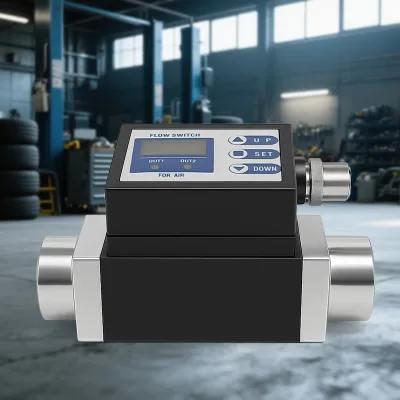


High Precision Gas Roots Flow Meter for Natural Gas Propane Flow Measurement
$200.00 - $500.00
MOQ: 1 Pieces


Pn16 Pressure Rating Gas Turbine Flowmeter Digital Turbine Flow Meter for Propane Gas
$450.00 - $7000.00
MOQ: 1 Pieces

Flange Connection Gas Turbine Flowmeter Digital Turbine Flow Meter for Propane Gas
$450.00 - $7000.00
MOQ: 1 Pieces

Fast Deliver Gas Turbine Flowmeter Digital Turbine Flow Meter for Propane Gas
$450.00 - $7000.00
MOQ: 1 Pieces

Easy Install Gas Turbine Flowmeter Digital Turbine Flow Meter for Propane Gas
$450.00 - $7000.00
MOQ: 1 Pieces

High Pressure Rating Gas Turbine Flowmeter Digital Turbine Flow Meter for Propane Gas
$450.00 - $7000.00
MOQ: 1 Pieces

Sensitive Measure Gas Turbine Flowmeter Digital Turbine Flow Meter for Propane Gas
$450.00 - $7000.00
MOQ: 1 Pieces

Precession Vortex Flow Meter Used on Measurement of Natural Gas Propane Air Nitrogen
$200.00 - $2000.00
MOQ: 1 Pieces
Comprehensive Sourcing Guide
Strategic Sourcing Guide for Temperature and Pressure Compensation Propane Gas Flow Meters
Procuring industrial flow measurement equipment for propane gas applications requires a rigorous understanding of thermodynamic principles, material compatibility, and regulatory compliance. Propane, as a liquefied petroleum gas (LPG), presents unique challenges regarding density fluctuations caused by temperature and pressure changes. Accurate measurement is not merely a matter of volume tracking but of mass flow determination to ensure safety and billing accuracy. This guide synthesizes available product attributes and industry standards to assist procurement professionals in evaluating suppliers and specifications for temperature and pressure compensated propane gas flow meters.
Technical Principles and Measurement Accuracy
The core of selecting a flow meter for propane lies in understanding the underlying measuring principle. For gas applications, particularly those requiring compensation for environmental variables, thermodynamic flow meters are a primary candidate. These devices operate on the principle that the heat transfer rate from a heated sensor to the flowing gas is a function of the mass flow rate. This method is inherently capable of handling the density variations associated with propane under different pressure and temperature conditions.
When evaluating technical specifications, buyers must verify the accuracy class. In the current market, high-performance units often achieve accuracy levels greater than ±1%. However, for more precise applications involving differential pressure or vortex shedding principles, accuracy ranges can tighten to ±0.6-1%. The choice between a thermodynamic sensor and a tube/flange-based differential pressure meter depends on the specific pipeline configuration and the required resolution.
The sensor type is another critical technical differentiator. Plug-in sensors are often preferred for larger diameter pipelines where installation without cutting the pipe is necessary. Conversely, tube or flange-integrated sensors are standard for smaller, fixed installations. The measurement object is typically a closed pipeline, necessitating a robust sealing mechanism to prevent leaks. The maximum operating temperature is a vital constraint; while some units are rated for media temperatures up to 350°C, others designed for specific liquid or mixed-phase applications may have lower limits, such as 130°C. Procurement teams must ensure the selected unit's thermal rating exceeds the maximum expected process temperature to prevent sensor drift or failure.
Compliance, Certification, and Safety Standards
Safety is paramount when handling propane, a flammable gas. Consequently, certification and compliance checks are not optional but are fundamental to the procurement process. Buyers must verify that the equipment carries recognized international and regional certifications. The presence of ISO, CE, and RoHS certifications indicates adherence to quality management systems and environmental standards. Additionally, specific safety certifications such as ATEX (Atmosphères Explosibles) are essential for equipment used in potentially explosive atmospheres, which is a common classification for propane storage and distribution facilities.
Regional standards also play a significant role. Products may comply with GB (Chinese National Standards), ANSI (American National Standards Institute), DIN (Deutsches Institut für Normung), or JIS (Japanese Industrial Standards). The specific standard required depends on the location of the installation and local regulatory bodies. For instance, a product originating from China might list certifications like ISO, CE, and SGS, while a unit intended for the US market must strictly meet ANSI requirements.
The material of construction is equally critical for compliance and longevity. Carbon steel and stainless steel are the standard materials used for flow meter bodies and sensors. Stainless steel is generally preferred for its resistance to corrosion, especially when the propane contains trace impurities or when the application involves corrosive liquids or gases alongside the fuel. Buyers should explicitly request material certificates to verify the grade of steel used, ensuring it meets the necessary pressure ratings, such as 4.0MPa, which is a common maximum pressure rating for industrial-grade meters.
Cost Drivers and Pricing Variables
The pricing structure for temperature and pressure compensated propane gas flow meters is influenced by several distinct factors. The observed market range for these devices spans from approximately $79.49 to $7,000. This wide variance is not arbitrary but reflects differences in technology, size, and customization.
The primary cost driver is the measuring principle and the complexity of the compensation algorithm. Thermodynamic meters and vortex flow meters generally command higher prices than basic mechanical meters due to the integrated electronics required for real-time temperature and pressure compensation. The size of the meter, defined by the caliber or maximum size, also significantly impacts cost. Units with a maximum size of 4000mm will be substantially more expensive than those with a caliber of DN15 to 300mm.
Customization is another major variable. Many suppliers offer customization services, which can include specific output signals, custom housing materials, or tailored calibration for specific propane mixtures. The availability of localization services and 7*24h technical support often adds a premium to the unit price but reduces long-term operational risks. Packaging methods, ranging from simple boxes to polywood or wooden cases for heavy-duty shipping, also contribute to the final cost, particularly for international logistics.
Typical Applications and Media Compatibility
Understanding the intended application is crucial for matching the right device to the need. While the core keyword focuses on propane gas, the versatility of these flow meters often extends to other media. The observed product attributes indicate that these devices are suitable for measuring nature gas, water, diesel fuel, fuel oil, and wastewater. This multi-media capability suggests a robust design capable of handling various fluid dynamics.
However, the specific application dictates the sensor choice. For nature gas and propane, the thermodynamic principle is often superior due to its ability to measure mass flow directly. In contrast, applications involving water or diesel fuel might utilize turbine flow meters based on mechanical principles or vortex flow meters based on differential pressure. The main application categories listed include industrial production, where reliability and continuous operation are non-negotiable.
The measurement media must be strictly verified against the meter's specifications. While some units are designed for gas, others are optimized for liquids. A unit rated for "Measuring Media: Gas" may not perform accurately if used for liquids, and vice versa. Furthermore, the presence of corrosive components in the gas stream requires a meter with appropriate corrosion resistance, often provided by stainless steel construction. The temperature of the medium, typically ranging from -40°C to 150°C, must be within the operational limits of the selected device to ensure accurate readings and prevent sensor damage.
Supplier Evaluation and Technical Support
Selecting a supplier involves more than just comparing unit prices; it requires an assessment of their technical support and service capabilities. A reliable supplier should offer 7*24h technical support, ensuring that any issues with the flow meter can be addressed immediately, minimizing downtime in critical industrial processes. Localization services are also a key indicator of a supplier's commitment to the local market, suggesting they have the infrastructure to provide on-site installation assistance or calibration services.
The origin of the product is a relevant factor in the evaluation process. Many high-quality flow meters originate from China, with specific manufacturing hubs like Shanghai. This origin does not imply a lower quality but rather indicates a supply chain that has matured to meet global standards. Buyers should verify the specific origin to understand the logistics and potential import duties.
Shipping methods are another practical consideration. Door-to-door delivery is a common offering, which simplifies the logistics for the buyer. However, the packaging standard, such as the 505050cm box or larger wooden cases, must be sufficient to protect the sensitive electronics during transit. The lead time and minimum order quantity (MOQ) are also critical; in this market, the MOQ is often as low as 1 unit, allowing for flexible procurement strategies for small-scale projects or pilot installations.
Quality Control and Long-Term Procurement Considerations
Ensuring long-term reliability requires a focus on quality control mechanisms and output specifications. The communication and output capabilities of the flow meter are essential for integration into existing control systems. Standard outputs include Pulse, 4-20mA, RS485, and RS232. These interfaces allow for seamless data transmission to SCADA systems or PLCs, enabling real-time monitoring and data logging.
Buyers should verify the power supply requirements, which are typically DC12V or DC24V. Ensuring compatibility with the facility's power infrastructure is necessary to avoid additional conversion costs. The standard for the product, often listed as CE/SGS/ISO, serves as a baseline for quality assurance. However, buyers should also look for specific test results or calibration certificates that accompany the unit, as these provide evidence of the meter's performance under controlled conditions.
Long-term procurement considerations include the availability of spare parts and the ease of maintenance. A plug-in sensor design, for example, allows for easier replacement without dismantling the entire pipeline. The explosion-proof rating (ATEX) ensures that the meter remains safe over its entire lifecycle, even if the process conditions change. Finally, the standard packaging and origin details should be consistent across orders to ensure that the logistics and handling procedures remain predictable and cost-effective for future purchases.
Comparative Analysis of Flow Meter Types
To assist in the final selection, the following table compares the key attributes of the different flow meter types observed in the market, specifically regarding their suitability for propane gas applications.
| Feature | Thermodynamic Flow Meter | Vortex Flow Meter | Turbine Flow Meter | Differential Pressure Meter |
|---|---|---|---|---|
| Measuring Principle | Thermodynamic | Vortex Shedding | Mechanics | Differential Pressure |
| Primary Media | Gas (Nature Gas, Propane) | Gas/Liquid | Liquid (Water, Diesel) | Gas/Liquid |
| Accuracy Range | >±1% | ±0.6-1% | Variable | Variable |
| Sensor Type | Plug-in | Tube/Flange | Tube/Flange | Tube/Flange |
| Max Temp | Up to 350°C | Up to 350°C | Up to 130°C | Up to 350°C |
| Max Size | Variable | Up to 4000mm | Up to 200mm | Variable |
| Best Application | Propane Gas Mass Flow | General Gas/Liquid | Liquid Hydrocarbons | High Pressure Gas |
This comparison highlights that while turbine meters are excellent for liquids like diesel and water, thermodynamic and vortex meters are generally more appropriate for the specific requirements of propane gas measurement, particularly when mass flow accuracy and temperature compensation are required. The differential pressure meter remains a versatile option for high-pressure applications but requires careful calibration for gas density changes.
In conclusion, sourcing a temperature and pressure compensated propane gas flow meter requires a balanced approach that weighs technical specifications against safety certifications and supplier capabilities. By adhering to the standards and attributes outlined in this guide, buyers can make informed decisions that ensure operational safety, measurement accuracy, and long-term value.
FAQs
What measuring principle is used for propane gas flow meters?
Thermodynamic principles are commonly used for gas applications to measure mass flow directly. This method handles density fluctuations caused by temperature and pressure changes effectively. Some units also utilize electrical or mechanical principles for different media types.
Which certifications are required for propane gas flow meters?
Essential certifications include ISO, CE, RoHS, and ATEX for explosion-proof safety in hazardous environments. Regional standards like GB, ANSI, DIN, and JIS may also apply depending on the installation location. Always verify specific safety compliance before purchase.
How accurate are temperature and pressure compensated propane gas flow meters?
High-performance units typically achieve accuracy greater than ±1%. More precise differential pressure or vortex meters can reach accuracy ranges of ±0.6 to 1%. The specific accuracy depends on the measuring principle and sensor type selected for the application.
Can these flow meters handle corrosive liquids and gases?
Yes, many models are designed for corrosive liquid and gas applications using stainless steel or carbon steel construction. The maximum operating pressure is often rated at 4.0MPa to ensure safety. Verify material compatibility with your specific media before ordering.
What output signals are available for integration with control systems?
Standard output options include Pulse, 4-20mA, RS485, and RS232 for seamless data transmission. These interfaces allow integration with SCADA or PLC systems for real-time monitoring. Power supply is typically DC12V or DC24V to match facility infrastructure.
What is the minimum order quantity for these flow meters?
The minimum order quantity is often as low as 1 unit, allowing for flexible procurement strategies. This supports small-scale projects or pilot installations without requiring bulk purchases. Buyers can verify specific MOQs with suppliers during the sourcing process.
Where are these flow meters typically manufactured?
Many high-quality units originate from China, with specific manufacturing hubs like Shanghai. Products may also comply with international standards regardless of origin. Verify the product origin to understand logistics and potential import duties for your specific region.