Source Temperature Resistant Bonded Seal for pumps, engines, and transmissions
Compare 30 listings for Temperature Resistant Bonded Seal options suitable for pumps, engines, and transmissions. Buyers can evaluate materials like NBR and FPM, customization sizes, and lead times from verified Chinese manufacturers.
Key considerations
Products List




Comprehensive Sourcing Guide
Strategic Sourcing Guide for Temperature Resistant Bonded Seals
Understanding the Technical Profile of Bonded Seals
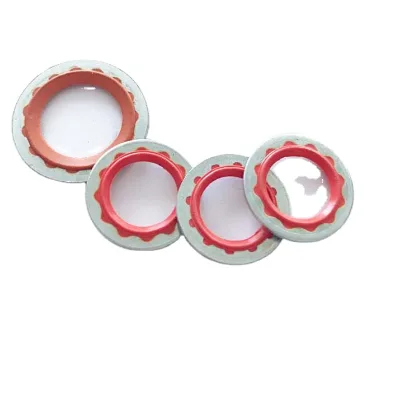
When sourcing temperature resistant bonded seals, buyers must first distinguish between the fundamental construction of the product and the specific material properties that enable thermal performance. A bonded seal, as observed in current market listings, typically consists of a metal washer bonded to a rubber or elastomeric ring. This composite structure is designed to provide a reliable seal in applications where vibration, pressure fluctuations, or thermal expansion might compromise a simple gasket. The core technical advantage lies in the combination of the metal's structural integrity and the elastomer's ability to conform to surface irregularities.
The material selection is the primary determinant of temperature resistance. The available market data indicates a diverse range of materials, including NBR (Nitrile Butadiene Rubber), FPM (Fluoroelastomer), Silicone Rubber, and HNBR (Hydrogenated Nitrile Butadiene Rubber). Each material offers a distinct thermal profile. FPM, often referred to by trade names like Viton, is widely recognized for superior high-temperature stability and chemical resistance, making it a primary candidate for demanding thermal environments. Silicone rubber offers excellent flexibility across a wide temperature range, while HNBR provides enhanced resistance to heat and aging compared to standard NBR. Buyers should verify that the specific material grade selected matches the maximum operating temperature of their application, as "temperature resistant" is a relative term dependent on the specific elastomer used.
The shape of the seal is another critical technical specification. While the general category includes O-Rings and various cross-section shapes, bonded seals often feature a specific geometry where the rubber element is bonded to a flat or shaped metal washer. The market observations note the availability of "Standard" and "Nonstandard" shapes, as well as custom sizing options. The cross-section shape, whether O-Ring, Rectangle Ring, or other profiles, dictates the compression set and sealing force. For high-temperature applications, the geometry must be designed to prevent extrusion under pressure while maintaining sufficient contact stress even as the material expands or contracts with thermal cycling.
Compliance and Certification Verification
In the industrial procurement of bonded seals, verifying compliance with international standards and certifications is essential for ensuring product reliability and safety. The sourcing landscape includes products that adhere to specific national standards, such as GB9877.1-88, which governs the dimensions and performance of certain sealing components. However, buyers must not assume that all listed products meet this specific standard without explicit verification, as the market also lists "Custom size" and "Nonstandard" options that may deviate from established norms.
Certification status is a vital component of the compliance checklist. Current product listings indicate that many suppliers offer seals certified under RoHS (Restriction of Hazardous Substances) and Reach regulations. These certifications are crucial for applications in the automotive, electronics, and household appliance sectors, where environmental compliance is mandatory. RoHS compliance ensures that the materials used do not contain restricted hazardous substances, while Reach certification confirms that the chemical substances within the product have been evaluated for safety.
Buyers should also look for evidence of OEM/ODM capabilities, which often implies a higher level of quality control and adherence to specific client standards. The presence of certifications like RoHS and Reach suggests that the manufacturer has established processes for material traceability and chemical safety. However, for specialized high-temperature applications, buyers may need to request additional documentation, such as Material Safety Data Sheets (MSDS) or specific test reports for thermal aging and compression set, which are not explicitly listed in general product summaries but are standard expectations for critical sealing components.
Cost Drivers and Pricing Dynamics
The cost of temperature resistant bonded seals is influenced by a complex interplay of material costs, manufacturing complexity, and order volume. The observed price range in the market spans from 0 to 99 USD, but this wide variance often reflects differences in unit size, material grade, and order quantity rather than a uniform pricing structure. High-performance materials like FPM and HNBR are inherently more expensive than standard NBR or Silicone due to the cost of raw polymers and the specialized processing required.
Order Volume is a significant cost driver. The market data shows an MOQ (Minimum Order Quantity) range extending from 1 to 5000 units. For small-batch prototyping or low-volume production runs, the unit cost will be significantly higher due to the fixed costs of setup and tooling. Conversely, bulk orders can leverage economies of scale to reduce the per-unit price. Buyers should be aware that "Custom" sizing and non-standard shapes often incur additional tooling charges, which can impact the overall cost structure even if the base material price is competitive.
Lead time is another factor that influences the total cost of ownership. The standard lead time observed is 15 days, with sample lead times as short as 3 days. Expedited production or rush orders may incur premium costs. Additionally, the delivery port, identified as Ningbo in some listings, suggests that logistics costs will vary based on the buyer's location and the shipping method selected. Buyers should factor in these logistical variables when calculating the total landed cost, especially for just-in-time manufacturing strategies where delays can disrupt production schedules.
Typical Applications and Performance Requirements
Temperature resistant bonded seals are deployed across a wide spectrum of industries, each with unique performance requirements. The observed applications include pumps, engines, transmissions, rear axles, vehicles, household appliances, electronic products, and general machinery. In automotive applications, such as engines and transmissions, seals must withstand high temperatures generated by combustion and friction, alongside exposure to oils and coolants. The "Oil Proof" and "Alkali Resistance" advantages noted in product attributes are particularly relevant here, ensuring that the seal does not degrade when exposed to harsh chemical environments.
In the context of pumps and industrial machinery, the seals must maintain integrity under varying pressure conditions. The market data mentions "Atmospheric Type" pressure ratings, but for high-performance applications, seals may need to handle higher pressures. The "High Speed" attribute indicates suitability for dynamic applications where the seal must function without excessive wear or heat generation due to friction. The "Wear" performance attribute further underscores the importance of selecting a material with high abrasion resistance, especially in rotating or reciprocating applications.
The versatility of these seals is evident in their use in household appliances and electronic products. In these applications, the seals often serve as wiper seals or rider rings, providing protection against dust and moisture while maintaining a tight seal. The "Lips Type" and "Spring Washer Type" attributes suggest that the design includes features to enhance sealing force and adaptability to surface variations. Buyers should match the specific application requirements, such as the need for "Self-centerIng" or "Non-Self-centerIng" capabilities, to the operational demands of their equipment.
Supplier Evaluation and Sourcing Strategy
Evaluating suppliers for temperature resistant bonded seals requires a focus on technical capability, production capacity, and quality assurance systems. The market data indicates that suppliers offer customization services, with "Custom" sizes and "Custom size" standards available. This flexibility is a strong indicator of a supplier's ability to meet specific engineering requirements. Buyers should prioritize suppliers who demonstrate a clear understanding of the material science behind their products, particularly regarding the selection of FPM, Silicone, or HNBR for high-temperature applications.
The origin of the products is a relevant factor, with "China" listed as the production origin. While this does not inherently dictate quality, it is important to verify that the supplier has a robust quality management system in place. The presence of certifications like RoHS and Reach suggests a commitment to international standards, but buyers should also inquire about internal quality control processes, such as incoming material inspection, in-process testing, and final product verification.
Supplier evaluation should also consider the "Sample Lead Time" and "Delivery Port" information. A short sample lead time of 3 days can be advantageous for rapid prototyping and testing. The delivery port of Ningbo is a major shipping hub, which generally facilitates efficient logistics. However, buyers should confirm the supplier's ability to handle their specific shipping requirements and ensure that the packaging, described as "Bag" or "Half a Pack," is suitable for protecting the seals during transit, especially given the 10-year storage life potential of the materials.
Quality Control and Long-Term Procurement Considerations
Ensuring the long-term reliability of temperature resistant bonded seals requires a rigorous approach to quality control and procurement planning. The "Storage Life" of 10 years or 10 years mentioned in the product attributes is a significant selling point, indicating that the materials are stable and resistant to degradation over time. However, this storage life is contingent upon proper storage conditions, such as protection from direct sunlight, ozone, and extreme temperatures. Buyers should establish clear storage guidelines for their inventory to maximize the shelf life of the seals.
Quality control should extend beyond the initial purchase to include ongoing performance monitoring. For critical applications, buyers may need to implement a program of periodic testing to verify that the seals continue to meet performance standards over time. This is particularly important for seals used in high-temperature environments, where thermal cycling can accelerate material aging. The "Wear" and "Oil Proof" attributes suggest that the seals are designed for durability, but real-world performance can vary based on the specific operating conditions.
Long-term procurement considerations also involve building a strategic relationship with the supplier. The availability of OEM/ODM services suggests that suppliers are willing to collaborate on product development and customization. This partnership can be valuable for optimizing seal designs for specific applications, potentially leading to cost savings and improved performance. Buyers should also consider the "Standard" and "Nonstandard" options when planning for future product lines, ensuring that the supplier can scale production to meet changing demand.
Summary of Key Specifications and Attributes
To facilitate a clear comparison of the available options, the following table summarizes the key attributes observed in the market for temperature resistant bonded seals. This summary is based on the provided product facts and serves as a reference for buyers during the selection process.
| Attribute Category | Observed Specifications | Relevance to Temperature Resistance |
|---|---|---|
| Material | NBR, FPM, Silicone Rubber, HNBR | FPM and HNBR offer superior high-temp stability; Silicone offers wide range flexibility. |
| Shape | O-Ring, Rectangle Ring, Custom | Geometry affects compression and extrusion resistance under thermal load. |
| Standard | Standard, Nonstandard, GB9877.1-88 | Compliance with specific standards ensures dimensional and performance consistency. |
| Certification | RoHS, Reach | Essential for environmental compliance and chemical safety in regulated industries. |
| Lead Time | 15 Days (Standard), 3 Days (Sample) | Impacts project timelines and inventory planning. |
| MOQ | 1 to 5000 Units | Determines minimum order volume and cost efficiency. |
| Origin | China | Indicates production location and potential logistics considerations. |
| Storage Life | 10 Years | Indicates material stability and shelf life under proper conditions. |
| Application | Pumps, Engine, Transmission, Vehicle, Machinery | Defines the operational environment and required performance metrics. |
| Advantage | Oil Proof, Alkali Resistance, Wear | Critical for maintaining seal integrity in harsh chemical and mechanical environments. |
By carefully analyzing these attributes and understanding the underlying technical and commercial factors, buyers can make informed decisions when sourcing temperature resistant bonded seals. The focus should remain on matching the specific material and design requirements to the operational demands of the application, while ensuring that the supplier can deliver consistent quality and compliance with relevant standards.
FAQs
What materials are used for temperature resistant bonded seals?
These seals are commonly made from NBR, FPM, Silicone Rubber, and HNBR. FPM offers superior high-temperature stability, while HNBR provides enhanced heat resistance compared to standard NBR.
Can I get custom sizes for these bonded seals?
Yes, customization is available with custom sizes and non-standard shapes offered. Buyers can specify dimensions to match their specific application requirements without being limited to standard catalog sizes.
How long is the lead time for production?
The standard lead time is 15 days for production orders. Sample lead times are shorter, typically taking only 3 days to prepare samples for evaluation before bulk manufacturing begins.
Which certifications do these seals typically hold?
Many products are certified under RoHS and Reach regulations. These certifications ensure compliance with environmental standards, making them suitable for automotive, electronics, and household appliance applications.
What is the storage life of these rubber seals?
The storage life is up to 10 years under proper conditions. This longevity depends on protecting the seals from direct sunlight, ozone, and extreme temperatures during storage.
Where are these bonded seals manufactured?
The products originate from China, with delivery ports often located in Ningbo. This location facilitates efficient logistics and shipping for international buyers seeking cost-effective sourcing options.