Source Thermal Break Aluminum Greenhouse for Flowers, Vegetables, Seedlings
Find 30 Thermal Break Aluminum Greenhouse options for commercial and agricultural use. Buyers can compare specifications, materials, and prices for flower, vegetable, and seedling cultivation projects. These structures feature metal frames, polycarbonate covers, and optional cooling systems for efficient growing environments.
Key considerations
Products List
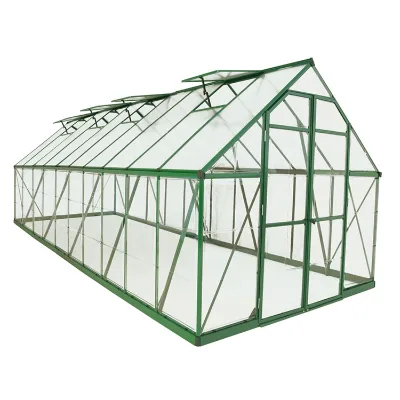
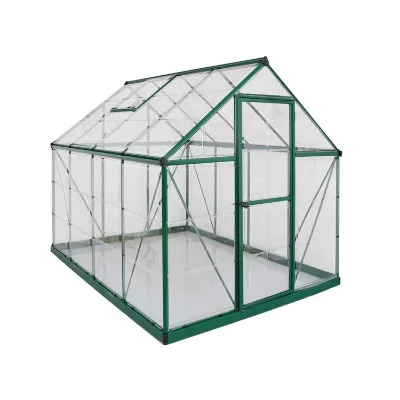


Greenhouse Frame Structure Aluminum Greenhouse Single Span Steel Structure Greenhouse
$3.60 - $6.90
MOQ: 120 Square Meters


Greenhouse Aluminium Film Channel Victorian Greenhouse Full Interior Small Greenhouse
$4.00 - $7.00
MOQ: 120 Square Meters


Premium Agricultural Warm Greenhouse with Durable Double Layer Cover
$7.00 - $22.00
MOQ: 10 Square Meters


Sunroom Aluminum Garden Greenhouse Outdoor Glass Room Aluminium Outdoor Room
$168.00 - $188.00
MOQ: 10 Square Meters


Aluminum Frame Glass Garden Greenhouse
$15.00
MOQ: 200 Square Meters
Cangzhou Zhuotai Greenhouse Equipment Manufacturing Co., Ltd.


High Light Transmission Glass Greenhouse
$15.00
MOQ: 200 Square Meters
Cangzhou Zhuotai Greenhouse Equipment Manufacturing Co., Ltd.

Portable Small Greenhouse for Plants
$15.00
MOQ: 200 Square Meters
Cangzhou Zhuotai Greenhouse Equipment Manufacturing Co., Ltd.


Comprehensive Sourcing Guide
Thermal Break Aluminum Greenhouse Sourcing Guide
Procuring a Thermal Break Aluminum Greenhouse requires a nuanced understanding of how structural integrity intersects with thermal efficiency in agricultural and commercial settings. Buyers must recognize that while aluminum offers superior corrosion resistance and lightweight handling compared to steel, the inclusion of a thermal break is critical for preventing condensation and heat loss. This guide focuses on verifying the specific engineering of the aluminum profiles to ensure they meet the rigorous demands of temperature-controlled cultivation environments.
The sourcing process involves distinguishing between standard aluminum frames and those engineered with polyamide bars to interrupt thermal conductivity. This distinction directly impacts the internal microclimate stability, which is vital for high-value crops. Sourcing teams should prioritize suppliers who provide detailed cross-sectional diagrams of the profiles, allowing for a visual confirmation of the thermal break’s presence and thickness before committing to large-scale orders.
Product Scope and Observed Listing Signals
Market listings for greenhouses often present a wide array of structural materials, ranging from hot-dip galvanized steel to various aluminum alloys. Observed data indicates that many suppliers offer single-span and multi-span configurations with lengths extending up to two hundred meters. Buyers must carefully filter these listings to identify units specifically constructed with aluminum frames, as steel structures, while robust, do not provide the same weight-to-strength ratio or inherent corrosion resistance that aluminum offers in humid greenhouse environments.
The covering materials observed in the market include polycarbonate sheets and various film types, which interact differently with aluminum framing systems. Polycarbonate options, such as four-millimeter hollow sheets, provide excellent insulation and durability, while film covers offer cost-effective solutions for seasonal use. Procurement specialists should verify that the aluminum profiles are compatible with the chosen covering material, ensuring that the clamping mechanisms and structural loads are appropriately distributed to prevent material failure over time.
Technical Specifications to Verify
The core technical requirement for a Thermal Break Aluminum Greenhouse is the verification of the profile’s thermal insulation properties. Buyers must request technical datasheets that specify the thermal transmittance value of the aluminum sections, which is achieved through the integration of non-conductive polyamide bars. This specification is not always explicitly stated in general product titles, so direct inquiry into the manufacturing process of the extruded profiles is necessary to confirm the presence and quality of the thermal break component.
Structural dimensions and load-bearing capacities are equally critical for long-term viability. The width of the greenhouse typically ranges from six to twelve meters, with customizable options available for larger commercial facilities. Buyers should verify the thickness of the aluminum walls and the quality of the surface finishing, such as powder coating, which protects against environmental degradation. Additionally, the ventilation system, including side and top vents, must be integrated seamlessly into the aluminum framework to ensure efficient airflow without compromising the structural seal.
Compliance and Safety Documentation
Safety and compliance documentation for greenhouse structures often involve verifying the structural integrity against local wind and snow load requirements. While specific certification standards may vary by region, buyers should insist on engineering calculations that demonstrate the greenhouse can withstand expected environmental stresses. This is particularly important for aluminum structures, which, while strong, may have different load-bearing characteristics compared to steel, requiring precise design adjustments to meet safety codes.
Environmental and material safety standards also play a role in the procurement process. Buyers should verify that the aluminum alloys and polyamide thermal breaks used in construction meet relevant environmental regulations, particularly regarding the release of volatile organic compounds or other hazardous materials. Although general quality management standards like ISO 9001 are often cited, buyers must confirm that these certifications apply to the specific manufacturing facilities producing the aluminum profiles and assembled greenhouse units.
Cost Drivers and Commercial Terms
The cost of a Thermal Break Aluminum Greenhouse is significantly influenced by the thickness and alloy grade of the aluminum used in the frame. Thicker profiles and higher-grade alloys increase material costs but offer greater durability and load-bearing capacity. Buyers should analyze the cost per square meter carefully, ensuring that the price includes all necessary components such as ventilation systems, insect screens, and the thermal break profiles themselves, rather than just the basic frame structure.
Commercial terms regarding customization and lead times are also key factors in the total cost of ownership. Many suppliers offer customized dimensions and configurations, which can impact production schedules and pricing. Buyers should negotiate clear terms regarding the inclusion of installation videos, drawings, and technical support, as these services can reduce on-site labor costs and installation errors. Understanding the minimum order quantity and payment terms is essential for budgeting and cash flow management in large-scale agricultural projects.
Supplier Qualification and Quality Control
Supplier qualification for aluminum greenhouse structures requires a thorough assessment of their manufacturing capabilities and quality control processes. Buyers should verify that the supplier has experience in producing thermal break aluminum profiles, as this is a specialized manufacturing process that requires precise extrusion and assembly techniques. Requesting references from previous projects or conducting factory audits can provide valuable insights into the supplier’s ability to maintain consistent quality across large production runs.
Quality control measures should include rigorous testing of the aluminum profiles for dimensional accuracy, surface finish quality, and thermal break integrity. Buyers should establish clear acceptance criteria for the delivered goods, including visual inspections for scratches or deformations and verification of the thermal break’s presence through cross-sectional sampling. Implementing a third-party inspection service for large orders can provide an additional layer of assurance, ensuring that the products meet the specified technical requirements before shipment.
Long-Term Procurement Checks
Long-term procurement success depends on the supplier’s ability to provide consistent quality and reliable after-sales support. Buyers should establish a performance monitoring system to track the durability of the aluminum frames and thermal breaks over time, noting any issues with corrosion, structural deformation, or thermal performance degradation. This data can be used to negotiate better terms with current suppliers or to identify alternative sources for future procurement needs.
Maintaining a strong relationship with the supplier is also crucial for accessing updates on new technologies and materials. As aluminum extrusion and thermal break technologies evolve, suppliers may offer improved profiles with better insulation properties or enhanced durability. Buyers should stay informed about these advancements and consider upgrading their greenhouse structures periodically to maintain optimal growing conditions and operational efficiency. Regular communication with the supplier can also help in planning for future expansions or modifications to existing greenhouse facilities.
FAQs
How is a Thermal Break Aluminum Greenhouse constructed?
A Thermal Break Aluminum Greenhouse uses an aluminum frame with polycarbonate hollow sheets, typically 4mm, as the cover. The aluminum profile includes an insulating barrier that reduces heat transfer between interior and exterior surfaces. Frames are usually powder coated in white or greenhouse colors, and structures may combine aluminum with hot galvanized steel components for larger spans.
What cover materials work with thermal break aluminum greenhouses?
The most common cover is 4mm polycarbonate hollow sheeting, which pairs well with the insulated aluminum frame to limit heat loss. Film coverings, such as 150 or 200 micron plastic film, are also used on larger single-span and multi-span agricultural greenhouse structures. Polycarbonate offers better insulation and durability, while film is the more economical option.
Which crops are suitable for a Thermal Break Aluminum Greenhouse?
These greenhouses suit vegetables, tomatoes, fruit, flowers, herbal medicine, and seedling cultivation. Growers using vertical farming methods can also stack production layers inside the structure. Because the thermal break frame retains heat better than standard aluminum, temperature-sensitive crops benefit most during cooler seasons when temporary heating systems supplement natural warmth.
Can a Thermal Break Aluminum Greenhouse be customized in size?
Yes, customization is available on many listings. Large single-span and multi-span structures commonly range from 6 to 10 meters in width, with widths up to 112 meters and lengths from 20 to 200 meters on film models, customized to site requirements. Buyers should confirm exact dimensions, roof shape, and optional systems like cooling, irrigation, heaters, and lights with the seller.
How is ventilation handled in these greenhouses?
Most designs provide side and top ventilation, using operable vents or air ventilation components as part of the basic structure. Ventilation works with the covering material to regulate temperature and humidity throughout the day. For larger commercial installations, buyers can add a cooling system as an optional component to maintain stable growing conditions during hot periods.
What optional systems can be added to a Thermal Break Aluminum Greenhouse?
Common optional systems include cooling, irrigation, heaters, and grow lights, alongside the basic structure and covering components. Temporary heating is a typical method for maintaining temperatures in colder periods. These additions let commercial growers tailor the greenhouse to specific crops, climates, and cultivation methods, so buyers should specify required systems before ordering or requesting a quote.