Source Thermal Lunch Jar for Office, School, and Picnic
Compare 30 verified Thermal Lunch Jar options featuring stainless steel or fabric construction with FDA and LFGB certifications. Buyers can evaluate insulation performance, capacity sizes ranging from 500ML to 1000ML, and customization services for logos and colors.
Key considerations
Products List


$20.00 - $50.00
MOQ: 1000 Pieces
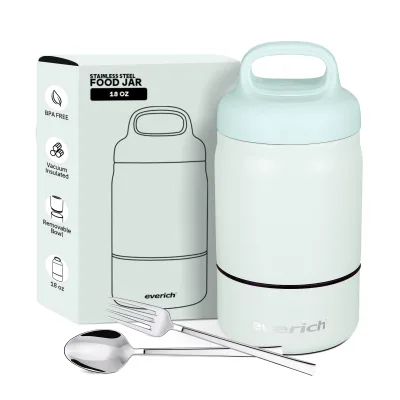


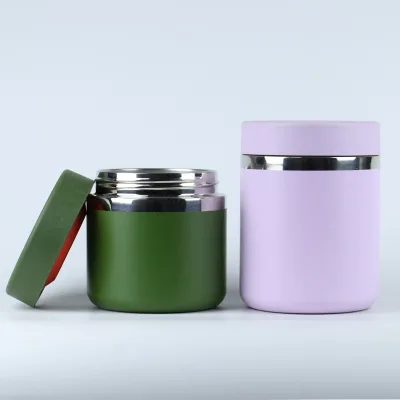

Lunch Box with Bag Stainless Steel Leakproof Insulated Thermal Insulated Container
$1.98 - $2.00
MOQ: 1000 Pieces

Comprehensive Sourcing Guide
Strategic Sourcing Guide for Thermal Lunch Jars
The global market for thermal lunch jars has evolved significantly, driven by a demand for sustainable, high-performance food storage solutions that maintain temperature integrity for extended periods. For procurement professionals and B2B buyers, navigating this sector requires a disciplined approach to verifying technical specifications, compliance standards, and supplier capabilities. This guide synthesizes observed market data and product attributes to provide a structured framework for sourcing thermal food jars, focusing on stainless steel construction, insulation performance, and regulatory adherence.
Technical Specifications and Material Composition
The foundation of a high-quality Thermal Lunch Jar lies in its material composition and structural design. Analysis of current product listings indicates that Stainless steel is the predominant material for the primary vessel, often paired with Metal components for lids and structural reinforcements. This choice is critical for durability and food safety. The surface finish of these metal components varies, with observed processes including Polish, Color Painting, Powder Coating, and Electroplated treatments. These finishes are not merely aesthetic; they serve functional roles in corrosion resistance and user grip.
Capacity is a primary specification variable. Market data reveals specific model standards ranging from 500ML to 1000ML. Distinct models are identified with capacities such as 500ML, 700ML, 800ML, and 1000ML, with some models offering dual-volume configurations like 530ML / 800ML or 500ML / 700ML. Buyers must verify the exact volume requirements for their target demographic, as the "standard" capacity often dictates the external dimensions and weight.
Insulation performance is another critical technical parameter. Products are frequently marketed with specific thermal retention claims, such as Insulated for 2-6 Hours. This range suggests that while vacuum flask technology is standard, the duration of heat retention can vary based on wall thickness and seal quality. Additionally, the Food Container Feature of being Heatable is a common attribute, indicating that these vessels can withstand direct heating or the introduction of hot liquids without compromising structural integrity. The Speciality of Insulated and Food Grade Metal confirms the dual purpose of thermal retention and food safety.
Compliance and Certification Verification
In the food contact sector, regulatory compliance is non-negotiable. Buyers must rigorously verify that suppliers possess valid certifications for the regions where the products will be sold. The observed product data highlights FDA and LFGB certifications as common attributes. LFGB (German Food, Commodities and Feed Code) is particularly stringent regarding migration limits, while FDA compliance is essential for the United States market. Some listings also reference CE / EU certification, which is necessary for entry into the European Economic Area.
When evaluating potential suppliers, procurement teams should request current, verifiable certificates for these standards. It is important to note that while some background information may mention ISO9001, BSCI, or FSC, these should be treated as secondary or background indicators rather than primary food safety guarantees. The primary focus must remain on FDA and LFGB status to ensure the Food Grade Metal and internal linings do not leach harmful substances.
Buyers should also verify that the Surface treatments, such as Color Painting or Powder Coating, are applied to food-contact surfaces only if they are certified safe. The Inside Material of some related products is noted as Fabric, which typically applies to the outer carrying bags rather than the jar itself, but the distinction must be clear to avoid confusion regarding food safety.
Cost Drivers and Pricing Dynamics
Understanding the cost structure of thermal lunch jars is essential for budgeting and margin analysis. The observed price range in the market spans from 0 to 98 USD, a wide variance that reflects differences in material quality, brand positioning, and order volume. The MOQ (Minimum Order Quantity) ranges from 1 to 1000, indicating that the market accommodates both small trial orders and large-scale production runs.
Several factors drive the final unit cost. First, the Material grade of the stainless steel significantly impacts price; higher-grade alloys with better corrosion resistance command a premium. Second, the complexity of the Surface finish, such as Electroplated or multi-layer Color Painting, adds manufacturing steps and cost. Third, the Customization level is a major cost driver. Products offering OEM and ODM Services with specific Logo application methods like Laser, Silk Screen, Heat Transfer, Decal, or 3D Printing will incur higher setup and per-unit costs compared to stock items.
The prod_packing method also influences logistics costs. While some items come in a Color Box, others are packed in Carton or OPP bags. Bulkier packaging increases shipping weight and volume, affecting the landed cost. Buyers should negotiate based on the Small Orders: Accepted capability if they are testing the market, understanding that unit prices may be higher for lower volumes.
Typical Applications and Usage Scenarios
Thermal lunch jars are designed for versatile use across various environments. The Usage category explicitly lists Food, Tableware, and Thermal applications. The Place of usage is diverse, including Kitchen, School, Office, and Picnic settings. This versatility makes them suitable for a broad B2B client base, from corporate cafeterias to educational institutions.
The Type For attribute indicates suitability for 3-4 Persons, suggesting that larger capacity models (e.g., 800ML / 1000ML) are designed for family use or group sharing, while smaller models (e.g., 500ML) are ideal for individual professionals or students. The Gender is listed as Unisex, confirming that design and marketing should be inclusive.
Beyond the jar itself, the ecosystem includes carrying solutions. Some product data references Lunch Bag attributes, including Polyester material, Waterproof properties, and a Bearing Capacity of 3-10 kg. These bags are often Multicolor and feature Pure Colour patterns. When sourcing, buyers should consider whether the thermal jar is sold as a standalone unit or as part of a kit with a compatible carrying bag, as this affects the overall value proposition for the end consumer.
Supplier Evaluation and Customization Capabilities
Selecting the right supplier requires a deep dive into their customization and production capabilities. The Customization: Available attribute is a key differentiator. Suppliers offering OEM and ODM Services allow buyers to tailor the product to their brand identity. This includes customizing the Logo through various techniques such as Laser engraving or Silk Screen printing.
The prod_model numbers, such as F1611, F1602, F1603, F1613, and ZT-FJ08, indicate a structured product line. Buyers should request samples of these specific models to verify the Hardness (noted as Medium Soft for fabric components) and the integrity of the Insulated seal. The Place of origin is consistently listed as China, which is a major manufacturing hub for this category, but buyers must verify the specific factory location and audit status.
Crucially, buyers should assess the supplier's ability to handle Small Orders if they are in the early stages of market entry. The acceptance of small orders suggests flexibility, but it is vital to confirm the Lead Time and MOQ for custom designs, as these may differ from stock items. The Design flexibility should extend to the Volume, which is listed as Customized in some contexts, allowing for bespoke capacity solutions.
Quality Control and Long-Term Procurement
Maintaining quality over time requires a robust quality control (QC) strategy. Given the Feature of Eco-Friendly and Stocked items, buyers should ensure that the Eco-Friendly claims are substantiated by the material sourcing and manufacturing processes. The Freshness Preservation feature is a critical performance metric; buyers should test the Insulated jars for their ability to maintain food temperature and prevent spoilage over the claimed 2-6 Hours.
For long-term procurement, consistency in the Surface finish is vital. Variations in Color Painting or Powder Coating can lead to customer complaints regarding aesthetics. Buyers should establish a clear acceptance criteria for color matching and surface smoothness. Additionally, the prod_packing integrity must be verified to prevent damage during transit, especially for Color Box and Carton packaging.
The Standard of 500ML / 700ML or 800ML / 1000ML should be strictly adhered to. Any deviation in volume could affect the product's fit within carrying bags or its suitability for specific dietary needs. Buyers should also monitor the Property of the jar, ensuring that the Insulated performance remains consistent across batches.
Summary of Key Product Attributes
To facilitate quick reference during the sourcing process, the following table summarizes the critical attributes observed in the Thermal Lunch Jar market. This data serves as a checklist for verifying product specifications against supplier claims.
| Attribute Category | Specific Observations & Standards |
|---|---|
| Material | Stainless steel, Metal, Polyester (for bags), Fabric (inside lining) |
| Capacity | 500ML, 700ML, 800ML, 1000ML, 530ML, Customized |
| Certifications | FDA, LFGB, CE / EU |
| Surface Finish | Polish, Color Painting, Powder Coating, Electroplated |
| Insulation | Insulated for 2-6 Hours, Vacuum flask, Heatable |
| Customization | Logo (Laser, Silk Screen, Heat Transfer, Decal, 3D Printing), OEM/ODM |
| Packing | Color Box, Carton, OPP |
| Origin | China |
| Usage | Kitchen, School, Office, Picnic, Food, Tableware |
| MOQ Range | 1 - 1000 units |
By adhering to these guidelines and rigorously verifying the provided facts, buyers can mitigate risks associated with sourcing thermal lunch jars. The focus on verified certifications, precise material specifications, and clear customization parameters ensures that the final procurement delivers high-quality, compliant, and market-ready products.
FAQs
What certifications do thermal lunch jars typically have?
Thermal lunch jars typically hold FDA and LFGB certifications to ensure food safety. Some listings also include CE EU certification for European markets. Buyers must verify these documents directly with suppliers to confirm compliance before placing orders.
How long do insulated thermal jars retain heat?
These insulated jars generally retain heat for a duration of 2 to 6 hours. This performance depends on the vacuum flask technology and wall thickness used in the stainless steel construction. Specific retention times vary by model and should be confirmed with the manufacturer.
Which capacities are available for thermal food jars?
Available capacities range from 500ML up to 1000ML with specific models offering 700ML or 800ML options. Some configurations provide dual volumes like 530ML or 800ML. Customized volume options are also available for buyers with specific requirements.
Can I customize the logo on these lunch jars?
Yes, customization is available for applying logos using laser, silk screen, heat transfer, decal, or 3D printing methods. OEM and ODM services allow for tailored branding on the metal surface. Buyers should discuss specific design needs with the supplier to confirm feasibility.
What is the minimum order quantity for these products?
The minimum order quantity ranges from 1 unit to 1000 units depending on the supplier and product type. Small orders are often accepted for trial purposes, though unit prices may differ from bulk rates. Buyers should check specific MOQs for custom versus stock items.
Where are these thermal lunch jars manufactured?
These products are primarily manufactured in China. The consistent origin point allows for efficient logistics but requires verification of specific factory locations. Buyers should confirm the exact production site to ensure quality control and compliance with their regional standards.
What materials are used for the jar and carrying bag?
The jars are constructed from stainless steel or metal with polished or coated surfaces. Carrying bags are often made of polyester fabric with waterproof features. The inside material of bags is fabric, while the jar interior is food-grade metal designed for heating.