Source Timing Belt Kit for Power Plants, Mining, and Transport
Explore 30 verified listings for the Timing Belt Kit suitable for diesel engines, power plants, and industrial transport. Buyers can compare specifications, materials like rubber and stainless steel, and supplier details to find the right replacement or repair solution.
Key considerations
Products List


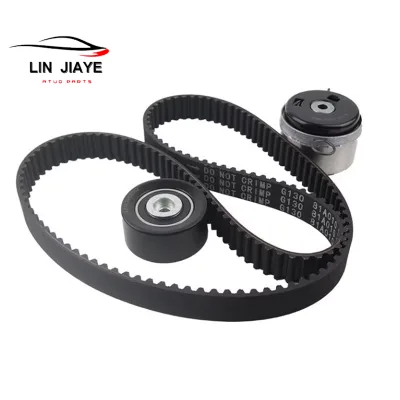


$6.88 - $16.88
MOQ: 100 Sets


$6.88 - $16.88
MOQ: 100 Sets


Comprehensive Sourcing Guide
Strategic Sourcing Guide for Timing Belt Kits
The global industrial supply chain relies heavily on the precision and reliability of power transmission components, with the Timing Belt Kit serving as a critical element in maintaining operational continuity across diverse sectors. For procurement professionals, sourcing a Timing Belt Kit involves more than simply selecting a part that fits a mechanical assembly; it requires a rigorous evaluation of material integrity, compliance with industry standards, and the logistical capabilities of potential suppliers. This guide provides a comprehensive framework for buyers navigating the market, grounded in observed product attributes and established procurement principles. The objective is to equip buyers with the knowledge to verify claims, assess risks, and secure high-quality components that meet specific operational demands.
Technical Specifications and Material Composition
When evaluating timing belt kits, the first step is a detailed analysis of technical specifications. The core function of a timing belt is to synchronize the rotation of camshafts and crankshafts in engines or to drive machinery in industrial settings with zero slip. The supplied data indicates that these kits are often designed for diesel engines and adhere to OEM standard sizes, ensuring compatibility with existing machinery without the need for modification. Buyers must verify that the model numbers, such as 95516740 or 90354782, align precisely with their equipment's requirements.
Material composition is equally critical. The market offers kits constructed from various materials, including rubber and stainless steel, each serving different environmental and mechanical needs. Rubber-based belts, often cited with high wear resistance, heat resistance, and flame resistance, are common for general automotive and industrial applications. In contrast, stainless steel components may be required for environments demanding superior corrosion resistance or higher tensile strength. The observed product attributes highlight features such as tear resistance and cold resistance, which are essential for operations in extreme climates.
Furthermore, the installation method is a specific technical consideration. The data points to "Spring Fixing" as a viable installation method, which implies a specific tensioning mechanism that buyers must accommodate in their design. The standard sizes observed range from 480mm to 20,000mm, indicating a vast spectrum of applications from small machinery to large-scale industrial conveyors. Buyers should not assume that a single specification fits all; instead, they must cross-reference the specific model number (e.g., 60T-5M, 3M, 5M, 8M) with their system's pitch and width requirements.
Compliance, Certification, and Quality Standards
In the B2B procurement of mechanical components, compliance is non-negotiable. The presence of certifications such as ISO 9001 and IATF 16949 is a strong indicator of a supplier's commitment to quality management systems. The IATF 16949 standard, in particular, is specific to the automotive industry and ensures that the supplier meets rigorous requirements for defect prevention and variation reduction. Additionally, certifications like ISO and CE suggest adherence to international safety and quality benchmarks.
However, buyers must treat these certifications as observations rather than absolute guarantees for every listed product. The verification process should involve requesting current, valid certificates directly from the supplier and confirming that the specific batch of goods was manufactured under the scope of these certifications. The observed data also mentions "Standard or Nonstandard" classifications, with many products listed as "Standard." This distinction is vital; while standard parts offer easier sourcing and interchangeability, nonstandard parts may be necessary for legacy equipment or specialized applications.
Quality is frequently described as "High Level" or "High-Quality" in product listings. To substantiate these claims, buyers should look for evidence of rigorous testing protocols. While specific test results are not provided in the general data, the presence of features like "Tensile Strength: Strong" suggests that the belts are engineered to withstand significant mechanical stress. Buyers should verify that the "High-Quality" designation is backed by internal quality control procedures that align with the stated certifications.
Cost Drivers and Pricing Structures
Understanding the cost drivers for timing belt kits is essential for budgeting and negotiation. The observed price range in the market spans from $0.10 to $2,800, a wide variance that reflects differences in material costs, manufacturing complexity, and order volume. The primary factors influencing cost include the material used (rubber vs. stainless steel), the complexity of the belt profile (e.g., 5M, 8MGT, 14MGT), and the inclusion of additional components in a "kit" format, such as tensioners and idlers.
Minimum Order Quantity (MOQ) is another significant cost driver. The observed MOQ range is between 1 and 1,000 units. For buyers requiring small quantities for maintenance or prototyping, suppliers with low MOQs are preferable, though the unit price may be higher. Conversely, large-scale procurement can leverage economies of scale to reduce the per-unit cost, provided the buyer can meet the higher MOQ thresholds.
Payment terms also play a role in the overall cost of ownership. The standard terms observed are T/T (Telegraphic Transfer) and L/C (Letter of Credit). T/T is generally faster and less expensive for the buyer in terms of banking fees, while L/C offers greater security for large transactions. Buyers should negotiate terms that align with their cash flow and risk tolerance. Additionally, the "Lowest" price attribute observed in the data should be approached with caution; it often correlates with lower MOQs or specific promotional periods rather than a sustainable baseline price for all orders.
Typical Applications and Operational Environments
Timing belt kits are versatile components used across a broad spectrum of industries. The data explicitly lists applications in power plants, mining transport, grain transport, and the chemical industry. In power plants, the reliability of the timing belt is crucial for maintaining the synchronization of turbines and generators. In mining and grain transport, the belts must withstand heavy loads and abrasive environments, making the "Wear-resistant" and "Tear-resistant" features highlighted in the product attributes particularly valuable.
The chemical industry presents unique challenges, including exposure to corrosive substances and varying temperatures. Here, the "Anti-corrosion Tape" and "Waterproof Tape" features, along with the "Heat-resistant" and "Cold-resistant" properties, become critical selection criteria. The "Purpose" of these kits is often defined as "for replace/repair," indicating their role in maintenance schedules rather than just initial assembly.
Buyers must also consider the specific engine type. The data notes that certain kits are designed "for Diesel Engine," which implies specific load and speed characteristics different from gasoline engines. In these applications, the "Spring Fixing" installation method must be compatible with the engine's tensioning system. Misalignment between the application requirements and the belt's specifications can lead to premature failure, downtime, and increased long-term costs.
Supplier Evaluation and Logistics
Selecting the right supplier is as important as selecting the right product. The observed data indicates that products originate from China, specifically from regions like Guangdong. While this provides access to a vast manufacturing base, buyers must conduct thorough due diligence. Key evaluation criteria include the supplier's ability to provide "Customization" services, as the data notes that customization is available. This is crucial for buyers with non-standard requirements or specific branding needs.
Logistics and lead times are critical factors in supply chain planning. The data presents a range of delivery times, including 15-20 days, 7-25 days, and a general lead time of 30 days. These variations suggest that delivery schedules depend on order volume, stock availability, and the specific production schedule of the supplier. Buyers should clarify the exact delivery time for their specific order before committing to a purchase to avoid production delays.
Packaging is another logistical consideration. The observed packaging methods include "Carton Box," "Wooden Case," "Carton Package, Pallet," and "Canton Package." The choice of packaging depends on the fragility of the product and the mode of transport. For international shipping, a "Wooden Case" or "Pallet" might be necessary to prevent damage, while "Carton Box" may suffice for smaller, less fragile orders. Buyers should specify their packaging requirements to ensure the goods arrive in optimal condition.
Quality Control and Long-Term Procurement
Ensuring consistent quality over time requires a robust quality control strategy. The "Warranty Period" of 1 year is a standard offering observed in the data, providing a baseline for recourse in case of defects. However, buyers should not rely solely on the warranty; they must implement incoming quality inspections and establish clear acceptance criteria. The "High Level" quality claim should be validated through sample testing before bulk orders are placed.
Long-term procurement considerations involve building a strategic relationship with suppliers who can offer stability and support. The availability of "Colors" dependent on customer demand and "Packing" dependent on customer demand suggests a flexible supplier capable of adapting to changing needs. Buyers should prioritize suppliers who demonstrate a commitment to continuous improvement and can provide technical support for installation and troubleshooting.
Furthermore, the "Condition" of the product is listed as "New," which is a fundamental requirement for most applications. Buyers must verify that the "New" condition is not a misrepresentation of refurbished or remanufactured parts, especially in critical applications. The "OE No." (Original Equipment Number) provided in the data serves as a reference for compatibility, but buyers should cross-reference this with their own equipment manuals to ensure accuracy.
Comparative Analysis of Product Attributes
To facilitate decision-making, the following table summarizes key attributes observed in the market for timing belt kits. This comparison helps buyers quickly identify which products align with their specific technical and logistical requirements.
| Attribute Category | Observed Options | Critical Verification Point |
|---|---|---|
| Material | Rubber, Stainless Steel | Verify compatibility with operating temperature and chemical exposure. |
| Certification | ISO 9001, IATF 16949, ISO, CE | Request current certificates and confirm scope covers the specific product. |
| Lead Time | 7-25 Days, 15-20 Days, 30 Days | Confirm exact delivery date based on order volume and stock status. |
| Packaging | Carton Box, Wooden Case, Pallet | Ensure packaging meets shipping requirements and protects the product. |
| Warranty | 1 Year | Understand terms and conditions for claims and replacements. |
| Customization | Available (Colors, Packing) | Confirm feasibility and cost implications for custom requests. |
| Application | Diesel Engine, Power Plant, Mining | Match belt specifications to the specific machinery and load requirements. |
Conclusion
Sourcing a Timing Belt Kit is a multifaceted process that demands attention to technical details, compliance standards, and supplier capabilities. By carefully analyzing the specifications, verifying certifications, and understanding the cost drivers, buyers can make informed decisions that ensure the reliability and efficiency of their operations. The wide range of available options, from different materials to various packaging and customization possibilities, offers flexibility but also requires diligence. Ultimately, the goal is to secure a product that not only fits the mechanical requirements but also stands the test of time in demanding industrial environments. Through rigorous evaluation and strategic partnership with suppliers, buyers can mitigate risks and achieve long-term value in their procurement of timing belt kits.
FAQs
What certifications do timing belt kits typically hold?
Many timing belt kits hold ISO 9001 and IATF 16949 certifications. Some listings also mention ISO and CE marks, indicating adherence to international quality and safety standards for automotive and industrial applications.
How long is the lead time for delivery?
Delivery times vary between 7 and 30 days depending on the order. Specific listings show ranges of 15-20 days or 7-25 days, with a general lead time of 30 days often cited for production scheduling.
Which materials are used for these timing belts?
Products are commonly made from rubber or stainless steel. Rubber belts often feature wear and heat resistance, while stainless steel options provide high tensile strength and corrosion resistance for specific industrial environments.
Can I request custom packaging for my order?
Yes, customization for packing is available based on customer demand. Options observed include carton boxes, wooden cases, and palletized packages, allowing buyers to select the most suitable method for their logistics needs.
What is the minimum order quantity for these kits?
The minimum order quantity ranges from 1 to 1000 units. Buyers can source small quantities for maintenance or larger volumes for production, with pricing often adjusted based on the specific order size and material.
Where are these timing belt kits manufactured?
Products originate from China, with specific mentions of Guangdong as a production hub. This location supports a wide range of manufacturing capabilities for automotive and industrial timing belt components.