Source Tomato Sauce Pump for Food, Chemical, and Dairy
Find 30 Tomato Sauce Pump options from verified Chinese manufacturers. Compare specifications like flow rate, material, and power for food, chemical, and dairy applications to select the right equipment.
Key considerations
Products List

Fluid Pump / Stainless Steel Pump/ Honey Pump/Twin Screw Pump / Tomato Sauce Pump
$1000.00 - $15000.00
MOQ: 1 Pieces


Stainless Steel Syrup Honey Tomato Sauce Jam Ketchup Deliver Transfer Rotary Lobe Pump
$1000.00 - $1100.00
MOQ: 1 Pieces
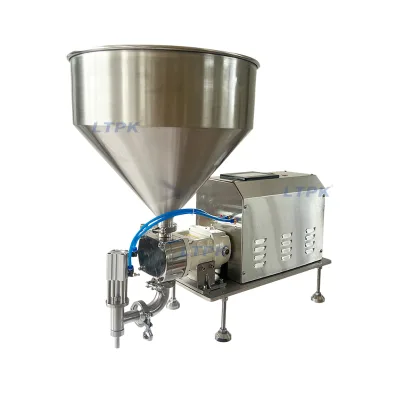


High-Performance Lobe Pump for Tomato Sauce and Peanut Butter Transfer
$5400.00 - $5600.00
MOQ: 1 Pieces


Comprehensive Sourcing Guide
Strategic Sourcing Guide for Tomato Sauce Pump Procurement
Understanding the Technical Architecture of Double Screw Systems
When sourcing equipment for high-viscosity applications such as tomato sauce, the mechanical architecture of the pump is the primary determinant of operational efficiency. The supplied product data indicates a prevalence of Double Screw Pump configurations, which are particularly suited for the shear-sensitive nature of tomato products. Unlike single-screw alternatives, double screw designs utilize intermeshing rotors that provide a gentle, continuous flow, minimizing the degradation of the product's texture and pulp integrity.
A critical technical observation from the available data is the Horizontal pump shaft position. This orientation is standard for industrial installations as it facilitates easier maintenance access to the coupling and mechanical seals while ensuring stable foundation requirements. The suction method is predominantly Single Suction, which simplifies the inlet piping design but requires careful consideration of the suction head to prevent cavitation, especially when handling thick sauces.
The tooth geometry of these pumps is another vital specification. The data highlights an Involute tooth curve paired with a Straight Tooth flank, often found in Normal Line Gear Pump variations. While the term "gear pump" appears in the context of internal engagement, the specific mention of "Double Screw" suggests a hybrid or specialized screw design where the involute profile ensures smooth meshing. This geometry is essential for maintaining a consistent flow rate without pulsation, a common issue in gear pumps that can damage delicate food matrices. The Mesh Form is described as Internal Engaged, which typically implies a compact design with a high pressure capability, suitable for transferring tomato sauce through long pipelines or into high-pressure filling machines.
Compliance and Certification Verification Protocols
In the food and beverage sector, regulatory compliance is not merely a formality but a prerequisite for market access. The sourcing guide must prioritize verification of CE and ISO certifications. The provided data explicitly lists CE and ISO as standard certifications for the equipment. Buyers must ensure that the specific unit being procured carries valid documentation for these standards, as they indicate adherence to European safety directives and international quality management systems.
The material composition of the pump is intrinsically linked to compliance. The data specifies SS304 & SS316 as the primary materials. SS304 is the industry standard for general food processing, offering adequate corrosion resistance against acidic tomato products. However, for applications involving higher salinity or more aggressive cleaning agents, SS316 is often required. Procurement teams should verify that the wetted parts of the pump are constructed from these specific stainless steel grades to prevent metal contamination and ensure compliance with food safety regulations.
Furthermore, the Automatic Grade of the machinery varies between Manual and Semi-Automatic configurations. While the pump itself may be manual or semi-automatic, the surrounding filling system often dictates the grade. The data notes a filling accuracy of +-1%, which is a critical metric for compliance with weight control regulations. Buyers should request the machinery test report to confirm that the pump meets these accuracy standards under actual operating conditions. The presence of a 1 Year warranty and Video Technical Support also serves as a proxy for the manufacturer's confidence in their compliance and quality control processes.
Cost Drivers and Pricing Structure Analysis
The pricing landscape for tomato sauce pumps is influenced by several distinct variables, ranging from material costs to customization levels. The observed price range in the market spans from 0 to 15,000 USD, a wide spectrum that reflects the diversity of pump sizes, power ratings, and feature sets. A unit priced at the lower end of this spectrum likely represents a smaller capacity model with standard SS304 construction and minimal customization. Conversely, units approaching the upper limit typically feature SS316 construction, higher power outputs, and advanced control systems.
The Power Source is a significant cost driver. The data indicates a range of 0.75kw to 30kw. Higher power ratings necessitate more robust motors, larger electrical components, and potentially more complex control panels, all of which increase the unit cost. Additionally, the Voltage requirements, listed as 110 V or 220 V, can impact the final price if custom electrical configurations are needed to match local grid standards.
Customization is another major factor. The data confirms that Customization and Customized options are available. Buyers seeking specific flow rates, unique shaft lengths, or specialized sealing arrangements will incur additional costs. The MOQ (Minimum Order Quantity) ranges from 1 to 50,000, suggesting that bulk purchases may offer significant per-unit savings, while single-unit orders will carry a premium. The prod_packing type, whether Export Box, Wooden Case, or Plywood Case, also affects the total landed cost, as heavy-duty packaging for international shipping adds to the expense.
Typical Applications and Operational Scope
The versatility of these pumps extends across a broad spectrum of industries, as evidenced by the diverse Application tags in the data. While the core keyword is tomato sauce, the pumps are explicitly designed for Food, Chemical, Dairy, Alcohol, Beer, and Pharmacy industries. This multi-industry capability suggests that the pump design is robust enough to handle various viscosities and chemical properties.
Specifically for tomato sauce, the Proper Medium Temperature range of 20~150 Degree Centigrade is a crucial operational parameter. Tomato processing often involves heating the product to pasteurization temperatures, which can exceed 100°C. The pump must maintain its structural integrity and sealing performance within this thermal range. The Flow capacity, ranging from 650 to 85,000 L/H, allows for scalability from small batch production lines to large-scale industrial facilities.
The filling material list includes Viscous Liquid, Honey, Rice, Ketchup, Peanut Butter, JAM, and Yogurt. This confirms that the pump is engineered for high-viscosity fluids, which is the defining characteristic of tomato sauce. The Speed of 200-500 Rpm is optimized to handle these thick fluids without generating excessive shear heat, which could otherwise degrade the quality of the sauce. The Capacity of 6L-400L/100 Rotations further illustrates the pump's ability to deliver precise volumes, making it suitable for various packaging formats including Bottles, Cans, Cartons, and Stand-up Pouches.
Supplier Evaluation and Origin Verification
When evaluating potential suppliers, the prod_origin and place of origin are critical data points. The supplied facts indicate origins in China, specifically Wenzhou and Zhejiang Province. These regions are known hubs for pump manufacturing, offering a competitive advantage in terms of supply chain maturity and component availability. However, buyers must verify the specific factory location to ensure it aligns with their logistical preferences and quality expectations.
The brand name LTPK is mentioned in the data, serving as a reference point for brand identification. While buyers should not rely on a single brand, the presence of a named brand suggests a level of market presence and accountability. Buyers should cross-reference this brand with the After-sales Service Provided, which includes Video Technical Support. This service capability is essential for troubleshooting issues remotely, reducing downtime and maintenance costs.
The dimension of the equipment, listed as 684264cm, provides a baseline for space planning. However, buyers must be aware that dimensions can vary significantly based on the specific model and power rating. The prod_standard is listed as Various Materials and 500L-50000L/HOUR, indicating that the supplier offers a range of standards to meet different production needs. Buyers should request detailed technical drawings to confirm that the physical dimensions and mounting requirements match their facility's layout.
Quality Control and Long-Term Procurement Considerations
Ensuring long-term reliability requires a rigorous approach to quality control. The data mentions that a machinery test report is provided, which is a valuable tool for verifying performance claims before purchase. Buyers should insist on reviewing these reports to confirm that the pump meets the specified flow, speed, and pressure requirements. The warranty period of 1 Year offers a baseline of protection, but buyers should negotiate terms that cover critical components like the core components (Pump) and mechanical seals.
The Performance attribute is described as Wearable, which likely refers to the durability of the pump's internal components under abrasive or high-viscosity conditions. For tomato sauce, which can contain seeds and pulp, the wear resistance of the screw and housing is paramount. Buyers should inquire about the availability of spare parts and the expected lifespan of the wear components to plan for future maintenance costs.
Finally, the packaging type plays a role in the preservation of the product during transit. The options of Export Box, Wooden Case, and Plywood Case suggest that the supplier is equipped to handle international shipping. Buyers should ensure that the packaging is robust enough to prevent damage during transit, especially for heavy industrial equipment. The Standard Export Packing and Standard Export Packing variations indicate a commitment to meeting international shipping standards, which is essential for global procurement.
| Feature | Specification Range | Relevance to Tomato Sauce |
|---|---|---|
| Pump Type | Double Screw Pump | Gentle handling of pulp and viscosity |
| Material | SS304 & SS316 | Corrosion resistance against acidity |
| Flow Rate | 650-85,000 L/H | Scalability for batch to continuous production |
| Temperature | 20~150°C | Compatibility with pasteurization processes |
| Accuracy | +-1% | Precision filling for regulatory compliance |
| Power | 0.75kw-30kw | Variable power for different line speeds |
| Certification | CE, ISO | Safety and quality assurance standards |
In conclusion, sourcing a Tomato Sauce Pump requires a balanced approach that weighs technical specifications, compliance requirements, and cost factors. By leveraging the detailed data available on double screw designs, material grades, and operational ranges, buyers can make informed decisions that ensure efficient, safe, and reliable production of tomato-based products. The focus should remain on verifying the specific attributes of each supplier against the rigorous demands of food processing, ensuring that the chosen equipment delivers consistent performance over the long term.
FAQs
What certifications do tomato sauce pumps typically have?
Tomato sauce pumps typically hold CE and ISO certifications. These standards ensure adherence to European safety directives and international quality management systems for food processing equipment.
Which materials are used for the pump construction?
The pumps are constructed from SS304 and SS316 stainless steel. These materials provide necessary corrosion resistance against acidic tomato products and aggressive cleaning agents.
How is the pump shaft positioned for installation?
The pump shaft is positioned horizontally. This orientation facilitates easier maintenance access to the coupling and mechanical seals while ensuring stable foundation requirements.
Can the pump handle high-temperature processing?
Yes, the pump operates within a proper medium temperature range of 20 to 150 degrees Celsius. This allows it to maintain structural integrity during pasteurization processes.
What is the filling accuracy of the system?
The system offers a filling accuracy of plus or minus 1 percent. This precision is critical for compliance with weight control regulations in food packaging.
Which flow rates are available for this pump?
Available flow rates range from 650 to 85,000 liters per hour. This wide range supports scalability from small batch production lines to large-scale industrial facilities.