Source Tool Storage Bag for Electrical, Hardware, and Car Repair
Compare 30 tool storage bags from verified suppliers offering waterproof and shockproof protection. Options include polyester and nylon materials with customizable sizes for electrical, hardware, and car repair tools.
Key considerations
Products List


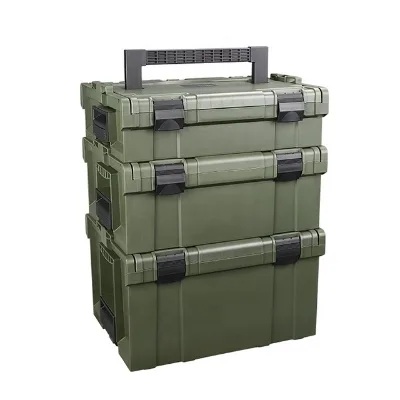

Waterproof Durable Hard Handle Tool Bag Multiple Side Pockets Storage Bags
$7.89 - $10.59
MOQ: 200 Pieces


Multi-Pocket Convenient and Adjustable Maintenance Tool Belt Bag Tool Bag
$5.50 - $6.50
MOQ: 1000 Pieces


Factory Custom Belt Tool Bag Adjustable Bag Durable Bag Multi-Pocket Multi-Function
$9.00 - $10.00
MOQ: 500 Pieces


Comprehensive Sourcing Guide
Tool Storage Bag Sourcing Guide
Procuring tool storage bags requires a clear understanding of the specific operational environment where the bags will be deployed, as the selection criteria vary significantly between general hardware storage and specialized electrical tool management. The market offers a diverse range of options, from soft-sided duffel bags designed for portability to structured cases with specific capacity ratings. Buyers must first define whether the primary requirement is for heavy-duty protection against impact and water or for lightweight organization of smaller hand tools. The observed product landscape includes items explicitly rated for electrical tools, USB tools, and car repair applications, indicating that material selection and internal organization are critical decision points that directly influence the bag's longevity and utility.
The commercial landscape for these items is characterized by flexible customization options and a wide range of minimum order quantities, allowing buyers to scale orders from single units to bulk procurement without immediate inventory pressure. Suppliers frequently offer OEM and ODM services, enabling brands to tailor the bag's appearance, branding, and internal layout to match specific corporate or professional standards. However, this flexibility comes with the need for rigorous verification of production timelines and material consistency. Buyers should be prepared to navigate varying lead times, which can range from sample approval periods of roughly a week to full production cycles extending up to two months, depending on the complexity of the customization and the supplier's current capacity.
Product Scope and Observed Listing Signals
The product scope for tool storage bags in the current market spans multiple material compositions, with polyester and nylon being the most prevalent choices for the main body, while ABS is utilized for structural components or specific hard-shell variants. The observed listings indicate a strong emphasis on capacity, with products categorized as either "Big Capacity" or "Medium Capacity," suggesting that buyers must align their selection with the volume of tools they intend to carry. For instance, specific models are noted to have dimensions such as 34 * 22 * 25cm or 19.7" x 9.8" x 9.3", providing tangible benchmarks for spatial requirements. Additionally, the hardness of the bags ranges from soft to medium soft, which dictates the level of protection against crushing forces versus the flexibility needed for storage in tight spaces.
Functional attributes observed in the listings highlight a focus on durability and environmental resistance, with many products explicitly marketed as waterproof and shockproof. These features are essential for professionals working in variable weather conditions or on construction sites where tools are exposed to moisture and impact. The color palette is generally standardized, with black and blue being the dominant options, though customization is available to meet specific branding needs. Furthermore, the bearing capacity of these bags varies, with some models supporting loads exceeding 10 kg while others are rated for 3-10 kg, a critical distinction for users carrying heavy power tools or extensive hardware sets.
Technical Specifications to Verify
When evaluating technical specifications, the primary focus should be on the closure mechanisms and the structural integrity of the bag's shape. The observed data points to zipper closures as the standard method for securing contents, which must be verified for smooth operation and resistance to jamming under heavy loads. The shape of the bags is typically described as vertical square or duffel-style, which influences how tools are organized and accessed. Buyers should verify that the internal dimensions and external shape align with the specific tools they carry, ensuring that the "Big Capacity" or "Medium Capacity" labels accurately reflect the usable space rather than just the external volume.
Material composition and weight are equally critical technical factors that determine the bag's suitability for specific tool types. While polyester and nylon are common, the presence of ABS in certain models suggests a hybrid approach for enhanced rigidity. The gross weight of the bags is observed to be between 1 and 1.5 kg, which is a significant factor for users who must carry the bag for extended periods. It is essential to confirm that the stated weight includes all necessary hardware and that the material density is sufficient to withstand the abrasion caused by metal tools. Additionally, the packing method, often described as polybag or customized packaging, should be assessed to ensure it provides adequate protection during transit and storage.
Compliance and Safety Documentation
Compliance and safety documentation for tool storage bags primarily revolve around social responsibility certifications and material safety standards rather than electrical safety, as the bags themselves are passive storage containers. The BSCI certification is a notable attribute observed in the supply chain, indicating that the manufacturing facilities adhere to specific social compliance standards regarding labor practices and working conditions. Buyers should request proof of this certification to ensure their supply chain aligns with corporate social responsibility goals. While CE certification is mentioned in background contexts, it is not a definitive attribute for the bags themselves, and buyers should clarify with suppliers whether any specific safety standards apply to the materials used, particularly if the bags are intended for use in regulated industrial environments.
Safety considerations also extend to the physical design of the bag, ensuring that it does not introduce hazards during use. The "Shockproof" and "Waterproof" claims observed in the product listings should be backed by specific test data or material specifications that verify the bag's ability to protect tools from environmental damage. Buyers must verify that the zippers and handles are robust enough to prevent accidental opening or failure under load, which could lead to tool damage or injury. Although specific test results are not provided in the general listing data, the presence of these functional claims necessitates a request for validation from the supplier to ensure that the bag meets the promised performance levels in real-world scenarios.
Cost Drivers and Commercial Terms
The cost of tool storage bags is driven by several key factors, including the complexity of the material composition, the level of customization required, and the scale of the order. The use of specialized materials like ABS or high-grade nylon, combined with features such as waterproofing and shockproofing, will inherently increase the unit cost compared to basic polyester models. Customization options, such as tailored branding, specific color schemes, or unique internal layouts, add to the production complexity and cost. Buyers should be aware that the price range observed in the market spans from $1 to over $80, reflecting the vast difference between basic utility bags and premium, highly customized solutions.
Commercial terms and payment structures are critical components of the procurement process, with the T/T (Telegraphic Transfer) method being a standard requirement for many suppliers. The lead time is another significant cost driver, as production times can extend from 45 to 60 days after the deposit is received, with sample lead times typically ranging from 7 to 10 days. These timelines must be factored into the overall project schedule to avoid delays. Additionally, the port of loading, often cited as Xiamen, China, and the price condition, such as FOB Xiamen, will influence the final landed cost and logistics planning. Buyers should negotiate these terms carefully to ensure they align with their cash flow and delivery expectations.
Supplier Qualification and Quality Control
Supplier qualification for tool storage bags should prioritize manufacturers with a proven track record in OEM and ODM services, as these suppliers are better equipped to handle the customization and quality control requirements of the industry. The observation of specific product models like QM-SS940 and DK21-TB10 series indicates that established suppliers often have a catalog of standardized designs that can be adapted to buyer needs. Buyers should verify the supplier's production capacity and their ability to maintain consistency across large batches, especially given the wide range of MOQs from 1 to 1000 units. A supplier's ability to provide samples within the observed 7-10 day window is a strong indicator of their operational efficiency and responsiveness.
Quality control measures must be rigorous, focusing on the integrity of the stitching, the durability of the zippers, and the consistency of the material thickness. Since the bags are designed to protect valuable tools, any failure in the bag's structure could result in significant financial loss for the end-user. Buyers should implement a quality control protocol that includes pre-production sample approval and in-process inspections to ensure that the final product matches the agreed-upon specifications. The "Customized" packing option observed in the listings suggests that suppliers are capable of meeting specific packaging requirements, but this must be verified to ensure that the packaging itself does not compromise the bag's protection during shipping.
Long-Term Procurement Checks
Long-term procurement checks for tool storage bags should focus on the supplier's ability to maintain consistent quality and delivery performance over time. Given the variability in lead times and the potential for customization, it is essential to establish a clear communication channel with the supplier to monitor production progress and address any issues promptly. Buyers should regularly review the supplier's adherence to the agreed-upon specifications, particularly regarding material quality and functional attributes like waterproofing and shockproofing. Consistent performance in these areas is crucial for maintaining the reliability of the supply chain and ensuring that the end-users receive products that meet their expectations.
Sustainability and adaptability are also key considerations for long-term procurement strategies. As market demands evolve, suppliers must be able to adapt their product lines to incorporate new materials or design features that enhance durability and functionality. Buyers should assess the supplier's commitment to continuous improvement and their willingness to collaborate on product development. The ability to scale production up or down based on demand, as indicated by the flexible MOQ range, is a valuable asset for managing inventory levels and reducing waste. By maintaining a proactive approach to supplier management, buyers can ensure a stable and efficient supply of tool storage bags that supports their long-term business goals.
FAQs
What materials are used for tool storage bags?
Tool storage bags are commonly crafted from durable materials such as polyester, nylon, and ABS. Polyester offers a soft yet sturdy option for general use, while ABS provides a harder, shockproof shell for sensitive electrical tools. Nylon is also utilized for its strength and resistance to wear. Buyers can choose based on the specific protection needs for their hardware or hand tools.
Can tool storage bags be customized for branding?
Yes, customization is available for tool storage bags through OEM and ODM services. Buyers can request specific designs, colors, and packing methods to match their brand identity. The production time for customized orders typically ranges from 45 to 60 days after receiving the deposit. This service allows businesses to create unique, branded solutions for their tool storage requirements.
What is the typical lead time for tool storage bags?
The sample lead time for tool storage bags is approximately 7 to 10 days. For bulk production, the time required is generally 45 to 60 days after the deposit is received. These timelines allow for quality checks and manufacturing processes. Buyers should plan their procurement schedules accordingly to ensure timely delivery of their customized or standard tool storage solutions.
Which certifications are available for tool storage bags?
Tool storage bags can be produced with BSCI certification, ensuring compliance with social responsibility standards. This certification is valuable for buyers who require ethical sourcing practices. While other certifications like CE may be relevant for specific product types, BSCI is a documented option for these bags. Buyers should verify specific certification needs with suppliers during the sourcing process.
How much weight can tool storage bags hold?
Tool storage bags have varying bearing capacities depending on the design and material. Some models support a bearing capacity of greater than 10 kg, suitable for heavy-duty hardware. Others are designed for 3-10 kg, offering medium capacity for lighter tools. Buyers should select a bag based on the total weight of the tools they intend to carry to ensure durability and safety.
What are the standard dimensions for tool storage bags?
Standard dimensions for tool storage bags vary by model. For instance, one common size is 34 * 22 * 25 cm, while another is 19.7 inches by 9.8 inches by 9.3 inches. Some bags offer customized sizes to fit specific tool sets. Buyers should check the specific model specifications to ensure the bag accommodates their tools effectively.