Find Tool Free Installation Tension Clamp for Trucking, Bus, and Off-Road
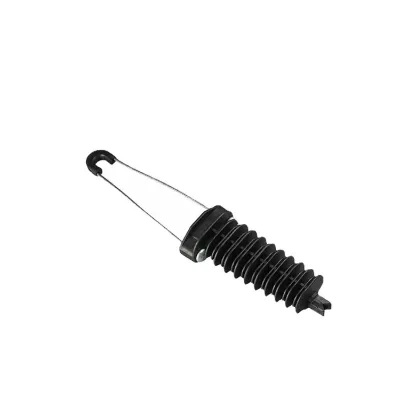
Source 30 verified products featuring Tool Free Installation Tension Clamp for heavy-duty clamps, high voltage pole lines, and off-road equipment. Compare specifications, materials, and lead times from suppliers in Ningbo and Qingdao to find the right fit for your railway or trucking needs.
Key considerations
Products List




Comprehensive Sourcing Guide
Strategic Sourcing Guide for Tool-Free Installation Tension Clamps
Procuring specialized hardware for heavy-duty infrastructure and transportation applications requires a rigorous approach to verifying technical compatibility and supply chain reliability. The core keyword "tool-free installation tension clamp" points to a specific subset of fastening solutions designed to minimize on-site labor time while maintaining structural integrity under high stress. Buyers entering this market must navigate a complex landscape of material specifications, certification requirements, and manufacturing processes. This guide synthesizes available market data to provide a disciplined framework for evaluating potential suppliers and products, ensuring that procurement decisions are grounded in verified facts rather than unconfirmed marketing claims.
Technical Specifications and Material Compatibility
The foundation of any successful procurement for tension clamps lies in understanding the precise technical attributes of the product. In the current market, tension clamps are not monolithic; they vary significantly based on the intended application, whether for railway systems, high-voltage transmission lines, or heavy-duty trucking equipment. A critical observation from available product data indicates that models such as the "WD916CT" and "NEJ series" exist, each serving distinct functional roles. The "WD916CT" is explicitly designed for trucking, bus, and off-road equipment, featuring a band width of 9/16" (14.2mm) and a design incorporating four pairs of washers. Conversely, the "NEJ series" is categorized for high-voltage pole line applications, utilizing a suspension clamp structure to achieve low line loss.
Material selection is equally pivotal. Suppliers offer clamps constructed from Stainless Steel and Aluminum Alloy, each presenting different corrosion resistance profiles and weight characteristics. Stainless Steel variants are often associated with high durability in harsh environments, while Aluminum Alloy options may be preferred for applications where weight reduction is critical. The manufacturing process also dictates the final product's quality; Investment Casting is a noted process for producing these components, suggesting a high degree of dimensional accuracy and surface finish. Furthermore, the connection method is a vital specification; some models utilize welding connections, while others rely on specific fastener types like railway fasteners. Buyers must verify that the "Tool-Free" aspect of the installation aligns with the specific connection mechanism, as some designs may require specialized tools despite the "tool-free" marketing label, or the label may refer to the absence of heavy machinery during assembly.
Compliance, Certification, and Standard Verification
Navigating the regulatory landscape is essential for ensuring that purchased tension clamps meet international safety and quality benchmarks. The market data reveals a diverse array of standards and certifications that suppliers may claim to meet. Commonly cited standards include ISO9001, DIN, ANSI, and IEC standards. For instance, specific product listings reference ISO9001 as a production standard, while others mention compliance with IEC standards for high-voltage applications. Additionally, some suppliers indicate the availability of PPAP (Production Part Approval Process) files, which are crucial for automotive and heavy equipment sectors to validate the manufacturing process.
However, buyers must exercise caution when interpreting certification claims. While ISO9001 is frequently mentioned, the specific scope of this certification—whether it covers the entire manufacturing facility or just specific product lines—must be verified. Similarly, references to "TS16949" (now IATF 16949) suggest automotive-grade quality management, but this should be confirmed through direct supplier communication rather than assumed. The presence of SGS reports or "Standard" designations in product descriptions should be treated as observations of the supplier's documentation rather than guarantees of performance for every unit. Buyers should explicitly request copies of valid certificates and verify their current status with the issuing bodies. It is also important to note that while some data points mention "EN 50483-3" as a background standard, this should not be asserted as a definitive requirement for all products without specific verification from the supplier regarding the product's compliance with this specific European norm.
Cost Drivers and Pricing Dynamics
Understanding the cost structure of tension clamps is vital for budgeting and negotiating effective procurement contracts. The observed price range in the market spans from $0.01 to $12.65 USD, a wide variance that reflects differences in material costs, manufacturing complexity, and order volume. The primary cost drivers include the raw material used (Stainless Steel vs. Aluminum Alloy), the complexity of the investment casting process, and the extent of surface treatments applied. Surface treatments such as Anti-Rust Oil or Painting add value but also increase the unit cost compared to products with "Without Treatment" finishes.
Order volume plays a significant role in pricing, as indicated by the observed Minimum Order Quantity (MOQ) range of 1 to 100,000 units. Suppliers offering lower MOQs, such as 1 unit, may charge a premium per unit due to the setup costs associated with small-batch production. Conversely, bulk orders approaching the 100,000-unit range likely benefit from economies of scale, though the specific price point for such volumes is not explicitly defined in the available data. Buyers should anticipate that specialized models like the "Wdct58" or "Wdct916" series may command higher prices due to their specific design features, such as the inclusion of multiple washer pairs or specialized band widths. Additionally, packaging requirements, such as Plywood Crates or Master Cartons, can influence the final landed cost, especially for international shipments where freight charges are significant.
Typical Applications and Operational Context
The utility of tool-free installation tension clamps is defined by their application context. The market data highlights three primary sectors: railway infrastructure, high-voltage power transmission, and heavy-duty transportation. In the railway sector, clamps function as critical fasteners, often requiring high tensile strength and resistance to vibration. The "Railway" fastener attribute suggests these components are integral to track stability and safety.
For high-voltage applications, the focus shifts to electrical performance and structural suspension. The "NEJ series" and "Suspension Clamp" designations indicate products engineered to support conductors on poles while minimizing energy loss. The "Low Line Loss" advantage mentioned in the data underscores the importance of electrical conductivity and mechanical stability in these environments. In the transportation sector, specifically for trucking and off-road equipment, clamps must withstand dynamic loads and harsh environmental conditions. The "WD916CT" model, with its specific band width and washer design, is tailored for these heavy-duty uses. Buyers must ensure that the selected clamp matches the specific operational stresses of their application, as a clamp designed for a static high-voltage pole may not perform adequately in a dynamic trucking environment.
Supplier Evaluation and Operational Capabilities
Selecting the right supplier involves more than just comparing product specifications; it requires a holistic assessment of the supplier's operational capabilities. Key factors include production location, lead times, and trade terms. The data indicates that suppliers are located in various regions of China, including Ningbo, Zhejiang, and Qingdao. Ningbo appears to be a significant hub, with multiple product origins listed there. The lead time for production is consistently observed in the range of 30 to 45 days, with some specific entries noting a 30-day delivery time. Buyers must factor this lead time into their project schedules, ensuring that production and shipping timelines align with their operational needs.
Payment methods and trade terms are also critical components of supplier evaluation. Common payment methods include L/C (Letter of Credit) and T/T (Telegraphic Transfer), while trade terms often default to FOB (Free on Board). These terms dictate the risk and cost allocation between the buyer and the seller. Additionally, the number of employees, such as the noted figure of 120, can serve as a rough indicator of the supplier's capacity, though it should not be the sole metric for evaluation. Buyers should verify the supplier's ability to handle customizations, as "Customization" is listed as an available attribute for many products. This flexibility is crucial for adapting standard clamps to unique project requirements.
Quality Control and Long-Term Procurement Considerations
Ensuring long-term reliability requires a robust quality control strategy. The available data mentions various packing methods, including Plywood Crates, PP Bags, and Master Cartons, which play a role in protecting the product during transit. However, the most critical aspect of quality control is the verification of the manufacturing process and surface treatments. The "Investment Casting" process and surface treatments like "Anti-Rust Oil" or "Painting" must be inspected to ensure they meet the specified standards. Buyers should request detailed quality inspection reports and, where possible, conduct third-party inspections before shipment.
Long-term procurement considerations also involve the availability of spare parts and the consistency of supply. The "Customized" nature of some products means that reordering identical units may require specific communication with the supplier to ensure that design changes have not occurred. Furthermore, the "Condition: New" attribute suggests that buyers should verify the state of the goods upon receipt to ensure they are not refurbished or used items. Establishing a clear communication channel for after-sales support and warranty claims is essential, especially for critical infrastructure components where failure could have severe consequences. Buyers should also consider the environmental impact of the materials and packaging, ensuring that the chosen solution aligns with their sustainability goals.
Comparative Analysis of Product Attributes
To facilitate a clearer understanding of the diverse options available, the following table summarizes key attributes observed in the market data. This comparison highlights the variations in models, materials, and standards that buyers must evaluate.
| Product Model / Series | Primary Application | Material | Key Standard / Certification | Surface Treatment | Packing Method |
|---|---|---|---|---|---|
| WD916CT | Trucking, Bus, Off-Road | Stainless Steel | PPAP File Available | Anti-Rust Oil or Painting | PP Bag, Master Carton, Pallet |
| NEJ Series | High Voltage Pole Line | Aluminum Alloy | IEC Standard | Without Treatment | Ply-Wooden Case |
| Clamp-HS | Heavy Duty Clamps | Stainless Steel | SGS | Anti-Rust Oil or Painting | Wooden Case |
| Nll-2 / Nld-2 | General / Custom | Not Specified | Contact for Info | Not Specified | As You Requested |
| Tie Plate (General) | Railway | Stainless Steel | ISO9001, DIN, ANSI | Anti-Rust Oil or Painting | Plywood Crate |
This table illustrates that no single product fits all needs. The "WD916CT" is optimized for transportation with specific washer designs, while the "NEJ Series" targets electrical infrastructure with aluminum construction. The "Clamp-HS" and general "Tie Plate" categories serve broader heavy-duty and railway markets, respectively. Buyers must cross-reference these attributes with their specific project requirements to avoid mismatches in performance or compliance.
Final Procurement Recommendations
In conclusion, sourcing tool-free installation tension clamps requires a meticulous approach that balances technical specifications, regulatory compliance, and supplier reliability. Buyers should prioritize verifying the material composition, such as Stainless Steel or Aluminum Alloy, and ensure that the manufacturing process, like Investment Casting, aligns with their quality expectations. Certification checks must go beyond surface-level claims, requiring direct validation of ISO9001, IEC, or PPAP documentation. Cost considerations should account for the wide price range and MOQ variations, while lead times of 30-45 days must be integrated into project planning. By focusing on these evidence-based criteria, buyers can secure high-quality tension clamps that meet the rigorous demands of railway, power transmission, and heavy-duty transportation applications.
FAQs
What materials are used for tool free installation tension clamps?
These clamps are constructed from Stainless Steel or Aluminum Alloy. Stainless Steel offers high durability for harsh environments, while Aluminum Alloy reduces weight for applications where mass is a critical factor.
Which certifications do suppliers typically provide for these clamps?
Suppliers often provide ISO9001 certification and PPAP files for automotive applications. Some listings also reference IEC standards for high-voltage applications or SGS reports, though specific scope must be verified directly.
How long is the lead time for manufacturing these clamps?
The standard lead time ranges from 30 to 45 days for production. Some specific entries note a 30-day delivery time, so buyers should confirm exact schedules before placing orders.
Can these clamps be customized for specific project requirements?
Yes, customization is available for many of these products. Buyers can request specific modifications to fit unique project needs, provided they communicate requirements clearly to the manufacturer.
What packaging methods are used for shipping these clamps?
Common packaging includes Plywood Crates, PP Bags, Master Cartons, and Pallets. The specific method depends on the supplier and order size, with Ply-Wooden Cases also used for larger shipments.
Where are the manufacturers of these clamps located?
Manufacturers are primarily located in Ningbo, Zhejiang, and Qingdao, China. Ningbo appears as a significant hub with multiple product origins listed in that region for various clamp models.
What is the minimum order quantity for these clamps?
The minimum order quantity ranges from 1 to 100,000 units depending on the supplier. Lower MOQs allow for smaller initial orders, while bulk purchases may benefit from economies of scale.
Which standards apply to high voltage pole line clamps?
High voltage pole line clamps often comply with IEC standards. Specific models like the NEJ series are designed for these applications, ensuring low line loss and structural suspension capabilities.