Source Track Chassis Hydraulic Final Drive for Excavators
Compare 30 track chassis hydraulic final drive units from verified suppliers. These components support heavy-duty applications in excavators, bulldozers, and crawler machinery with options for steel or rubber tracks; compare the available evidence and request quotations based on your requirements.
Key considerations
Products List




Comprehensive Sourcing Guide
Track Chassis Hydraulic Final Drive Sourcing Guide
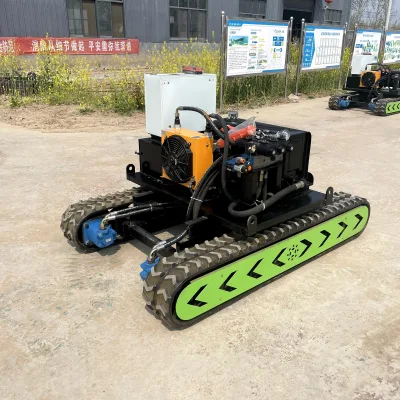
Procuring track chassis hydraulic final drives requires distinguishing between general speed reduction units and specialized undercarriage components designed for heavy earthmoving equipment. The market offers modular designs that integrate speed reduction with torque multiplication, specifically tailored for crawler applications ranging from small agricultural machinery to large bulldozers. Buyers must verify that the observed product attributes, such as hardened tooth surfaces and notchless ground tooth roots, align with the specific load demands of their intended machinery, whether it is a compact excavator or a massive mining vehicle.
The observed listings indicate a diverse range of models, including specific series for excavators like the PC and E3 series, as well as general crawler undercarriage groups. These components often feature robust construction with floating oil seals to ensure longevity in harsh environments. When evaluating suppliers, it is critical to confirm that the "Crawler" type designation matches the actual track configuration, such as steel or rubber tracks, and that the travel speed and climbing ability specifications meet the operational requirements of the specific job site conditions.
Product Scope and Observed Listing Signals
Buyers should first analyze the functional scope of the listed units to ensure they match the required drive configuration. The available products explicitly support speed reduction, speed changing, and drive torque modification, which are essential for converting high-speed motor input into the low-speed, high-torque output needed for track movement. The presence of optional motors and multiple disc brakes suggests a flexible system that can be adapted to various powertrain layouts, but the buyer must confirm that the specific motor and brake integration is compatible with their existing hydraulic systems.
Listing signals also reveal a strong emphasis on customization and modular design, allowing for tailored solutions across different tonnage classes. The data shows models ranging from 0.5 tons to 50 tons, with specific standards for 6-ton through 35-ton machines, indicating a broad but segmented product range. Procurement teams must verify that the "Three-Step" design and "Horizontal Type" installation orientation are suitable for their chassis geometry, as these physical constraints significantly impact the feasibility of retrofitting or new machine integration.
Technical Specifications to Verify
Technical verification must begin with the gear train integrity, specifically the hardness and surface treatment of the teeth. The supplied facts highlight "Hardened Tooth Surface" and "Notchless Ground Tooth Root" as key attributes, which are critical for resisting fatigue failure under the cyclic loading typical of crawler operations. Buyers should request detailed metallurgical reports to confirm that the case-hardened and tempered materials meet the specific stress requirements of their application, ensuring the gear set can withstand the high load capacity observed in the product descriptions.
Performance metrics such as input speed and output torque are equally vital for system compatibility. The observed input speed of 4000rpm sets a baseline for the driving motor, and the "Higher Output Torque" claim must be validated against the actual resistance of the track system. Additionally, the travel speed of 30km/h and climbing ability of 30 degrees provide operational boundaries that must be respected; verifying these figures against the specific machine model, such as the PC100 or E320 series, ensures the final drive will not be overstressed during peak performance scenarios.
Compliance and Safety Documentation
Regulatory compliance is a primary concern when sourcing industrial components for heavy machinery, particularly regarding international safety standards. The observed listings mention CE and ISO9001 certifications, which serve as foundational indicators of quality management and safety adherence. However, buyers must treat these as general observations and request specific test certificates for the final drive units to ensure they meet the safety regulations of the destination country, as certification status can vary by batch and specific model configuration.
Safety documentation should also cover the mechanical integrity of critical sealing and braking systems. The inclusion of "Floating Oil Seals" and "Multiple Disc Brakes" implies specific safety protocols for hydraulic containment and emergency stopping. Procurement teams must verify that the sealing technology prevents contamination ingress in dusty or wet environments and that the braking systems are rated for the maximum load capacity of the machine. Without explicit test results for these safety-critical components, the risk of operational failure increases significantly.
Cost Drivers and Commercial Terms
Cost structures for final drives are heavily influenced by the level of customization and the complexity of the gear design. The availability of "Customized Design" and "Different Ratios" suggests that standard off-the-shelf units may be less expensive, but specialized configurations for specific excavator models will command a premium. Buyers should analyze the trade-off between the "Lower Cost" claim and the specific performance requirements, ensuring that cost-saving measures do not compromise the "Robust and Modular Design" necessary for long-term reliability in demanding applications.
Commercial terms regarding delivery and minimum order quantities (MOQ) also play a significant role in the total cost of ownership. The observed MOQ range of 1 to 10 units offers flexibility for small projects, while the "Fast Delivery" and "15 Days" lead time indicate a responsive supply chain. However, the "18 Months" warranty period is a critical commercial term that must be clearly defined in the contract, including coverage for manufacturing defects versus wear and tear, to protect the buyer from unexpected replacement costs during the initial operational phase.
Supplier Qualification and Quality Control
Supplier qualification should focus on their ability to maintain consistent quality across the diverse range of models they offer. The presence of multiple related models, from PC60 to E5090B, indicates a supplier with a broad manufacturing capability, but buyers must verify their quality control processes for each specific product line. The "Easy Assembly" feature is a positive indicator of design maturity, but it should be backed by documented assembly instructions and quality checks to ensure that the final drive can be installed correctly without specialized tooling or excessive labor.
Quality control protocols must extend to the raw materials and finishing processes used in production. The specification of "Top-Quality Case Hardened and Tempered" materials requires rigorous supplier audits to confirm that the heat treatment processes are consistent and verified. Buyers should request evidence of in-process inspections and final testing procedures, particularly for the "Steel Crawler Undercarriage Group" and "Travel Motor" components, to ensure that the final product meets the high standards implied by the product descriptions.
Long-Term Procurement Checks
Long-term procurement strategies must account for the availability of spare parts and the longevity of the supply relationship. The "Related Parts" list, which includes swing motors and crankshafts, suggests that the supplier offers a comprehensive ecosystem of components. Buyers should verify the long-term availability of these parts to prevent machine downtime, ensuring that the supplier can support the equipment throughout its entire lifecycle, which is essential for maintaining operational continuity in heavy industry applications.
Finally, ongoing performance monitoring is necessary to validate the initial claims of durability and efficiency. The "18 Months" warranty provides a baseline for performance expectations, but buyers should establish a feedback loop to track actual field performance against the observed specifications like "Higher Load Capacity" and "Higher Output Torque." Regular reviews of the product condition and any recurring issues will help refine future procurement decisions and ensure that the selected final drives continue to meet the evolving demands of the machinery fleet.
FAQs
What is the input speed for the HFT-T crawler track chassis?
The HFT-T crawler track chassis supports an input speed of 4000rpm. This high-speed capability ensures efficient power transmission through the three-step reduction system. The robust design accommodates various motor options, allowing operators to match performance requirements with specific agricultural or construction machinery applications effectively.
Can the track chassis be customized for specific machinery models?
Yes, customized design options are available for the track chassis. Manufacturers offer tailored solutions for bulldozers and excavators, including models like PC100 and E320. Buyers can select between steel or rubber tracks to suit different terrains. This flexibility ensures optimal compatibility and performance for diverse heavy equipment applications worldwide.
What certifications are provided for the crawler undercarriage components?
The crawler undercarriage components come with CE and ISO9001 certifications. These standards verify that the products meet rigorous quality and safety requirements for international trade. The new condition parts, such as travel motors and final drives, undergo strict quality control. This ensures reliable performance and compliance with global manufacturing standards for heavy machinery.
How long is the delivery time for the track chassis parts?
The standard delivery time for track chassis parts is within 15 days. Fast delivery services ensure that buyers receive their orders promptly to minimize equipment downtime. The products are packed in export-standard wooden boxes to protect them during transit. This efficient logistics process supports timely project completion for global construction and agricultural clients.
What is the warranty period for the hydraulic final drive system?
The hydraulic final drive system includes an 18-month warranty. This coverage protects buyers against manufacturing defects and ensures long-term reliability. The components feature hardened tooth surfaces and floating oil seals for durability. This warranty period provides peace of mind for operators using the equipment in demanding agricultural and construction environments across various global markets.
Which materials are used for the crawler track chassis construction?
The crawler track chassis is constructed from top-quality case hardened and tempered materials. This high-grade steel ensures exceptional strength and resistance to wear under heavy loads. The notchless ground tooth root design enhances structural integrity. These material choices contribute to the robust modular design, providing superior performance and longevity for steel and rubber track applications.