Source Trailer Door Latch for Door Window and Furniture
Compare 30 verified Trailer Door Latch options from Chinese manufacturers. Buyers can evaluate specifications like material, dimensions, and surface treatment to find suitable solutions for doors, windows, furniture, and trailers.
Key considerations
Products List


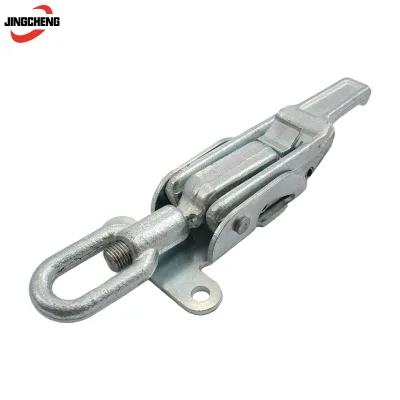


Truck Parts Door Handle Steel Container Trailer Truck Door Handle Latch
$8.00 - $10.00
MOQ: 500 Pieces

Steel Heavy Duty Handle Latch Used on Trailer Parts/Tractor Parts/Truck Parts
$8.00 - $10.00
MOQ: 500 Pieces


Comprehensive Sourcing Guide
Strategic Sourcing Guide for Trailer Door Latch Systems
The global logistics and transportation sectors rely heavily on the integrity of cargo containment systems, with the Trailer Door Latch serving as a critical component for security and operational safety. For procurement professionals, sourcing these mechanisms requires a disciplined approach that balances technical specifications, material durability, and regulatory compliance. The market offers a diverse array of latch types, ranging from simple spring bolts to complex load-bearing body structures designed for refrigerated trucks and heavy-duty transport. This guide provides a structured framework for evaluating potential suppliers and selecting the right hardware, grounded in observable product attributes and industry standards.
Technical Specifications and Material Composition
When evaluating trailer door latches, the primary focus must be on the physical dimensions and material composition, as these factors directly dictate the hardware's lifespan and load-bearing capacity. The supply chain data indicates a significant variation in product models, such as the SN-TL2603, SN-23TGL01, and the 21080 series, each serving distinct functional requirements. A critical observation in the current market is the prevalence of iron and steel as the base materials. For instance, specific models are explicitly identified as being constructed from iron, while others utilize steel, which generally offers superior tensile strength for heavy-load applications.
Dimensional precision is paramount for compatibility with existing trailer frames. Buyers must verify the length, width, and thickness of the latch against their specific trailer models. Available specifications include a length of 165mm for certain spring bolt variants, while others extend to 209mm or 210mm in total length. The pin diameter is another crucial metric, with observed values of 12mm for specific models, ensuring a secure fit within the locking mechanism. Furthermore, the thickness of the latch body, noted at 5mm in some configurations, influences its resistance to forced entry and impact.
Surface treatment is equally vital for corrosion resistance, particularly for trailers operating in maritime or humid environments. The observed market data highlights "Zinc Plated" and "Zinc" surface treatments as standard finishing processes. These coatings provide a protective barrier against rust and oxidation, extending the service life of the hardware. Buyers should confirm that the surface treatment matches the environmental conditions of their intended use, ensuring that the zinc layer is applied uniformly to prevent premature failure.
Compliance, Certification, and Standardization
In the B2B procurement of automotive and trailer components, adherence to international standards and certifications is non-negotiable. The supply data references specific standards such as "M12X165MM" and "Total length: 209mm," which serve as technical benchmarks for product interchangeability. However, beyond dimensional standards, quality assurance relies heavily on recognized certifications. One prominent certification observed in the market is ISO/TS16949, a quality management standard specific to the automotive industry. This certification indicates that the supplier has implemented rigorous processes for design, production, and service, ensuring consistency and reliability in the manufacturing of door latches.
Buyers must verify that any supplier they engage holds valid ISO/TS16949 certification or equivalent industry-recognized standards. This verification process is not merely a formality but a risk mitigation strategy. Products lacking such certification may not meet the stringent safety and quality requirements of major logistics fleets. Additionally, the compatibility of the latch with international standards is a key attribute, with some products explicitly marked as "International" compatible. This suggests that the design adheres to global norms, facilitating easier integration into trailers manufactured in different regions.
When evaluating compliance, procurement teams should also look for documentation regarding the "Condition" of the product. The market data indicates that new condition items are standard, but buyers must ensure that "New" does not simply mean unused but rather that the product meets current manufacturing tolerances and has not been subject to prior stress or damage. The absence of ABS (Anti-lock Braking System) in certain latch models is also noted, clarifying that these are mechanical locking devices rather than electronic integration points, which is a crucial distinction for system design.
Cost Drivers and Pricing Dynamics
Understanding the cost structure of trailer door latches is essential for budgeting and negotiating effective procurement contracts. The observed price range in the market spans from $0.10 to $25.00 USD, a wide spectrum that reflects the diversity in product complexity, material quality, and order volume. The lower end of this range typically corresponds to basic spring bolts or smaller components, while the higher end likely encompasses heavy-duty, load-bearing units with advanced surface treatments or custom features.
Several factors drive these cost variations. Material selection is a primary driver; steel components generally command a higher price than iron due to their superior strength-to-weight ratio and durability. The complexity of the manufacturing process, including the application of zinc plating or other surface treatments, also influences the final cost. Furthermore, the "Loading Weight" of the product, which can reach up to 500kg for specific heavy-duty models, impacts shipping and handling costs, indirectly affecting the total landed cost for the buyer.
Order volume plays a significant role in pricing, as evidenced by the Minimum Order Quantity (MOQ) range observed between 1 and 2000 units. Suppliers often offer tiered pricing structures where larger orders result in a lower unit cost. Buyers should leverage this by aggregating demand across different departments or projects to meet higher MOQ thresholds. Additionally, the "Supply Ability" of the supplier, noted as 10,000 pieces per month for some vendors, indicates their capacity to handle large-scale orders without compromising delivery timelines. This capacity is a critical factor in cost stability, as suppliers with limited capacity may face price volatility due to supply chain bottlenecks.
Typical Applications and Functional Requirements
Trailer door latches are designed for a wide range of applications, from general cargo transport to specialized refrigerated trucking. The market data highlights specific usage scenarios, including doors, windows, furniture, and trailers. For the logistics industry, the "Refrigerated Truck Door Lock" is a specialized category, requiring latches that can withstand temperature fluctuations and maintain a tight seal to preserve cargo integrity. These latches often feature a "Load-bearing Body" structure, designed to support the weight of the door and resist the forces exerted during transit.
The placement of the latch is another critical consideration. Some models are designed for rear placement, which is standard for most trailer configurations. The installation method is typically "Bolt-on," requiring specific mounting holes and hardware that must align with the trailer's frame. Buyers must ensure that the latch's "Style" and "Custom Style" options match the aesthetic and functional requirements of their fleet. For instance, a "Simple" tent type or specific color options like "White" or "Silver" may be required for brand consistency or visibility.
Compatibility is a key attribute for buyers managing mixed fleets. Products marked as "International" compatibility suggest a design that fits a broad range of trailer models, reducing the need for multiple SKUs. However, for specialized applications, such as those requiring a specific "Axle Number" or "Tire Number" configuration, buyers must verify that the latch is compatible with the specific trailer architecture. The "Keyword" association with refrigerated trucks further emphasizes the need for high-performance latches in temperature-controlled environments.
Supplier Evaluation and Quality Control
Selecting the right supplier is as important as selecting the right product. Procurement teams should evaluate potential partners based on their production capabilities, quality control measures, and after-sales support. The observed "After-Sales Service" of 1 year for certain products indicates a baseline expectation for warranty and support. Buyers should verify if this service covers defects in material or workmanship and understand the claims process.
Quality control should be a continuous process, starting from the supplier's factory floor. Buyers should request evidence of the supplier's adherence to ISO/TS16949 or similar standards. Additionally, the "Packaging Details" provided, such as "PCS/CTN" and "Pallet for Carton," offer insights into the supplier's logistics capabilities. Proper packaging is essential to prevent damage during transit, especially for heavy items with a weight of up to 4.5kg or 1kg. The "Sea Port" of origin, identified as Ningbo, is a major shipping hub, suggesting that the supplier has experience with international logistics and can facilitate efficient export procedures.
When evaluating suppliers, buyers should also consider the "Customize Logo" availability. This feature allows companies to brand their equipment, which can be valuable for fleet identification and asset management. However, customization should not compromise the structural integrity of the latch. Buyers must ensure that any logo customization is done using methods that do not weaken the metal or interfere with the surface treatment.
Long-Term Procurement Considerations
Sourcing trailer door latches is not a one-time transaction but a long-term relationship that impacts operational efficiency and safety. Buyers should consider the "Lead Time" and "D/T" (Delivery Time), which is observed as 30 days for some suppliers. This timeline must be factored into inventory planning to avoid stockouts that could halt operations. The "Supply Ability" of 10,000 pieces per month suggests that suppliers can scale production to meet fluctuating demand, but buyers should confirm this capacity during peak seasons.
Sustainability and environmental compliance are increasingly important in B2B procurement. The use of zinc plating and steel/iron materials has environmental implications, and buyers should inquire about the supplier's recycling practices and waste management policies. Additionally, the "Condition" of the product, specifically "New," should be maintained throughout the supply chain to ensure that no refurbished or used parts are inadvertently sold as new.
Finally, buyers should establish clear communication channels with suppliers regarding technical specifications and changes. The "Standard" and "Specification" fields in the product data, such as "M12X165MM" or "Total length: 209mm," should be documented in contracts to ensure that any future orders match the original requirements. By maintaining a disciplined approach to procurement, focusing on verified facts and avoiding unverified claims, buyers can secure a reliable supply of high-quality trailer door latches that meet the rigorous demands of the logistics industry.
| Attribute Category | Observed Data Points | Procurement Verification Focus |
|---|---|---|
| Material | Iron, Steel | Verify tensile strength and corrosion resistance requirements. |
| Dimensions | Length: 165mm-210mm, Pin Diameter: 12mm | Match against existing trailer frame specifications. |
| Surface Treatment | Zinc Plated, Zinc | Confirm coating thickness and uniformity for marine environments. |
| Certification | ISO/TS16949 | Validate current certification status and scope. |
| Packaging | Cartons, Pallet for Carton, PCS/CTN | Ensure packaging prevents damage during long-haul shipping. |
| Lead Time | 30 Days (D/T) | Align with inventory replenishment cycles. |
| MOQ | 1-2000 Units | Negotiate volume discounts based on projected demand. |
| Applications | Door, Window, Furniture, Trailer, Refrigerated Truck | Confirm compatibility with specific trailer types and axle configurations. |
By adhering to these guidelines and focusing on the tangible attributes provided, procurement professionals can make informed decisions that enhance the reliability and security of their trailer fleets. The integration of technical precision, compliance verification, and strategic supplier evaluation ensures a robust sourcing strategy that stands the test of time and operational demands.
FAQs
What materials are used for trailer door latches?
Trailer door latches are primarily constructed from iron or steel to ensure durability. Iron models offer basic strength, while steel variants provide superior tensile strength for heavy-load applications like refrigerated trucks.
How long is the typical delivery time for these latches?
The standard delivery time for trailer door latches is approximately 30 days. Buyers should plan inventory accordingly, as this lead time applies to standard orders from suppliers with a monthly supply ability of 10,000 pieces.
Which certifications should I look for in a supplier?
Buyers should verify that suppliers hold ISO/TS16949 certification for automotive quality management. This standard ensures rigorous processes for design and production, which is critical for safety and reliability in Trailer Door Latch systems.
Can I customize the logo on the Trailer Door Latch?
Yes, customization of the logo is available for many Trailer Door Latch models. This feature allows for fleet branding, provided the customization method does not compromise the structural integrity or the zinc plating surface treatment.
What is the price range for trailer door latches?
The market price for trailer door latches ranges from 0.10 to 25.00 USD per unit. Costs vary based on material selection, such as steel versus iron, and the complexity of the manufacturing process or surface treatment applied.
How are these latches typically packaged for shipping?
Products are typically packaged in cartons with pallets for secure transport. Detailed packaging includes PCS per carton and pallet configurations, ensuring protection for items weighing up to 4.5kg during international transit from ports like Ningbo.
What is the after-sales service period for these products?
The standard after-sales service period for trailer door latches is one year. This warranty typically covers defects in material or workmanship, providing buyers with a baseline expectation for support and product reliability.