Source Tribenuron Methyl and Florasulam Herbicide for Crops, Soil, and Weeds
Find 30 listings for Tribenuron Methyl and Florasulam Herbicide from verified manufacturers. Buyers can compare formulations, certifications, and packaging options to select the right selective or non-selective solution for agricultural needs.
Key considerations
Products List




Comprehensive Sourcing Guide
Strategic Sourcing Guide for Tribenuron Methyl and Florasulam Herbicides
Procuring agricultural chemical inputs such as tribenuron methyl and florasulam requires a disciplined approach that balances technical efficacy with rigorous supply chain verification. These herbicides, often utilized in selective and non-selective weed control strategies, represent complex chemical formulations that demand precise handling and compliance. For B2B buyers, the sourcing process begins with a clear understanding of the product attributes observed in the market, ranging from physical states like liquids, powders, and granules to specific formulation types such as WDG (Water Dispersible Granules) and WP (Wettable Powder). The following guide outlines the critical dimensions of sourcing these active ingredients, ensuring that procurement decisions are grounded in verified facts rather than speculative claims.
Technical Specifications and Formulation Variations
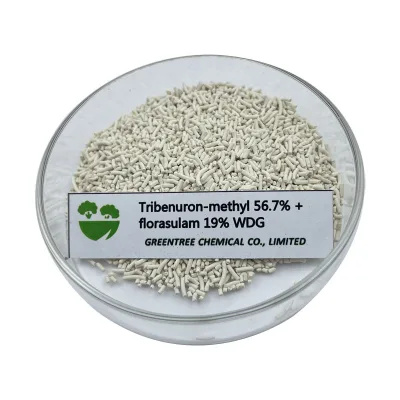
The technical landscape for tribenuron methyl and florasulam herbicides is defined by a diverse array of physical forms and chemical compositions. Market observations indicate that these products are available in multiple states, including liquid, powder, and granular forms. The color of the product can vary significantly depending on the specific formulation and impurities, with observed attributes ranging from yellow, black, and blue to white and dark brown. This variation necessitates that buyers do not assume a single standard appearance for all batches of these herbicides.
Formulation types are equally critical to the sourcing decision. The market features specific model designations such as WDG, 75% WDG DF, and Florasulam-based blends. A notable observation is the existence of complex mixtures, such as Florasulam combined with Mesosulfuron-methyl and Mcpa-Isooctyl, which suggests that sourcing strategies must account for both single-ingredient and multi-component formulations. The composition of these products is generally categorized as either organic or inorganic, a distinction that impacts storage requirements and environmental handling protocols.
Purity levels are another essential technical parameter. While specific purity claims vary, buyers must verify the exact concentration of the active ingredient, as some market listings reference specific percentages like 15%. The method of application is equally specific, with products designed for cauline leaf treatment, soil treatment agents, or general transmission through the herbicide pathway. Understanding whether the product is intended for selective or non-selective use is paramount, as the application strategy dictates the crop safety profile and the potential for crop damage.
Compliance, Certification, and Regulatory Standards
Navigating the regulatory environment for agricultural chemicals requires strict adherence to international and local standards. Suppliers in this sector often provide documentation to validate their compliance, with ISO 9001, BV, and SGS appearing as common certification markers. These certifications serve as indicators of a manufacturer's commitment to quality management systems and product consistency. Additionally, the presence of COA (Certificate of Analysis) and SGS certificates is frequently observed, providing buyers with a baseline for verifying product identity and purity.
The organizational landscape for these suppliers often includes entities associated with Icama, Cac, and Cccmc, which may indicate membership in specific industry bodies or regional trade associations. However, buyers must treat these organizational affiliations as observations of the supplier's network rather than guarantees of product performance. The standard packaging and product specifications also play a role in compliance. Observed standards include a wide range of package sizes, from small samples to bulk industrial quantities like 1L, 500ml, 250ml, and 25kg bags. The specific standard for the product model, such as 50ml, 100ml, or 1kg, must be verified against the buyer's logistical needs and local regulatory limits on chemical transport.
Toxicological profiles are a critical component of compliance. Some product attributes note a "Nerve Poison" effect, while others describe the toxicity of reagents as low. This discrepancy highlights the importance of obtaining the Safety Data Sheet (SDS) for every specific batch. Buyers must verify the specific toxicological classification for the exact formulation they are purchasing, as the risk profile can vary between different active ingredients and their mixtures. The shelf life of these products is typically cited as 2 years, but this should be confirmed against storage conditions to ensure efficacy is maintained throughout the supply chain.
Cost Drivers and Pricing Dynamics
The pricing structure for tribenuron methyl and florasulam herbicides is influenced by a complex interplay of factors, including formulation type, packaging volume, and customization requirements. The observed price range in the market spans from 1 to 1000 USD, reflecting the vast difference between small sample orders and bulk industrial shipments. This wide range indicates that unit economics are heavily dependent on the order volume and the specific packaging configuration requested by the buyer.
Minimum Order Quantities (MOQ) are another significant cost driver, with observed ranges extending from 1 unit to 2000 units. Buyers with lower volume needs may face higher per-unit costs, while those capable of meeting higher MOQ thresholds can leverage economies of scale. The customization of packaging is a frequent requirement, with suppliers offering options such as "Custom Made OEM" or "According to Customer Requirements." These customization services often incur additional costs, which must be factored into the total procurement budget.
The origin of the product, primarily identified as China, influences logistics costs and lead times. While the specific lead times are not universally fixed, the distance from the manufacturing hub to the destination market will impact the final landed cost. Buyers should also consider the cost of samples, which are often available for testing purposes. The availability of samples allows for quality verification before committing to a large order, but the cost of these samples and the associated shipping must be accounted for in the initial budget planning.
Typical Applications and Usage Scenarios
The application of tribenuron methyl and florasulam herbicides is highly specialized, targeting specific weed control scenarios in agricultural settings. These products are designed for both selective and non-selective usage, allowing them to be deployed in a variety of crop systems. The method of application is critical to their efficacy, with specific instructions for cauline leaf treatment and soil treatment agents. This dual capability suggests that these herbicides can be used for post-emergence foliar application or pre-emergence soil incorporation, depending on the target weed spectrum and crop stage.
The specific conductivity of these herbicides, described in market data as "The Herbicide Transmitting" or "The Tag Type Herbicides," indicates their mode of action within the plant system. Understanding this transmission mechanism is essential for determining the correct application rate and timing. For instance, products with specific conductivity profiles may require precise spraying techniques to ensure adequate coverage and absorption. The formulation type, whether it is a liquid, powder, or granule, also dictates the application method. Liquids may require tank mixing and spraying equipment, while granules or powders might be applied via spreaders or specialized injection systems.
The target markets for these herbicides are primarily North America and Europe, regions with stringent agricultural regulations and high demand for effective weed control solutions. Buyers operating in these markets must ensure that the product they source meets local registration requirements. The usage profile, whether selective or non-selective, must align with the specific agronomic needs of the crop being cultivated. For example, selective herbicides are preferred in crops where weed control must be achieved without damaging the cash crop, while non-selective options are used for total vegetation management.
Supplier Evaluation and Organizational Verification
Evaluating suppliers for tribenuron methyl and florasulam herbicides requires a thorough assessment of their organizational structure and capabilities. The market data identifies suppliers as manufacturers or factories, suggesting a direct relationship between the production facility and the buyer. This direct sourcing model can offer advantages in terms of price and quality control, but it also requires due diligence to verify the supplier's actual production capacity and history.
The organization type, whether listed as Icama, Cac, or Cccmc, provides a starting point for background checks. Buyers should verify these affiliations through independent databases to ensure the supplier is a legitimate member of the relevant industry bodies. The support documentation provided by suppliers, such as full dossiers, is a key indicator of their transparency and commitment to quality. A supplier that offers comprehensive technical support and documentation is more likely to be reliable in the long term.
The customization capabilities of the supplier are also a critical evaluation metric. The ability to provide customized packaging, labels, and formulations demonstrates flexibility and responsiveness to buyer needs. However, buyers must ensure that these customization services do not compromise the integrity of the product. The supplier's ability to provide samples is another positive indicator, as it allows for pre-purchase testing and validation. Buyers should request samples from multiple potential suppliers to compare product quality and performance before making a final selection.
Quality Control and Long-Term Procurement Strategy
Maintaining consistent quality in the procurement of herbicides is essential for ensuring crop safety and efficacy. The observed product attributes, such as color variations and formulation types, underscore the need for rigorous quality control protocols. Buyers should implement a system of incoming quality checks that includes visual inspection, chemical analysis, and performance testing. The availability of certificates like SGS and COA should be a prerequisite for every shipment, serving as a baseline for verification.
Long-term procurement strategies should focus on building relationships with suppliers who demonstrate stability and compliance. The shelf life of 2 years provides a window for inventory management, but buyers must ensure that storage conditions are maintained to prevent degradation. The specific packing requirements, such as 25kg bags or 1L bottles, should be standardized to minimize logistical errors and ensure product integrity during transit.
The continuous verification of supplier certifications and organizational status is vital for mitigating risk. As regulations evolve, suppliers must adapt to maintain their compliance status. Buyers should regularly review the certification status of their suppliers to ensure they remain valid and up-to-date. The ability of the supplier to provide full dossiers and support documentation is a strong indicator of their long-term viability and commitment to quality. By prioritizing these factors, buyers can secure a reliable supply chain for tribenuron methyl and florasulam herbicides that supports their agricultural operations effectively.
Comparative Analysis of Product Attributes
To facilitate informed decision-making, the following table summarizes the key product attributes observed in the market for tribenuron methyl and florasulam herbicides. This comparison highlights the diversity of available options and the specific parameters that buyers must verify.
| Attribute Category | Observed Variations | Verification Requirement |
|---|---|---|
| Physical Appearance | Liquid, Powder, Granules | Confirm state matches application method |
| Color | Yellow, Black, Blue, White, Dark Brown | Visual inspection against batch COA |
| Formulation Type | WDG, WP, 75% WDG DF | Verify model number and active ingredient % |
| Composition | Organic, Inorganic | Check SDS for chemical composition |
| Usage Type | Selective, Non-Selective | Confirm crop safety profile |
| Packaging | 50ml to 25kg, Custom OEM | Verify volume and material compatibility |
| Certification | ISO 9001, BV, SGS, COA | Validate certificate authenticity |
| Origin | China | Confirm logistics and import compliance |
| Toxicology | Nerve Poison, Low Toxicity Reagents | Review specific toxicological data |
| Shelf Life | 2 Years | Verify storage conditions and expiry |
This table serves as a checklist for buyers to ensure that all critical attributes are accounted for during the sourcing process. By systematically verifying each parameter, buyers can mitigate risks associated with product inconsistency and regulatory non-compliance. The diversity of options available in the market underscores the need for a tailored approach to procurement, where the specific needs of the buyer are matched with the precise capabilities of the supplier.
FAQs
What certifications do Tribenuron Methyl and Florasulam Herbicide manufacturers hold?
Manufacturers typically hold ISO 9001, BV, and SGS certifications. These markers indicate adherence to quality management systems, though buyers must verify specific certificates like COA for each batch to ensure product identity and purity.
Which physical forms are available for tribenuron methyl and florasulam herbicides?
Products appear as liquids, powders, or granules with colors ranging from yellow, black, and blue to white and dark brown. The specific form depends on the formulation type, such as WDG or WP, which dictates application methods.
Can buyers request customized packaging for these herbicides?
Yes, customized packaging is available according to customer requirements. Suppliers offer options like custom labels and OEM designs, though these services may incur additional costs and require specific order volumes to be feasible.
What is the typical shelf life for tribenuron methyl and florasulam products?
The shelf life is typically 2 years when stored correctly. Buyers must confirm storage conditions to prevent degradation, as the efficacy depends on maintaining the product within recommended environmental parameters throughout the supply chain.
How do purity levels vary in tribenuron methyl and florasulam formulations?
Purity levels vary, with some market listings specifying concentrations like 15%. Buyers must verify the exact active ingredient percentage for each batch, as the formulation type and composition directly impact the herbicide's efficacy and safety profile.
Which application methods are supported for these herbicides?
Products support cauline leaf treatment and soil treatment agent applications. The method depends on whether the formulation is selective or non-selective, requiring precise spraying techniques or spreader systems based on the specific conductivity profile.
What are the main markets for tribenuron methyl and florasulam herbicides?
The main markets are North America and Europe, regions with stringent agricultural regulations. Buyers in these areas must ensure the product meets local registration requirements and aligns with specific agronomic needs for crop safety.