Source Triangle Quarter Turn Cam Lock for Cabinets Lockers Mailboxes
Compare 27 Triangle Quarter Turn Cam Lock options from verified suppliers. Evaluate materials like zinc alloy and stainless steel, finishes, and customization features for equipment, household, and commercial applications.
Key considerations
Products List


$1.00 - $1.20
MOQ: 1 Pieces


Quarter Turn Wing Lock Key Cylinder Lock Hexagonal Wing Knob Cabinet Cam Lock
$2.60 - $2.80
MOQ: 1 Pieces


Ms705 Stainless Steel Cabinet Metal Adjustable Quarter Turn Panel Cam Lock
$2.60 - $2.80
MOQ: 1 Pieces


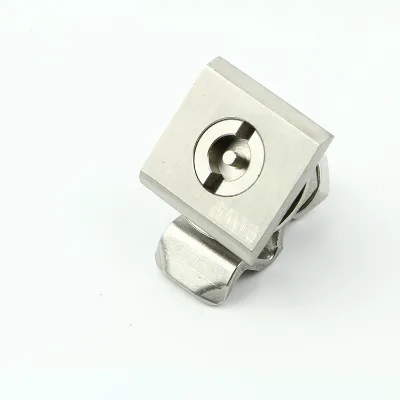


Comprehensive Sourcing Guide
Strategic Sourcing Guide for Triangle Quarter Turn Cam Locks
Understanding the Product Architecture and Technical Specifications
The Triangle Quarter Turn Cam Lock represents a specialized class of locking mechanisms designed for rapid engagement and disengagement, typically requiring a 90-degree rotation to secure or release a door, panel, or enclosure. In the context of industrial and commercial procurement, the core functionality relies on a cam mechanism that rotates within a housing to drive a locking bolt or latch. The "triangle" designation often refers to the specific shape of the cam or the keyway interface, which provides a distinct mechanical advantage and resistance to unauthorized manipulation compared to standard circular or square cams.
When evaluating the technical specifications of these units, buyers must focus on the material composition and surface finishing, as these directly dictate the lifespan and environmental resistance of the component. The supplied product data indicates a prevalent use of Zinc Alloy and Stainless Steel as primary materials. Zinc alloy offers a favorable balance of cost, castability, and structural integrity for general-purpose applications, while stainless steel is selected for environments requiring superior corrosion resistance. The surface finishing processes observed include Zinc Alloy treatments, Silver Plating, and Polishing. These finishes are not merely aesthetic; they serve as critical barriers against oxidation and wear. For instance, a silver-plated finish on a zinc alloy body can significantly extend the service life in humid or coastal environments.
The mechanical operation is defined by the "Unlock Way," which is specified as Mechanical Key in the available data. This confirms that the locking mechanism relies on physical key interaction rather than electronic or biometric systems. The installation method is noted as "Left and Right Side," indicating a versatile design that can be adapted to various cabinet orientations without requiring a complete hardware overhaul. Furthermore, the weight specifications vary, with observed data points such as 84g and 95g, suggesting that buyers should verify the exact weight requirements for their specific load-bearing applications. The packaging details, ranging from individual polybags to bulk cartons containing 50 units, highlight the need for clear logistical planning during the procurement phase.
Compliance, Certification, and Regulatory Standards
In the global B2B market, compliance is a non-negotiable prerequisite for sourcing industrial hardware. The supplied product information explicitly lists RoHS (Restriction of Hazardous Substances) and ISO certifications as available attributes. RoHS compliance ensures that the manufacturing process adheres to strict limits on the use of specific hazardous materials, such as lead, mercury, and cadmium, which is essential for products intended for export to the European Union and other regulated markets. The presence of ISO certification suggests that the manufacturing facility operates under a quality management system, though the specific ISO standard (e.g., ISO 9001) should be verified against the specific supplier's documentation rather than assumed.
Buyers must treat certification claims as observations that require validation. While the data mentions "ISO" and "RoHS," it does not provide specific certificate numbers or issuing bodies. Therefore, a robust sourcing strategy involves requesting valid, up-to-date certification documents from potential suppliers before finalizing any order. The standard "0.005CBM/CARTON" mentioned in the data refers to the volume occupied by the packaging, which is a logistical metric rather than a product performance standard. However, it is crucial for calculating shipping costs and warehouse space requirements.
Additionally, the product origin is identified as China, with specific mentions of Guangdong as a production hub. This geographic concentration implies a mature supply chain ecosystem but also necessitates careful due diligence regarding export regulations and trade compliance. Buyers should verify that the supplier's export licenses are current and that the products meet the specific safety standards of the destination country. For applications involving electrical equipment, such as power boxes, the locks must not interfere with the electrical safety of the enclosure, and the materials used must not degrade under electrical stress or heat.
Cost Drivers and Economic Factors in Procurement
The economic landscape for triangle quarter turn cam locks is influenced by several dynamic factors, with the most immediate being the raw material market. The dual availability of Zinc Alloy and Stainless Steel creates a price variance that buyers must navigate. Zinc alloy is generally more cost-effective, making it suitable for high-volume, cost-sensitive applications, whereas stainless steel commands a premium due to its superior durability and corrosion resistance. The observed price range in the market data spans from $0.20 to $9.90 USD, a wide spectrum that reflects differences in material quality, manufacturing complexity, and order volume.
Minimum Order Quantity (MOQ) is another critical cost driver. The data indicates an MOQ range of 1 to 2000 pieces, with specific instances of 1 PCS or 1PC being available. This flexibility allows buyers to test the market with small batches or fulfill urgent, low-volume needs without incurring excessive inventory costs. However, for large-scale production runs, negotiating a lower unit price based on higher volumes is a standard practice. The "OEM" (Original Equipment Manufacturer) and "ODM" (Original Design Manufacturer) capabilities noted in the data suggest that customization can be a cost factor. Customized designs, such as specific keyways or unique cam shapes, may incur tooling costs that are amortized over the production run, affecting the unit price.
Packaging and logistics also play a significant role in the total cost of ownership. The variety of packaging options, from "Inner Box, Outer Carton" to "1PCS in a Bubble Pack," impacts the unit cost. Bulk packaging reduces per-unit shipping costs but requires more storage space and handling equipment. The lead time, observed as 1-15 days, is relatively short, which can reduce inventory carrying costs and allow for a more responsive supply chain. However, buyers should confirm that these lead times are consistent during peak production seasons, as delays can disrupt manufacturing schedules and incur additional costs.
Typical Applications and Usage Scenarios
The versatility of the Triangle Quarter Turn Cam Lock is evident in its diverse range of applications. The data explicitly lists usage in "Equipments," "Household," "Commercial," "Locker Cabinet," "Mailbox," "Tool Box," and "Cabinet / Power Box." This breadth of application underscores the lock's adaptability to different security levels and environmental conditions. In commercial settings, such as locker cabinets and mailboxes, the lock must provide a balance of security and ease of use for frequent access. The "Password Mailbox Cam Lock" variant suggests that some models may integrate additional security features beyond standard mechanical keys.
For industrial applications, particularly in power boxes and equipment enclosures, the "Anti-Corrosion" feature is paramount. These environments often expose hardware to moisture, dust, and chemical agents, making the choice of material and finish critical. The "Strong Compression / Water Proof Cam Lock" specification indicates that certain models are engineered to maintain a tight seal, preventing water ingress and protecting internal components. This is essential for outdoor installations or industrial facilities where environmental control is limited.
The "Quarter Turn" mechanism offers a distinct advantage in speed and efficiency. In high-traffic areas, such as tool boxes in workshops or cabinets in commercial kitchens, the ability to lock and unlock with a single 90-degree turn reduces wear on the mechanism and saves time for operators. The "Left and Right Side" installation capability further enhances its utility, allowing for flexible integration into existing cabinetry without the need for custom modifications. Buyers should match the specific application requirements with the lock's features, ensuring that the selected model meets the necessary security and durability standards for the intended use case.
Supplier Evaluation and Selection Criteria
Selecting the right supplier is a critical step in the procurement process, requiring a systematic evaluation of capabilities, reliability, and compliance. The data indicates that suppliers offer "Customization" and "OEM/ODM" services, which are valuable for buyers with specific design requirements. However, the presence of these services does not guarantee quality; buyers must assess the supplier's technical expertise and capacity to deliver consistent results. The observation of multiple product models, such as YK-CL-001, MS705-8, and SK1-063-6W, suggests a diverse product portfolio, but buyers should verify that the supplier has a proven track record in manufacturing the specific model required.
Geographic location is another factor to consider. The concentration of suppliers in Guangdong, China, offers access to a robust manufacturing ecosystem, but it also requires careful management of logistics and communication. Buyers should evaluate the supplier's ability to handle international shipping, customs clearance, and quality control inspections. The "Delivery Time" of 1-15 days is a positive indicator of responsiveness, but buyers should confirm this timeline with the specific supplier to avoid potential delays.
Quality control is paramount, and buyers should inquire about the supplier's internal testing procedures. While the data mentions "RoHS" and "ISO" certifications, it does not detail the specific testing protocols used for the locks. Buyers should request evidence of performance testing, such as cycle testing for the quarter-turn mechanism and corrosion resistance testing for the material and finish. The "Condition: New" attribute confirms that the products are manufactured to new standards, but buyers should also verify that the production process includes rigorous inspection at various stages to ensure consistency.
Quality Control and Long-Term Procurement Considerations
Ensuring the long-term reliability of triangle quarter turn cam locks requires a proactive approach to quality control and supplier relationship management. The "Feature: Anti-Corrosion" and "Feature: Strong Compression / Water Proof" attributes highlight the importance of durability. Buyers should implement a quality assurance plan that includes incoming inspection of materials, verification of surface finishes, and functional testing of the locking mechanism. The weight specifications, such as 84g and 95g, should be monitored to ensure that the manufacturing process maintains consistency and that no material substitutions have occurred without notice.
Long-term procurement considerations also involve the scalability of the supply chain. As business needs grow, the ability of the supplier to increase production volume without compromising quality is essential. The observed MOQ range of 1 to 2000 pieces suggests flexibility, but buyers should negotiate volume discounts and establish a framework for future orders. The "Packaging Details" vary significantly, and buyers should standardize packaging requirements to ensure consistency in handling and storage.
Finally, buyers should maintain open communication with suppliers regarding any changes in standards, materials, or manufacturing processes. The "OEM" and "Customized" options allow for adaptation to new requirements, but these changes must be documented and approved to ensure they meet the original specifications. By focusing on these quality control and long-term considerations, buyers can secure a reliable supply of triangle quarter turn cam locks that meet their operational and security needs.
Comparative Analysis of Product Attributes
To facilitate informed decision-making, the following table summarizes the key attributes observed in the product data, highlighting the variations available to buyers.
| Attribute Category | Observed Values | Relevance to Procurement |
|---|---|---|
| Material | Zinc Alloy, Stainless Steel, Alloy | Determines cost, corrosion resistance, and durability. |
| Surface Finish | Zinc Alloy, Silver Plated, Polishing | Affects aesthetic appeal and environmental protection. |
| Certification | RoHS, ISO | Ensures regulatory compliance and quality management. |
| MOQ | 1 PCS, 1PC, up to 2000 | Influences initial investment and inventory management. |
| Lead Time | 1-15 Days | Impacts supply chain responsiveness and planning. |
| Application | Locker, Mailbox, Power Box, Cabinet | Guides selection based on specific use-case requirements. |
| Installation | Left and Right Side | Provides flexibility for different cabinet orientations. |
| Packaging | Carton, Polybag, Bubble Pack, Inner/Outer Box | Affects shipping costs and storage requirements. |
This comparative analysis underscores the diversity of options available in the market. Buyers should use this data to align their specific requirements with the most suitable product attributes, ensuring that the selected locks meet both immediate operational needs and long-term strategic goals. By carefully evaluating these factors, procurement professionals can optimize their sourcing strategies and secure high-quality components for their applications.
FAQs
What materials are used for triangle quarter turn cam locks?
These locks are primarily manufactured using Zinc Alloy and Stainless Steel. The choice of material depends on the required durability and corrosion resistance for specific applications like equipment or household use.
Can buyers request customization for these cam locks?
Yes, customization is available for these products. Suppliers offer OEM and ODM services to accommodate specific design requirements, allowing for tailored solutions for various industrial and commercial needs.
Which certifications do these locks typically hold?
The available locks often carry RoHS and ISO certifications. These certifications indicate compliance with hazardous substance restrictions and quality management standards, ensuring safety and reliability for export markets.
How is the installation process configured for these locks?
The installation supports both left and right side mounting options. This versatile design allows the locks to be easily adapted to different cabinet orientations without requiring significant hardware modifications.
What is the minimum order quantity for purchasing these locks?
The minimum order quantity can be as low as 1 piece. This flexible MOQ allows buyers to test products or fulfill small orders without incurring excessive inventory costs before committing to larger volumes.
How long does delivery take for these cam locks?
Delivery times typically range from 1 to 15 days. This relatively short lead time supports responsive supply chains, though actual timelines may vary based on order volume and specific supplier capacity.