Source Truck 4WD Lug Nut Cover for Freightliner, N250, and N330
Find and compare 30 listings for Truck 4WD Lug Nut Cover options including chrome-plated ABS and universal fitment styles. Buyers can review specifications like 25mm and 33mm sizes alongside customization and packing details from Chinese manufacturers.
Key considerations
Products List




Comprehensive Sourcing Guide
Strategic Sourcing Guide for Truck 4WD Lug Nut Covers
Procuring high-performance wheel nut covers for four-wheel-drive (4WD) trucks requires a nuanced understanding of the intersection between aesthetic customization and functional durability. The market for these components is vast, ranging from universal fitment options to specialized units designed for specific heavy-duty chassis. For procurement professionals, the primary challenge lies in navigating a fragmented supply chain where product attributes vary significantly even within the same category. This guide synthesizes observed market data and technical requirements to provide a disciplined framework for sourcing truck 4WD lug nut covers, ensuring that buyers can distinguish between generic inventory and components that meet rigorous operational standards.
Technical Specifications and Material Composition
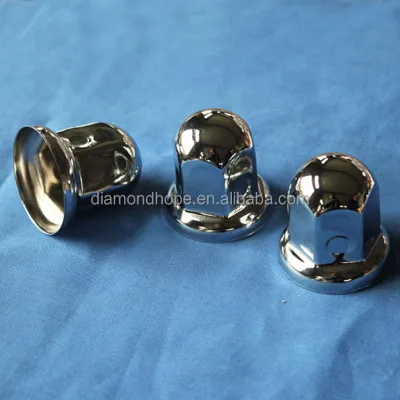
The foundational aspect of any sourcing decision involves verifying the technical specifications that define the component's physical integrity. In the current market, the material composition is a critical differentiator. Observed data indicates that high-quality lug nut covers are frequently manufactured using ABS (Acrylonitrile Butadiene Styrene). This polymer is selected for its balance of impact resistance, thermal stability, and ease of molding, which is essential for components exposed to road debris, varying temperatures, and UV radiation.
Dimensions and fitment are equally paramount. The supply chain presents a variety of standard sizes, with specific observations noting nut cover sizes of 25 mm and 33 mm. These measurements correspond to the diameter of the lug nut or the opening of the wheel hub, dictating the compatibility of the cover. Furthermore, the height of the unit varies, with observed specifications ranging from 46 mm to 106 mm. This variance suggests that a single SKU cannot serve all 4WD truck models; buyers must cross-reference the specific wheel hub geometry of their fleet.
The assembly method is another technical constraint that influences installation logistics. The market offers two primary installation mechanisms: screw-on and press-on methods. Some specialized units utilize a clamp-on structure, which may be preferable for applications where the wheel design does not accommodate standard threading. Additionally, the head style of the cover, whether round or hexagon head with flange, must align with the aerodynamic and aesthetic requirements of the vehicle. The flange, in particular, serves a functional role in securing the cover against centrifugal forces at high speeds, a critical factor for 4WD vehicles often operated in demanding conditions.
Compliance, Certification, and Quality Standards
When sourcing industrial components, verifying the supplier's adherence to international quality management systems is non-negotiable. Data from the supply base confirms that reputable manufacturers often hold ISO 9001 certification. This standard ensures that the supplier maintains a consistent quality management system, which is vital for maintaining uniformity across large production runs. For buyers operating in regulated industries or exporting to regions with strict automotive standards, this certification serves as a baseline indicator of process reliability.
Beyond general quality management, specific industry standards may apply. While the observed data mentions a standard of "33 mm" and "25 mm" regarding product dimensions, it is crucial to distinguish between dimensional standards and safety certifications. Buyers should verify if the supplier adheres to any specific automotive safety standards relevant to wheel components. The presence of TS 16949 (now IATF 16949) certification is a strong indicator of compliance with automotive industry-specific requirements, covering defect prevention, variation reduction, and continuous improvement.
Furthermore, the finish of the product is a key compliance and aesthetic factor. The market frequently lists "Chrome Plated" or "Chrome" finishes. While this provides a high-gloss, corrosion-resistant appearance, buyers must verify the plating process to ensure it meets environmental regulations regarding heavy metal usage and waste disposal. The finish must also be durable enough to withstand exposure to road salts and chemicals, which can degrade lower-quality plating over time.
Cost Drivers and Pricing Dynamics
Understanding the cost structure of lug nut covers is essential for budgeting and negotiation. The observed price range in the market is exceptionally broad, spanning from $0.16 to $300 per unit. This wide disparity is not indicative of a single product line but rather reflects the diversity of specifications, materials, and order volumes. The lower end of the spectrum likely corresponds to basic, universal-fit ABS units with standard chrome finishes, purchased in high volumes. Conversely, the higher price points may reflect custom styling, specialized materials, or limited production runs for specific truck models like Freightliner or N-series chassis.
Minimum Order Quantity (MOQ) is a significant driver of unit cost. The observed MOQ range extends from 1 to 10,000 units. Suppliers offering low MOQs (e.g., 1 unit) typically charge a premium to cover setup and handling costs associated with small batches. Conversely, buyers committing to volumes near the 10,000-unit threshold can often negotiate significantly lower per-unit prices. The packaging method also influences cost; options such as "200 PCS/CTN" or "250 PCS/CTN" suggest optimized logistics for bulk shipping, whereas "Blister Pack & Carton Pack" may be designed for retail display, adding to the overall unit cost.
Typical Applications and Vehicle Compatibility
The application of truck 4WD lug nut covers extends beyond simple aesthetics; they play a role in protecting wheel hubs from debris and reducing aerodynamic drag. The observed data highlights compatibility with specific heavy-duty brands, notably Freightliner. This suggests that a significant portion of the supply is tailored for commercial trucking fleets. However, the market also offers "Universal" fitment options, which are designed to accommodate a wide range of 4WD truck models without requiring model-specific tooling.
The product name "Wheel Nut Cover" and keywords like "Truck Wheel Axle Cover" indicate that these components are intended for heavy-duty applications. The "Non-bearing Body" structure observed in some listings implies that these covers are designed to sit over the wheel hub without interfering with the bearing assembly, ensuring that the rotational integrity of the wheel is not compromised. For 4WD vehicles, which often operate in off-road environments, the ability of the cover to remain secure under vibration and impact is critical.
Buyers must carefully evaluate the "Car Fitment" attribute. While some products are labeled as universal, the specific dimensions (25 mm vs. 33 mm) and height (46 mm vs. 106 mm) dictate the actual compatibility. A mismatch in these specifications can lead to covers that do not seat correctly, potentially falling off during operation. Therefore, procurement teams should maintain a matrix of their fleet's specific wheel hub dimensions to match against supplier catalogs accurately.
Supplier Evaluation and Sourcing Strategy
Evaluating suppliers requires a focus on their production capabilities and logistical transparency. The "Place of Origin" and "Prod Origin" fields consistently indicate "Made in China" or "China (Mainland)," which is a common hub for automotive component manufacturing. Buyers should verify the specific manufacturing location within China, as regional clusters often specialize in different types of automotive plastics and metal finishes.
The "Sales Method" of "Export, Manufacture" suggests that many suppliers are vertically integrated, controlling both the production and the export process. This integration can reduce lead times and improve communication. However, buyers should still verify the supplier's capacity to handle custom orders, as "Customization" is listed as an available attribute. This capability is essential for fleets requiring branded or uniquely styled covers that align with corporate identity.
When assessing suppliers, the "Condition" of the product should always be "New." Buyers must also scrutinize the "Assembly Method" and "Installation Method" to ensure they align with their maintenance protocols. If a supplier offers a "Screw-on" method, the buyer must ensure that the necessary tools and fasteners are included or compatible with existing fleet inventory. The "Structure" of the product, specifically the "Non-bearing Body" design, should be confirmed to ensure it does not interfere with wheel maintenance procedures.
Quality Control and Long-Term Procurement Considerations
Implementing a robust quality control (QC) protocol is vital for mitigating the risks associated with component failure. Given the wide range of observed prices and specifications, buyers should not assume that all products meet the same quality threshold. QC checks should focus on the integrity of the chrome plating, the tensile strength of the ABS material, and the precision of the dimensional tolerances (e.g., ensuring the 25 mm or 33 mm size is accurate).
Long-term procurement considerations involve the stability of the supply chain. The "Product Packing" details, such as "Carton" or "200 PCS/CTN," indicate how the product is protected during transit. Buyers should evaluate whether the packaging is sufficient to prevent damage during long-haul shipping, especially for components with delicate chrome finishes. Additionally, the "Lead Time" and "MOQ" flexibility should be assessed to ensure the supplier can scale with the buyer's fleet expansion or replacement cycles.
The following table summarizes key technical attributes observed in the market to assist in specification matching:
| Attribute Category | Observed Specifications | Procurement Verification Point |
|---|---|---|
| Material | ABS | Verify impact resistance and UV stability. |
| Finish | Chrome Plated, Chrome | Check plating thickness and corrosion resistance. |
| Nut Cover Size | 25 mm, 33 mm | Match to specific wheel hub diameter. |
| Height | 46 mm, 85 mm, 105 mm, 106 mm | Ensure clearance with wheel well and brakes. |
| Installation | Screw-on, Press-on, Clamp-on | Confirm tool requirements and fastener inclusion. |
| Compatibility | Freightliner, Universal | Validate fitment for specific truck models. |
| Certification | ISO 9001, TS 16949 | Request valid certificates for audit trails. |
| Origin | China (Mainland) | Verify factory location and export compliance. |
In conclusion, sourcing truck 4WD lug nut covers requires a meticulous approach that balances technical fitment, material quality, and supplier reliability. By focusing on the specific dimensions, materials, and certifications observed in the market, buyers can construct a procurement strategy that ensures their fleet receives components that are not only visually appealing but also functionally robust. The wide variance in the market offers opportunities for customization and cost optimization, provided that the buyer maintains a disciplined verification process for every specification and certification claim.
FAQs
What material is used for truck 4wd lug nut covers?
High-quality covers are frequently manufactured using ABS plastic. This polymer is selected for its balance of impact resistance and thermal stability, which is essential for components exposed to road debris and UV radiation.
Which certifications should I verify for these covers?
Reputable manufacturers often hold ISO 9001 certification for quality management. Some also possess TS 16949, indicating compliance with specific automotive industry requirements for defect prevention and continuous improvement.
How do I select the correct size for my truck?
You must match the nut cover size to your wheel hub diameter. Observed standard sizes include 25 mm and 33 mm, so verify your specific hub geometry before purchasing to ensure proper fitment.
Can I find custom styling options for these covers?
Customization is available for buyers requiring unique designs. Many suppliers offer chrome plated finishes and various head styles, allowing fleets to align components with corporate identity or specific aesthetic requirements.
What is the typical price range for these covers?
The market price range is exceptionally broad, spanning from 0.16 to 300 USD per unit. Lower prices typically correspond to basic universal-fit units, while higher points reflect custom styling or specialized materials.
Which installation methods are commonly available?
The market offers screw-on, press-on, and clamp-on installation mechanisms. Buyers should confirm the method aligns with their maintenance protocols and ensure necessary tools or fasteners are included with the order.
Are these covers compatible with universal truck models?
Universal fitment options exist alongside models tailored for specific brands like Freightliner. However, dimensions such as height and diameter dictate actual compatibility, so cross-reference fleet specifications carefully.