Source Truck Air Dryer for DAF, MAN, and Iveco Applications
Compare 30 Truck Air Dryer units from verified suppliers offering models compatible with DAF, MAN, and Iveco vehicles. This collection includes options with R22 or R407c refrigerants and various cooling methods to suit different manufacturing and operational needs.
Key considerations
Products List


$1700.00 - $2200.00
MOQ: 1 Pieces

$1700.00 - $2200.00
MOQ: 1 Pieces


$6800.00 - $8000.00
MOQ: 1 Pieces

$1700.00 - $2200.00
MOQ: 1 Pieces


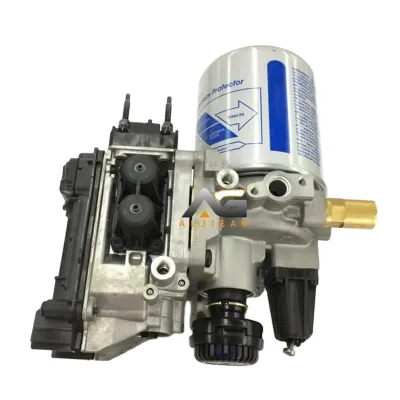


Truck Spare Parts Air Dryer 9325010060
$2560.00 - $2570.00
MOQ: 2 Pieces
Wuhan Yuanyumu Automobile Industry Import and Export Co., Ltd


Comprehensive Sourcing Guide
Strategic Sourcing Guide for Industrial Truck Air Dryers
Understanding Technical Specifications and Operational Variability
When sourcing a Truck Air Dryer, buyers must navigate a complex landscape of technical configurations that vary significantly based on the intended application and vehicle architecture. The core function of these units is to remove moisture and contaminants from the compressed air system, ensuring the longevity and reliability of pneumatic braking and suspension systems. However, the specific technical attributes required depend heavily on the operational environment and the vehicle manufacturer.
The supply market presents a diverse array of operational methods. Some units are designed for continuous operation, providing a steady stream of dried air essential for heavy-duty fleets that run around the clock. In contrast, other configurations utilize an on/off operational method, which may be suitable for specific duty cycles or lighter applications. The movement way of the internal mechanism also varies; buyers may encounter units with a fixed structure or those employing a combined movement way, which can influence maintenance intervals and part replacement strategies.
Thermal management is another critical specification. The cooling method is a primary differentiator, with direct cooling being a common feature in high-efficiency models. The cooling type often dictates the external design, with air-cooled systems being prevalent due to their simplicity and lack of water dependency. Specifically, the condenser type is frequently identified as a copper tube air-cooled type, which offers a balance between thermal conductivity and durability. The refrigerant used within the system is equally vital for environmental compliance and performance. Common refrigerants observed in the market include R407c, R22, and R134A. It is imperative for buyers to verify the specific refrigerant type against local environmental regulations, as some regions are phasing out older refrigerants like R22.
The drying medium itself is a key technical parameter. While air is the standard medium for many applications, some specialized units utilize an inactive gas to prevent oxidation or ensure specific chemical inertness within the drying chamber. The structure of the dryer also plays a role; "Air Flow Drier" is a distinct classification that relies on the velocity and direction of the air stream to facilitate moisture separation. Furthermore, the type of flow within the unit—whether parallel flow or cross flow—affects the efficiency of the drying process. Parallel flow typically moves air in the same direction through the desiccant, while cross flow moves it perpendicularly, each offering different pressure drop characteristics and drying efficiencies.
Compliance, Certification, and Regulatory Standards
Navigating the regulatory landscape is a non-negotiable aspect of sourcing truck air dryers. The global nature of the automotive supply chain means that units must comply with a myriad of international standards and certifications to be legally sold and operated in various markets. The observed market data indicates a strong presence of specific certifications that buyers should prioritize during the vetting process.
The "Ce" certification is a prominent standard observed in the supply data, indicating conformity with health, safety, and environmental protection standards for products sold within the European Economic Area. For buyers targeting European markets, verifying the presence of valid CE marking is essential. Additionally, the "ECE" certification is frequently cited, which refers to the United Nations Economic Commission for Europe regulations. This certification is particularly relevant for brake systems and components, ensuring that the air dryer meets the rigorous safety requirements for commercial vehicles in Europe and other regions that adopt ECE regulations.
Beyond specific product certifications, broader quality management system standards are critical indicators of a supplier's reliability. The supply data references "ISO/TS16949: 2002," a technical specification for quality management systems in the automotive industry. This standard is a precursor to the current IATF 16949 and signifies that the manufacturer has established processes for continuous improvement, defect prevention, and the reduction of variation and waste in the supply chain. While the data also mentions "SGS," this refers to a third-party inspection and verification body rather than a standard itself. Buyers should look for evidence of SGS testing or inspection reports to validate the manufacturer's claims regarding material quality and production consistency.
It is important to note that while some background information suggests the existence of ISO 9001, ISO 14001, or ISO 45001 certifications, these should not be assumed as universal facts for every listed product without explicit verification. Buyers must request current certification documents from the supplier to confirm active status. The "Main Market" data indicates a global distribution, covering South America, North America, Eastern and Western Europe, Asia, Africa, and Oceania. This global reach implies that suppliers must be capable of meeting diverse regulatory requirements, but the specific standard applicable to a buyer's region must be confirmed on a case-by-case basis.
Cost Drivers and Pricing Dynamics
The pricing structure for truck air dryers is influenced by a combination of technical complexity, material costs, and supply chain logistics. The observed price range in the market is exceptionally wide, spanning from 6 USD to 50,000 USD. This vast disparity is not indicative of a single product category but rather reflects the diversity of the supply, ranging from small replacement components or simple accessories to complete, heavy-duty industrial drying systems with advanced refrigeration and control capabilities.
Several factors drive these cost variations. The choice of compressor is a significant cost driver. The presence of "Bristol" compressors in the product data suggests that high-quality, brand-name components are available, which typically command a premium price compared to generic or unbranded alternatives. Similarly, the material composition affects the final cost. Units constructed from steel are standard for durability, but the grade and thickness of the steel, as well as the use of copper tubes in condensers, will influence the material cost.
The level of customization available is another critical factor. The market data confirms that customization is available, allowing buyers to tailor specifications to their specific fleet needs. Customization often involves engineering changes, unique packaging requirements, or specific model configurations, all of which add to the production cost. The production model numbers, such as "HRS," "1.6/3.0," "CW-1F----CW-20F/W," and "4324101170," indicate a wide range of capacities and designs. Larger capacity units, such as those with a capacity range of 1.5-20m3/Min or standards ranging from 1.2 to 110 m3/min, will naturally be more expensive than smaller, lower-capacity units.
Packaging also plays a role in the final landed cost. Options range from "Wooden Case" and "Wooden Package" to "Standard Seaworthy" and "Standard Export Box Packing." For international shipping, robust packaging like wooden cases is necessary to prevent damage, adding to the overall cost. Additionally, the origin of the product, primarily identified as China and specifically Shanghai, impacts logistics. While China offers competitive manufacturing costs, buyers must factor in shipping, import duties, and lead times, which can vary based on the volume and destination.
Typical Applications and Vehicle Compatibility
Truck air dryers are integral to the pneumatic systems of heavy-duty vehicles, and their application is strictly defined by the vehicle's make, model, and operational requirements. The supply data highlights specific applications, noting compatibility with major truck manufacturers such as Man, Daf, and Iveco. This indicates that the market includes both OEM-equivalent parts and aftermarket solutions designed to fit these specific brands.
The application extends beyond just the braking system. The data mentions "Types of Suspension Systems: Air Suspension," suggesting that these dryers are also critical for maintaining the integrity of air suspension systems, which rely on clean, dry air to function correctly. Moisture in the air lines can cause corrosion, freezing in cold climates, and failure of suspension valves, making the air dryer a vital component for vehicle safety and ride quality.
The "Application" field also lists "Man, Daf, Iveco," which are prominent European truck manufacturers. This suggests that a significant portion of the supply is tailored to the European market standards. However, the "Main Market" data shows a global reach, implying that these units are also adapted for use in other regions. The "Wheel Base" specification of 9000-10000mm provides a clue regarding the size of the vehicles these dryers are designed for, likely indicating use in long-haul heavy trucks or trailers.
Furthermore, the "Self-dumping" attribute suggests that some units are designed with automatic regeneration features, which is a common requirement for heavy-duty applications where manual intervention is impractical. The "Appearance of Dried Sample: Bulk" indicates that these systems are designed to handle large volumes of air, typical of commercial truck fleets. Buyers must ensure that the selected air dryer matches the specific air flow requirements of their vehicle's pneumatic system, which can be verified by cross-referencing the OEM part numbers, such as "432410000" or "4324101020," with the vehicle's service manual.
Supplier Evaluation and Quality Assurance Protocols
Evaluating a supplier for truck air dryers requires a rigorous assessment of their manufacturing capabilities, quality control processes, and logistical reliability. The supply data indicates that products originate from China, with a specific mention of Shanghai as a production hub. While this provides a geographic context, buyers must look beyond the location to assess the actual quality of the manufacturing process.
Quality assurance should be verified through documented standards and third-party testing. The presence of "ISO/TS16949: 2002" certification is a strong indicator of a supplier's commitment to automotive quality standards. Buyers should request copies of these certificates and verify their validity with the issuing body. Additionally, the mention of "SGS" suggests that third-party inspections are part of the quality process. Buyers should ask for specific test reports related to the air dryers, including pressure testing, moisture removal efficiency, and durability assessments.
The "OEM Number" and "OEM Part Number" fields, such as "432410000" and "4324101020," are critical for ensuring compatibility. A reputable supplier should be able to provide detailed cross-reference documentation proving that their product meets or exceeds the original equipment manufacturer's specifications. The "Standard Export Box Packing" and "Standard Seaworthy" packaging options indicate that the supplier is experienced in international shipping, which is a positive sign for reliability.
Buyers should also evaluate the supplier's ability to handle customization. The "Customization: Available" attribute suggests flexibility, but it is essential to understand the scope of this customization. Can the supplier modify the drying medium, cooling method, or operational parameters? The ability to customize often reflects a deeper understanding of the product and a more robust engineering team.
Finally, the "Main Market" data shows a global distribution network. A supplier that successfully serves markets in South America, North America, Europe, and Asia likely has a mature logistics and support infrastructure. Buyers should inquire about the supplier's after-sales support, warranty terms, and availability of spare parts to ensure long-term operational continuity.
Long-Term Procurement Considerations and Lifecycle Management
Procuring truck air dryers is not merely a transactional purchase but a strategic decision that impacts the long-term operational efficiency and maintenance costs of a fleet. The wide range of observed MOQs (1-100) suggests that suppliers can accommodate both small-scale replacements and large-scale fleet upgrades. However, buyers must consider the lifecycle of the product and the availability of support over time.
The "Lead Time" and "MOQ" values are critical for inventory management. While specific lead times are not provided in the data, the variability in MOQ suggests that buyers can negotiate terms based on their volume. For fleets with high turnover, a lower MOQ might be preferable to reduce inventory holding costs. Conversely, for large fleets, a higher MOQ might secure better pricing and ensure consistent supply.
The "Product Name: Air Dryer" and the various model numbers indicate a standardized product line, which is beneficial for long-term procurement. Standardization simplifies the training of maintenance staff and reduces the complexity of the spare parts inventory. Buyers should prioritize suppliers who offer a range of models that can be easily interchanged or upgraded as fleet needs evolve.
The "Heating Mode" attribute, which includes options like "No" and "Dielectric," highlights the importance of selecting the right technology for the operating environment. In cold climates, a dielectric heating mode might be necessary to prevent freezing, whereas in warmer regions, a unit without a heating mode might suffice. Understanding the long-term environmental conditions of the fleet's operating routes is essential for selecting the right configuration.
Finally, the "Certification" and "Standard" requirements will likely evolve over time. Buyers should establish a relationship with suppliers who are proactive about regulatory changes and can provide updated models that meet new environmental and safety standards. This forward-thinking approach ensures that the fleet remains compliant and operational for years to come, avoiding costly retrofits or replacements due to regulatory non-compliance.
FAQs
What certifications do truck air dryers typically have?
Truck air dryers commonly carry CE and ECE certifications for European compliance. Some models also meet ISO/TS16949:2002 standards for automotive quality management. Buyers should verify specific certificates for their target markets.
Which refrigerants are used in industrial air dryers?
Common refrigerants include R407c, R22, and R134A depending on the model. These fluids are selected for efficiency and environmental compliance. Users must check local regulations regarding specific refrigerant types before purchasing.
Can truck air dryers be customized for specific needs?
Yes, customization is available for many industrial drying units. Buyers can request specific configurations for cooling methods, flow types, or operational modes. Customization often affects pricing and lead times significantly.
How is the cooling method defined for these dryers?
Most units utilize direct cooling with an air-cooled condenser type. The condenser often features copper tubes for optimal thermal conductivity. This design ensures efficient heat dissipation without requiring water cooling systems.
What is the typical MOQ for ordering truck air dryers?
The minimum order quantity ranges from 1 to 100 units based on the supplier. Specific MOQs depend on the model and customization level. Buyers should confirm exact quantities with manufacturers before placing orders.
Which locations supply these industrial drying systems?
Products primarily originate from China, with specific hubs in Shanghai. Global markets include North America, Europe, and Asia. Shipping costs and lead times vary based on the specific origin location.
What operational methods are available for air dryers?
Operational methods include continuous operation or on/off switching. The choice depends on the vehicle duty cycle and application requirements. Fixed or combined movement ways are also available depending on the design.