Source Truck Differential Pressure Sensor for Medical, Industrial, HVAC
Find 30 Truck Differential Pressure Sensor options with varying accuracy, output signals, and pressure ranges. Compare specifications for medical, industrial, and HVAC applications to select the right component for your needs; compare the available evidence and request quotations based on your requirements.
Key considerations
Products List


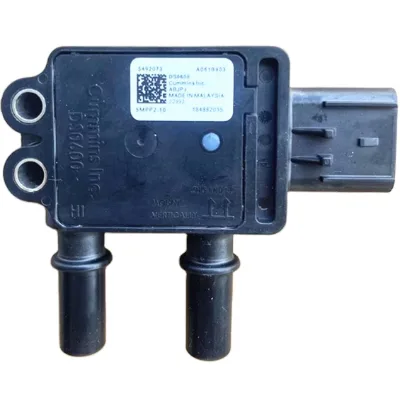


Truck Oil Pressure Sensor 1777165
$8.00 - $10.00
MOQ: 20 Pieces
Wuhan Yuanyumu Automobile Industry Import and Export Co., Ltd


$3.50 - $4.00
MOQ: 10 Pieces


Tire Pressure and Temperature Monitoring Sensor for Truck Trailer (03)
$100.00 - $1000.00
MOQ: 1 Pieces


$8.00 - $12.00
MOQ: 10 Pieces
Comprehensive Sourcing Guide
Truck Differential Pressure Sensor Sourcing Guide
Procuring differential pressure sensors for heavy-duty truck applications requires a disciplined approach to technical verification and supplier qualification. These components are critical for monitoring engine performance, exhaust systems, and filtration efficiency, where precise measurement ensures optimal fuel economy and emissions compliance. Buyers must navigate a market with diverse specifications, ranging from gas and liquid media to varying pressure ranges and output signals. The complexity of integrating these sensors into existing vehicle architectures demands careful attention to electrical compatibility, environmental resilience, and long-term stability.
This guide provides a structured framework for evaluating potential suppliers and selecting the right sensor technology. It focuses on interpreting observed listing signals, verifying technical specifications against operational needs, and ensuring compliance with safety and quality standards. By adhering to these procurement principles, buyers can mitigate risks associated with component failure, reduce downtime, and secure reliable supply chains. The following sections detail the essential steps for sourcing high-performance differential pressure sensors that meet the rigorous demands of commercial transportation.
Product Scope and Observed Listing Signals
The observed product landscape includes models such as the SAC-130, SAC-132-DN, and SAC-3051-DN, each tailored to specific measurement requirements. These sensors typically feature metal construction with IP65 protection, ensuring durability in harsh automotive environments. Listings indicate a wide range of measuring mediums, including gas and liquid, with pressure ranges spanning from low differential pressures like 0~1.5kPa to broader scales up to 100MPa. Buyers should note that customization is available, allowing for specific process connections like φ8 Pagoda Mouth and tailored output signals.
Observed listing signals reveal significant variation in accuracy and stability, with some models offering 0.2%F.S accuracy and ±0.1%Fs/Year stability, while others provide 0.5%F.S accuracy. Output signals commonly include 4-20mA, 0-5VDC, and RS485 digital outputs, catering to different control system integrations. Power supply requirements typically range from 12~36VDC to 16V ~ 48V DC, reflecting the diverse electrical systems in truck fleets. Buyers must carefully match these observed specifications to their specific vehicle models and monitoring needs to avoid compatibility issues.
Technical Specifications to Verify
Verifying the measuring range and accuracy is paramount for ensuring reliable data acquisition in truck applications. Sensors must accurately capture differential pressures within the expected operational envelope, whether for low-flow filtration monitoring or high-pressure exhaust systems. Buyers should confirm the measurement accuracy, which can vary from 0.2%F.S to 0.5%F.S, and assess the long-term stability, typically ranging from ±0.1%Fs/Year to ±0.5%F.S/Year. These parameters directly impact the precision of engine management systems and emissions control strategies.
Electrical and environmental specifications also require rigorous verification. The power supply voltage must align with the truck’s electrical system, often 24VDC, while output signals like 4-20mA or RS485 must be compatible with the vehicle’s data acquisition unit. Operating temperatures typically span from -20℃ to +80℃, with storage temperatures extending further, ensuring functionality in extreme climates. Buyers should also check the compensated temperature range and humidity tolerance, as these factors influence sensor performance and longevity in real-world driving conditions.
Compliance and Safety Documentation
Certification and safety standards are non-negotiable for components used in commercial vehicles. The CE certification observed in listings indicates compliance with European health, safety, and environmental protection standards, which is crucial for markets adhering to these regulations. Buyers must verify that all sensors meet relevant automotive industry standards for electromagnetic compatibility and functional safety. This ensures that the sensors do not interfere with other vehicle electronics and operate reliably under various electrical loads.
Explosion-proof grades, such as Exdiict6 Ga, are critical for sensors installed in potentially hazardous areas, such as fuel or exhaust systems. Buyers should confirm the specific explosion-proof certification required for their application and ensure the supplier provides valid documentation. Additionally, the IP65 rating observed in many listings confirms protection against dust and water jets, essential for components exposed to the elements. Proper documentation of these certifications facilitates smoother customs clearance and regulatory approval in different regions.
Cost Drivers and Commercial Terms
Pricing for differential pressure sensors varies based on accuracy, output type, and customization options. Observed price ranges span from $0.01 to $1000, reflecting the diversity from basic models to high-precision, digitally enabled units. Buyers should consider the total cost of ownership, including installation, maintenance, and potential downtime costs, rather than focusing solely on unit price. Higher accuracy and stability often command a premium but can reduce long-term operational costs by improving system efficiency.
Minimum order quantities (MOQ) typically range from 1 to 100 units, offering flexibility for both prototype testing and bulk procurement. Buyers should negotiate terms that align with their production schedules and inventory management strategies. Packaging details, such as cartons with standard dimensions of 27155cm and a weight of 1kg, impact logistics and storage costs. Understanding these commercial terms helps in planning supply chain logistics and optimizing inventory levels to meet demand without excessive holding costs.
Supplier Qualification and Quality Control
Supplier qualification involves assessing their production capabilities and quality management systems. The use of ceramics in the production process for some models suggests a focus on durability and chemical resistance, which is beneficial for harsh environments. Buyers should verify the supplier’s ability to provide customized solutions, such as specific process connections or output signals, to meet unique application requirements. A robust quality control process ensures consistent performance and reliability across batches.
Quality control checks should include verification of sensor accuracy, stability, and environmental resistance. Buyers may request test reports or certificates of conformity to validate these parameters. The turndown ratio of 100:1 observed in some models indicates high versatility, allowing for accurate measurement across a wide range of pressures. Suppliers with a track record of providing high-quality sensors and responsive technical support are preferable, as they can assist with integration and troubleshooting throughout the product lifecycle.
Long-Term Procurement Checks
Long-term procurement success depends on establishing a reliable supply chain and maintaining ongoing supplier relationships. Buyers should monitor supplier performance metrics, such as delivery times, defect rates, and responsiveness to issues. Regular audits or reviews of the supplier’s quality management system can help identify potential risks and ensure continuous improvement. Building a partnership with a qualified supplier facilitates better communication and collaboration on future product developments.
Continuous monitoring of market trends and technological advancements is also essential. As truck emissions regulations become stricter, the demand for higher-precision sensors will likely increase. Buyers should stay informed about new technologies, such as digital outputs and enhanced stability features, to remain competitive. By proactively managing their procurement strategy, buyers can ensure a steady supply of high-quality differential pressure sensors that meet evolving operational needs and regulatory requirements.
FAQs
What measuring ranges are available for truck differential pressure sensors?
Differential pressure sensors in this category cover measuring ranges from -100kPa to 100kPa, and wider ranges from -0.1MPa through 100MPa are also listed. Low-pressure models can measure 0 to 1.5kPa for fine differential applications. Confirm the exact span and pressure form, whether gauge or differential, with the supplier before ordering, since listed products vary in configuration.
What output signals can a Truck Differential Pressure Sensor provide?
Listed models support common industrial outputs including 4-20mA, 0-5VDC, and 0-10VDC, and some versions offer 4-20mA DC or RS485 digital communication in a two-wire system. Digital output types are also available. Choose the signal that matches your truck's control system or data logger, and verify power supply compatibility, typically 12 to 36VDC with 24VDC typical.
How accurate are these differential pressure sensors?
Measurement accuracy depends on the model selected. Listed options include 0.2%F.S and 0.5%F.S accuracy grades, with 0.5% as a default and 0.3% available through customization on certain models. Higher-precision versions advertise sensor accuracy of ±0.075% and overall performance of ±0.25%F.S. Accuracy selection affects cost, so specify the tolerance your application genuinely requires when requesting quotations.
Can the sensor be customized for specific truck applications?
Yes, customization is available on listed products. Buyers can specify options such as display selection when ordering, different accuracy grades, and pressure ranges suited to the medium being measured. Customized configurations are explicitly supported. Provide your medium type, required range, output signal, and environmental conditions to the supplier so the correct customized differential pressure sensor can be configured.
What environmental conditions can the sensor withstand?
Listed sensors handle compensated temperatures from -20 to 70 degrees Celsius on some models, and operating temperatures from -20 to +80 degrees Celsius on others, with storage temperatures down to -40 degrees Celsius. Ambient relative humidity tolerance is 0 to 95%, with some models accepting up to 100% relative humidity. Protection class IP65 is listed for durability in demanding vehicle environments.
Which certifications and packaging details apply to these sensors?
CE certification is listed for products in this category, and one model carries an explosion-proof grade of Exdiict6 Ga. Long-term stability is rated at ±0.5%F.S per year, with some models at ±0.1%F.S per year. Packing is cartons, with one listed package specification of 27 by 15 by 5 centimeters weighing 1 kilogram. Confirm certification documents with the supplier before purchase.