Source Tungsten Carbide Drill Guide Pads and Blade Inserts for Metal Processing, Heavy Industry, and Aviation
Explore 30 listings for Tungsten Carbide Drill Guide Pads and Blade Inserts designed for metal processing, heavy industry, and aviation applications. Buyers can compare specifications, certifications, and customization options to find suitable cutting tools and inserts for various machinery needs.
Key considerations
Products List


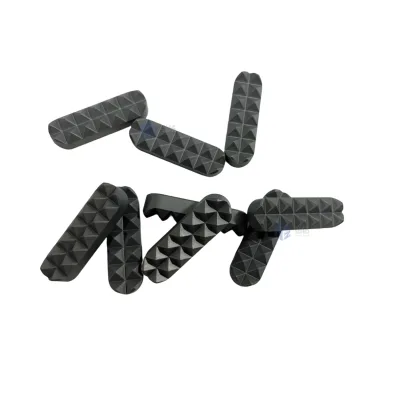


Comprehensive Sourcing Guide
Strategic Sourcing Guide for Tungsten Carbide Drill Guide Pads and Blade Inserts
Understanding Product Specifications and Material Composition
When sourcing Tungsten Carbide Drill Guide Pads and Blade Inserts, the primary focus must be on the precise material composition and physical specifications that dictate performance in high-stress environments. The core material for these components is consistently identified as tungsten carbide, often alloyed with specific binders to achieve the necessary hardness and toughness. In the current market, products are frequently described as "Alloy" or specifically "Tungsten Carbide," with some listings noting "Cobalt" and "WC" (Tungsten Carbide) as standard composition elements. The physical performance of these inserts is characterized by high hardness, a critical attribute for maintaining edge integrity during metal cutting and drilling operations.
Buyers must verify the specific model designations available, as the market offers a diverse range of configurations. Common model identifiers include "Carbide gun drill bits," "Carbide Side Support," "AG," "drill bit inserts," and "carbide gripper inserts." These designations often correlate with specific applications, such as metal forging machinery, metal processing parts, or metal recycling machines. The physical dimensions are equally critical; specifications may range from "Small" sizes to custom dimensions like "22x10x6.3" or other measurements defined by customer demand. Furthermore, the standard tolerance class is often cited as "H," which indicates a specific fit and finish requirement that must be matched to the buyer's machinery.
The surface treatment and manufacturing process also play a pivotal role in the final product quality. Observed surface treatments include "Polishing" and "Sand Blast," while manufacturing processes range from "Forging" to "Stamping." Coating technologies, such as "PVD/CVD," are frequently applied to enhance wear resistance and reduce friction during operation. The condition of the product is typically listed as "New," and the availability of customization allows for specific logo printing options, though some suppliers may offer "Without Logo Printing" as a standard option. Understanding these granular details is essential before initiating any procurement dialogue, as the mismatch between a buyer's specific machining requirements and the supplier's standard output can lead to significant operational inefficiencies.
Compliance, Certification, and Regulatory Standards
Navigating the compliance landscape for industrial cutting tools requires a rigorous verification of certifications and adherence to international standards. The most frequently observed certification in the supply chain is ISO 9001, with specific variations such as "ISO 9001:2008" appearing in product descriptions. Some suppliers also list "CE" and "GS" certifications, indicating compliance with European safety and quality directives. However, buyers must treat these as observations of specific listings rather than universal guarantees for all products in the category. The presence of "ISO 9001" often accompanies a "Customized" status, suggesting that the quality management system is adapted to meet specific client needs.
In terms of technical standards, the market exhibits a high degree of flexibility. While some products adhere to established international standards including "AISI," "ASTM," "BS," "DIN," "GB," and "JIS," others operate under a "As Your Request" or "Non-Standard" framework. This flexibility is particularly relevant for specialized applications where standard dimensions do not suffice. The standard for the product itself can vary significantly; one listing might define the standard as "11kg" (likely referring to weight or a specific batch standard), while another cites "cobalt, WC" as the material standard. Buyers should explicitly verify which standard applies to their specific order, as the "Accept Non-Standard Customization" clause is common but requires clear communication to ensure the final product meets the intended engineering tolerances.
The origin of the products is another critical compliance factor. The majority of the observed supply originates from China, with specific regions noted as "Shandong," "Hunan," and "Zhuzhou." Zhuzhou, in particular, is a known hub for tungsten carbide production. While the "China" origin is a factual observation from the data, buyers must ensure that the specific manufacturing facility in these regions holds the necessary local and international certifications relevant to their target market. The "Export Packing" and "Carton" or "Cardboard Box" packaging standards are also part of the compliance chain, ensuring that the goods arrive in a condition suitable for immediate industrial use without damage.
Cost Drivers and Pricing Dynamics
The pricing structure for Tungsten Carbide Drill Guide Pads and Blade Inserts is influenced by a complex interplay of material costs, customization levels, and order volumes. The observed price range in the market is extensive, spanning from $0.50 to $310 USD per unit. This wide variance is not indicative of quality differences alone but rather reflects the diversity in product size, complexity, and material composition. A small, standard-grade insert may fall at the lower end of this spectrum, while a large, custom-engineered component with specialized coatings and high-tolerance specifications will command a premium price.
Order Volume is a significant determinant of cost. The Minimum Order Quantity (MOQ) ranges from 1 to 1000 units. Buyers purchasing small quantities, likely for prototyping or low-volume maintenance, will face higher unit costs but benefit from lower upfront capital expenditure. Conversely, bulk procurement allows for negotiation leverage, potentially reducing the per-unit cost significantly. The "Customized" attribute is a major cost driver; while "Customized Support" and "OEM" services are widely available, they inherently increase the manufacturing complexity and time, thereby affecting the final price. The "As Customer Demand" packaging and standard options also contribute to cost variability, as bespoke solutions require dedicated production runs.
Material costs, particularly for tungsten carbide and cobalt binders, are subject to global market fluctuations. Products listed with "High Quality" and "High Hardness" attributes often utilize premium alloys, which directly impacts the base price. Additionally, the manufacturing process, whether "Forging" or "Stamping," influences the cost structure. Forging generally implies a more robust grain structure but may involve higher energy and tooling costs compared to stamping. Buyers should analyze the total cost of ownership, considering not just the unit price but also the lead time, which can vary based on the customization level and the supplier's current production capacity.
Typical Applications and Operational Context
Tungsten Carbide Drill Guide Pads and Blade Inserts are engineered for demanding industrial environments where precision and durability are paramount. The primary applications identified in the market include metal forging machinery, metal processing machinery parts, metal cutting machines, and metal recycling machines. These components are essential for maintaining the accuracy of drilling operations in heavy industry settings. The "Usage" category is explicitly defined as "Heavy Industry," underscoring the robust nature of these tools.
Beyond heavy industry, the versatility of these inserts extends to specialized sectors such as chemical processing, medical device manufacturing, industrial automation, electronics production, and aviation. In the aviation sector, for instance, the high hardness and precision of tungsten carbide are critical for drilling into advanced alloys. The "Machining" capabilities listed include "Finish," "Semi-Finish," and "Roughing," indicating that these inserts can be utilized across various stages of the manufacturing process. The "Clearance Angle" options, ranging from A to G, N, P, O, allow for fine-tuning the tool geometry to suit specific material types and cutting conditions.
The condition of the product is consistently listed as "New," ensuring that buyers receive components with full performance potential. The "Warranty" period, observed as "6 Month" in some listings, provides a baseline for quality assurance, though this should be verified on a case-by-case basis. The ability to customize the "Hole" configuration (with or without) further expands the application scope, allowing these inserts to be integrated into diverse machinery designs. Understanding the specific operational context of the buyer's machinery is crucial for selecting the correct insert type, as a mismatch in application can lead to premature wear or catastrophic tool failure.
Supplier Evaluation and Selection Criteria
Selecting the right supplier requires a methodical evaluation of their capabilities, history, and alignment with buyer requirements. The supply chain for these products is concentrated in specific regions of China, notably Shandong, Hunan, and Zhuzhou. Buyers should prioritize suppliers who can demonstrate a clear track record in the specific manufacturing processes relevant to their needs, such as "Forging" or "Stamping." The availability of "Customized Support" and "OEM" capabilities is a strong indicator of a supplier's flexibility and technical competence.
Certification status is a primary filter for supplier evaluation. While "ISO 9001" is the most common certification, the presence of "CE" and "GS" adds an additional layer of credibility, particularly for buyers targeting European markets. However, buyers must verify that these certifications are current and applicable to the specific product line being sourced. The "Standard" section of a supplier's profile should be scrutinized; while many accept "Non-Standard Customization," a supplier's ability to adhere to "AISI," "ASTM," "BS," "DIN," "GB," or "JIS" standards is vital for maintaining consistency in global supply chains.
The logistical capabilities of the supplier, including "prod_packing" and "prod_origin," are also critical. Suppliers offering "Export Packing" or "First Into Paper Box, Then Into Carton" demonstrate a commitment to protecting the product during transit. The "Location" of the supplier, whether in Shandong, Hunan, or Zhuzhou, can impact lead times and shipping costs. Buyers should request detailed information on the supplier's production capacity and quality control protocols to ensure they can meet volume requirements without compromising on the "High Quality" and "High Hardness" attributes expected of tungsten carbide products.
Quality Control and Long-Term Procurement Strategy
Ensuring consistent quality in tungsten carbide components requires a robust quality control strategy that extends beyond the initial purchase. The "Physical Performance" of the product, specifically "High Hardness," must be verified through independent testing or certification of the batch. The "Tolerance Class" of "H" is a standard that should be strictly enforced during the inspection phase. Buyers should implement a rigorous incoming quality inspection process to verify that the "Surface Treatment" (Polishing or Sand Blast) and "Coating" (PVD/CVD) meet the specified requirements.
Long-term procurement considerations involve building a relationship with suppliers who can offer consistent "Customized" solutions. The "Standard" of "As Your Request" suggests that a successful partnership relies on clear communication and iterative refinement of product specifications. The "Warranty" period, often cited as "6 Month," serves as a benchmark for supplier confidence, but buyers should negotiate terms that align with their operational risk tolerance. The "Application" diversity, from chemical to aviation, means that a single supplier may not be suitable for all needs; therefore, a diversified supplier base may be necessary to mitigate supply chain risks.
The "Condition" of the product being "New" is a baseline expectation, but long-term success depends on the supplier's ability to maintain this standard over multiple production cycles. Buyers should also consider the "Material" consistency, ensuring that the "Alloy" and "Tungsten Carbide" composition remains stable across batches. By focusing on these quality control metrics and fostering a collaborative relationship with suppliers, buyers can secure a reliable supply of high-performance drill guide pads and blade inserts that support their operational efficiency and product quality goals.
Comparison of Key Product Attributes
To facilitate a clearer understanding of the market landscape, the following table summarizes the key attributes observed in the supply of Tungsten Carbide Drill Guide Pads and Blade Inserts. This comparison highlights the variability in specifications and the importance of verifying details against specific buyer needs.
| Attribute Category | Observed Options | Verification Requirement |
|---|---|---|
| Material | Tungsten Carbide, Alloy, Cobalt, WC | Confirm specific alloy composition and hardness rating. |
| Certification | ISO 9001, ISO 9001:2008, CE, GS | Verify current validity and scope of certification. |
| Manufacturing Process | Forging, Stamping | Ensure process matches required mechanical properties. |
| Surface Treatment | Polishing, Sand Blast | Confirm treatment suits the intended application environment. |
| Standard | AISI, ASTM, BS, DIN, GB, JIS, As Request | Specify exact standard required for the project. |
| Packaging | Carton, Cardboard Box, Export Packing | Ensure packaging meets shipping and storage requirements. |
| Origin | China (Shandong, Hunan, Zhuzhou) | Verify location for logistics and potential tariff implications. |
| Customization | Available, OEM, Non-Customized | Define the extent of customization needed (e.g., logo, size). |
| Tolerance | Class H, Non-Standard | Specify tolerance class to ensure fit and function. |
| Warranty | 6 Month | Clarify warranty terms and coverage scope. |
This table serves as a checklist for buyers to ensure they are not overlooking critical details when evaluating potential suppliers. The diversity of options underscores the need for a disciplined approach to sourcing, where every attribute is matched against the specific technical and operational requirements of the buyer's machinery. By adhering to these verification steps, buyers can navigate the complex market of tungsten carbide components with confidence and precision.
FAQs
What certifications do Tungsten Carbide Drill Guide Pads and Blade Inserts suppliers hold?
Most suppliers hold ISO 9001 certification, with some also listing CE and GS marks. These certifications verify manufacturing process quality and safety compliance for international markets.
Which customization options are available for these cutting tools?
Customization is widely available including OEM support and non-standard tolerance acceptance. Buyers can request specific logo printing or dimensions like 22x10x6.3 based on their machinery needs.
How are Tungsten Carbide Drill Guide Pads and Blade Inserts typically packaged?
Products are commonly packed in cartons, cardboard boxes, or export packing. Some suppliers use a first-into-paper-box-then-into-carton method to ensure safe transit for industrial components.
Can I find suppliers with specific manufacturing processes like forging or stamping?
Yes, suppliers utilize various processes including forging, stamping, and sand blasting. The choice of process affects the final hardness and surface treatment of the tungsten carbide inserts.
What is the typical price range for these industrial cutting tools?
The observed price range spans from 0.5 to 310 USD per unit. Costs vary significantly based on material composition, customization levels, and order volume requirements.
Where are the primary manufacturing locations for these products?
Production is concentrated in China, specifically in regions like Shandong, Hunan, and Zhuzhou. Zhuzhou is a known hub for tungsten carbide alloy production and processing.
What materials are used to manufacture these drill guide pads and inserts?
Materials include tungsten carbide, cobalt, WC, and various alloys. Some listings also mention ceramic materials, ensuring high hardness and durability for heavy industry applications.