Source UL Certified 2140 SMD Fuse for 3c Digital, Power, USB Charger
Compare 30 listings of UL Certified 2140 SMD Fuse with varying voltage and ampere ratings for 3c Digital, Power, and USB Charger applications. Buyers can evaluate customization options, certifications, and packing details from Chinese manufacturers.
Key considerations
Products List


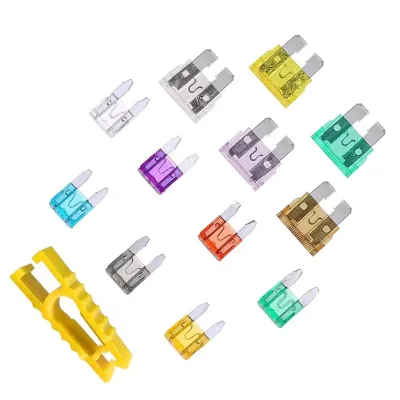
Versatile High-Quality SMD Fuse Connector for Reliable Circuit Connections
$0.08 - $0.09
MOQ: 3000 Pieces


Comprehensive Sourcing Guide
Strategic Sourcing Guide for UL Certified 2140 SMD Fuses
Navigating the global market for surface-mount device (SMD) fuses requires a rigorous approach to technical verification and supplier qualification. The specific search term "UL Certified 2140 SMD Fuse" indicates a procurement need for compact overcurrent protection components designed for high-density circuit boards. While the term "2140" often refers to a specific physical dimension or series designation in the industry, the actual availability of this exact model number must be cross-referenced against current supplier inventories. Buyers must distinguish between generic SMD fuses and those meeting specific UL certification requirements, as not all listed products in a marketplace will automatically possess valid certification status. This guide outlines the critical factors for sourcing these components, focusing on the intersection of technical specifications, regulatory compliance, and supply chain reliability.
Technical Specifications and Form Factor Analysis
The core of sourcing an SMD fuse lies in understanding its physical and electrical characteristics. Based on available product data, SMD fuses are characterized by their small footprint, which allows for automated placement on printed circuit boards (PCBs). The observed product attributes indicate a "SMD" shape and a "Current Fuse" type, designed specifically for electronic applications. The voltage ratings observed in the market range significantly, from 63V up to 300V, with specific models rated at 63V, 72V, 125V, and 250V. When targeting a "2140" series or similar high-density component, buyers must verify the specific voltage rating required for their application, as a mismatch can lead to catastrophic failure or insufficient protection.
Current ratings are equally critical. The market data shows a wide spectrum of amperage, ranging from 63mA to 40A, with specific sub-ranges like 16A to 40A and 50mA to 15A available. The fusing speed is another vital parameter; the observed data specifies an "F" fusing speed, which typically denotes a fast-acting characteristic. This is essential for protecting sensitive digital electronics, such as 3C digital devices, USB chargers, and cell phones, where rapid response to overcurrent is necessary to prevent damage. Additionally, the breaking capacity varies, with some products offering "Low" breaking capacity and others "High." For high-voltage or high-energy applications, a high breaking capacity is non-negotiable to ensure the fuse can safely interrupt a fault without exploding or causing an arc.
| Parameter | Observed Market Range | Critical Verification Point |
|---|---|---|
| Shape | SMD | Verify footprint compatibility with PCB design |
| Voltage Rating | 63V ~ 300V | Must match or exceed circuit operating voltage |
| Ampere Rating | 63mA ~ 40A | Select based on normal operating current + margin |
| Fusing Speed | F (Fast) | Confirm response time matches application needs |
| Breaking Capacity | Low to High | Ensure sufficient for fault current levels |
Compliance and Certification Verification
The request for "UL certified" components introduces a layer of regulatory scrutiny that cannot be overlooked. While the supplied product data lists certifications such as ISO9001, IATF16949, and ISO9001-CB, these are quality management system certifications and do not automatically equate to product safety certifications like UL. The UL standard for fuses, specifically UL 248, is referenced in background knowledge, but buyers must treat this as a verification target rather than a guaranteed attribute of every listed item.
Buyers must explicitly request the UL file number for the specific fuse model. A legitimate UL-certified product will have a unique file number that can be verified on the UL Product iQ database. The presence of a "UL" logo on the component or packaging is a visual indicator, but it must be accompanied by valid documentation. In the context of the "2140" designation, if the component is intended for use in equipment requiring UL certification, the fuse itself must be listed. The observed data mentions "Others: OEM Service," which suggests that suppliers may offer custom labeling, but this does not replace the need for the underlying component to be certified.
Furthermore, international standards such as IEC 60269 and IEC 60282 provide additional frameworks for fuse performance. While the supplied text lists these as background standards, a prudent buyer should verify if the specific product meets IEC standards in addition to UL requirements, especially for export markets. The absence of a specific mention of UL 248 in the high-confidence facts means that buyers cannot assume compliance based on the provided list alone. The verification process must involve direct communication with the supplier to obtain the test reports and certification certificates for the specific batch or model number.
Cost Drivers and Pricing Dynamics
The pricing for SMD fuses is influenced by several factors, including the complexity of the manufacturing process, the volume of the order, and the level of certification. The observed price range in the market spans from $0.01 to $1,500, a vast disparity that reflects the difference between low-cost generic components and specialized, high-performance units or bulk packaging. The lower end of the spectrum likely represents standard, non-certified, or high-volume generic fuses, while the higher end may include specialized models with high breaking capacities, specific voltage ratings, or those sold in smaller, premium packaging.
Minimum Order Quantity (MOQ) is a significant cost driver. The observed MOQ range is 1 to 5,000 units. For a buyer seeking a specific "2140" model, an MOQ of 1,000 or 1,500 units per tape (as seen in the "1000pcs/TAP" and "1500pcs/TAP" standards) is common. Buying in smaller quantities often incurs a higher unit cost due to setup fees and the inefficiency of handling small reels. Conversely, ordering at the higher end of the MOQ range can significantly reduce the per-unit cost. Buyers must balance their inventory needs with cash flow constraints, ensuring they do not overstock components that may become obsolete or require long lead times to restock.
Lead times also impact the total cost of ownership. The observed lead time is approximately 2 weeks ("2wks"), which is relatively standard for SMD components. However, for custom orders or specific certification requirements, this time may extend. Buyers should factor in potential supply chain disruptions and the cost of holding inventory while waiting for delivery. The packaging method, such as "Taped or Reel" or "Cartons," also influences handling costs and automation compatibility.
Typical Applications and Performance Requirements
The versatility of SMD fuses allows them to be used in a wide array of electronic applications. The observed product attributes list applications including 3C digital devices, power supplies, USB chargers, cell phones, LED drivers, and PC computers. This broad applicability underscores the need for precise selection based on the specific circuit environment. For instance, a fuse used in a USB charger must handle the specific current surges associated with charging cycles, while a fuse in an LED driver must manage the thermal characteristics of the driver circuit.
The "Fusing Device" attribute varies, with some products featuring "Luminous" indicators and others "Discoloration" mechanisms. These features provide visual feedback when the fuse has blown, which is crucial for maintenance and troubleshooting in industrial or commercial settings. The "Arc-extinguishing Medium" is noted as "Vacuum" in some high-performance models, which is essential for preventing re-ignition of the arc after the fuse element melts. This is particularly important in high-voltage applications where the risk of sustained arcing is higher.
For applications requiring circuit breaker functionality, the data mentions types such as RCCB (Residual Current Circuit Breaker) and OVP (Overvoltage Protection). While these are distinct from standard fuses, they highlight the complexity of the protection ecosystem. Buyers sourcing "2140 SMD fuses" should ensure they are selecting the correct component for their specific protection needs, rather than confusing them with circuit breakers or other protection devices. The "Installation" method is typically "Fixed," and the "Fuse Holder Installing Method" is often "Circuit Board Fuse Holder," indicating that these components are designed for direct soldering or insertion into board-mounted holders.
Supplier Evaluation and Quality Assurance
Evaluating suppliers for SMD fuses requires a multi-faceted approach. The observed data indicates that products originate from "China," specifically "Guangdong, China," a major hub for electronics manufacturing. While this region offers competitive pricing and high production capacity, it also necessitates rigorous supplier vetting. Buyers should look for suppliers who hold ISO9001 and IATF16949 certifications, as these indicate a commitment to quality management systems. However, as noted earlier, these are system certifications and do not guarantee product-specific compliance.
The "OEM Service" attribute suggests that suppliers are willing to customize packaging or labeling, which can be beneficial for branding and traceability. However, buyers must ensure that customization does not compromise the integrity of the product or its certification status. The "Standard" of "1000pcs/TAP" or "1500pcs/TAP" indicates the packaging format, which is crucial for automated assembly lines. Suppliers should be able to provide consistent packaging to prevent issues during the pick-and-place process.
Quality control should be a central part of the procurement strategy. Buyers should request sample units for testing before placing a large order. These samples should be subjected to electrical testing to verify the fusing current, voltage rating, and breaking capacity. The "prod_model" numbers, such as "2410," "6125," "1808," "SFS2300," "SFS2200," "SFE1630," and "R1245F/1250 Series," provide a reference for specific models, but buyers must confirm that the "2140" designation aligns with one of these existing series or is a custom variant.
Long-Term Procurement Considerations
Sourcing SMD fuses is not a one-time transaction but a long-term relationship that requires careful management. The "2140" designation may be subject to obsolescence as manufacturers update their product lines. Buyers should inquire about the product lifecycle status and the availability of long-term supply agreements. The "Lead Time" of 2 weeks is a baseline, but buyers should plan for potential delays due to raw material shortages or geopolitical factors.
The "Place of Origin" being Guangdong, China, offers advantages in terms of supply chain proximity to major electronics manufacturers, but it also introduces risks related to logistics and trade regulations. Buyers should ensure that their contracts include clauses for quality disputes, delivery penalties, and intellectual property protection. The "Material" of the fuse holder, noted as "Plastic Fuse Holder," should be evaluated for its thermal and chemical resistance, especially in harsh environments.
Finally, buyers must maintain a clear record of all certifications and test reports. As regulations evolve, the ability to demonstrate compliance with UL and other standards will be critical for maintaining product certification in the end equipment. The "Function" of the fuse, whether it is for overcurrent protection, overvoltage protection, or circuit breaker failure protection, must be clearly documented to ensure it meets the safety requirements of the final product. By adhering to these procurement guidelines, buyers can secure a reliable supply of high-quality SMD fuses that meet their technical and regulatory needs.
FAQs
What certifications do UL Certified 2140 SMD Fuse suppliers typically hold?
Suppliers typically hold ISO9001 and IATF16949 certifications for quality management. While these indicate robust systems, buyers must explicitly request UL file numbers to verify specific product safety compliance for the 2140 series.
Which voltage ratings are available for surface mount current fuses?
Available voltage ratings range from 63V up to 300V, including specific models rated at 63V, 72V, 125V, and 250V. Buyers must select a rating that matches or exceeds their circuit operating voltage to ensure safety.
How fast do these fuses react to overcurrent conditions?
The observed fusing speed is designated as F, indicating a fast-acting characteristic. This rapid response is essential for protecting sensitive digital electronics like USB chargers and cell phones from sudden current surges.
Can I find these fuses with high breaking capacity?
Yes, products are available with both low and high breaking capacities. High breaking capacity is critical for high-voltage applications to safely interrupt faults without causing an arc or explosion during operation.
What is the minimum order quantity for these components?
The minimum order quantity ranges from 1 to 5000 units depending on the supplier. Standard packaging often involves 1000 or 1500 pieces per tape, which influences the effective minimum order for automated assembly lines.
Where are these electronic components primarily manufactured?
Products originate from China, specifically the Guangdong region. This location is a major hub for electronics manufacturing, offering competitive pricing but requiring rigorous supplier vetting for quality assurance.