Source UK Socket with 2 USB Ports for Commercial, Industrial, and Residential Use
Compare 30 verified listings for a UK Socket with 2 USB Ports designed for commercial, industrial, and residential applications. Buyers can evaluate specifications including voltage, current, and cable length to find the right extension socket for their needs.
Key considerations
Products List

UK Type Plug Extension Socket with 2*USB Port
$4.70 - $5.00
MOQ: 1000 Pieces
WANSHUN ELECTRICAL & INTELLIGENT MANUFACTURE (GUANGDONG) CO., LTD.

T-Type UK Standard Plug Socket with USB Ports
$5.65 - $5.80
MOQ: 2400 Pieces
WANSHUN ELECTRICAL & INTELLIGENT MANUFACTURE (GUANGDONG) CO., LTD.


4 Way 2 USB Ports UK Extension Socket with Switch
$5.05 - $5.10
MOQ: 1200 Pieces
WANSHUN ELECTRICAL & INTELLIGENT MANUFACTURE (GUANGDONG) CO., LTD.

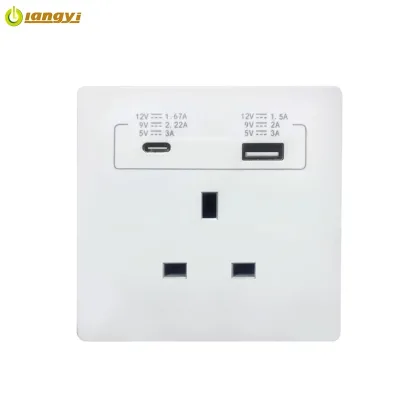
UK USB Type a and Type C 13A 3 Holes Wall Extension Socket With 2 USB Ports
$0.25 - $5.45
MOQ: 100 Minimum
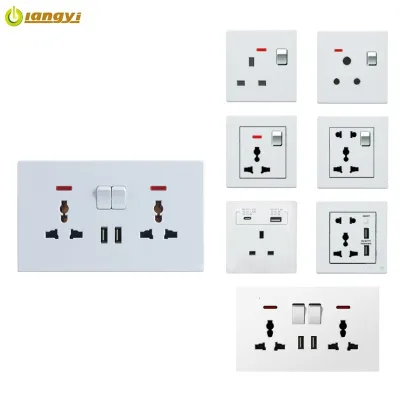
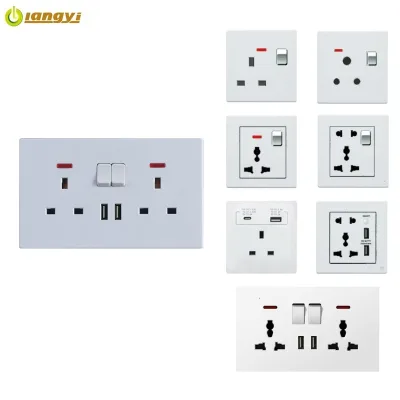
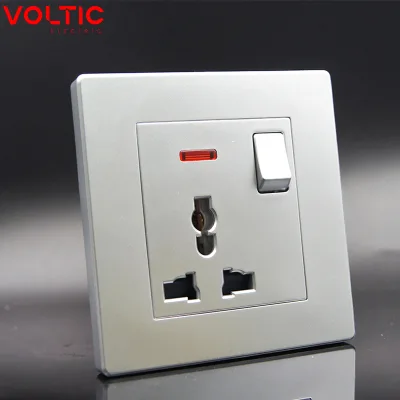


Comprehensive Sourcing Guide
Strategic Sourcing Guide for UK Sockets with Integrated USB Charging
Procuring electrical components for international markets requires a rigorous approach to technical verification, regulatory compliance, and supply chain reliability. When sourcing a UK socket with two USB ports, buyers must navigate a complex landscape of national standards, safety certifications, and manufacturing capabilities. The following guide outlines the essential factors for evaluating potential suppliers and products, ensuring that the final procurement aligns with safety requirements and operational needs.
Technical Specifications and Electrical Ratings
The foundation of any reliable electrical procurement lies in precise technical specifications. For a UK socket, the primary electrical parameters must align with the local grid infrastructure. The standard operating voltage for these units is typically rated at 250V Alternating Current (AC). The current rating is a critical safety parameter; for standard UK applications, the socket is often rated at 13A, which supports a maximum power load of approximately 3250W. Buyers must verify that the specific model selected matches these ratings to prevent overheating or circuit failure.
Beyond the mains power, the integration of USB charging ports introduces additional specifications. A common configuration for modern sockets includes dual USB ports capable of delivering 5V at 2.4A per port, or a combined output of 2400mA. This ensures compatibility with a wide range of mobile devices. The cable length is another variable that impacts usability; observed market options include cables ranging from 1.5 meters to 3 meters. The wire gauge must also be verified; standard configurations often utilize 3x0.75mm² or 3x1.25mm² wire depending on the current capacity and length requirements.
The physical construction of the socket is equally important. The shell material is frequently composed of ABS plastic or PC (Polycarbonate) to ensure fire protection and electrical insulation. Internal conductive parts are typically made of copper to ensure low resistance and high conductivity. Safety mechanisms, such as shutters that prevent single-pin insertion, are standard features in compliant UK sockets. These shutters protect against accidental contact with live parts. The IP rating for these indoor units is generally IP20, indicating protection against solid objects larger than 12.5mm, while the grounding is typically standard grounding to ensure user safety.
Compliance and Certification Verification
Compliance with international and local standards is non-negotiable in the electrical industry. For products intended for the UK and European markets, specific certifications serve as proof of safety and quality. The most prominent certifications observed in this category include CE and RoHS, which indicate conformity with health, safety, and environmental protection standards for products sold within the European Economic Area.
Furthermore, adherence to specific technical standards is required. Products should comply with IEC60884 for safety of plugs and socket-outlets and IEC60669 for switches. In the UK context, compliance with BS1363 is essential, as this standard dictates the design and safety requirements for 13A plugs and socket-outlets. Additionally, many manufacturers hold ISO9001:2015 certification, which verifies that their quality management systems meet international benchmarks. Buyers should request documentation proving that the specific batch of products holds these certifications, as counterfeit or non-compliant goods pose significant liability risks.
Cost Drivers and Pricing Dynamics
The price of a UK socket with USB ports is influenced by several variable factors. The observed market price range for these items can vary significantly, from approximately $0.24 to $30.00 per unit. This wide disparity is not merely a function of brand but is driven by material quality, certification depth, and order volume. High-quality PC materials and pure copper conductors command higher prices than lower-grade ABS or alloy alternatives.
The Minimum Order Quantity (MOQ) is a primary driver of unit cost. Suppliers often offer tiered pricing structures where the unit price decreases as the order volume increases. MOQs for these products can range from as low as 1 unit for samples up to 2400 units for bulk orders, with some suppliers setting a standard MOQ of 5000 pieces for custom configurations. Buyers must balance the need for inventory against the cash flow implications of large orders. Additionally, the complexity of customization, such as adding specific branding or altering the cable length, can increase the base cost. Payment terms, often cited as T&T (Telegraphic Transfer), also influence the financial terms of the transaction.
Typical Applications and Usage Scenarios
The versatility of UK sockets with integrated USB ports makes them suitable for a diverse range of applications. These units are designed for commercial, industrial, hospital, and residential environments. In residential settings, they serve as general-purpose power sources, providing convenient charging for smartphones and tablets without the need for additional adapters. In commercial spaces such as hotels and offices, the dual USB feature reduces cable clutter and enhances user convenience.
Industrial and hospital applications require higher reliability and safety standards. The fire protection and insulation properties of the shell material are critical in these environments to prevent electrical fires. The prevention of single-pin insertion shutters is particularly important in high-traffic areas where accidental contact is a risk. The standard grounding ensures that sensitive medical or industrial equipment is protected from electrical surges. The specific model selection should match the environment; for instance, a unit with a 3-meter cable might be preferred for office setups where outlets are distant from workstations, while a compact 1.5-meter unit may suffice for bedside applications.
Supplier Evaluation and Production Capabilities
Evaluating a supplier requires a deep dive into their production capabilities and logistical reliability. The origin of the product is a key indicator of manufacturing standards; many of these units originate from Guangdong, China, a hub for electrical component manufacturing. Buyers should verify the supplier's production capacity and their ability to meet demand during peak seasons.
Lead times are a critical factor in procurement planning. Production times can vary, with observed ranges from 30 to 60 days for standard orders, and some suppliers citing a specific production time of 45 days. This timeline includes manufacturing, quality testing, and packaging. The packaging method also affects logistics; common configurations include 1 piece per blister card with 24 pieces per carton, or bulk carton packing. Buyers must ensure that the packaging is robust enough to prevent damage during transit, especially for international shipping.
Warranty terms are another metric for supplier confidence. A standard warranty period for these electrical components is often 2 years, indicating the manufacturer's confidence in the product's durability. Buyers should also check for customization availability, as many suppliers offer tailored solutions for branding or specific technical requirements.
Quality Control and Inspection Protocols
Implementing a robust quality control (QC) protocol is essential to mitigate the risks associated with electrical components. The minimum electrical spacing within the socket must be verified to be less than 3mm to ensure adequate insulation between live parts. This spacing is a critical design parameter that prevents short circuits.
Inspection should cover both visual and functional aspects. Visual checks should confirm the integrity of the shell material, the quality of the copper contacts, and the clarity of any labeling. Functional testing must verify that the USB ports deliver the correct voltage and current, and that the main socket operates at the rated 13A without overheating. The presence of safety shutters should be tested to ensure they function correctly and do not impede the insertion of standard UK plugs.
For bulk orders, third-party inspection services can provide an additional layer of assurance. These inspections can verify that the product matches the agreed specifications, including the cable length, wire gauge, and certification documents. Buyers should also request test reports that validate the product against the relevant standards, such as BS1363 and IEC60884.
Long-Term Procurement Considerations
Sourcing electrical components is not a one-time transaction but a long-term partnership. Buyers should consider the scalability of the supplier's operations. As demand grows, the supplier must be able to maintain consistent quality and delivery times. The availability of spare parts and the longevity of the product design are also important factors.
Customization capabilities offer a strategic advantage. Suppliers that offer customization can help buyers differentiate their products in the market. However, customization often comes with higher MOQs and longer lead times, which must be factored into the supply chain strategy.
Finally, buyers should monitor changes in regulatory standards. As international safety requirements evolve, suppliers must adapt their products to remain compliant. A supplier with a strong commitment to quality management systems, such as ISO9001:2015, is better positioned to navigate these changes. By maintaining a proactive approach to supplier evaluation and quality control, buyers can ensure a steady supply of safe, reliable, and compliant UK sockets with USB ports.
Summary of Key Product Attributes
To assist in the evaluation process, the following table summarizes the key attributes observed in the market for UK sockets with USB ports. This data serves as a reference for buyers to compare potential suppliers and products.
| Attribute | Observed Range / Standard | Notes |
|---|---|---|
| Voltage Rating | 250V AC | Standard for UK mains |
| Current Rating | 13A | Supports up to 3250W |
| USB Output | 5V 2.4A (Dual Port) | Common configuration |
| Cable Length | 1.5m - 3m | Depends on model |
| Wire Gauge | 3x0.75mm² or 3x1.25mm² | Varies by current rating |
| Shell Material | ABS, PC | Fire protection and insulation |
| Internal Material | Copper | High conductivity |
| Certifications | CE, RoHS, ISO9001:2015 | Verify specific batch docs |
| Standards | BS1363, IEC60884, IEC60669 | Mandatory for UK/EU |
| Safety Features | Single Pin Insertion Shutter | Standard safety measure |
| IP Rating | IP20 | Indoor use only |
| MOQ | 1 - 5000 PCS | Depends on customization |
| Lead Time | 30 - 60 Days | Production and shipping |
| Warranty | 2 Years | Standard term |
By adhering to these guidelines and verifying the specific attributes against the supplier's documentation, buyers can make informed decisions that prioritize safety, compliance, and value. The complexity of the electrical market demands diligence, but a structured approach ensures the procurement of high-quality UK sockets with USB ports that meet the rigorous demands of modern applications.
FAQs
What certifications do UK Socket with 2 USB Ports typically hold?
These units typically hold CE and RoHS certifications to ensure safety compliance. Many manufacturers also provide ISO9001:2015 certification for quality management. BS1363 and IEC60884 standards are essential for UK and European market entry respectively.
How much is the minimum order quantity for these sockets?
The minimum order quantity ranges from 1 to 5000 pieces depending on the supplier and customization needs. Standard bulk orders often require 2400 or 5000 pieces, while sample orders may be as low as a single unit.
Can I find UK Socket with 2 USB Ports with a 3-meter cable?
Yes, models with a 3-meter cable length are available in the market. These units often use 3x0.75mm² or 3x1.25mm² wire and come with 13A fused plugs for safe operation in various residential and commercial settings.
What is the lead time for production of these electrical components?
Production lead times generally range from 30 to 60 days for standard orders. Some suppliers specify a production time of 45 days, which includes manufacturing, quality testing, and packaging before shipment from the origin location.
Which safety features are standard in UK Socket with 2 USB Ports?
Standard safety features include prevention from single pin insertion shutters to protect against accidental contact. The units also feature fire protection and insulation shell materials, along with standard grounding for user safety during operation.
How much power can the main socket handle?
The main socket is typically rated for 13A at 250V AC, supporting a maximum power load of 3250W. This rating ensures compatibility with standard UK appliances while maintaining safety and preventing overheating during continuous use.
What materials are used for the shell and internal contacts?
Shell materials are commonly ABS plastic or PC for fire protection and insulation. Internal conductive parts are typically made of copper to ensure high conductivity and low resistance for efficient power transmission and safety.