Source Underground Conveyor Bend Pulley for Mining, Tunneling, and Processing
Compare 30 Underground Conveyor Bend Pulley options from verified Chinese manufacturers. Buyers can evaluate specifications like diameter, material, and lagging types to find suitable solutions for mining, tunneling, and material processing applications.
Key considerations
Products List




Comprehensive Sourcing Guide
Strategic Sourcing Guide for Underground Conveyor Bend Pulleys
Understanding Technical Specifications and Design Variations
When sourcing an Underground Conveyor Bend Pulley, buyers must first distinguish between the specific design requirements dictated by the underground environment. The core component is the pulley itself, which serves to change the direction of the conveyor belt. In the context of the available market data, the product attributes indicate a wide range of diameters, specifically observed between 250mm and 1600mm, with other listings noting a range of 102mm to 1800mm. This variance suggests that procurement strategies must be highly customized rather than relying on a single off-the-shelf size. The length of the pulley shafts or drums also varies significantly, with observed specifications ranging from 300mm to 3500mm, requiring precise alignment with the conveyor frame dimensions.
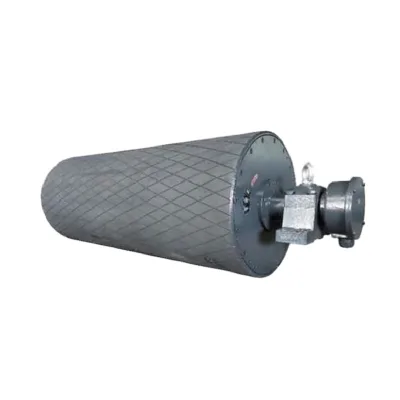
The structural integrity of these units is paramount. The primary material identified in the supply chain is Carbon Steel, with specific tube materials noted as S235jr. This material selection is critical for underground applications where mechanical stress and potential corrosion are constant factors. The welding processes employed vary, with some manufacturers utilizing Mixed Gas Shielded Arc Welding, while others specify Submerged Arc Welding. Buyers should verify which welding technique is used for their specific order, as this impacts the fatigue life and structural consistency of the pulley. Furthermore, the surface treatment processes are diverse; options include Baking Paint and various forms of Rubber Lagging. The lagging types observed range from Nature Rubber to specialized Heat/Thermal Vulcanized Rubber Casting. Surface finishes can be smooth, diamond grooved, or herringbone, each offering different friction coefficients and wear characteristics essential for underground traction.
The bearing and sealing systems are equally critical for longevity. The observed data lists bearings as "as Requested," indicating a high degree of customization is standard in this sector. Sealing mechanisms include Labyrinth Seals and Nylon 6 components, with some listings specifically mentioning Labyrinth Sealing. These seals are designed to prevent dust and moisture ingress, which are prevalent in underground mining environments. The expected operational lifetime varies in the market data, with some units claiming more than 50,000 hours and others citing over 30,000 hours. This discrepancy highlights the need for buyers to request specific performance data or test results for the exact model they intend to purchase, rather than assuming all units meet the highest observed benchmark.
Compliance, Certification, and Regulatory Standards
Navigating the compliance landscape for underground equipment requires rigorous verification of certifications and adherence to international standards. The supply chain data indicates that products often carry a suite of certifications, including CE, ISO, BV, SGS, and Ika. However, buyers must treat these as observations of what is available in the market rather than guarantees for every specific unit. The presence of these certifications suggests that reputable suppliers generally align with global safety and quality management systems, but individual batch verification is necessary.
Standards compliance is another area where specificity is required. The observed product standards include GB, ISO, Cema, DIN, JIS, SABS, BS, and BW 16''-94''. The CEMA (Conveyor Equipment Manufacturers Association) standard is particularly relevant for conveyor components in North America, while DIN and JIS are common in European and Asian markets respectively. The "BW" standard appears to relate to specific width or diameter classifications. Since underground environments often have strict local regulatory requirements, buyers must confirm that the pulley model they select meets the specific mining safety codes of their operating region. For instance, if a mine operates under CEMA guidelines, a pulley certified only to GB or JIS standards may not be sufficient without additional engineering validation.
The origin of the products is predominantly China, with specific mentions of Hebei as a manufacturing hub. While this provides insight into the supply chain geography, it does not inherently dictate quality. The "Customization" attribute is frequently listed as available, which is a positive indicator for meeting unique regulatory needs. However, buyers should ensure that any custom modifications do not void existing certifications. The "OEM" (Original Equipment Manufacturer) acceptance noted in the data suggests that suppliers are willing to produce under a buyer's brand or specifications, but this must be accompanied by a clear agreement on who holds the liability for compliance with local mining regulations.
Cost Drivers and Pricing Structure Analysis
The pricing structure for underground conveyor bend pulleys is influenced by several variable factors, making it difficult to establish a single market rate. The observed price range in the market spans from $1 to $50,000 USD. This vast range reflects the difference between small, standard components and large, heavily engineered units with specialized features. The lower end of the spectrum likely corresponds to smaller diameter pulleys with standard lagging and basic bearings, while the upper end represents large-diameter units (approaching 1600mm or more) with complex sealing systems, high-grade rubber lagging, and custom engineering.
The Minimum Order Quantity (MOQ) is another significant cost driver. The data shows an MOQ range of 1 to 100 units. Some suppliers offer a low MOQ of 1, which is beneficial for replacement parts or small-scale projects, while others require a batch of 100 units, which may be necessary for new mine installations or bulk upgrades. Buyers should be aware that ordering below a supplier's standard MOQ might incur a premium price or require a specific negotiation. Additionally, the "Customization" and "Customized" attributes suggest that bespoke orders will likely carry a higher unit cost due to the engineering and setup time involved.
Packaging and logistics also contribute to the final cost. The observed packing methods include "Wooden Packing Case" with "Fumigation Before Loading" and "Free Fumigation Wooden Packing." International shipping of wooden packaging requires compliance with ISPM 15 standards, and the cost of fumigation is often passed on to the buyer. The "Energy Saving" attribute mentioned in some listings could be a differentiator, potentially affecting the long-term operational cost of the conveyor system, though the initial purchase price might be higher for energy-efficient designs. Buyers should request a detailed breakdown of costs, separating the unit price, packaging, and any potential customs or fumigation fees to understand the true landed cost.
Typical Applications and Operational Environments
Underground conveyor bend pulleys are primarily utilized in mining and tunneling operations where space is constrained and the environment is harsh. The "Gravity Conveyor" and "Belt Conveyor" types mentioned in the data indicate that these pulleys are integral to systems that rely on gravity or motorized drives to move material. The specific application of a "Head Pulley, Tail Pulley, Snub Pulley, or Take up Pulley" determines the function of the bend pulley within the system. Bend pulleys are often used to guide the belt around corners or to increase the wrap angle on drive pulleys, which is crucial for maintaining tension and preventing slippage in underground tunnels.
The "Heat Resistant" material feature noted in the data suggests that these pulleys are also suitable for environments where the conveyed material generates significant heat, such as in coal mining or ore processing. The "Turning" installation attribute implies that these units are designed for dynamic movement, requiring robust bearings and precise balancing. The "Dynamic Equilibrium and Static Equilibrium" balance treatment is essential for high-speed underground conveyors to prevent vibration and premature wear.
The "Multi Color" and "Color as Required" options indicate that color coding may be used for safety or identification purposes within the mine. For example, specific colors might denote different load capacities or maintenance schedules. The "New" condition of the products ensures that buyers are receiving fresh inventory, which is critical for underground safety where worn components can lead to catastrophic failures. The "Energy Saving" attribute further suggests that these pulleys are designed to minimize friction and power consumption, which is a key consideration in underground operations where ventilation and power costs are high.
Supplier Evaluation and Quality Assurance Protocols
Evaluating suppliers for underground conveyor bend pulleys requires a focus on their ability to deliver consistent quality and adhere to technical specifications. The "Customization" and "OEM" capabilities are strong indicators of a supplier's flexibility and technical competence. However, buyers should verify the supplier's track record in producing units that meet the specific "Standard" requirements of their region. The presence of multiple certifications (CE, ISO, BV, SGS) is a positive sign, but buyers should request copies of these certificates and verify their validity with the issuing bodies.
Quality control should be a central part of the procurement process. The "Welding" processes, whether Mixed Gas Shielded Arc or Submerged Arc, should be inspected to ensure they meet the required standards. The "Surface Treatment" and "Rubber Lagging" processes are also critical areas for inspection. Buyers should request photos or videos of the manufacturing process, particularly the vulcanization of the rubber lagging, to ensure it is done correctly. The "Lifetime" claims of 30,000 to 50,000 hours should be backed by test data or case studies from similar underground applications.
The "Guarantee" and "Warranty" periods vary, with some suppliers offering 1 year and others 2 years. This difference should be factored into the supplier evaluation. A longer warranty period often indicates a higher level of confidence in the product's durability. Buyers should also check the "Bearing" and "Seal" specifications to ensure they match the harsh conditions of the underground environment. The "As Requested" nature of the bearing specification means that the buyer must be proactive in specifying the exact bearing type and brand required for their application.
Long-Term Procurement and Maintenance Considerations
Long-term procurement of underground conveyor bend pulleys involves more than just the initial purchase; it requires a strategy for maintenance, replacement, and lifecycle management. The "Lifetime" of the pulley is a key factor in this strategy. While some units are claimed to last over 50,000 hours, the actual lifespan depends on the operating conditions, such as the type of material being conveyed, the speed of the conveyor, and the environmental factors like dust and moisture. Buyers should plan for regular inspections of the "Labyrinth Seals" and "Rubber Lagging" to prevent premature failure.
The "Customization" aspect allows for future-proofing the procurement strategy. If a mine expands or changes its conveyor layout, the ability to order custom-sized pulleys (within the 250-1600mm range) ensures that the system can be adapted without needing a complete overhaul. The "OEM" capability also supports long-term relationships with suppliers, allowing for consistent branding and part compatibility.
Maintenance considerations include the availability of spare parts, such as bearings and seals. The "As Requested" bearing specification means that buyers should ensure that the chosen bearing type is readily available from the market or the supplier. The "Fumigation" requirement for wooden packing is a logistical consideration that should be factored into the supply chain planning, especially for international shipments. Finally, the "Energy Saving" feature of the pulleys can lead to significant cost savings over the lifecycle of the equipment, making it a worthwhile investment for long-term operational efficiency.
Summary of Key Procurement Factors
To summarize, sourcing an Underground Conveyor Bend Pulley requires a meticulous approach to technical specifications, compliance, and supplier evaluation. The wide range of diameters, materials, and surface treatments available in the market offers flexibility but demands careful selection based on the specific underground environment. Buyers must verify certifications, standards, and warranty terms to ensure the product meets safety and performance requirements. The cost drivers, including customization and packaging, should be clearly understood to avoid unexpected expenses. By focusing on long-term maintenance and lifecycle management, buyers can ensure that their underground conveyor systems operate efficiently and safely for years to come. The data indicates a robust market with diverse options, but success lies in the buyer's ability to navigate these options with precision and due diligence.
FAQs
What material is used for underground conveyor bend pulleys?
The primary material used is carbon steel, often with S235jr tube material. This selection ensures structural integrity against mechanical stress and corrosion in harsh underground environments.
Which certifications are typically available for these pulleys?
Common certifications include CE, ISO, BV, SGS, and Ika. Buyers should verify that specific units carry these certificates rather than assuming all products automatically meet every listed standard.
How long is the expected operational lifetime of the pulley?
Operational lifetimes vary, with some units claiming more than 50,000 hours and others over 30,000 hours. Buyers must request specific performance data for the exact model to confirm durability.
Can the pulley dimensions be customized for specific needs?
Yes, customization is available for diameters ranging from 250mm to 1600mm and lengths up to 3500mm. Buyers should specify exact requirements to ensure the unit fits their conveyor frame dimensions.
What types of rubber lagging are offered for surface treatment?
Options include nature rubber and heat or thermal vulcanized rubber casting. Surface finishes can be smooth, diamond grooved, or herringbone to provide specific friction coefficients for underground traction.
What is the minimum order quantity for purchasing these units?
The minimum order quantity ranges from 1 to 100 units depending on the supplier. Some vendors offer single units for replacements, while others require batch orders for new installations.
Which standards do these pulleys typically comply with?
Products often comply with standards such as GB, ISO, CEMA, DIN, JIS, and SABS. Buyers must confirm that the selected model meets the specific mining safety codes of their operating region.