Source Underfloor Heating XPS Board for floor wall roof
Find 30 listings for Underfloor Heating XPS Board with varying compressive strength and refractoriness. Buyers can compare materials like polystyrene and XPS, surface treatments, and custom sizes for insulation needs.
Key considerations
Products List


XPS Underfloor Heating Board, Grooved XPS Foam Board for Underfloor Heating System
$3.00 - $9.50
MOQ: 1000 Square Meters


Long Lifespan Durable XPS Radiant Insulation Underfloor Heating Board
$3.60 - $8.50
MOQ: 1000 Square Meters

High Compression Strength Radiant XPS Underfloor Heating Board for Heating System
$3.60 - $8.50
MOQ: 1000 Square Meters

Aging Resistant High Efficiency XPS Radiant Hydronic Underfloor Heating Board
$3.60 - $8.50
MOQ: 1000 Square Meters

XPS Underfloor Water Heating Panel Modular Floor Underfloor Heating Board
$3.60 - $8.50
MOQ: 1000 Square Meters


Chinese Famous Brand XPS Foam 20mm Insulation Board for Wall Underfloor Heating
$89.37 - $96.35
MOQ: 65 Cubic metre


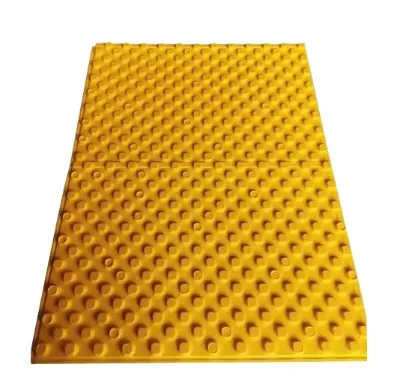
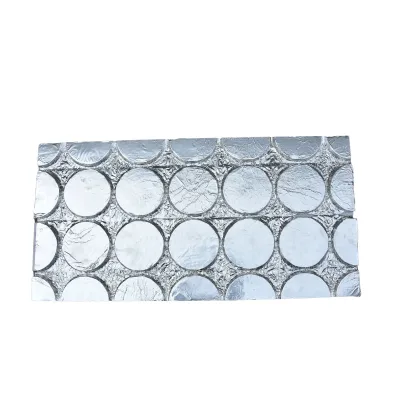

Dry Type Underfloor Heating System with Pre Grooved XPS Floor Insulation Board
$3.50 - $10.00
MOQ: 1000 Square Meters

Eco Friendly Heat Insulation XPS Foam Board for Underfloor Heating Substrate
$35.00 - $55.00
MOQ: 100 Square Meters

$35.00 - $55.00
MOQ: 100 Square Meters
Comprehensive Sourcing Guide
Strategic Sourcing Guide for Underfloor Heating XPS Boards
Understanding Core Technical Specifications and Material Variants
When sourcing XPS (Extruded Polystyrene) boards specifically designed for underfloor heating systems, buyers must first distinguish between the various material compositions and physical properties available in the current market. The supplied product data indicates that the primary material base is often Polystyrene, with specific variants utilizing XPS combined with Aluminum Foil to enhance thermal reflection. The core functional requirements for these boards revolve around heat insulation, waterproofing, and fire retardancy, which are critical for maintaining the efficiency of underfloor heating systems while ensuring safety.
A critical observation in the product landscape is the variation in apparent density, which directly correlates with structural integrity and thermal performance. Data points show density ranges spanning from 28 to 50 kg/m³ in general insulation applications, while specific underfloor heating models often cite a range of 35 to 65 kg/m³. This higher density in specialized models is essential to withstand the mechanical loads imposed by flooring materials and furniture without compressing the insulation layer. Furthermore, compressive strength is a non-negotiable metric; observed values range from 200 to 800 kPa, with specific underfloor models frequently listing strengths around 300 kPa or 350 kPa. Buyers must verify that the selected board meets the load-bearing requirements of their specific project, as insufficient strength can lead to floor deformation over time.
The thermal limits of the material are equally significant. The refractoriness, or the temperature range the board can withstand without degrading, varies across listings. Some products are rated for a range of -50°C to +75°C, while others extend to -30°C to +80°C or even -50°C to +80°C. Since underfloor heating systems operate at elevated temperatures, selecting a board with a refractoriness that comfortably exceeds the maximum operating temperature of the heating pipes is vital. Additionally, the surface treatment plays a role in installation efficiency. Available treatments include smooth, grooved, roughing, and embossed surfaces, with some specialized boards featuring an aluminum foil layer to reflect heat upward into the living space rather than downward into the subfloor.
Compliance, Fire Ratings, and Certification Verification
In the realm of construction materials, particularly those installed beneath flooring, fire safety compliance is a paramount concern. The product data explicitly lists fire ratings ranging from B3 to B1/B2/B3. It is important to note that these ratings indicate different levels of flammability, with B1 typically representing the highest level of fire resistance among the listed options. Buyers must rigorously verify the specific fire rating required by local building codes and project specifications, as a B3 rating may be insufficient for commercial or multi-family residential projects. The presence of a B1/B2/B3 designation suggests that the product may come in different grades, and the procurement team must ensure the ordered batch matches the safety standards mandated by the jurisdiction.
While the provided data includes low-confidence background references to standards such as ISO 9001, ISO 14001, and certifications like CE, these should be treated as potential attributes rather than guaranteed facts for every listed product. The absence of a specific certification claim in the high-confidence facts means that buyers cannot assume a supplier holds these certifications without direct verification. The procurement strategy must include a request for valid, current certificates from the supplier. Relying on the assumption that a product is ISO certified because the category often includes such standards is a risk. Instead, the buyer should explicitly ask for the certificate number and verify its authenticity with the issuing body. This due diligence is essential to ensure that the manufacturing process adheres to quality management and environmental standards, which often correlate with the consistency of the product's physical properties.
Cost Drivers and Pricing Structure Analysis
The pricing for XPS underfloor heating boards is influenced by a complex interplay of material composition, density, thickness, and surface treatments. The observed price range in the market is extensive, spanning from $0.14 to $260 per unit or batch, reflecting the diversity in product configurations. This wide variance is not merely a function of brand but is driven by specific technical attributes. For instance, boards featuring an aluminum foil surface treatment or those with higher compressive strength (e.g., 350 kPa vs. 200 kPa) will naturally command a higher price point. Similarly, the thickness of the board, which can range from 6mm to 150mm depending on the standard, is a primary cost driver. Thicker boards require more raw material and energy to produce, directly impacting the unit cost.
Minimum Order Quantity (MOQ) is another significant factor affecting the total cost of procurement. The observed MOQ ranges from 2 to 1040 units, indicating that suppliers have varying thresholds for production runs. For smaller projects, a supplier with a low MOQ might be more cost-effective despite a higher unit price, whereas large-scale developments can leverage high-volume orders to reduce the per-unit cost. Buyers should also consider the packaging method, as options include PP bags, carton boxes, or polybags. While packaging might seem like a minor detail, specialized packaging for fragile or high-value boards can add to the logistics cost. Furthermore, the customization of dimensions, such as the standard size of 1200*600mm versus custom cuts, can influence the price. Customization often incurs additional setup fees or requires a higher MOQ to justify the production line changeover.
Typical Applications and Installation Considerations
The primary application for these XPS boards is clearly defined as insulation for underfloor heating systems, though the data also mentions broader uses for floor, wall, roof, and cold room insulation. The specific design for underfloor heating often includes grooved surfaces to facilitate the embedding of heating pipes, ensuring optimal thermal contact and heat distribution. The size specifications provided, such as 1200*600mm with thicknesses of 6mm, 10mm, or 12mm, are tailored to fit standard construction modules. However, the availability of customized sizes up to 150mm in thickness allows for adaptation to specific thermal resistance (R-value) requirements.
Installation efficiency is enhanced by the surface treatment and the material's inherent properties. The waterproof nature of XPS is crucial in underfloor applications where moisture from the concrete subfloor or potential leaks could compromise the insulation. The aluminum foil variant, in particular, serves a dual purpose: it acts as a vapor barrier and reflects radiant heat back into the room, increasing the system's overall efficiency. The color options, ranging from blue, pink, yellow, and white to green, do not affect performance but may assist in site organization or identification of different insulation layers. Buyers should ensure that the selected board's dimensions and surface texture align with the specific installation method planned, whether it involves direct embedding of pipes or the use of a screed layer over the insulation.
Supplier Evaluation and Quality Control Protocols
Evaluating suppliers for XPS underfloor heating boards requires a focus on consistency and transparency regarding the product attributes. Given the observed variations in density and compressive strength, a robust quality control protocol is necessary. Buyers should request batch-specific test reports that confirm the apparent density falls within the claimed range (e.g., 35-65 kg/m³) and that the compressive strength meets the specified threshold (e.g., 300 kPa++). The warranty period, observed to be 1 year for some products and 5 years for others, serves as an indicator of the supplier's confidence in their product's longevity. A longer warranty often implies a more rigorous internal quality assurance process.
The production origin is consistently listed as China, which provides a context for logistics and lead time expectations. However, the specific lead times and locations are not provided in the high-confidence facts, necessitating direct inquiry with the supplier. When evaluating a potential partner, buyers should assess their ability to provide customization, as the data confirms that customization is available for dimensions, colors, and surface treatments. The supplier's capacity to handle the specific MOQ requirements is also critical; a supplier with a high MOQ might be unsuitable for small residential projects, while one with a low MOQ might lack the capacity for large commercial developments. Additionally, the after-sales service, ranging from 1 year to 5 years, should be clearly defined in the contract to ensure support in case of installation issues or material defects.
Long-Term Procurement and Performance Assurance
Securing a reliable supply chain for XPS underfloor heating boards involves looking beyond the initial purchase to long-term performance and support. The product data highlights a warranty of 1 year and an after-sales service of 5 years for certain models, suggesting that the longevity of the insulation is a key selling point. Buyers should prioritize suppliers who offer extended after-sales support, as this indicates a commitment to the product's performance over time. The ability to customize the product, including specific thicknesses and surface treatments, ensures that the insulation can be tailored to the evolving needs of the project, reducing the risk of performance gaps.
In the long term, the stability of the material properties is crucial. The refractoriness range of -50°C to +80°C, for example, ensures that the board will not degrade under the thermal cycling of a heating system. However, buyers must verify that the specific batch they receive maintains these properties, as manufacturing variations can occur. The packaging method, whether PP bags or carton boxes, should be evaluated for its ability to protect the boards during transit and storage, preventing damage that could compromise the insulation's integrity. By focusing on suppliers who provide transparent data, consistent quality control, and robust after-sales support, buyers can ensure that their underfloor heating systems operate efficiently and safely for years to come.
Comparative Analysis of Product Attributes
To facilitate a clearer understanding of the variations in the market, the following table summarizes the key attributes observed in the product data. This comparison helps buyers identify the specific features that align with their project requirements.
| Attribute | General Range / Observation | Specific Underfloor Heating Variants |
|---|---|---|
| Material | Polystyrene | XPS, XPS + Aluminum Foil |
| Apparent Density | 28-50 kg/m³ | 35-65 kg/m³ |
| Compressive Strength | 200-800 kPa | 300 kPa++, 350 kPa |
| Refractoriness | -50°C to +80°C | -30°C to +80°C, -50°C to +75°C |
| Fire Rating | B3 | B1/B2/B3 |
| Surface Treatment | Smooth, Grooved, Roughing | Aluminum Foil, Grooved, Without Skin |
| Standard Size | 600-1220mm width | 1200600mm, 6002400mm |
| Thickness | 10-150mm | 6mm, 10mm, 12mm, 25mm, 30mm |
| Warranty | 1 Year | 1 Year, 5 Years |
| Origin | China | China |
This table underscores the importance of specifying exact requirements when sourcing. The variation in density and strength, for instance, suggests that not all XPS boards are suitable for heavy-load applications. Similarly, the fire rating differences highlight the need for strict compliance with local safety regulations. By carefully cross-referencing these attributes with project needs, buyers can make informed decisions that balance cost, performance, and safety.
FAQs
What is the compressive strength range for these boards?
The compressive strength ranges from 200 to 800 kPa depending on the specific model. Some underfloor heating variants offer strengths around 300 kPa or 350 kPa to ensure structural integrity under load.
Which temperature range can the material withstand?
Refractoriness varies between -50°C to +80°C across different product listings. This range ensures the board remains stable under the thermal cycling typical of underfloor heating systems without degrading.
Can I customize the dimensions and surface treatment?
Yes, customization is available for thickness, width, and surface finishes like grooved or smooth. Buyers can specify sizes up to 150mm thickness with options for aluminum foil or embossed surfaces.
What fire ratings are available for these insulation boards?
Fire ratings range from B3 to B1/B2/B3 depending on the specific product grade. Buyers must verify the required rating against local building codes as B1 offers higher resistance than B3.
How is the product typically packed for shipment?
Products are packed in PP bags, carton boxes, or polybags depending on the order. This packaging protects the boards during transit while allowing for efficient storage and handling at the construction site.
What is the warranty period for these XPS boards?
Warranty periods vary from 1 year to 5 years depending on the supplier and model. Extended after-sales service often indicates higher confidence in the product's long-term durability and performance.
Which materials are used for underfloor heating insulation?
The primary materials are Polystyrene and XPS, sometimes combined with aluminum foil. These materials provide necessary heat insulation, waterproofing, and fire retardancy for efficient underfloor heating system installation.