Find Used Automatic Transmission Flatbed Truck for logistics, construction, and industrial transport
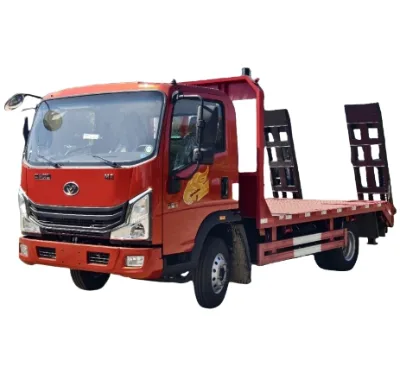
Source 30 available units of Used Automatic Transmission Flatbed Truck designed for heavy-duty hauling. Buyers can compare specifications including load capacity, axle configuration, and suspension systems to match specific operational needs.
Key considerations
Products List

$23400.00 - $24500.00
MOQ: 1 Sets


4X2 Flatbed Truck Manufacturer 180HP Flatbed Transport Truck for Sale
$22000.00 - $29800.00
MOQ: 1 Pieces

Flatbed Transport Truck for Sale, Construction Machinery Transport Truck
$22000.00 - $29800.00
MOQ: 1 Pieces

High-Quality 3 to 10-Ton Flatbed Transport Truck for Sale at Factory Price
$22000.00 - $29800.00
MOQ: 1 Pieces


8X4 Flatbed Transport Truck Construction Machinery Transfer Flatbed Truck Heavy Truck
$48000.00 - $55000.00
MOQ: 1 Pieces


Futian Flatbed Truck 4X2 Platform Truck 12 Tons Logistics Trailer Dump Truck
$21500.00 - $32000.00
MOQ: 1 Pieces


Diesel Manual Transmission 4X2 Light 4.5 Ton Flatbed Truck for Sale
$14980.00 - $23180.00
MOQ: 1 Pieces

Cheap 6X2 Diesel Manual Transmission Left Drive 2.2m 24.5 Ton Heavy Flatbed Transporter
$32296.00 - $38896.00
MOQ: 1 Pieces

High Quality Can Be Customized Special Truck Freight Truck Flatbed Transporter
$30628.00 - $37238.00
MOQ: 1 Pieces

New Customizable Diesel 4X2 Drive Flatbed Transporter with Manual Transmission
$16255.00 - $24580.00
MOQ: 1 Pieces



Comprehensive Sourcing Guide
Strategic Sourcing Guide for Used Automatic Transmission Flatbed Trucks
Understanding the Technical Profile of Available Inventory
When researching a Used Automatic Transmission Flatbed Truck, buyers must first distinguish between the broad category of flatbed trailers and the specific motorized vehicle units often listed under similar search terms. The market data indicates a diverse inventory ranging from heavy-duty semi-trailers to specialized flatbed-style trucks. A critical observation in the current supply landscape is the variation in wheelbase configurations. Some units in the catalog feature a wheelbase of 7000-8000mm, while others, specifically identified as flatbed style trucks, present a wheelbase of 5100mm or 3950mm. This discrepancy suggests that "flatbed truck" in this context may encompass both the tractor unit and the trailer component, requiring the buyer to verify the exact configuration.
The transmission type is a primary filter for this search. While many heavy-duty units in the dataset are equipped with manual transmissions, a specific subset is listed with automatic transmission types. This distinction is vital for operational comfort and ease of use in urban or stop-and-go environments. The engine specifications for these units vary significantly; some entries list horsepower between 150-250hp, while others indicate an engine capacity of less than 4L. Fuel type is consistently noted as diesel across the inventory, which is standard for this class of heavy equipment. The condition of the vehicles is predominantly listed as "New" in the supplier descriptions, which presents a unique scenario for a "used" search query. Buyers must clarify whether the listing refers to a new model being sold as a used inventory item, a refurbished unit, or a mislabeled entry, as this directly impacts the valuation and expected lifespan of the asset.
Compliance and Certification Verification
Navigating the regulatory landscape for imported or cross-border truck procurement requires rigorous verification of certifications and standards. The observed inventory includes a mix of certification labels, such as ISO/TSCCC, ISOCE, and ECE/GCC. However, there are also entries where certification data appears fragmented, such as "ISOCondition:New" or "ISOCCC,TSEEC." This inconsistency necessitates a proactive approach where the buyer does not assume compliance based on the listing title alone. For a used vehicle, the validity of the original certification is paramount. If the truck is intended for operation in regions requiring Euro emission standards, the buyer must verify the specific emission standard listed, as some entries mention "Euro Fuel:Diesel" without specifying the exact Euro level (e.g., Euro 5 or Euro 6).
The product standards provided in the listings offer dimensional benchmarks that serve as a proxy for compliance. Dimensions such as 13000mm3000mm or 63601960*2680mm are cited as product standards. These figures likely represent the maximum allowable dimensions for road legality in specific jurisdictions. A buyer must cross-reference these dimensions against local road regulations to ensure the vehicle will not be subject to fines or restrictions. Furthermore, the origin of the goods is frequently listed as China or specifically Hubei, China. While this is a known manufacturing hub, it does not automatically guarantee adherence to Western safety standards. The presence of a "Tire Certification: ECE, GCC" suggests that some tires meet international standards, but the buyer must confirm that the entire vehicle assembly, including the braking system and lighting, aligns with the destination country's requirements.
Cost Drivers and Pricing Dynamics
The financial landscape for sourcing these vehicles is characterized by a wide price variance, with observed listed prices ranging from $1,250 to $61,000. This broad spectrum indicates that the "Used Automatic Transmission Flatbed Truck" category includes everything from light-duty flatbed trucks to heavy-duty semi-trailers or specialized wrecker units. The minimum order quantity (MOQ) is observed to be low, ranging from 1 to 2 units, which facilitates procurement for individual operators or small fleets. However, the low MOQ does not necessarily correlate with lower unit costs; rather, it reflects the flexibility of the suppliers in handling single-unit transactions.
Several factors drive the cost of these units beyond the base price. The load capacity is a significant differentiator, with listings showing capacities ranging from 1-10 tons up to 50 tons. A 50-ton capacity semi-trailer will naturally command a higher price than a 10-ton flatbed truck. Additionally, the axle configuration plays a role; units with 3 axles are noted in the data, which generally increases the cost due to the added structural complexity and load-bearing capability. The condition of the vehicle is another critical cost driver. Despite the "New" label in some listings, the "used" nature of the search implies that buyers should expect wear and tear. The curb weight, listed as 3110kg or 7650kg, also influences the price, as heavier vehicles typically utilize more steel and heavier-duty components. Buyers should also consider the "Plate Bearing Weight" of 3 tons, which may affect the overall payload efficiency and, consequently, the value proposition of the truck.
Typical Applications and Operational Suitability
The versatility of flatbed trucks makes them suitable for a wide array of industrial applications, but the specific configuration dictates the optimal use case. The data highlights a "Semi-Trailer" type with a 50-ton load capacity, which is ideal for long-haul logistics involving heavy construction materials, steel coils, or large machinery. The hydro-pneumatic suspension system noted in some entries suggests these units are designed for sensitive cargo or rough terrain, enhancing ride stability for high-value loads. Conversely, the "Flatbed Style" trucks with smaller wheelbases (3950mm or 5100mm) and lower load capacities (1-10 tons) are better suited for urban distribution, municipal work, or short-haul construction site support.
The "Wrecker" model specification found in the inventory points to a specialized application in recovery and towing services. These units often feature a towing tonnage of 5 tons, making them suitable for light to medium-duty recovery operations. The steering configuration is listed as "Left Hand Drive," which is a critical factor for buyers in regions that mandate right-hand traffic or vice versa. The "Self-dumping" attribute is explicitly noted as "Not Self-dumping" for certain units, meaning these trucks require external equipment or manual labor to unload cargo. This limitation must be factored into the operational workflow, particularly for buyers who rely on rapid turnover at construction sites. The "Custimization" of color and the availability of customization options allow buyers to tailor the vehicle for branding or specific functional requirements, such as adding racks or tie-down points.
Supplier Evaluation and Quality Assurance
Evaluating suppliers for used heavy equipment requires a focus on transparency and the ability to provide verifiable documentation. The presence of "Bulk/RO-RO" and "Nude Packing" in the product packing specifications indicates that the supplier is prepared for international shipping, but the buyer must clarify the condition of the vehicle upon arrival. The "Made Year" of 2025 for some units is a notable anomaly in a "used" search, suggesting that these may be new units with a model year of 2025, or there is a data inconsistency. Buyers should request proof of the manufacturing date and a detailed service history to confirm the actual age and usage of the vehicle.
Quality control should extend beyond the visual inspection of the listing. The "Heavy Duty" grade and "Steel" material are standard attributes, but the buyer must verify the specific grade of steel and the condition of the chassis. The "Landing Gear" capacity of 28 tons is a critical safety component for semi-trailers; its functionality must be tested to ensure it can support the trailer independently. The "ABS Anti-lock Braking System" is a standard safety feature listed, but its operational status in a used vehicle must be confirmed through a road test or a certified inspection report. Suppliers should be asked to provide a detailed inspection report covering the engine, transmission, brakes, and suspension. The "Bearing Capacity: Medium" classification suggests that these units are not designed for extreme heavy loads, and buyers should verify the actual load limits against their intended cargo to prevent overloading and potential accidents.
Long-Term Procurement and Maintenance Considerations
Investing in a Used Automatic Transmission Flatbed Truck involves considering the long-term total cost of ownership, including maintenance, parts availability, and resale value. The "Manual" transmission is common in heavy-duty applications, but the "Automatic" transmission option offers advantages in fuel efficiency and driver comfort, provided the transmission is in good working order. Buyers should inquire about the specific make and model of the transmission, as parts availability varies significantly between brands. The "Drive Wheel" configuration of 4× is standard for many trucks, but the buyer must confirm the specific drivetrain layout to ensure compatibility with their existing fleet maintenance protocols.
The "Emission Standard" is a growing concern for long-term procurement. As regulations tighten globally, older diesel engines may face restrictions on where they can operate. Buyers should verify the emission compliance of the specific unit to avoid future operational limitations. The "Condition: New" label in some listings may imply a warranty or a lower risk of immediate maintenance issues, but for truly used units, a comprehensive maintenance schedule is essential. The "Curb Weight" and "Load Capacity" ratios should be analyzed to ensure the truck is not underutilized or overworked. Finally, the "prod_origin" of Hubei, China, suggests a specific supply chain that may offer competitive pricing but requires careful logistics planning for importation. Buyers should factor in the lead time and shipping costs associated with these origins to calculate the true cost of acquisition.
Comparative Analysis of Key Specifications
To assist buyers in making informed decisions, the following table summarizes the key technical specifications observed in the current market inventory. This comparison highlights the diversity of options available and the critical variables that influence the selection process.
| Specification Category | Observation A (Heavy Duty) | Observation B (Standard Flatbed) | Observation C (Specialized) |
|---|---|---|---|
| Transmission Type | Manual / Automatic | Manual | Automatic |
| Load Capacity | 50T | 1-10T | 5T (Towing) |
| Wheelbase | 7000-8000mm / 6880+1310+1310 | 5100mm / 3950mm | N/A |
| Axle Count | 3 | N/A | N/A |
| Suspension | Hydro-Pneumatic | N/A | N/A |
| Condition | New (Listed) | New (Listed) | New (Listed) |
| Emission Standard | Euro (Unspecified) | Euro (Unspecified) | N/A |
| Origin | China / Hubei | China / Hubei | China / Hubei |
| Certification | ISO/TSCCC, ISOCE | ECE, GCC | ISOCCC, TSEEC |
This table underscores the necessity of precise filtering when sourcing. A buyer looking for a heavy-duty semi-trailer with hydro-pneumatic suspension will find Observation A relevant, while a buyer seeking a versatile urban flatbed truck should focus on Observation B. The "Specialized" category, likely representing wrecker or recovery units, offers a different value proposition with its specific towing tonnage. By understanding these distinctions, buyers can avoid the common pitfall of purchasing a vehicle that does not meet their specific operational needs. The variability in certification and condition labels further emphasizes the need for due diligence before finalizing any procurement agreement.
FAQs
What transmission types are available for flatbed trucks?
Both manual and automatic transmission types are available in the current inventory. Buyers should verify the specific transmission configuration, as some heavy-duty units list manual options while others feature automatic systems for improved urban driving comfort.
Which certifications apply to these truck listings?
Observed certifications include ISO/TSCCC, ISOCE, ECE, GCC, and ISOCCC. Buyers must verify the validity of these labels, as some entries show fragmented data, and ensure the specific unit meets the destination country's regulatory requirements before purchase.
How does the load capacity vary across units?
Load capacities range significantly from 1-10 tons for smaller trucks up to 50 tons for heavy-duty semi-trailers. The specific capacity depends on the axle configuration and chassis design, so buyers must match the unit to their intended cargo weight.
Can buyers customize the color and features?
Customization is available for color and other features on these units. Buyers can request specific modifications to suit branding or functional needs, though the standard offering includes options like flatbed shapes and various suspension systems.
What is the condition status of the listed vehicles?
Many listings describe the vehicles as new, which may indicate new models or data inconsistencies in a used search context. Buyers should request proof of manufacturing date and service history to confirm the actual age and usage condition of the asset.
Which supplier locations are common for these trucks?
The primary origin for these units is China, with specific mentions of Hubei as a manufacturing hub. Buyers should factor in the logistics and lead times associated with importing from these regions when calculating the total acquisition cost.