Source Used Baby Diaper Making Machine for Production Lines
Compare 20 Used Baby Diaper Making Machine listings from Chinese suppliers with varying speeds and automation levels. Buyers can evaluate specifications like production capacity, power requirements, and packaging options to find suitable equipment for infant product manufacturing.
Key considerations
Products List

Used Baby Diaper Machine Used Economic Cheap Baby Diaper Production Making Machine
$100000.00 - $250000.00
MOQ: 1 Sets

China Used Baby Diaper Making Machine Factory Manufacturing Baby Diaper Machine
$100000.00 - $250000.00
MOQ: 1 Sets

Refurbished Baby Diaper Production Making Machine Used Semi Automatic Adult Diaper Machine
$25000.00 - $500000.00
MOQ: 1 Sets

Used Automatic Adult Diaper Production Line Second Hand Baby Diaper Making Machine
$100000.00 - $250000.00
MOQ: 1 Sets

Second Hand Adult Baby Diaper Making Machine Used Baby Diaper Machine
$100000.00 - $200000.00
MOQ: 1 Sets

Good Working Used Automatic Highly Absorbent Waistband Baby Diaper Making Machine
$100000.00 - $250000.00
MOQ: 1 Sets


$270000.00 - $480000.00
MOQ: 1 pieces


Comprehensive Baby Diaper Making Machine Production Line with Superior Quality
$750000.00 - $850000.00
MOQ: 1 set

Versatile Baby Diaper Making Machine for All Sizes and Efficiency Needs
$420000.00 - $450000.00
MOQ: 1 set

Fully Automatic Baby Diaper Machine Production Line for High Efficiency
$100000.00 - $300000.00
MOQ: 1 Pieces
Comprehensive Sourcing Guide
Strategic Sourcing Guide for Used Baby Diaper Making Machines
The global demand for infant hygiene products continues to drive the need for efficient manufacturing infrastructure. For procurement professionals seeking to enter this sector or expand capacity without the capital expenditure of brand-new facilities, the market for used baby diaper making machines presents a viable pathway. This guide provides an evidence-based framework for sourcing, evaluating, and integrating these industrial assets. The focus remains strictly on observable product attributes, verified compliance data, and practical procurement considerations derived from current market listings.
Technical Specifications and Operational Capabilities
When evaluating a used diaper machine, the primary differentiator lies in its technical specifications, which dictate production volume and product quality. The market presents a distinct split between high-speed automated lines and legacy systems. Buyers must scrutinize the "Automatic Grade" classification. High-end units are often categorized as "Full Automatic," capable of sustaining production speeds ranging from 150 to 400 pieces per minute. In contrast, newer or upgraded models in the same category may exceed 400 pieces per minute, offering significantly higher throughput for large-scale operations.
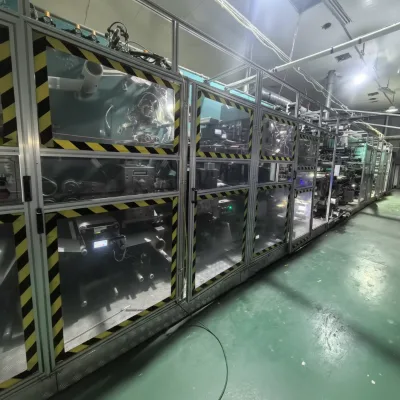
The physical footprint and power requirements are equally critical for facility planning. Observed dimensions for major units can reach approximately 25 meters in length, 6 meters in width, and 4 meters in height, requiring substantial floor space and high-bay ceilings. Power consumption varies widely; some systems operate on standard industrial voltages like 380V/50Hz, while others may support 220V or custom requirements. Total capacity for these heavy-duty machines can be as high as 250 kilowatts, necessitating a robust electrical infrastructure. Weight is another factor, with some industrial units weighing approximately 70 tons, which impacts foundation requirements and logistics planning during installation.
The control interface is a vital component of operational efficiency. Listings indicate a divergence in control systems. Some units are equipped with a "Computer Control Panel," offering advanced automation and real-time monitoring, while others operate without such panels, relying on manual or semi-automated controls. The choice between a "Computerized" system and a non-computerized one depends on the buyer's technical expertise and desired level of process automation. Furthermore, the "Product Object" is consistently identified as "Infant," confirming the machine's specific design for baby diaper production rather than general paper processing.
Compliance, Certification, and Safety Standards
Navigating the regulatory landscape is essential for any industrial procurement, particularly when dealing with equipment used for infant products. Safety and quality certifications serve as proxies for the machine's adherence to international manufacturing standards. In the current market, "CE" certification is a frequently observed attribute, indicating compliance with European health, safety, and environmental protection standards. Some listings also reference "ISO9001," suggesting that the manufacturing entity or the machine itself adheres to quality management system requirements.
However, buyers must exercise caution when interpreting these labels on used equipment. While a machine may have been originally certified, the current validity of that certification depends on the maintenance history and any modifications made since its initial production. The "Standard" attribute in product listings often varies; some entries note "As actual," implying that the machine's compliance status is tied to its current physical condition rather than a static certificate. Others list specific standards like "ISO 13485," which is relevant for medical device manufacturing, though its direct applicability to diaper machinery should be verified against local regulations.
It is crucial to distinguish between the certification of the machine and the certification of the facility where it will be installed. A machine bearing a CE mark does not automatically guarantee that the used equipment meets the specific safety protocols of the buyer's local jurisdiction. Procurement teams should verify that the "Video Outgoing-Inspection" feature, if available, includes visual confirmation of safety guards, emergency stops, and electrical enclosures to ensure the machine is safe for operation in a new environment.
Cost Drivers and Pricing Dynamics
The pricing landscape for used baby diaper machines is complex, influenced by age, condition, and technical specifications. Market data indicates a wide price range, with observed values spanning from 25,000 to 850,000 USD. This broad spectrum reflects the diversity of the inventory, ranging from smaller, older units to large, high-speed, fully automated lines. The "Condition" of the machine is a primary cost driver; listings explicitly distinguish between "Used" and "New" units, with used machines naturally commanding lower prices but requiring a more rigorous assessment of remaining lifespan.
Additional cost factors include the "Production Speed" and the "Process" type. Machines designed for "Paper Machine" processes or specific "Baby Diaper Machine" applications with speeds exceeding 400 pieces per minute typically command a premium. The "Brand Name" and "Place of Origin" also influence value; units originating from major manufacturing hubs like Jiangsu or Fujian, China, may have different resale values compared to others. The "Total Capacity" of 250kW is a significant indicator of power and potential output, directly correlating with higher price points.
Buyers should also consider the "MOQ" (Minimum Order Quantity), which in this sector is often 1 unit, allowing for flexible acquisition. However, the "Lead Time" and "Shipping" costs are substantial. Most units utilize "Wood Case Packaging" for sea shipping, a requirement necessitated by the "Wood Case" or "Wooden Box" packaging standards to protect the heavy machinery during transit. The "Weight" of approximately 70 tons further escalates logistics costs, requiring specialized freight handling.
Typical Applications and Product Versatility
Understanding the specific application of a used machine is vital for matching it to production goals. The primary "Usage" for these units is explicitly defined as "Baby Diaper Machine," designed to produce infant hygiene products. However, some listings indicate versatility, with machines also categorized for "Household Paper Machine" processes or "Paper Folding Machine" operations. This suggests that certain models may be adaptable for producing different paper-based hygiene products, though the core design remains focused on diapers.
The "Product Specification" often notes "Large" dimensions, aligning with the industrial scale required for mass production. The "Color" of the machinery, often "Blue and Silver" or "Ivory White," is a cosmetic attribute but can indicate the manufacturer's standard aesthetic or the machine's age. The "Machine Direction" is sometimes listed as "To Be Defined," which may imply that the machine's orientation can be customized during installation to fit specific factory layouts.
The "Core Components" of these machines, such as "Plcmotorbearingother," are critical for understanding maintenance needs. The presence of specific motors and bearings determines the machine's ability to handle the "Production Speed" and the "Usage" rate of 98%, which likely refers to operational efficiency or material usage rates. Buyers should verify if the machine is suitable for the specific "Product Object" of infants, ensuring the final output meets the necessary softness, absorbency, and safety standards required for baby products.
Supplier Evaluation and Vendor Reliability
Selecting the right supplier for used industrial equipment requires a rigorous vetting process. The "Place of Origin" is a key data point, with major sources identified as China, specifically regions like Jiangsu and Fujian. While these regions are known for manufacturing, buyers must evaluate the specific supplier's track record. The "Provided" services, such as "Installing and Training on Site," are critical value-adds that can significantly reduce downtime and ensure proper operation.
Buyers should prioritize suppliers who offer "Video Outgoing-Inspection." This feature allows for a remote visual verification of the machine's condition before purchase, mitigating the risk of acquiring equipment with hidden defects. The "Condition" attribute, whether listed as "Used" or "New," should be cross-referenced with the supplier's warranty policies and the availability of spare parts. A supplier that offers comprehensive on-site training indicates a commitment to the long-term success of the buyer's operation.
It is imperative to avoid relying on unverified claims regarding "Certification" or "Standard" compliance. While "CE" and "ISO9001" are common, the buyer must confirm that these certifications are current and applicable to the specific unit being purchased. The "Standard" for the machine's packaging, often "Wood Case" or "Transparent Film," should also be verified to ensure safe transport.
Quality Control and Long-Term Procurement Considerations
Implementing a robust quality control protocol is essential when integrating a used machine into a production line. The "Process" type, whether "Paper Machine" or "Baby Diaper Machine," dictates the specific quality checks required. Buyers should verify the "Dimension" of the machine against their factory floor plans, ensuring the 25m x 6m x 4m footprint fits the available space. The "Voltage" requirements must match the local power grid to prevent electrical failures.
Long-term procurement considerations include the availability of spare parts and the potential for customization. The "Customization" attribute indicates that some machines can be adapted to specific needs, which is valuable for extending the machine's utility. The "Prod_packing" method, such as "Wood Case Packaging Sea Shipping," ensures the machine arrives in a condition suitable for immediate installation.
Buyers must also consider the "Total Capacity" and "Power" requirements in the context of energy costs. A machine with a 250kW capacity will have significant ongoing energy expenses. The "Production Speed" of 150-400 pcs/min or >400 pcs/min will directly impact the return on investment. Finally, the "Standard" of the machine, often listed as "As actual," means that the buyer assumes the responsibility of verifying the machine's compliance with local safety and environmental regulations upon installation.
Comparison of Key Machine Attributes
To facilitate decision-making, the following table summarizes the key attributes observed in the market for used baby diaper making machines. This comparison highlights the variability in specifications that buyers must navigate.
| Attribute | High-Speed Automated Model | Standard/Legacy Model |
|---|---|---|
| Automatic Grade | Full Automatic | Manual / Semi-Auto |
| Production Speed | > 400 pcs/min | 150 - 400 pcs/min |
| Computer Control | Computer Control Panel | Without Computer Control Panel |
| Condition | New / Refurbished | Used |
| Total Capacity | 250 kW | Variable |
| Weight | ~70 Tons | Variable |
| Certification | CE, ISO9001 | CE |
| Origin | Jiangsu, China | Fujian, China |
| Packaging | Wood Case | Wooden Box |
| Process | Baby Diaper Machine | Paper Machine / Folding |
This table underscores the importance of aligning technical specifications with production goals. The "High-Speed" model offers greater efficiency but may come with a higher price point and more complex installation requirements. The "Standard" model may be more suitable for smaller operations or those with limited capital, provided the speed meets production targets.
In conclusion, sourcing a Used Baby Diaper Making Machine requires a meticulous approach to technical verification, compliance checking, and supplier evaluation. By focusing on the observable facts of production speed, power capacity, and certification status, buyers can make informed decisions that balance cost efficiency with operational reliability. The market offers a diverse range of options, from high-capacity, fully automated lines to versatile paper processing units, each with unique advantages and considerations for long-term success.
FAQs
What is the production speed of used baby diaper making machines?
Production speeds vary between 150 to 400 pieces per minute for standard models, while newer units can exceed 400 pieces per minute. Buyers must verify the specific automatic grade and model number to confirm the actual throughput capability of the used equipment.
Which certifications are commonly found on these machines?
Most listings indicate CE certification, with some also referencing ISO9001 standards. Buyers should verify that these certifications remain valid for the specific used unit and confirm compliance with local safety regulations before installation.
How much does a Used Baby Diaper Making Machine cost?
Prices range widely from 25,000 to 850,000 USD depending on age and specifications. The final cost is heavily influenced by the machine condition, production speed, total capacity, and whether it includes on-site installation and training services.
Can I find machines with computer control panels?
Yes, some units are equipped with computer control panels while others operate without them. Buyers should explicitly check the product attributes to determine if the specific used machine offers the desired level of automation and real-time monitoring.
What is the typical weight and dimension of these machines?
Industrial units can weigh approximately 70 tons with dimensions reaching 25 meters in length, 6 meters in width, and 4 meters in height. This substantial footprint requires careful planning for factory floor space and foundation support during installation.
Where are these machines typically manufactured?
The majority of listings originate from China, specifically regions like Jiangsu and Fujian. Buyers should verify the place of origin to assess shipping logistics and ensure the supplier provides necessary on-site installation and training support.