Source Used Diesel Single-Deck City Bus for Transit, School, and Tour
Compare 30 listings of used diesel single-deck city bus options featuring manual gearboxes, hydraulic or barometric braking, and varying seat capacities from 31 to 60. Buyers can evaluate models with Euro emission standards and service lives ranging from 1 to 6 years for commercial, novice, or touring applications.
Key considerations
Products List


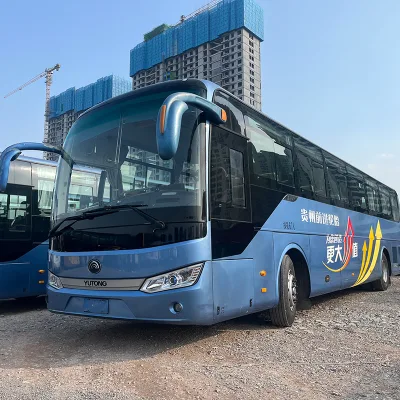
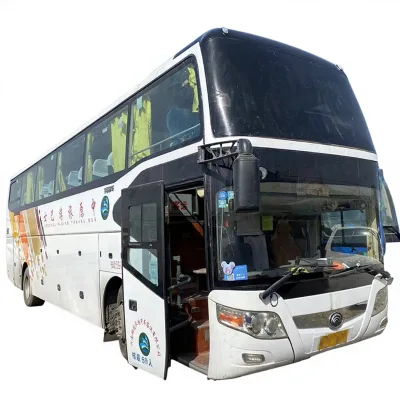
Used Refurbished Bus City Transportation Diesel Engine 51 Seat Coach Bus
$8000.00 - $8600.00
MOQ: 1 Pieces


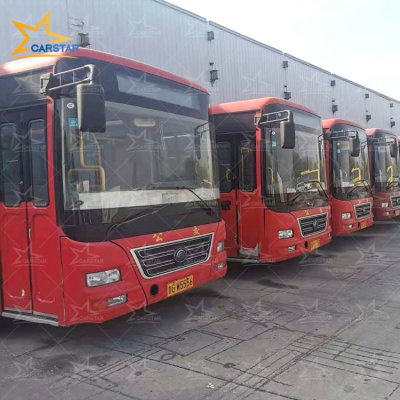
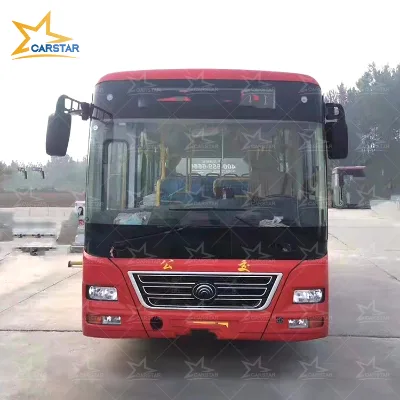
High Quality Used Diesel City Bus Left Hand Drive City Bus with Cheap Price
$9000.00 - $11000.00
MOQ: 1 Pieces


Second Hand Bus Price 50 Seat Diesel Use Bus Cheap Used City Bus for Sale
$5000.00 - $9000.00
MOQ: 1 Pieces


Fully Renovated 2023 Used 53 Passenger Long Distance Single Deck Coach Bus for Sale
$9900.00 - $16500.00
MOQ: 1 Pieces


$35625.00 - $35689.00
MOQ: 1 Pieces



Comprehensive Sourcing Guide
Strategic Sourcing Guide for Used Diesel Single-Deck City Buses
Understanding the Technical Landscape of Single-Deck Diesel Coaches
When sourcing a used diesel single-deck city bus, buyers must first navigate a complex array of technical specifications that vary significantly across the available inventory. The core keyword implies a vehicle designed for urban transit, yet the observed market data reveals a broad spectrum of configurations ranging from standard touring coaches to specialized BRT (Bus Rapid Transit) units. A critical observation in the current market is the variance in engine displacement. While some units are listed with Euro Engine Capacity exceeding 8 liters, others operate with different power profiles, necessitating a careful review of the specific engine block before purchase.
The braking systems present another area of divergence. Buyers will encounter listings specifying either barometric or hydraulic braking systems. Barometric systems are often associated with older heavy-duty configurations, whereas hydraulic systems may indicate more modern retrofitting or specific manufacturer standards. Similarly, the gearbox is predominantly observed as manual in the current dataset, which influences the driver skill requirements and maintenance complexity. For operators managing fleets, the distinction between a "Low Floor Bus" and a standard "Single-Deck" structure is vital for accessibility compliance and passenger flow efficiency.
The seating capacity and structural dimensions further define the utility of the vehicle. Data indicates models with seat capacities ranging from 31 seats in medium-sized units to 47 seats in larger configurations, with some units explicitly marketed as 60-seater coaches. The physical dimensions also vary, with specific listings noting packing sizes such as 877424703385 mm or 12800X3000X4000 mm. These measurements are not merely cosmetic; they determine whether the bus can navigate specific urban infrastructure, fit into designated depots, or comply with local height and width restrictions. Buyers must verify that the listed dimensions align with their operational routes and garage facilities.
Compliance, Certification, and Emission Standards
Navigating the regulatory landscape is perhaps the most critical phase of sourcing used diesel buses, particularly as global emission standards tighten. The observed market includes units adhering to various emission standards, with specific references to "Euro" classifications and fuel types explicitly listed as Diesel. However, the exact Euro standard (e.g., Euro 4, Euro 5, Euro 6) is not universally defined in the general listings, requiring buyers to demand specific documentation for each unit. The presence of "EuroFuel:Diesel" in some specifications suggests a compliance baseline, but the absence of a specific number means verification is mandatory.
Certification status is another pillar of compliance. The dataset includes references to ISOCCC certification, which serves as a baseline indicator of quality management systems within the manufacturing or refurbishment process. However, relying solely on a generic "ISO" tag is insufficient. Buyers must verify the specific scope of the certification and its validity in the destination country. Furthermore, the product standard section often lists "White or as your request" or "color can be as your request," indicating that cosmetic standards are flexible, but structural and safety standards must remain rigid.
For international procurement, the origin of the vehicle is a key compliance factor. The majority of the observed inventory originates from China, which implies adherence to Chinese manufacturing standards that may differ from European or North American regulations. Buyers importing these units must cross-reference the Chinese production standards with the import regulations of their target market. This includes verifying that the "Integral Power Steering" and "LHD" (Left-Hand Drive) configurations match local traffic laws. A mismatch in steering position or emission certification can lead to the vehicle being deemed non-roadworthy, rendering the procurement investment useless.
Cost Drivers and Financial Evaluation
The financial landscape for used diesel buses is characterized by a wide price range, observed between 800 USD and 75,770 USD. This massive variance is driven by several factors, including the vehicle's age, mileage, condition, and specific configuration. The mileage data presents a clear segmentation: units are available with mileage between 10,000-30,000 km, while others have traversed 60,000-100,000 km. This difference significantly impacts the residual value and the immediate maintenance costs required to bring the vehicle up to operational standards.
Service life is another primary cost driver. The market offers units with a service life of 1-3 years and others extending to 3-6 years. A vehicle with a shorter remaining service life may appear cheaper initially but could incur higher costs in the short term due to major component replacements. Conversely, a unit with a longer projected service life might command a higher upfront price but offer better long-term value. The condition of the vehicle, explicitly noted as "Used" in many listings, must be correlated with these service life estimates.
Other cost determinants include the power output and torque specifications. Units with a maximum power of 153kw or 180kw and a maximum torque of 1250n.M will generally be priced higher than lower-output models, as they offer better performance for hilly terrain or high-load scenarios. Additionally, the "Customization" availability noted in the product attributes can influence cost. If a buyer requires specific modifications to the interior, exterior, or engine tuning, these customizations will add to the base price. The MOQ (Minimum Order Quantity) is observed to be very low, ranging from 1 to 2 units, which allows for flexible purchasing but may affect bulk pricing negotiations.
Typical Applications and Operational Fit
The versatility of used diesel single-deck buses makes them suitable for a diverse range of applications, from novice driving schools to commercial transit operations. The product attributes explicitly list usage scenarios including "Novice Car," "Experience Car," "Commercial Vehicle," "Touring Car," "Family Car," "Bus," "Coach," "School Bus," and "BRT." This breadth of application highlights the adaptability of the platform but also requires buyers to match the specific vehicle configuration to their intended use case.
For instance, a "School Bus" application demands specific safety features, seating arrangements, and potentially lower floor access, which aligns with the "Low Floor Bus" and "Single-Deck" observations. A "Touring Car" or "Coach" application, on the other hand, prioritizes comfort, luggage space, and higher maximum speeds, with some units listed with a Max Speed exceeding 130km/h. The "BRT" (Bus Rapid Transit) intelligence feature suggests that certain units are equipped with systems suitable for high-frequency, dedicated-lane operations, which is a critical consideration for municipal transit authorities.
The "Style" of the bus, noted as "Sitting," is standard for most applications, but the seating capacity must be aligned with the expected passenger volume. A 60-seater coach is ideal for inter-city tours, while a 31-seat medium-sized bus might be better suited for community shuttles or school routes. The "Road Conditions" attribute, listed simply as "Road," implies these vehicles are designed for paved surfaces, which is typical for city buses but may require adaptation for rougher terrains. Buyers must ensure that the vehicle's suspension and ground clearance match the specific road conditions of their operating area.
Supplier Evaluation and Due Diligence
Evaluating suppliers for used diesel buses requires a rigorous approach to due diligence, given the lack of standardized pricing and the variability in product conditions. Since specific supplier names cannot be recommended, buyers must focus on the verifiability of the product attributes provided. A reliable supplier should be able to provide detailed documentation for every listed specification, including the exact mileage, service life history, and maintenance records. The presence of "Customization" options suggests a supplier capable of tailoring vehicles, but this capability must be validated through past performance examples.
The origin of the vehicle, predominantly China, necessitates an understanding of the export and logistics processes from that region. Buyers should verify the supplier's ability to handle the complex documentation required for international shipping, including the "prod_packing" dimensions and "prod_standard" compliance. The "Certificate: ISOCCC" mentioned in the data is a positive indicator, but it should be cross-checked with the issuing body to ensure it applies to the specific vehicle being sold.
Furthermore, the "Condition: Used" label requires a transparent disclosure of the vehicle's history. A trustworthy supplier will provide a comprehensive inspection report detailing the status of the engine, gearbox, braking system, and body structure. The variance in "Max Power" and "Max Torque" across different models indicates that a one-size-fits-all approach to supplier evaluation is ineffective. Buyers should request comparative data sheets for multiple units to understand the supplier's inventory depth and consistency in quality.
Quality Control and Long-Term Procurement Considerations
Implementing a robust quality control (QC) protocol is essential when purchasing used diesel buses, as the "Used" condition introduces inherent risks regarding component wear and tear. The QC process should begin with a thorough inspection of the "Braking System," whether barometric or hydraulic, to ensure it meets safety standards. The "Steering" system, specifically the "Integral Power Steering," must be tested for responsiveness and stability. Additionally, the "Emission Standard" compliance must be verified through on-site testing or certified laboratory reports, as this is a critical factor for regulatory approval in many jurisdictions.
Long-term procurement considerations extend beyond the initial purchase price. The "Service Life" of 1-3 years or 3-6 years is a projection that depends heavily on the maintenance regime. Buyers should plan for a maintenance schedule that accounts for the "Mileage" of the vehicle, with higher mileage units requiring more frequent and intensive servicing. The "Fuel: Diesel" specification also implies ongoing fuel costs and the need for compatible fuel infrastructure.
To mitigate long-term risks, buyers should prioritize units with a clear history of maintenance and a "Customization" history that aligns with their operational needs. The "Product Name" variations, such as "Used Coach Bus" or "Second Hand Used Bus," suggest that the market is flooded with similar terminology, making it crucial to focus on the underlying specifications rather than the marketing labels. Establishing a relationship with a supplier who offers post-sales support and spare parts availability is also a key long-term strategy. The "prod_packing" and "prod_standard" details provided in the listings can serve as a baseline for future maintenance and repair, ensuring that replacement parts are compatible with the original manufacturing specifications.
Final Procurement Strategy and Verification Checklist
To conclude the sourcing process, buyers should adopt a structured verification checklist that addresses all critical technical and compliance aspects. This checklist must include verifying the exact "prod_model" (e.g., Cstar-UBS-Yu tong, Cstar-U-MiniBus), confirming the "Size" (Large, Medium, Bus), and ensuring the "Seats" count matches the operational requirements. The "Color" options, ranging from standard yellow to custom requests, should be finalized early to avoid delays in delivery.
Buyers must also confirm the "Steering Position" (LHD) and the "Structure" (Single-Deck, Low Floor) to ensure compatibility with local traffic laws and infrastructure. The "Intelligence" features, such as BRT capabilities, should be tested to ensure they function as advertised. Finally, the "Emission Standard" and "Fuel" type must be double-checked against the regulations of the destination country to prevent legal issues upon arrival.
By adhering to a disciplined, evidence-based approach and relying strictly on the verified attributes of the product, buyers can navigate the complex market of used diesel single-deck city buses with confidence. The goal is to secure a vehicle that not only meets the immediate operational needs but also provides a reliable, compliant, and cost-effective solution for the long term. The wide range of options available, from 31-seater medium buses to 60-seater coaches, offers significant flexibility, but the key to success lies in meticulous verification and a clear understanding of the specific technical and regulatory requirements of the intended application.
FAQs
What is the service life of these used buses?
Service life ranges from 1 to 3 years or 3 to 6 years depending on the specific unit. Buyers must verify the actual mileage, which varies between 10,000 and 100,000 km, to determine the remaining operational lifespan accurately.
Which braking systems are available for these vehicles?
Available braking systems include both barometric and hydraulic configurations. The choice depends on the specific model and age, with barometric systems often found in older heavy-duty units and hydraulic systems in more modern retrofits.
Can buyers request specific color customization for the bus?
Yes, customization is available for the exterior color, often allowing white or other requested shades. Buyers should confirm the specific standard requirements with the supplier to ensure the customization aligns with their operational branding needs.
What is the typical seating capacity for these single-deck buses?
Seating capacities vary from 31 seats in medium-sized units to 60 seats in large coach models. Some specific listings indicate capacities of 35 or 47 seats, so buyers must check the exact model dimensions before purchase.
Which emission standards do these diesel buses meet?
Units generally meet Euro engine capacity standards exceeding 8 liters and are fueled by diesel. Buyers must request specific documentation to verify the exact Euro classification, as generic listings may not specify the precise emission tier.
How is the steering system configured in these buses?
The steering system is typically configured as integral power steering with a left-hand drive position. This setup is standard for the observed inventory originating from China and must match local traffic regulations for roadworthiness.
What is the maximum power output for these diesel engines?
Maximum power outputs observed range from 153kw to 180kw depending on the specific model. Higher torque values up to 1250n.M are also available, which are beneficial for heavy-load scenarios or hilly terrain operations.