Source UV Protection Motorized Skylight Blinds for Home Office Hotel
Find 30 options for UV Protection Motorized Skylight Blinds designed for residential, commercial, and hospitality applications. Buyers can compare features like blackout capability, honeycomb or roller styles, and custom sizing to select the right solution for their projects.
Key considerations
Products List

Blackout Blinds for Skylight Roof Windows, Motorized Roller Skylight Blinds
$58.00 - $60.00
MOQ: 10 Square Meters

Electric Skylight Roller Blinds Automatic Skylight Shades Motorized House Roof Blinds
$40.00 - $60.00
MOQ: 100 Square Meters

Skylight Blinds Automatic Control Motorized Skylight Roller Blind Perfect Fit Honeycomb Blinds
$19.99 - $29.99
MOQ: 100 Square Meters

Fss European Style Tubular Motorized Skylight Blinds Electric Roof Blind
$40.00 - $60.00
MOQ: 100 Square Meters

Top Quality Manufacturer Electric Retractable Roof Systems Blinds Motorized Skylight Blind
$40.00 - $60.00
MOQ: 100 Square Meters

Customized Triangle Shapes Irregular Motorized Waterproof Honeycomb Blinds Shade
$16.00 - $19.00
MOQ: 100 Square Meters
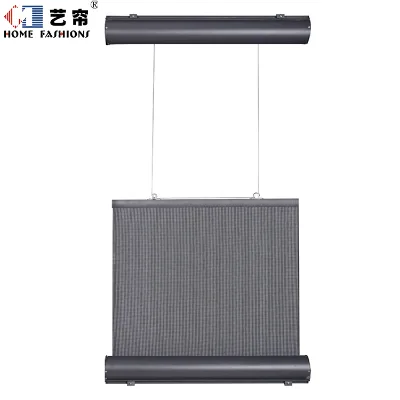


Solar Skylight Blinds Retractable Electric Roller Ceiling Blinds Blind
$60.00 - $100.00
MOQ: 2 Square Meters


Screen Automated Blinds Roller Blinds for Windows Sunscreen
$1.99 - $2.99
MOQ: 1 Square Meters
Shouguang Runchen Environmental Protection Technology Co., Ltd.

Sunscreen Roller Blinds Windows Motorized Roller Blind
$1.99 - $2.99
MOQ: 1 Square Meters
Shouguang Runchen Environmental Protection Technology Co., Ltd.

Motorized Roller Blinds with Sunshade Fabric for Indoor Windows
$10.99 - $13.99
MOQ: 1 Square Meters
Shouguang Runchen Environmental Protection Technology Co., Ltd.

8. Motorized Heavy Duty Outdoor Windproof Roller Blinds for Villa
$40.99 - $49.99
MOQ: 1 Square Meters
Shouguang Runchen Environmental Protection Technology Co., Ltd.

Sunscreen Blinds Shades Motorized Shade
$10.99 - $13.99
MOQ: 1 Square Meters
Shouguang Runchen Environmental Protection Technology Co., Ltd.

Roller Blinds Shading Window Blinds Sun Screen Rolling Shades
$1.99 - $2.99
MOQ: 1 Square Meters
Shouguang Runchen Environmental Protection Technology Co., Ltd.


Custom Size Motorized Zebra Blinds for Window Day and Night Light Control
$9.00 - $13.00
MOQ: 50 Square Meters
Comprehensive Sourcing Guide
Strategic Sourcing Guide for UV Protection Motorized Skylight Blinds
Understanding Product Architecture and Technical Specifications
The procurement of motorized skylight blinds requires a precise understanding of the intersection between mechanical engineering and textile performance. Based on the observed market data, the core product category encompasses "Skylight Blinds" and "Skylight Blind" models, which are distinct from standard vertical or horizontal window treatments due to their installation geometry. The primary technical differentiator in this segment is the "Motorized" style, which allows for automated operation essential for hard-to-reach roof installations. The supply chain data indicates that these units are frequently categorized under "Honeycomb" or "Roller Blind" structures, with some listings specifying "Slat" or "Corner roller blind" configurations.
A critical observation for buyers is the variability in "Open Type" and "Open Style" attributes. While the core keyword specifies "motorized," the data also lists "Manual" and "Rolling" styles, suggesting that suppliers often offer hybrid lines or that buyers must explicitly filter for motorized mechanisms to avoid manual-only inventory. The "Structure" is predominantly noted as "Vertical" in some contexts, yet the "Mounting Type" is consistently "Inside Mount," which is vital for skylight applications where exterior mounting may be impractical or aesthetically undesirable. The "Installation Type" further expands to include "Built-in," "Exterior Installation," "Wall," and "Ceiling," indicating that a single SKU may serve multiple architectural needs.
The material composition is a defining factor for UV protection capabilities. The observed products utilize "Polyester" as the primary fabric standard. This material choice is significant because polyester is inherently resistant to UV degradation compared to natural fibers, ensuring longevity in high-exposure skylight environments. The "Kind" attribute lists "Honeycomb" and "Roller Blind," which dictates the light filtering mechanism. Honeycomb structures, in particular, are noted for their "Heat Insulation" and "Sound Insulation" properties, while "Blackout" opacity is a frequently observed specification. The "Light Filtering" attribute confirms that "Blackout" is a standard offering, which directly correlates to the "UV Protection" function required by the core keyword. Buyers must verify that the specific "Blackout" fabric meets the necessary opacity levels for their specific climate and usage requirements.
Compliance Verification and Certification Protocols
In the B2B procurement of motorized window treatments, compliance is not merely a formality but a prerequisite for safety and market access. The supplied data mentions "prod_standard" as "Fabric" or "Support Customization," which are broad descriptors rather than specific international certifications. Consequently, buyers cannot rely on the product listing alone to confirm compliance with fire safety, electrical safety, or environmental standards. It is imperative to request specific test reports for the motorized components, as these involve electrical systems that must adhere to regional safety regulations.
When evaluating the "Fabric" standard, buyers should verify that the material has undergone testing for flame retardancy, particularly for applications in "Hotel," "Restaurant," "School," and "Office" environments where fire codes are stringent. The data lists "prod_standard" as "Fabric," but does not cite specific ratings like ASTM E84 or EN 13501. Therefore, the procurement strategy must include a mandatory request for third-party laboratory test results confirming the fabric's fire rating and the motor's electrical safety certification.
Furthermore, the "Security Rating" of "C" observed in the data suggests that some products may offer anti-theft or security features, such as "Anti-Theft" and "Airproof" functions. However, without a defined standard (e.g., a specific security grade system), this attribute should be treated as a qualitative claim. Buyers must demand a detailed breakdown of what "Security Rating C" entails in terms of physical resistance and locking mechanisms. Additionally, the "After-Sales Service" is listed as "Repair," and the "Warranty" is specified as "1year." These are baseline contractual terms that should be scrutinized against the complexity of the motorized system. A one-year warranty on a motorized unit may be insufficient for commercial applications; buyers should negotiate extended warranty periods that cover both the fabric and the motor mechanism, ensuring that the supplier provides a clear protocol for "Repair" services.
Cost Drivers and Pricing Dynamics
The pricing landscape for motorized skylight blinds is influenced by several dynamic factors, as evidenced by the observed price range of 1.99 to 150 USD. This wide variance indicates a spectrum of products ranging from basic manual or entry-level motorized units to high-end, custom-engineered systems. The "MOQ" (Minimum Order Quantity) range of 1 to 500 units further complicates cost analysis. While some suppliers offer low MOQs of 1, the data also highlights a specific "MOQ" of "100 Square Meters" for certain product lines. This suggests that pricing models may shift from per-unit to per-area calculations for larger commercial projects.
The primary cost driver is the "Customization" aspect. The data explicitly states "Customization: Available" and "Customized: Customized," with "Size" listed as "Customized" alongside specific dimensions like "34"W x 64"L" or "60"W x 72"L." Custom sizing inevitably increases production costs due to the need for bespoke fabric cutting and motor adjustment. Buyers should anticipate a premium for non-standard dimensions, especially when the "Size" requires complex engineering to fit specific skylight apertures.
Another significant cost factor is the "Style" and "Function" complexity. The "Motorized" style, combined with functions like "Heat Insulation," "Sunshade," and "UV Protection," adds to the unit cost. The "Features" listed, such as "Smoother," "Noiseless," "High Load," and "Windproof," imply advanced engineering that commands a higher price point. For instance, a "Windproof" motorized blind designed for exterior installation or high-wind areas will cost significantly more than a standard indoor unit. The "Payment Term" of "T/T" (Telegraphic Transfer) is standard, but buyers should be aware that suppliers with higher MOQs or custom capabilities may require larger upfront deposits.
The "prod_packing" also plays a role in logistics costs. Options include "Carton Box," "Pet Box/Carton Box," "Standard Packing," and "OPP Bag." For large orders, the choice of packaging affects shipping efficiency and damage risk. "Carton Box" and "Pet Box" likely offer better protection for motorized units, potentially reducing replacement costs, whereas "OPP Bag" might be suitable for smaller, less fragile components. Buyers should factor these packaging differences into their total landed cost calculations.
Typical Applications and Functional Requirements
The versatility of motorized skylight blinds is evident in the diverse "Usage" categories listed in the data. These products are deployed in "Home," "Office," "Restaurant," "Hotel," "Shop," "Room," "School," "Living Room," "Bedding Room," and "Bathroom." This broad applicability underscores the need for a procurement strategy that balances aesthetic requirements with functional performance.
In residential settings like "Home," "Living Room," and "Bedding Room," the focus is often on "Decoration," "Sun Shading," and "UV Protection." The "Color" options, including "White," "Grey," "Beige," "Black," and "Dark Grey," allow for seamless integration with interior design schemes. The "Blackout" feature is particularly valuable in bedrooms and home theaters to ensure total light control.
For commercial environments such as "Office," "Hotel," "Restaurant," and "School," the functional requirements shift towards durability and energy efficiency. The "Heat Insulation" and "Sound Insulation" properties are critical in these spaces to reduce HVAC costs and create a conducive working or sleeping environment. The "Insect Resistant" and "Dust-proof" functions are also relevant for "Restaurant" and "Hotel" applications where hygiene is paramount. The "Security Rating" and "Anti-Theft" features add value to "Shop" and "Office" applications, providing an additional layer of protection for the building envelope.
The "Kind" of blind, whether "Honeycomb" or "Roller," dictates the specific application suitability. Honeycomb blinds are often preferred in "Office" and "Hotel" settings due to their superior thermal insulation properties, while "Roller Blinds" might be chosen for "Shop" displays where a sleek, modern aesthetic is desired. The "Modern" style noted in the data aligns well with contemporary commercial interiors. Buyers must match the specific "Function" requirements of the venue with the product's technical capabilities to ensure optimal performance.
Supplier Evaluation and Quality Control Standards
Evaluating suppliers for motorized skylight blinds requires a rigorous approach to quality control, given the mechanical complexity of the products. The data indicates that the "prod_origin" is primarily "Jiangmen, Guangdong, China" or generally "China." While this provides a geographical context, it does not guarantee quality. Buyers should verify the supplier's manufacturing capabilities, specifically their ability to handle "Customized" sizes and "Motorized" mechanisms.
Quality control should focus on the "Features" listed, such as "Smoother," "Noiseless," and "High Load." These attributes are subjective and require physical testing or third-party validation. Buyers should request sample units to test the motor's noise levels and smoothness of operation, especially for "High Load" applications where the blind must support significant weight. The "Long-Li" (likely "Long Life") feature suggests a focus on durability, but this must be substantiated by the "Warranty" period and the "After-Sales Service" track record.
The "Shipping" method is listed as "by Sea," which is standard for bulk orders but requires careful logistics planning. Buyers should verify the "prod_packing" integrity to ensure that the motorized units arrive without damage. The "Standard Packing" or "Carton Box" options should be inspected for robustness. Additionally, the "Lead Time" is not explicitly provided in the data, but the "MOQ" and "Customization" requirements suggest that production times may vary. Buyers should establish clear timelines for custom orders to avoid project delays.
When evaluating suppliers, buyers should also consider the "Payment Term" of "T/T." This standard term requires a balance of trust and financial security. Buyers should negotiate payment milestones that align with production progress, such as a deposit upon order confirmation and the balance upon shipment or inspection. The "Warranty" of "1year" is a baseline; buyers should seek suppliers who offer extended warranties or comprehensive service agreements to mitigate long-term risks.
Long-Term Procurement and Lifecycle Management
Sourcing motorized skylight blinds is not a one-time transaction but a long-term partnership that requires careful lifecycle management. The "After-Sales Service" of "Repair" is a critical component of this strategy. Buyers must ensure that the supplier has a robust service network capable of addressing motor failures or fabric wear over time. The "1year" warranty is a starting point, but for commercial applications, a longer-term service agreement is advisable.
The "Customization" capability of the supplier is a key factor in long-term procurement. As building designs evolve or skylight dimensions change, the ability to source custom-sized blinds becomes essential. Buyers should prioritize suppliers who can maintain a consistent supply of "Customized" products without compromising on quality or lead time. The "Support Customization" standard indicates that the supplier is flexible, but buyers should verify their capacity to handle repeat custom orders efficiently.
Environmental sustainability is another consideration for long-term procurement. The "Polyester" material is durable and recyclable, but buyers should inquire about the sourcing of the fabric and the energy efficiency of the motorized systems. The "Heat Insulation" and "UV Protection" functions contribute to energy savings, which aligns with green building initiatives. Buyers should request information on the energy consumption of the motors and the recyclability of the components to support their sustainability goals.
Finally, the "Shipping" and "Packing" logistics must be optimized for long-term efficiency. The "by Sea" shipping method is cost-effective for large orders, but buyers should work with suppliers who offer consolidated shipping options to reduce costs. The "prod_packing" should be designed to minimize waste and facilitate easy installation. By focusing on these long-term factors, buyers can ensure a sustainable and cost-effective procurement strategy for motorized skylight blinds.
Comparative Analysis of Product Attributes
To facilitate decision-making, the following table summarizes the key attributes observed in the market data, highlighting the variations and standard features that buyers should consider.
| Attribute Category | Observed Variations | Standard/High-Confidence Fact | Procurement Implication |
|---|---|---|---|
| Product Model | Skylight Blind, Skylight Blinds, Honeycomb Blind, Corner roller blind | Skylight Blind | Verify the specific model matches the installation geometry. |
| Material | Polyester | Polyester | Confirm fabric quality and UV resistance properties. |
| Opacity | Blackout, Light Filtering | Blackout | Essential for UV protection and heat insulation. |
| Style | Motorized, Modern, Manual | Motorized | Ensure the motorized feature is explicitly included. |
| Color | White, Grey, Beige, Black, Dark Grey, Custom Color | White, Grey, Beige, Black | Custom colors may incur additional costs and lead times. |
| Size | Customized, Specific dimensions (e.g., 34"W x 64"L) | Customized | Custom sizing is standard; verify tolerance and pricing. |
| MOQ | 1, 100 Square Meters | 100 Square Meters (for some lines) | Clarify MOQ requirements before placing orders. |
| Warranty | 1year | 1year | Negotiate extended terms for commercial projects. |
| Origin | Jiangmen, Guangdong, China; China | Jiangmen, Guangdong, China | Verify supplier location for logistics and compliance. |
| Function | Heat Insulation, UV Protection, Sunshade, Sound Insulation | Heat Insulation, UV Protection | Match functions to specific application needs. |
This comparative analysis underscores the importance of detailed specification checks. While the data provides a broad overview, the variations in attributes necessitate a tailored approach to sourcing. Buyers must align their specific project requirements with the available product attributes to ensure a successful procurement outcome.
FAQs
What materials are used for UV Protection Motorized Skylight Blinds?
Polyester is the primary material used for these blinds. This fabric offers inherent resistance to UV degradation, ensuring longevity in high-exposure skylight environments while providing heat insulation and sunshade functions.
Can I customize the size of motorized skylight blinds?
Yes, customization is available for these units. Buyers can request specific dimensions such as 34W x 64L or 60W x 72L, though non-standard sizes may incur a premium due to bespoke fabric cutting and motor adjustment requirements.
How does the blackout feature work in these blinds?
The blinds offer a blackout opacity level to block light completely. This feature directly correlates with UV protection capabilities and is suitable for bedrooms or home theaters requiring total light control.
What is the minimum order quantity for these products?
The minimum order quantity varies between 1 and 500 units depending on the supplier. Some product lines specify a minimum of 100 square meters, indicating that pricing models may shift from per-unit to per-area calculations for larger projects.
Which warranty terms apply to motorized skylight blind systems?
A standard warranty of one year is typically provided for these units. Buyers should scrutinize this against the complexity of the motorized system and negotiate extended periods covering both the fabric and the motor mechanism.
Where are these blinds typically manufactured and shipped from?
Products originate primarily from Jiangmen, Guangdong, China or other regions in China. Shipping is generally conducted by sea, which is standard for bulk orders but requires careful logistics planning to ensure packaging integrity.