Source UV Resistant Anti-Clog Drip Tape for Farm Garden Irrigation
Find 30 suppliers offering UV Resistant Anti-Clog Drip Tape designed for agricultural irrigation, garden watering, and lawn maintenance. Compare specifications including flow rates, wall thickness, and material options to select the right solution for water-scarce applications.
Key considerations
Products List


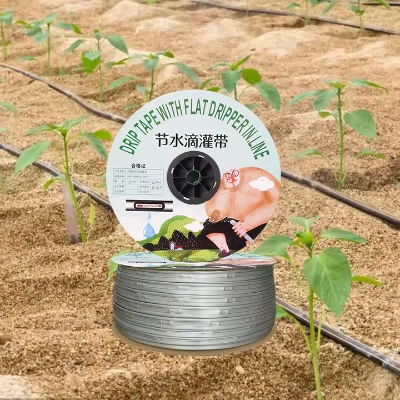


HDPE Drip Tape Anti-Clog Irrigation Pipe for Agricultural Drip Irrigation
$0.02 - $0.03
MOQ: 2000000 Meters
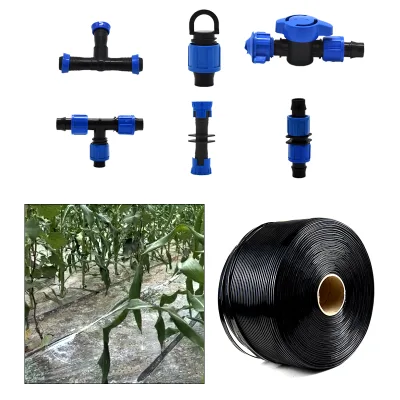


Comprehensive Sourcing Guide
Strategic Sourcing Guide for UV Resistant Anti-Clog Drip Tape
Procuring high-performance irrigation components requires a rigorous understanding of material science, manufacturing standards, and supply chain logistics. The core keyword "UV resistant anti-clog drip tape" points to a specialized segment of agricultural irrigation where durability and flow consistency are paramount. Buyers must navigate a market characterized by diverse material compositions, varying wall thicknesses, and specific customization capabilities. This guide synthesizes available product data to provide a disciplined framework for evaluating potential suppliers and selecting the correct specifications for water-scarce agricultural applications.
Material Composition and Structural Integrity
The foundation of any reliable drip irrigation system lies in the raw material used for the tape. Analysis of the current market reveals a divergence in material types, primarily between Polyethylene (PE) and Polyvinyl Chloride (PVC). PE is frequently cited for agricultural irrigation pipes, offering a balance of flexibility and chemical resistance. In contrast, PVC products are also observed, often categorized under thermosetting plastic pipes, though the specific application context for PVC in drip tape requires careful verification against the intended pressure and environmental conditions.
Wall thickness is a critical structural parameter that directly correlates with the tape's ability to withstand mechanical stress and UV degradation. Observed specifications indicate a wall thickness range of 0.15mm to 0.40mm. This variance suggests that buyers must align their selection with the specific pressure requirements of their irrigation system. Thinner walls, such as those at the 0.15mm end of the spectrum, may be suitable for low-pressure gravity-fed systems, while thicker walls up to 0.40mm provide enhanced durability for higher-pressure applications or rough terrain. The product data also highlights a standard diameter range of 16mm to 25mm, with specific models like 4205 and 2106 available. When sourcing, the buyer must verify that the selected diameter matches the emitter spacing and flow rate requirements of the specific crop being cultivated.
Technical Specifications and Flow Dynamics
The performance of drip tape is defined by its flow rate and emitter configuration. The market data presents a wide array of flow rates, ranging from 0.18L to 3L per unit. Specific observed values include 0.18L, 1.1L, 1.38L, 2L, 2.2L, 2.7L, and 3L, with a broader observed range of 0.8L to 3L. This diversity allows for precise tailoring to different crop water needs. However, the "anti-clog" attribute, central to the core keyword, is not a universal guarantee across all listed products. Buyers must explicitly verify the emitter design and filtration requirements to ensure the "anti-clog" claim holds true for their specific water quality conditions.
Emitter spacing is another vital technical specification. The observed data indicates a spacing range of 10cm to 100cm. This flexibility accommodates various planting densities, from closely spaced nursery stock to widely spaced orchard trees. The flat emitter length is also a specific dimension to consider, with observed values of 23mm, 25mm, 26.5mm, and 30mm. These dimensions affect the wetting pattern and the uniformity of water distribution across the field. Furthermore, the product standard for diameter is noted as 16mm, while other specifications list a range of 16mm-25mm. Consistency in these dimensions is essential for compatibility with existing irrigation infrastructure and manifold systems.
Compliance, Certification, and Quality Verification
In the B2B procurement of agricultural infrastructure, compliance with international standards is a primary risk mitigation strategy. The provided data confirms that ISO certification is a relevant attribute for these products. Specifically, ISO standards are mentioned in the context of product quality assurance. While background knowledge suggests ISO 9001 and ISO 14001 are common in the industry, the supplied facts strictly confirm "ISO" as a certification attribute. Buyers should request valid certification documents to verify that the manufacturer adheres to recognized quality management systems.
The product origin is identified as China, with specific mentions of Hebei as a production hub. This geographic concentration implies a mature supply chain but also necessitates rigorous due diligence regarding the specific factory's capabilities. The "Standard Export Carton Box" and "Standard Packaging or Customized" options indicate that packaging is adaptable, but the buyer must ensure that the packaging protects the UV-sensitive material during transit. The warranty period is listed as 1 Year, which serves as a baseline expectation for product longevity. Buyers should scrutinize the terms of this warranty to understand what constitutes a valid claim, particularly regarding UV degradation and premature failure.
Cost Drivers and Economic Considerations
The pricing landscape for drip irrigation tape is influenced by multiple variables, including material type, wall thickness, and customization levels. The observed price range in the market is extensive, spanning from $0.01 to $2500. This broad spectrum likely reflects the difference between single-roll samples and bulk industrial orders, as well as the variance in material costs between PE and PVC. The Minimum Order Quantity (MOQ) also varies significantly, ranging from 1 unit to 2,000,000 units. This flexibility allows small-scale farmers to test products while accommodating large-scale agricultural projects.
The packaging configuration is a significant cost driver. Products are commonly sold in rolls of 1000m or 2000m. The choice between these roll lengths affects logistics costs and handling efficiency on the farm. Additionally, the "Customization" attribute is available, which often incurs a premium. Customized sizes, such as the "Customized Size" and "16mm/custom" diameters noted in the data, allow for specialized applications but may increase the unit cost and extend the lead time. The delivery time is observed at 30 days, which is a standard benchmark for international shipping and manufacturing. Buyers must factor this lead time into their planting schedules to avoid delays in irrigation system installation.
Supplier Evaluation and Operational Capabilities
Evaluating a supplier for drip tape requires a focus on their production capacity and technical expertise. The product data lists specific model numbers, such as "4205," "2106," and "010," as well as generic identifiers like "drip tape" and "customized." These model numbers suggest a structured product line, but buyers should verify that the specific model corresponds to the "UV resistant" and "anti-clog" features required. The brand name "Chunrun" is observed, indicating that branded products are available, though buyers should not rely on a single brand without independent verification of quality.
The "Hardness" attribute is listed as "Hoses," and the "Shape" is "Round," which are standard characteristics for irrigation tubing. However, the "Type" is described as both "Thermosetting Plastic Pipe" and "Thermoplastic Pipe." This discrepancy highlights the need for clarification during the sourcing process. Thermoplastic materials generally offer better recyclability and flexibility, which is often preferred for drip tape. Suppliers must be able to clearly articulate the material properties and the specific manufacturing process used to achieve UV resistance. The "Feature" of "Extral Long Durability" is a marketing claim that must be substantiated by technical data sheets or third-party test results.
Typical Applications and Usage Scenarios
The versatility of drip irrigation tape is evident in its listed applications. The product data identifies usage in "Drainpipe," "Water Supply Pipe," "Threading Pipe," "Wire and Cable Pipe," and "Agricultural Irrigation Pipe." However, the core keyword focuses on "Agricultural Irrigation Pipe" and "Garden Farm Irrigation Lawn." The specific application of "Water-Scarce" environments underscores the importance of water efficiency. The "Function" is explicitly stated as "Drip Irrigation Work," confirming the primary use case.
Buyers should match the product specifications to the specific crop and soil type. For instance, the "Flow Rate" of 0.18L to 3L allows for precise water delivery to high-value crops in arid regions. The "Color" attribute is listed, though specific colors are not detailed; typically, black or green tapes are used to inhibit algae growth and protect against UV radiation. The "Hollow" attribute confirms the tubular nature of the product, which is essential for the internal flow of water to the emitters. The "Single package size" of 1X1X1 cm suggests compact packaging, which is beneficial for storage and transport efficiency.
Long-Term Procurement and Maintenance Strategy
Sourcing drip tape is not merely a transactional purchase but a long-term investment in agricultural infrastructure. The "Warranty" of 1 Year provides a baseline for product reliability, but the actual service life depends heavily on the UV resistance and anti-clog performance. Buyers should establish a maintenance protocol that includes regular flushing of the system to prevent clogging, especially if the water source contains sediments or biological matter. The "Standard Specifications or Customized" nature of the product allows for future scalability; as the farm expands, the ability to order customized sizes ensures continuity in the irrigation system design.
The "Deliver Time" of 30 days necessitates forward planning. Procurement teams should align their ordering cycles with the planting season to ensure that the irrigation tape is available when needed. The "Standard Export Carton Box" packaging should be inspected upon arrival to ensure that the rolls have not been damaged during transit. Furthermore, the "Customization" option should be leveraged to optimize the system for future crop rotations or changes in irrigation technology. By maintaining a relationship with a supplier that offers consistent quality and technical support, buyers can mitigate the risks associated with equipment failure and ensure sustained agricultural productivity.
Summary of Key Specifications for Verification
To assist buyers in their due diligence, the following table summarizes the critical specifications observed in the market data that must be verified for every procurement decision.
| Specification Category | Observed Data Points | Verification Requirement |
|---|---|---|
| Material | Plastic, PVC, PE | Confirm specific polymer type and UV stabilizers. |
| Wall Thickness | 0.15-0.40mm | Match to system pressure and terrain. |
| Diameter | 16mm, 16mm-25mm, Custom | Ensure compatibility with manifolds and emitters. |
| Flow Rate | 0.18L, 1.1L, 1.38L, 2L, 2.2L, 2.7L, 3L | Select based on crop water requirements. |
| Spacing | 10-100cm | Align with planting density. |
| Certification | ISO | Request valid certificate and scope. |
| Origin | China, Hebei | Verify factory location and export capability. |
| Packaging | 1000m/Roll, 2000m/Roll, Carton | Confirm roll length and protective packaging. |
| Warranty | 1 Year | Review terms for UV and clogging coverage. |
By adhering to these verification steps and understanding the nuances of the available specifications, buyers can effectively source UV resistant anti-clog drip tape that meets the rigorous demands of modern agricultural irrigation. The key lies in balancing the observed market data with specific project requirements, ensuring that every component of the irrigation system contributes to optimal water use and crop yield.
FAQs
What materials are used for UV Resistant Anti-Clog Drip Tape?
The tape is primarily made from Polyethylene (PE) or Polyvinyl Chloride (PVC). Buyers must verify the specific polymer type as some listings describe thermosetting plastic while others indicate thermoplastic properties.
How does wall thickness affect the durability of the drip tape?
Wall thickness ranges from 0.15mm to 0.40mm to match system pressure requirements. Thicker walls up to 0.40mm provide enhanced durability for rough terrain while thinner options suit low-pressure gravity systems.
Which flow rates are available for agricultural irrigation applications?
Available flow rates include 0.18L, 1.1L, 1.38L, 2L, 2.2L, 2.7L, and 3L per unit. This range allows precise tailoring to different crop water needs in water-scarce environments.
Can I find suppliers with ISO certification for this product?
Yes, ISO certification is a confirmed attribute for these products in the market. Buyers should request valid certification documents to verify adherence to recognized quality management systems before placing orders.
What is the standard delivery time for orders of this tape?
The standard delivery time is 30 days for international shipping and manufacturing. Procurement teams must align ordering cycles with planting seasons to ensure availability when needed.
How is the drip tape typically packaged for export?
Products are commonly sold in rolls of 1000m or 2000m packed in standard export carton boxes. Customized packaging options are also available to protect UV-sensitive materials during transit.