Source Vacuum Filter Friction Belt for Separation, Filtration, and Industry
Explore 30 listings for the Vacuum Filter Friction Belt, comparing options for liquid and solid separation, chemical processing, and environmental protection applications. Buyers can evaluate features like wear resistance and heat resistance across diverse specifications.
Key considerations
Products List


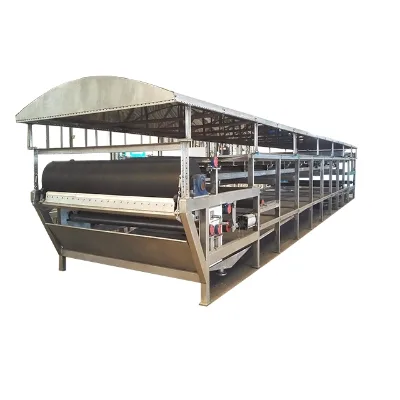
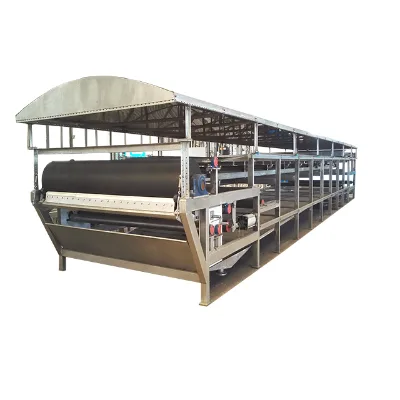
Vacuum Filter Belt for Horizontal Vacuum Filter Press High Quality
$30.00 - $40.00
MOQ: 1 Square Meters

High Quality Filter Belt for Horizontal Vacuum Filter Press Food Processing
$30.00 - $40.00
MOQ: 1 Square Meters

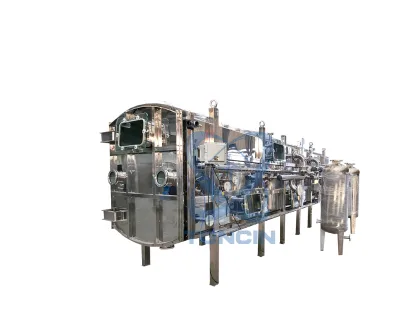
Vacuum Filter Belt for Horizontal Filter Press Coal Industry Industrial Filter Belt Conveyor Belt
$30.00 - $40.00
MOQ: 1 Square Meters




Comprehensive Sourcing Guide
Strategic Sourcing Guide for Vacuum Filter Friction Belts
The procurement of vacuum filter friction belts represents a critical decision point for industrial operations relying on solid-liquid separation. These components, often categorized broadly under conveyor belts or woven filters, serve as the primary interface for material handling in demanding environments. Buyers must navigate a complex landscape where product attributes vary significantly between manufacturers. The core keyword "Vacuum Filter Friction Belt" encompasses a range of products, from heavy-duty rubber belts designed for chemical processing to specialized woven filters for air and powder separation. This guide synthesizes available market data to provide a disciplined framework for evaluating suppliers, verifying technical specifications, and ensuring long-term operational reliability without relying on unverified claims.
Technical Specifications and Material Composition
Understanding the physical and chemical properties of the belt is the first step in any sourcing strategy. The market data indicates a divergence in material composition, with distinct offerings based on the intended application. For heavy-duty applications involving solid-liquid separation, the primary material is often rubber, specifically blends such as SBR, EPDM, Nr, or Neoprene. These materials are selected for their robust mechanical properties, including wear resistance, heat resistance, and tear resistance. The thickness of these rubber belts typically ranges from 8mm to 50mm, with widths available between 0.8m and 6m. Lengths can be customized to fit specific machinery, with observed ranges extending from 1m to 200m.
In contrast, applications requiring air, liquid, or powder filtration often utilize woven filter belts made from polyester. These belts are manufactured using composite fabric methods and feature specific hole shapes, such as square patterns, to facilitate efficient filtration. The model designations for these products vary, with "DU" and "pp" appearing as common identifiers in the market. It is crucial for buyers to distinguish between the "Strong Rubber Conveyor Belt" intended for mechanical transport and the "Woven Filter" designed for separation processes. The fabric types for woven options include Ee, Ep, and Nn, while the rubber options rely on the chemical resistance of the polymer matrix. Buyers must verify the specific material grade against their process requirements, as a belt suitable for general transport may fail in aggressive chemical environments.
Compliance, Certifications, and Regulatory Standards
Verification of compliance is non-negotiable in industrial procurement. The supplied data highlights a consistent presence of international certifications among suppliers, though the specific portfolio varies. Common certifications observed include CE, ISO 9001, and ISO 14001. Some suppliers also list OHSAS/ Ohsms 18001 or HSE standards, indicating a focus on occupational health and safety management. Additionally, specific product lines may carry UR certification, which is relevant for certain industrial applications.
When evaluating a potential supplier, buyers should not assume that all listed products carry every certification. The presence of a certificate on a general company profile does not guarantee that a specific batch of belts meets that standard. Buyers must request test reports or certification documents specific to the model number being purchased. For instance, while "DU Rubber Belt Vacuum Filter" models are noted in the data, the specific safety standards applicable to that model must be confirmed. The origin of the products is predominantly China, with specific manufacturing hubs noted in Yantai. While this geographic data is factual, buyers should verify that the "Customized" standard and "Cusromize" packing options mentioned in the data are executed according to the buyer's specific regulatory requirements, particularly regarding environmental and safety standards in their own jurisdiction.
Cost Drivers and Pricing Dynamics
The pricing structure for vacuum filter friction belts is highly variable, reflecting the diversity in materials, customization levels, and production complexity. The observed listed price range spans from $10 to $910,000 USD. This extreme variance suggests that the market includes both small, standardized components and large, custom-engineered systems. The lower end of the spectrum likely corresponds to standard woven filter belts or small rubber segments, while the upper end reflects large-scale conveyor systems or highly specialized rubber belts with custom dimensions and advanced material blends.
Several factors drive these costs. First, the "Customization" attribute is a primary cost driver. Products described with "Customized" packing, "Customized" standards, or "as Customer Required" specifications generally command higher prices due to the engineering and setup time involved. Second, the material composition significantly impacts cost. Belts made from imported raw materials or specialized rubber compounds like EPDM and Neoprene will be more expensive than those using standard polyester or basic rubber blends. Third, the scale of the order influences the unit price. The observed Minimum Order Quantity (MOQ) ranges from 1 to 15 units. Buyers should be aware that ordering near the minimum MOQ may result in a higher per-unit cost compared to bulk orders, although the data does not provide specific tiered pricing schedules.
Typical Applications and Operational Context
The application of vacuum filter friction belts is defined by the specific separation needs of the industry. The data explicitly links these products to "Liquid and Solid Separation," "Environmental Protection," and the "Chemical Industry." In these sectors, the belts must withstand harsh conditions, including exposure to corrosive chemicals, high temperatures, and abrasive materials. The "Vacuum Belt" is often described as a "Rubber Belt" specifically designed for "Du Rubber Belt Vacuum Filter" applications, highlighting its role in maintaining a seal and facilitating the vacuum process.
Beyond heavy industrial separation, the data indicates usage in filtration for air, liquid, powder, and solid filters. This suggests a dual market: one for mechanical transport in filtration systems and another for the filtration media itself. The "Motive Force" for these systems is typically "Vacuum," requiring the belt to maintain structural integrity under negative pressure. The "Control" systems associated with these belts are often "Automatic," implying integration with larger automated production lines. Buyers must ensure that the belt's performance characteristics, such as "Efficient Filtration" or "Strong Rubber Conveyor Belt" capabilities, align with the specific demands of their process. For example, a belt used for "Air Filter" applications may have different porosity and durability requirements than one used for "Solid Filter" applications.
Supplier Evaluation and Manufacturing Capabilities
Evaluating a supplier requires a deep dive into their manufacturing capabilities and logistical reliability. The data indicates that products originate from China, with specific mentions of Yantai as a production location. This geographic concentration suggests a mature supply chain for these specific industrial components. However, buyers should verify the supplier's capacity to handle "Customized" orders. The repeated mention of "Customized" packing, standards, and models implies that many suppliers operate on a make-to-order basis rather than maintaining large inventories of finished goods.
Key evaluation criteria should include the supplier's ability to provide "Seaworthy Package" or "Pallet or Wooden Box" solutions, ensuring the product arrives without damage. The "Delivery Time" is noted as 7 to 20 days, which serves as a benchmark for lead time expectations. Buyers should confirm if this timeline applies to standard orders or if customization extends the lead time. Furthermore, the "Manufacturing Method" is listed as "Composite Fabric" for woven options, indicating a specific production technique that affects the belt's strength and filtration efficiency. Buyers should request details on the quality control processes used during this manufacturing phase to ensure consistency.
Quality Control and Long-Term Procurement Considerations
Ensuring long-term reliability requires a robust quality control strategy. The "Features" of the belts, such as being "Wear-resistant," "Heat-resistant," "Cold-resistant," and "Tear-resistant," are critical performance indicators. However, these attributes should be treated as observations rather than absolute guarantees for every listed product. Buyers must request specific test results or performance data that validate these claims for the specific model they intend to purchase. The "Thickness" and "Width" specifications are also vital for quality assurance, as deviations can lead to premature failure or inefficient operation.
Long-term procurement considerations involve the availability of spare parts and the consistency of the supply chain. The "Raw Material" is sometimes listed as "Imported Material," which can be a positive indicator of quality but also introduces supply chain risks related to global logistics. Buyers should assess the supplier's ability to maintain consistent material sourcing over time. Additionally, the "Color" of the belt, noted as "Black" in some listings, may be relevant for specific identification or UV resistance requirements. Finally, the "Paper Type" mentioned in the data, described as "Qualitative," suggests that documentation and technical data sheets are part of the product offering, which is essential for maintaining a compliant and traceable supply chain.
Comparative Analysis of Product Attributes
To assist in the decision-making process, the following table summarizes the key distinctions between the primary product categories observed in the market data. This comparison highlights the differences in material, application, and specifications that buyers must consider.
| Attribute | Rubber Conveyor Belt Category | Woven Filter Belt Category |
|---|---|---|
| Primary Material | SBR, EPDM, Nr, Neoprene, Rubber | Polyester |
| Key Features | Wear-resistant, Heat-resistant, Tear-resistant | Efficient Filtration, Square Hole Shape |
| Typical Application | Liquid and Solid Separation, Chemical Industry | Air Filter, Liquid Filter, Powder Filter |
| Model Designation | DU, 1-80m | pp, filter belt |
| Fabric/Structure | Composite Fabric (Rubber) | Woven Filter, Ee, Ep, Nn |
| Control System | Automatic | Automatic |
| Certifications | CE, ISO 9001, ISO 14001, UR | CE, ISO 9001, ISO 14001 |
| Packing | Pallet, Wooden Box, Carton | Seaworthy Package, Carton and Pallet |
This comparison underscores the importance of matching the product category to the specific operational need. A buyer seeking a belt for heavy-duty chemical transport should focus on the rubber category, while a buyer needing filtration media should prioritize the woven filter specifications. By adhering to these distinctions and verifying the specific attributes against the supplier's documentation, buyers can mitigate risk and ensure the procurement of high-quality vacuum filter friction belts that meet their rigorous industrial standards.
FAQs
What materials are used for vacuum filter friction belts?
Belts are made from rubber blends like SBR, EPDM, or Neoprene, or woven polyester. Rubber types suit heavy solid-liquid separation, while polyester weaves handle air and powder filtration needs effectively.
Which certifications do Vacuum Filter Friction Belt suppliers hold?
Suppliers typically hold CE, ISO 9001, and ISO 14001 certifications. Some also provide UR, OHSAS 18001, or HSE standards to ensure safety and quality compliance for industrial operations.
How long is the delivery time for these belts?
The standard delivery time ranges from 7 to 20 days. This timeline applies to orders but may vary if the buyer requires extensive customization of dimensions or packing specifications.
Can I customize the dimensions of the vacuum filter belt?
Yes, customization is available for length, width, and thickness. Buyers can specify lengths up to 200 meters and widths between 0.8 and 6 meters to fit their specific machinery.
What is the minimum order quantity for vacuum filter belts?
The minimum order quantity ranges from 1 to 15 units depending on the supplier. Smaller orders might incur higher per-unit costs compared to bulk purchases of standard models.
Where are these vacuum filter friction belts manufactured?
Products originate primarily from China, with specific manufacturing hubs located in Yantai. Buyers should verify that the origin aligns with their logistical and regulatory requirements.
What packing options are available for shipping these belts?
Packing options include pallets, wooden boxes, or seaworthy packages. Some suppliers use cartons followed by pallets to ensure the belts arrive undamaged during international transport.