Source Vegetable Dicing Machine for Fruit, Vegetable, Seafood
Find 30 vegetable dicing machines from Chinese manufacturers with varying power, capacity, and dicing sizes. Compare models like BG, HT-CHD100, and SL to select the right cutter for root vegetables, herbs, or seafood processing needs.
Key considerations
Products List


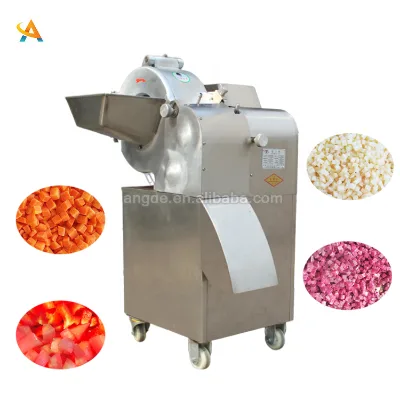
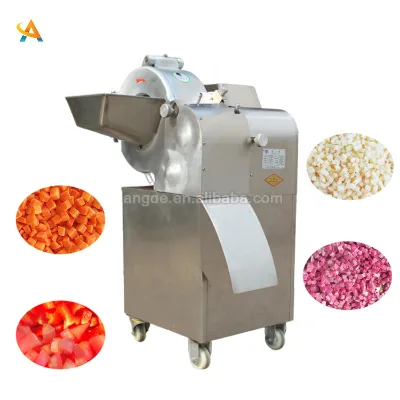


Multifunctional Dicing and Slicing Fruit and Vegetable Cutting Machine
$1500.00 - $2200.00
MOQ: 1 Pieces

Dual-Function Dicing and Slicing Fruit and Vegetable Cutting Machine
$1500.00 - $2200.00
MOQ: 1 Pieces


Comprehensive Sourcing Guide
Strategic Sourcing Guide for Vegetable Dicing Machines
Understanding Technical Specifications and Variability
When sourcing a Vegetable Dicing Machine, the primary challenge lies in navigating the significant variance in technical specifications across different models. The market does not offer a single standardized unit; rather, it presents a spectrum of machinery tailored to specific throughput needs and cut geometries. Buyers must treat product attributes as observations of individual listings rather than universal claims. For instance, power consumption varies notably, with observed units ranging from 0.75KW to 1.5KW. A procurement strategy that assumes a uniform power requirement across all suppliers will likely result in selecting equipment that is either underpowered for high-volume operations or inefficiently over-engineered for smaller tasks.
Similarly, the physical dimensions of the machinery are not consistent. Observed specifications indicate that unit sizes can range from compact footprints of 7106601085mm to larger industrial units measuring 8505301300mm. These dimensional differences directly impact floor space planning and integration into existing production lines. Furthermore, the cutting capabilities themselves are highly model-dependent. While some units offer adjustable slice thicknesses ranging from 1mm to 8mm, others are specialized for specific dice sizes, such as 3mm, 4mm, 5mm, 6mm, 8mm, 10mm, 12mm, 15mm, and 20mm. The ability to adjust these parameters is a critical technical differentiator that buyers must verify against their specific product requirements before engaging with a supplier.
Compliance, Certification, and Material Standards
Compliance and material integrity form the backbone of food safety in any processing facility. In the context of vegetable dicing machines, the material of construction is a non-negotiable factor. The supplied data consistently highlights stainless steel as the standard material for these units, a requirement driven by the need for corrosion resistance and ease of cleaning in food environments. However, buyers should verify that the specific grade of stainless steel meets local food safety regulations, as the term "stainless steel" alone does not guarantee compliance with all international standards.
Certification status is another area requiring rigorous verification. While some listings indicate the presence of certifications such as CE, SGS, ISO, BV, and QS, these should be treated as claims that require independent validation. The presence of a CE mark, for example, suggests conformity with health, safety, and environmental protection standards for products sold within the European Economic Area, but the specific scope of this certification must be confirmed. Similarly, ISO and SGS certifications indicate adherence to quality management and testing protocols, respectively. Buyers must request current, valid certificates from the supplier rather than relying on general assertions found in product descriptions. The absence of a specific certification in a listing does not necessarily imply non-compliance, but it does necessitate a deeper inquiry into the supplier's quality assurance processes.
Cost Drivers and Pricing Structures
The pricing landscape for vegetable dicing machines is characterized by a wide range, with observed values spanning from 759 USD to 35,000 USD. This substantial variance is driven by several key factors, including motor power, cutting precision, build quality, and the level of automation. A unit priced at the lower end of the spectrum, such as one with a 0.75KW motor and a capacity of 300-500kg/H, will naturally differ in cost from a high-performance model with a 1.5KW motor and a capacity of 600-1000kg/H.
Beyond the base unit price, buyers must consider the cost of packaging and shipping. Observed data indicates that units are typically packed in wooden cases, with some specified as "Fumigation-Free Wooden Cases" or "Wood Boxes for Free Fumigation." The inclusion of fumigation-free packaging can reduce customs clearance costs and delays, effectively lowering the total landed cost. Additionally, the weight of the machine, ranging from 80kg to 100kg in observed examples, influences freight charges. Buyers should request a detailed breakdown of costs, including the base price, packaging fees, and estimated shipping, to accurately compare the total cost of ownership across different suppliers.
Typical Applications and Operational Capacity
The application scope of vegetable dicing machines is broad, covering a variety of food categories including fruits, vegetables, seafood, and herbs. However, the suitability of a specific machine depends heavily on its operational capacity. Observed capacity ranges from 300-500kg/H to 600-1000kg/H, which dictates the scale of production for which the machine is appropriate. A facility processing small batches of premium herbs may find a 300-500kg/H unit sufficient, whereas a large-scale food and beverage factory processing root vegetables will require the higher throughput of a 600-1000kg/H model.
The versatility of the machine is also a critical application factor. Some units are marketed specifically as "Root Vegetable Cutters," while others are labeled as general "Vegetable Cutting Machines" or "Fruit Cutting Machines." The ability to handle different textures and densities without compromising cut quality is essential. Buyers should verify that the machine's design can accommodate the specific vegetables they intend to process, particularly if they plan to switch between soft fruits and hard root vegetables. The "High Productivity" selling point observed in some listings suggests that these machines are designed for continuous operation, but the actual uptime and efficiency will depend on the specific model's engineering and the operator's skill.
Supplier Evaluation and After-Sales Support
Evaluating a supplier for industrial machinery requires looking beyond the product listing to assess the support infrastructure. A critical factor in this evaluation is the availability of after-sales service. The data indicates that some suppliers offer "Engineers Available to Service Machinery Overseas," a significant advantage for international buyers who may face language barriers or logistical challenges in troubleshooting equipment. This service capability ensures that downtime is minimized, which is crucial for maintaining production schedules.
Furthermore, the warranty and support terms vary. While some listings mention "Online Support" as the primary after-warranty service, others may offer more comprehensive packages. Buyers should inquire about the specific terms of the warranty, the response time for technical support, and the availability of spare parts. The location of the supplier, often listed as Henan, China (Mainland), is a relevant factor for logistics and communication. While the origin is clear, the supplier's ability to provide timely support from that location is what matters most. Additionally, the provision of video outgoing-inspection services allows buyers to verify the machine's condition and functionality before shipment, adding a layer of quality assurance to the procurement process.
Quality Control and Procurement Considerations
Quality control in the procurement of vegetable dicing machines extends beyond the initial purchase. Buyers should implement a robust verification process that includes checking the "Condition" of the machine, which is typically listed as "New." However, "New" can sometimes be ambiguous, so buyers must ensure that the machine is factory-fresh and has not been refurbished or previously used. The packaging standard, such as the "Fumigation-Free Wooden Case," is also a quality indicator, as it suggests attention to detail in protecting the machine during transit.
Long-term procurement considerations include the modularity and customization options. While some listings indicate that customization is "Available," others state "Non-Customized." Buyers with unique processing requirements should prioritize suppliers who offer flexible customization options, such as adjustable dicing sizes or specific material configurations. The "Customized" attribute in some listings suggests that the machine can be tailored to specific needs, which can be a significant value-add for specialized production lines.
Finally, buyers must be mindful of the MOQ (Minimum Order Quantity) and lead times. The observed MOQ range of 1-1 indicates that single-unit purchases are generally accepted, which is beneficial for small to medium-sized enterprises. However, lead times and production schedules should be confirmed directly with the supplier, as these can vary based on order volume and current demand. By maintaining a disciplined approach to verification and documentation, buyers can mitigate risks and ensure a successful procurement experience.
Comparative Analysis of Key Attributes
To facilitate a clearer understanding of the market landscape, the following table summarizes the key technical and operational attributes observed in the current market for vegetable dicing machines. This comparison highlights the variability that buyers must navigate.
| Attribute | Observed Range / Options | Relevance to Procurement |
|---|---|---|
| Power Consumption | 0.75KW, 1.1KW, 1.5KW | Determines energy efficiency and motor sizing for the facility. |
| Production Capacity | 300-500kg/H, 600-1000kg/H | Directly impacts throughput and line balancing. |
| Cutting Specifications | 1-8mm (Adjustable), 3-20mm (Fixed Dice) | Must match the specific product requirements of the buyer. |
| Dimensions | 7106601085mm to 8505301300mm | Critical for floor space planning and integration. |
| Material | Stainless Steel | Essential for food safety and durability. |
| Packaging | Wooden Case, Fumigation-Free Wooden Case | Affects shipping costs and customs clearance efficiency. |
| Certifications | CE, SGS, ISO, BV, QS | Indicates compliance with international safety and quality standards. |
| After-Sales Service | Online Support, Overseas Engineers | Vital for minimizing downtime and ensuring long-term reliability. |
This table serves as a reference point for buyers to compare specific models against their operational needs. It underscores the importance of detailed due diligence, as no single machine fits all scenarios. By carefully analyzing these attributes, buyers can make informed decisions that align with their specific production goals and budget constraints.
FAQs
What certifications do vegetable dicing machines typically have?
Vegetable dicing machines often carry CE, SGS, ISO, BV, and QS certifications. Buyers should verify these claims with current certificates from the supplier to ensure compliance with local safety and quality standards.
How much power do these machines consume?
Power consumption varies by model, with observed units ranging from 0.75KW to 1.5KW. Selecting the correct motor size depends on your specific throughput needs and available electrical infrastructure.
What is the production capacity of these cutters?
Production capacity ranges from 300-500kg/H to 600-1000kg/H depending on the model. Choose a unit that matches your facility's daily processing volume to ensure operational efficiency.
Can these machines be customized for specific needs?
Customization is available for some models but not all. Buyers with unique processing requirements should prioritize suppliers who offer flexible options for dicing sizes or material configurations.
How are these machines packaged for shipping?
Units are typically packed in wooden cases, with some specified as fumigation-free. This packaging choice affects customs clearance efficiency and total landed costs for international buyers.
What after-sales support is available for these machines?
Support options include online assistance and engineers available for overseas service. Verify the specific response times and warranty terms to minimize downtime during production.