Source Vegetable Hard Shell Probiotics Capsule for digestion, immunity, and energy
Find 30 listings for Vegetable Hard Shell Probiotics Capsule designed to support digestion, boost immunity, and enhance energy. Buyers can compare specifications, MOQs, and OEM services from verified manufacturers in China.
Key considerations
Products List
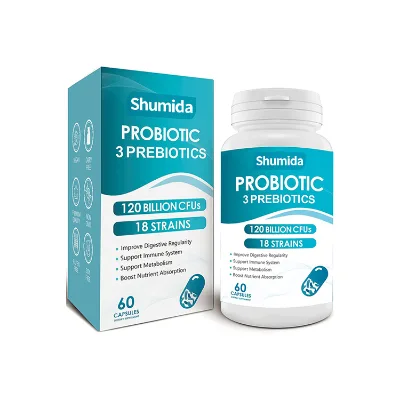


Multi-Strain Probiotic Capsules to Support Gut Health Naturally Health Food
$0.01 - $0.02
MOQ: 600000 Pieces


Probiotic Formula for Sensitive Stomach and Nutrient Absorption Health Food
$0.01 - $0.02
MOQ: 600000 Pieces

Advanced Probiotic Formula for Gut Health and Stress Relief Health Care Supplement
$0.44 - $0.49
MOQ: 300000 Pieces

Gentle Probiotic Formula for Sensitive Stomachs and Regularity Vitamin
$0.01 - $0.02
MOQ: 600000 Pieces


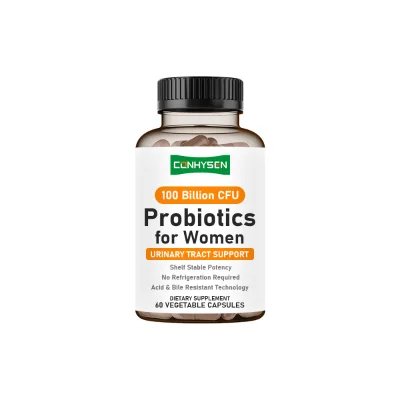


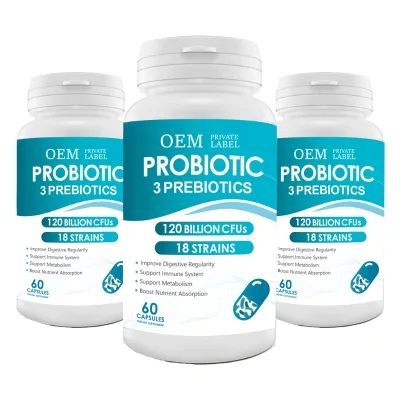
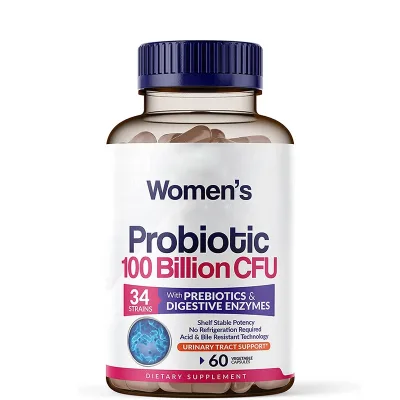


Comprehensive Sourcing Guide
Strategic Sourcing Guide for Vegetable Hard Shell Probiotics Capsules
Understanding Technical Specifications and Formulation Variability
When sourcing vegetable hard shell probiotics capsules, buyers must first distinguish between the core product attributes and the specific formulation variations available in the market. The foundational product type is identified as a combination of prebiotics, probiotics, and enzymes, designed primarily to support immune function, digestion, and energy levels. A critical technical observation is the dosage form, which is explicitly listed as a capsule, with a specific product specification noting a weight of 600mg per unit, though broader market specifications often range from 500mg to 1500mg.
The shell composition is a primary differentiator for "vegetable hard shell" products. While the provided data confirms the product type as "Prebiotics and probiotics capsules" and notes a "Feature" list including vitamins and sugar-free options, the specific material of the vegetable shell (often HPMC or pullulan) must be verified against the supplier's technical data sheet. The main ingredient profile is a blend of probiotics and prebiotics, which necessitates strict storage protocols to maintain viability. The product is formulated for adults, with a specific exclusion for newborns and children, indicating a potency or formulation that requires adult physiological tolerance.
Buyers should note the variability in model numbers and specifications. For instance, specific model identifiers such as SMD-PRBC005 or 20254104 and 20253403 suggest distinct production batches or formulation lines. The single package size is often standardized at 10x10x10 cm, but the gross weight per unit is recorded as 1.0 kg, which likely refers to a specific packaging configuration rather than the capsule weight itself. The dosage recommendation is typically two capsules daily, but this must be cross-referenced with the specific strain count and CFU (Colony Forming Units) provided by the manufacturer, as the provided text does not explicitly list CFU counts.
Compliance, Certification, and Regulatory Verification
In the B2B procurement of health supplements, certification is not merely a marketing asset but a fundamental requirement for market access and consumer trust. The available data indicates a robust certification landscape, with suppliers claiming compliance with GMP (Good Manufacturing Practice), HACCP (Hazard Analysis and Critical Control Points), QS (Quality Safety), ISO, and Kosher standards. However, the presence of these certifications in a product listing does not guarantee that every specific batch or SKU holds current, valid status.
Buyers must verify the specific scope of these certifications. For example, while "GMP, ISO" and "KOSHER, QS, HACCP, GMP, ISO" are listed, the exact standard numbers (such as ISO 9001:2015 or ISO 22000:2018) are noted in the background data as low-confidence. Therefore, procurement teams should not assume these specific standard numbers apply without requesting valid certificates from the supplier. The verification process should include checking the expiration dates of these certificates and ensuring they cover the specific manufacturing facility and product line in question.
The product is classified as a "Food" type, which implies adherence to food safety regulations rather than pharmaceutical standards, although GMP bridges this gap. The "Certificate" field lists multiple acronyms, suggesting a comprehensive quality management system. However, buyers must confirm if the Kosher certification applies to the vegetable shell specifically, as this is a common point of differentiation for religious dietary compliance. Additionally, the "QS" certification is particularly relevant for products originating from China, indicating compliance with national food safety quality standards.
Cost Drivers and Pricing Structure Analysis
The pricing structure for vegetable hard shell probiotics capsules is influenced by several dynamic factors, including the complexity of the formulation, the volume of the order, and the customization level required. The observed price range in the market spans from $0.01 to $200 USD, a vast disparity that reflects the difference between bulk raw material pricing and finished, branded, or highly customized units. This range suggests that the unit cost is highly dependent on the "Selling Units" configuration, which can be a single item or bulk palletized cartons.
A significant cost driver is the Minimum Order Quantity (MOQ). The data indicates an MOQ of 1000 bottles for certain product configurations, while other observations show a range from 1 to 600,000 units. This variance implies that suppliers may offer tiered pricing structures where the per-unit cost decreases significantly as the order volume increases. For buyers requiring smaller quantities, the cost per unit will likely be at the higher end of the observed spectrum. Conversely, large-scale procurement can leverage the lower end of the price range, provided the supplier has the capacity to handle the volume.
Customization is another major cost factor. The product offers "OEM ODM Private Label Service," "Logo Printing," and "Customization" for flavor, color, and specifications. These services require additional setup costs, tooling fees, and production line adjustments, which are typically passed on to the buyer. The "Feature" list includes attributes like "Decaffeinated," "Low-Salt," "Vitamins," and "Sugar-Free," which may require specific ingredient sourcing and quality testing, further influencing the final price. Buyers should request a detailed breakdown of costs separating the base product price from customization fees and logistics.
Typical Applications and Target Market Segmentation
The primary applications for vegetable hard shell probiotics capsules are centered around digestive health and immune system support. The product is explicitly marketed with the function to "Promote Digestion" and "support immune function, support digestion, support energy booster." This positions the product as a general wellness supplement rather than a therapeutic intervention for specific medical conditions. The target demographic is clearly defined as "Adults," with a specific exclusion for "Newborn" and "Children." This age restriction is critical for compliance and liability management, ensuring that the product is not marketed to populations that may not tolerate the specific strain or dosage.
The product is suitable for a unisex audience, making it applicable for a broad consumer base. The "Feature" attributes, such as being "Sugar-Free" and "Low-Fat," align with current consumer trends favoring clean-label products and those managing caloric intake. The inclusion of "Vitamins" suggests a multi-functional approach, combining probiotic benefits with essential micronutrients. The "Flavor" is listed as "custom," indicating that the product can be tailored to specific taste profiles, which is essential for consumer adherence in the supplement market.
In terms of distribution, the product is available for global trade with terms including EXW, FOB, CIF, DAP, CFR, and DDP. The port of departure options include major Chinese hubs like Qingdao, Tianjin, Shanghai, Beijing, and Xian, facilitating logistics to various international markets. The "Product Type" is categorized as "Food," which simplifies regulatory hurdles in many jurisdictions compared to drug classifications, but still requires adherence to food safety labeling and import regulations.
Supplier Evaluation and Capacity Assessment
Evaluating a supplier for vegetable hard shell probiotics capsules requires a deep dive into their production capacity and operational history. The data indicates a production capacity of 300 million pieces per year, a figure that suggests a large-scale manufacturing operation capable of handling significant volume orders. However, buyers must verify if this capacity is dedicated to probiotic products or if it is a general capacity that includes other supplement types. The "Place of Origin" is listed as Guangdong, China, and Shandong, China, indicating multiple manufacturing locations or a supply chain that spans these regions.
The "Service" offerings include OEM and ODM capabilities, which are essential for brands looking to launch private label products. The ability to provide "Logo Printing" and "Customization" for color and specifications is a key differentiator. Buyers should assess the supplier's flexibility in handling small to medium orders versus large bulk orders, given the wide MOQ range observed. The "Trade Terms" listed, such as EXW and DDP, indicate a mature logistics operation that can handle various shipping responsibilities.
When evaluating suppliers, buyers should request evidence of their "Certificate" claims, specifically GMP, HACCP, and ISO. The presence of multiple certifications suggests a commitment to quality, but the validity and scope must be confirmed. Additionally, the "Storage Method" requirements, such as avoiding sun exposure and high temperatures, and maintaining a temperature range of 5°C-25°C with 35%-65% relative humidity, indicate that the supplier must have robust cold chain or climate-controlled storage facilities.
Quality Control and Storage Protocols
Maintaining the viability of probiotics is the most critical aspect of quality control in this category. The product has a shelf life of 24 months, with some references to an expiration date of 3 years, which may indicate a discrepancy or different product variants. The "Storage Note" emphasizes the need for moisture-proof storage and protection from direct sunshine. The specific storage conditions are defined as 5°C-25°C with 35%-65% relative humidity. Deviation from these conditions can lead to the degradation of the probiotic strains, rendering the product ineffective.
Quality control should extend beyond the final product to the raw materials. The "Main Ingredient" is a blend of probiotics, prebiotics, and enzymes. Each component must be tested for purity, potency, and contamination. The "Feature" list includes "Decaffeinated" and "Low-Salt," which requires specific testing to ensure these claims are accurate. The "Single gross weight" of 1.0 kg and "Single package size" of 10x10x10 cm suggest a standardized packaging process, but buyers should verify the consistency of fill weights and seal integrity.
The "Expiration Date" and "Shelf life" are critical for inventory management. Buyers must ensure that the product they receive has a sufficient remaining shelf life, typically at least 18-24 months, to allow for distribution and retail display. The "Storage Method" also implies that the supplier must provide a certificate of analysis (COA) that includes stability data under the specified storage conditions. Without this data, the claimed shelf life of 24 months or 3 years cannot be substantiated.
Long-Term Procurement Considerations and Supply Chain Resilience
Long-term procurement of vegetable hard shell probiotics capsules requires a strategic approach to supply chain resilience and relationship management. The "Services" offered, including OEM/ODM, suggest that the supplier is a partner in product development rather than just a vendor. This partnership model is beneficial for long-term projects where formulation tweaks or branding changes are anticipated. The "Customization" availability allows for adaptation to changing market trends, such as new flavor preferences or updated health claims.
Buyers should consider the "Trade Terms" and logistics capabilities when planning long-term supply. The availability of multiple ports of departure (Qingdao, Tianjin, Shanghai, etc.) provides flexibility in shipping routes, which can be crucial during global supply chain disruptions. The "Production Capacity" of 300 million pieces per year offers a buffer against demand spikes, but buyers should verify if this capacity is committed to other clients or if it is available for their specific needs.
The "MOQ" range of 1 to 600,000 units indicates that the supplier can accommodate both pilot launches and mass production. However, buyers should negotiate volume-based pricing tiers that reflect long-term commitments. The "Product Specification" variability (500mg to 1500mg) allows for future product line expansion without changing suppliers. Finally, the "Brand Name" and "Logo Printing" options suggest that the supplier is experienced in handling private label clients, which is a positive indicator for brands looking to build a long-term market presence.
| Attribute | Observed Value/Range | Procurement Implication |
|---|---|---|
| MOQ | 1 - 600,000 units | Flexible for pilots; volume discounts likely for high volume. |
| Shelf Life | 24 Months (Standard) / 3 Years (Variant) | Verify specific batch dates; ensure sufficient remaining life. |
| Storage | 5°C-25°C, 35%-65% RH | Requires climate-controlled logistics; risk of spoilage if breached. |
| Certifications | GMP, HACCP, ISO, Kosher, QS | Verify validity and scope; essential for market entry. |
| Origin | Guangdong / Shandong, China | Check specific factory location for quality consistency. |
| Formulation | Probiotics + Prebiotics + Enzymes | Verify strain specificity and CFU counts in COA. |
| Target | Adults (Not for Newborns/Children) | Strict labeling compliance required to avoid regulatory issues. |
In conclusion, sourcing vegetable hard shell probiotics capsules involves a careful balance of technical verification, compliance checks, and strategic supplier selection. By focusing on the specific storage requirements, certification validity, and customization capabilities, buyers can secure a reliable supply chain that meets the high standards of the health supplement market. The data provided offers a solid foundation for these decisions, but direct verification with the supplier remains the final step in ensuring product quality and market success.
FAQs
What is the recommended daily dose for this probiotic capsule?
The recommended dose is to take two capsules daily. This dosage applies to adults and is designed to support immune function and digestion effectively.
Which certifications do the manufacturers hold for production?
Manufacturers hold GMP, HACCP, QS, ISO, and Kosher certifications. These credentials ensure compliance with food safety and quality management standards for the product.
How should the product be stored to maintain viability?
Store the capsules in a moisture-proof environment away from direct sunlight and high temperatures. The ideal conditions are a temperature between 5°C and 25°C with 35% to 65% relative humidity.
Can buyers request custom private label services for this product?
Yes, OEM and ODM private label services are available for customization. Buyers can request custom logos, colors, and specific flavor profiles to match their brand requirements.
What is the minimum order quantity for bulk purchases?
The standard minimum order quantity is 1000 bottles. However, suppliers may accommodate orders ranging from 1 up to 600,000 units depending on the specific configuration.
Who is the target demographic for these probiotic capsules?
The product is formulated specifically for adults and is not suitable for newborns or children. It is designed as a unisex supplement to support energy and digestive health.