Source Ventilation and Cooling PP Trickle Grid Fill for Industrial Cooling, HVAC Systems, and Process Plants
Explore 30 listings for Ventilation and Cooling PP Trickle Grid Fill designed for industrial applications. Buyers can compare specifications including material types, dimensions, and ventilation modes to find suitable solutions for their cooling tower needs.
Key considerations
Products List


$2.00 - $3.00
MOQ: 1000 Pieces


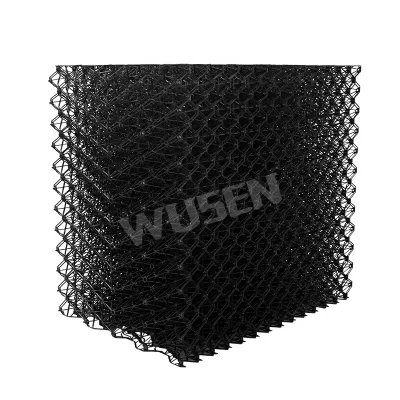
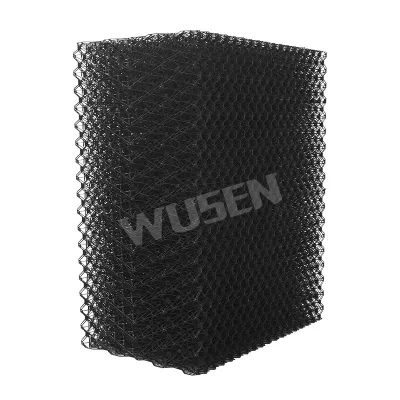
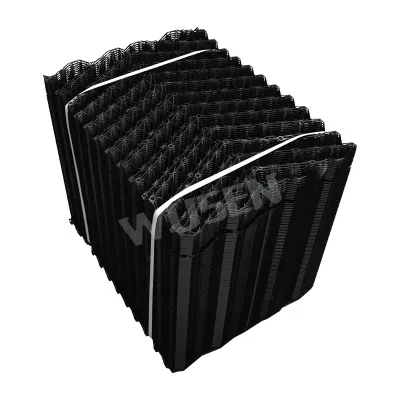

Animal Husbandry PP Trickle Deodorization Evaporative Grid Fill
$32.00 - $35.00
MOQ: 10 Square Meters
Shandong Wusen Environmental Control Equipment Technology Co., Ltd


PP Trickle Grid Fill / Farm Airclean / Farm Airclean System
$32.00 - $35.00
MOQ: 10 Square Meters
Shandong Wusen Environmental Control Equipment Technology Co., Ltd


Counter Flow Cooling Tower Fill Replacement PP Fill Pack
$32.00 - $35.00
MOQ: 10 Square Meters
Shandong Wusen Environmental Control Equipment Technology Co., Ltd
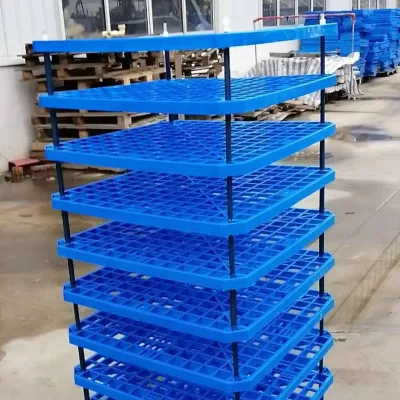


Comprehensive Sourcing Guide
Strategic Sourcing Guide for Ventilation and Cooling PP Trickle Grid Fill
Understanding the Core Product and Technical Specifications
The procurement of Ventilation and Cooling PP Trickle Grid Fill requires a precise understanding of the material composition, geometric configuration, and airflow dynamics inherent to industrial cooling towers. The core product, identified in market listings as "PP TRICKLE FILL," utilizes Polypropylene (PP) as the primary material. This choice of polymer is critical for its resistance to chemical degradation, thermal stability, and durability in wet environments. The "trickle" designation indicates a specific water distribution mechanism where water flows over the surface of the fill media in thin films, maximizing the surface area available for heat exchange between the water and the air.
The physical dimensions of these components vary significantly based on the specific application and tower design. Market observations indicate that standard widths for these fills often align with specifications such as 610mm, 750mm, or 300-1520mm, depending on the manufacturer's standard or custom requirements. The thickness of the fill sheets is another vital parameter, with observed standards including dimensions like 24mm for specific models. Buyers must verify the exact length and width ratios, as some products are supplied in standard lengths while others are cut to "any length" to fit unique tower footprints. The "PP Grid Fill" variant represents a structural evolution of the trickle fill, offering a rigid grid structure that supports water flow while maintaining air passage.
The thermal performance of these fills is heavily influenced by the air contact method. In the context of cooling towers, the air contact form is typically "Wet," facilitating evaporative cooling. However, advanced configurations may utilize a "Wet and Dry" contact form to optimize efficiency in varying ambient conditions. The ventilation mode is equally critical; systems may employ "Natural Ventilation" for passive cooling or "Mechanical Ventilation" using fans to force air through the fill media. The tower shape, whether "Round" or "Square," dictates the arrangement of the fill packs. For instance, square towers often utilize counter-flow configurations where air moves upward against the downward flow of water, while round towers may utilize different flow dynamics. The "Counter Flow" cooling method is a standard high-efficiency configuration observed in these products, ensuring that the coldest water meets the coldest air, thereby maximizing the temperature differential.
Compliance, Certification, and Quality Standards
When sourcing industrial cooling components, verifying compliance with international standards is non-negotiable. The supply chain for PP trickle grid fill is characterized by a range of certifications that validate the material's safety and performance. High-confidence data indicates that reputable suppliers often provide products certified under ISO standards, specifically ISO 9001 for quality management systems. Additionally, the CE mark is frequently cited, indicating conformity with health, safety, and environmental protection standards for products sold within the European Economic Area. Some listings also reference CTI (Cooling Technology Institute) certification, which is a specialized benchmark for cooling tower performance and reliability.
Buyers must scrutinize the "Certificate" field in supplier documentation to ensure it explicitly lists ISO 9001, CE, or CTI. The absence of these certifications does not necessarily imply non-compliance, but it requires a deeper investigation into the manufacturer's internal quality control processes. The material itself, Polypropylene, must meet specific fire safety and UV resistance standards, though these specific test results are not universally listed in general product summaries. Therefore, procurement teams should request material safety data sheets (MSDS) and fire rating certificates to confirm that the PP material meets the fire safety requirements of the installation site.
Quality is another paramount consideration. The "High Standard" attribute observed in product listings suggests that manufacturers aim for rigorous control over the extrusion and molding processes. However, "High Standard" is a qualitative claim that must be substantiated by objective data. Buyers should verify the consistency of the fill's mechanical properties, such as tensile strength and impact resistance, which are essential for preventing deformation under the weight of water and air pressure. The "Not Easy to Deform" advantage is a key selling point, indicating that the grid structure is designed to maintain its shape over long operational periods. To validate this, buyers should inquire about the specific testing protocols used to measure deformation resistance, such as load-bearing tests or thermal cycling tests.
Cost Drivers and Pricing Dynamics
The pricing of PP trickle grid fill is influenced by a complex interplay of material costs, manufacturing complexity, and logistical factors. The observed price range in the market spans from $0.28 to $100 USD, a wide variance that reflects differences in product specifications, order volume, and supplier positioning. The lower end of the spectrum typically corresponds to standard, off-the-shelf grid fills with minimal customization, while the higher end may include custom-cut dimensions, specialized coatings, or premium brands.
The Minimum Order Quantity (MOQ) is a significant cost driver. Listings indicate an MOQ range from 1 PC to 1000 units. For small-scale projects or replacement parts, an MOQ of 1 PC allows for immediate procurement without significant inventory commitment. However, for large industrial installations, buyers can leverage economies of scale by ordering in bulk, potentially reducing the unit cost. The "Competitive Prices" key selling point suggests that many suppliers are willing to negotiate based on volume, but buyers should verify the price per square meter or per cubic meter rather than relying solely on the total unit price.
Logistics and packaging also impact the final landed cost. Products are typically shipped in containers, on wooden pallets, or in wooden cases, depending on the size and fragility of the fill packs. The "Container" and "Pallet" packaging options are standard for international freight, while "Wooden Box Packing and Sea Freight" may be required for heavy or oversized loads. The lead time, observed at approximately 25 days for some models, adds a temporal cost to the procurement process. Buyers must factor in this production window when planning installation schedules, as delays in fill delivery can stall the entire cooling tower commissioning process.
Typical Applications and Operational Environments
PP trickle grid fill is predominantly utilized in industrial applications where efficient heat rejection is critical. The "Industrial" application field encompasses a wide range of sectors, including power generation, petrochemical processing, HVAC systems for large commercial buildings, and manufacturing plants. The "Mixed Flow Closed Circuit Cooling Tower" application type highlights the versatility of these fills in systems that require both direct and indirect cooling methods. In closed-circuit towers, the fill media plays a crucial role in transferring heat from the process fluid to the water, which is then cooled by the air.
The noise level of the cooling tower is another factor influencing the choice of fill. Products are available with "Ordinary," "Low," and "Ultra Low" or "Ultra Quiet" noise levels. For installations near residential areas or sensitive equipment, selecting a fill that contributes to a "Ultra Quiet" operation is essential. This attribute is often linked to the design of the air contact form and the ventilation mode. For instance, a "Natural Ventilation" system with a "Round" tower shape may produce less noise than a "Mechanical Ventilation" system with a "Square" tower, depending on the fan speed and airflow resistance.
The color of the fill, typically "Black" or "White," also has functional implications. Black PP is often preferred for its UV resistance and ability to absorb heat, which can aid in the cooling process in certain climates. White fills may be chosen for aesthetic reasons or to reflect sunlight in hot environments. The "Air Contact Way," whether "Open" or "Closed," determines the exposure of the water to the atmosphere. Open systems are common in industrial settings where water quality is less critical, while closed systems are preferred for applications requiring high water purity.
Supplier Evaluation and Manufacturing Capabilities
Evaluating suppliers for PP trickle grid fill requires a multi-faceted approach that goes beyond price and lead time. Buyers should assess the manufacturer's reputation and brand presence. The market includes well-known brands such as Bac, Marly, Evapco, and Spx, alongside generic manufacturers. While these brands are recognized for quality, they may come with a premium price. Generic manufacturers, often originating from China, offer competitive pricing but require rigorous vetting of their quality control processes.
The manufacturing location is a key indicator of supply chain reliability. Most of the observed products originate from China, a global hub for plastic manufacturing and cooling tower components. This location offers cost advantages but may introduce logistical challenges regarding shipping times and import regulations. Buyers should verify the "prod_origin" and ensure that the supplier has a track record of exporting to their region. The "Hacst" manufacture label suggests a specific manufacturer, but buyers should not rely on a single brand name without verifying the supplier's credentials.
Supplier capabilities should be evaluated based on their customization options. The "Customization: Available" attribute indicates that many suppliers can tailor the fill dimensions, thickness, and shape to meet specific project requirements. This flexibility is crucial for retrofitting existing towers or designing new systems with unique constraints. Buyers should inquire about the supplier's ability to produce custom lengths and widths, as well as their capacity to handle large-volume orders with consistent quality.
Quality Control and Long-Term Procurement Considerations
Ensuring the long-term performance of PP trickle grid fill requires a robust quality control strategy. Buyers should implement a verification process that includes material sampling, dimensional inspection, and performance testing. The "Quality: High Standard" claim must be backed by test reports that demonstrate the fill's resistance to deformation, chemical attack, and thermal degradation. The "Not Easy to Deform" advantage is a critical performance metric, as deformation can lead to reduced airflow and increased pressure drop, compromising the cooling tower's efficiency.
Long-term procurement considerations also involve the availability of after-warranty service. The "Online Support" attribute suggests that suppliers offer remote assistance for troubleshooting and maintenance. However, buyers should clarify the scope of this support, including response times and the availability of replacement parts. The "After-Warranty Service" is particularly important for industrial applications where downtime can be costly.
Maintenance and replacement strategies should be integrated into the procurement plan. The "Standard" dimensions, such as 247018404220 or L750W750H24mm, provide a baseline for ordering replacement packs. Buyers should maintain a stock of spare parts to minimize downtime in case of unexpected failures. The "prod_packing" details, such as "Wooden Pallet" or "Wooden Case," should be reviewed to ensure that the packaging protects the fill during transit and storage.
In conclusion, sourcing Ventilation and Cooling PP Trickle Grid Fill requires a balanced approach that considers technical specifications, compliance, cost, and supplier reliability. By adhering to the verified facts and avoiding unverified claims, buyers can make informed decisions that ensure the efficiency and longevity of their cooling systems. The wide range of options available in the market, from standard grid fills to custom solutions, provides flexibility for diverse industrial needs. However, the key to successful procurement lies in rigorous due diligence, clear communication with suppliers, and a commitment to quality standards.
FAQs
What certifications do Ventilation and Cooling PP Trickle Grid Fill products typically have?
Products typically hold ISO and CE certifications, with some listings also showing CTI and ISO 9001 certificates. These standards validate quality management and safety compliance for international trade, ensuring the materials meet specific industry requirements for durability and performance.
Can I customize the dimensions of the PP trickle grid fill for my tower?
Yes, customization is available to meet specific project needs, including variations in length and width. Standard widths often include 610mm or 750mm, but manufacturers can produce custom lengths to fit unique tower footprints or retrofit existing cooling systems effectively.
What is the typical lead time for ordering Ventilation and Cooling PP Trickle Grid Fill?
The lead time is approximately 25 days for many models, though this can vary based on order volume and customization. Buyers should account for this production window when planning installation schedules to avoid delays in cooling tower commissioning and operation.
Which ventilation modes are supported by these cooling tower fill products?
Products support both natural ventilation and mechanical ventilation modes depending on the tower design. Natural ventilation is common in passive systems, while mechanical ventilation uses fans to force air through the fill media for enhanced cooling efficiency in industrial applications.
What are the minimum order quantities for purchasing PP trickle grid fill?
Minimum order quantities range from 1 piece to 1000 units, offering flexibility for both small replacements and large industrial projects. Lower MOQs allow immediate procurement without significant inventory commitment, while bulk orders may leverage economies of scale for better pricing.
How does the material of the fill affect its performance in industrial settings?
The fill is primarily made of Polypropylene (PP) or FRP, offering resistance to chemical degradation and thermal stability. These materials ensure the grid structure remains not easy to deform under water weight and air pressure, maintaining consistent airflow and heat exchange efficiency.
What noise levels are available for Ventilation and Cooling PP Trickle Grid Fill systems?
Noise levels range from ordinary to ultra low or ultra quiet, depending on the specific tower configuration and airflow design. Selecting ultra quiet options is essential for installations near residential areas or sensitive equipment to minimize operational disturbance and maintain compliance.