Source Vertical Network Cabinet with Air Conditioner for Surveillance, Monitoring, and Integration
Explore 30 options for a Vertical Network Cabinet with Air Conditioner designed for video surveillance, remote monitoring, and wireless systems. Compare specifications including voltage, installation type, and certifications from suppliers in China.
Key considerations
Products List


Floor Standingn Outdoor Network Cabinet with 600W Air Conditioning Capacity
$490.00 - $500.00
MOQ: 10 Pieces

Versatile 22u-47u Floor Standing Outdoor Network Cabinet with Air Conditioning
$390.00 - $400.00
MOQ: 10 Pieces

22u-47u Outdoor Network Cabinet with 1500W/2000W Air Conditioner by Fastlink
$490.00 - $500.00
MOQ: 10 Pieces


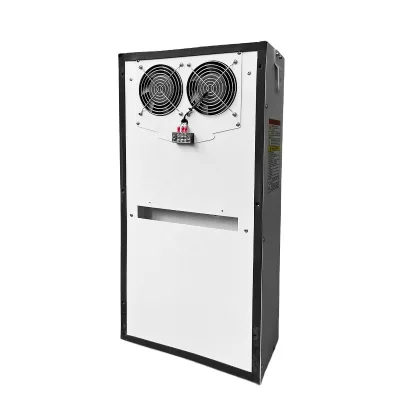


Comprehensive Sourcing Guide
Strategic Sourcing Guide for Vertical Network Cabinets with Integrated Air Conditioning
Procuring a vertical network cabinet equipped with an integrated air conditioning unit requires a disciplined approach to align technical specifications with operational reliability. In the context of modern data infrastructure, the cooling solution is not merely an accessory but a critical component that ensures the longevity of sensitive electronics. Buyers must navigate a complex landscape of product attributes, ranging from voltage compatibility and mounting configurations to specific certification requirements. This guide outlines the essential factors for sourcing these units, focusing on the intersection of vertical cabinet design and active thermal management systems.
Technical Specifications and Configuration Standards
The foundational aspect of sourcing a vertical network cabinet with an air conditioner involves verifying the physical and electrical specifications against the intended deployment environment. The product data indicates a clear distinction between standard server cabinets and those specifically engineered for thermal regulation. The core unit type is identified as a "Vertical" installation, which is distinct from wall-mounted or window-mounted alternatives. This vertical orientation is critical for floor-standing data centers or server rooms where space efficiency and airflow dynamics are paramount.
When evaluating the physical dimensions, buyers must look for adherence to the 19-inch cabinet standard, which is the industry norm for rack-mounted equipment. The supplied context highlights specific model numbers such as "Isr9-61242csw" and "Isr-61243csw," alongside generic designations like "22U-47U," indicating a range of heights suitable for varying equipment densities. The standard dimensions provided, specifically "600W1200D2000H," suggest a footprint of 600mm width, 1200mm depth, and 2000mm height, though these figures should be treated as reference points for specific models rather than universal constants.
The integration of the air conditioning unit introduces specific electrical and mechanical constraints. The voltage range observed in the market spans from 110V to 280V, offering flexibility for different regional power grids. However, the cooling capacity varies significantly, with observed ratings including 600W, 1000W, 1500W, 2000W, and 2300W. Some units are specified as "600W DC aircon," which implies a direct current power requirement, necessitating a thorough review of the facility's power infrastructure. The cooling principle is consistently described as "Compression Refrigeration Equipment," utilizing a "Heat Exchanger Tube" mechanism. This confirms that the units rely on standard vapor-compression cycles rather than passive cooling or Peltier effects.
Furthermore, the internal configuration often includes "Wiring Devices" such as ODF (Optical Distribution Frames), which must be compatible with the cabinet's internal space. The material composition is predominantly "Steel," ensuring structural integrity and electromagnetic shielding. Buyers should verify the "Fan Number," with some units featuring "Two" fans to optimize airflow distribution, and check the "Control Method," which is typically "Digital" for precise temperature management.
Compliance and Certification Verification
In the B2B procurement of industrial cooling and storage solutions, compliance with international standards is non-negotiable. The product data reveals a robust array of certifications that buyers should demand as proof of quality and safety. The most frequently cited certifications include ISO, RoHS, and CE. These indicate adherence to international management systems, restrictions on hazardous substances, and conformity with European health, safety, and environmental protection standards.
Additional certifications appear in specific product listings, such as "CCC" (China Compulsory Certification) and "GS" (Geprüfte Sicherheit), which are particularly relevant for products manufactured in or destined for the Chinese market. The presence of "CCC" suggests that the product meets specific Chinese safety requirements, while "GS" denotes a higher level of safety testing often recognized in Europe. It is crucial for buyers to request valid certification documents for the specific model they intend to purchase, as certification status can vary between product lines even within the same brand.
The supply chain origin is another critical compliance factor. The data indicates that products originate from "Guangzhou, China" or generally "China." While this location is a major manufacturing hub, buyers must ensure that the specific factory holding the ISO or CE certification is the actual manufacturer of the unit. The "Export Standard Package" and "Plywood Case" or "Carton Box" packing methods are also part of the compliance chain, ensuring that the product survives logistics without damage and meets import regulations regarding packaging materials.
Cost Drivers and Pricing Dynamics
Understanding the cost structure of vertical network cabinets with air conditioning is essential for budgeting. The observed price range in the market is exceptionally broad, spanning from $0.10 to $2,888. This wide variance is not indicative of a single product type but rather reflects the spectrum of configurations, capacities, and brand premiums. The lower end of the spectrum likely corresponds to basic cabinet structures or smaller capacity cooling units, while the upper end represents high-capacity, fully integrated systems with advanced digital controls and robust steel construction.
Several factors drive these costs. First, the cooling capacity is a primary determinant; units rated at 2300W will inherently cost more than those rated at 600W due to the larger compressors and heat exchangers required. Second, the voltage compatibility plays a role; units supporting a wide range of 110V~280V or specific DC requirements may command a premium. Third, the level of customization available, which is listed as "Available," allows buyers to tailor features such as door types, mounting options, and internal layouts, directly influencing the final price.
The Minimum Order Quantity (MOQ) also impacts the unit cost. The observed MOQ range is between 1 and 10 units. Purchasing at the lower end of this range (1 unit) typically incurs a higher per-unit cost compared to bulk orders of 10 units, where economies of scale may apply. Buyers should be aware that the "New" condition of the products is a standard expectation, but the "Lifetime" of the unit, noted as ">20 years" for certain components, suggests that higher initial investment in quality materials like "Ultrahigh" corrosion durability steel can yield long-term savings by reducing replacement frequency.
Typical Applications and Deployment Scenarios
The versatility of vertical network cabinets with integrated air conditioning makes them suitable for a diverse range of high-stakes environments. The primary application fields identified include "Video Surveillance Systems," "Network Integration Systems," "Remote Monitoring Systems," and "Closed-Circuit Monitoring Systems." In these scenarios, the cabinet protects sensitive recording equipment and network switches from overheating, which is critical for maintaining continuous operation in unconditioned spaces like outdoor shelters or remote server rooms.
Additionally, the "Electronic Monitoring System" and "Wireless Monitoring System" applications highlight the use of these cabinets in telecommunications and security infrastructure. The "Mechanical Engineering" application field suggests that these units are also deployed in industrial settings where dust, humidity, and temperature fluctuations are common. The "Ultra Quiet" noise level of the cooling units is a specific attribute that makes them suitable for environments where noise pollution must be minimized, such as office-adjacent server rooms or residential monitoring stations.
The "Mounting" options, specifically "Wall/Window Mount" for air conditioners and "Vertical" for the cabinet, indicate flexibility in installation. However, the core product is a floor-standing vertical cabinet, which is ideal for data centers requiring high-density equipment storage. The "LED" display type on the control panel allows for easy monitoring of temperature and system status, which is vital for remote management in "Wireless Monitoring System" deployments.
Supplier Evaluation and Selection Criteria
Selecting the right supplier requires a rigorous evaluation process that goes beyond the basic product listing. Buyers should prioritize suppliers who can provide clear evidence of the "ISO," "RoHS," and "CE" certifications for the specific model in question. The presence of multiple certifications, such as "CCC," "GS," and "ISO" together, often indicates a more mature manufacturing process and a commitment to quality.
The "Brand" information, such as "Invinstar" and "Getwell," serves as a starting point for supplier identification, but buyers should not rely solely on brand recognition. Instead, they should verify the supplier's ability to support "Customization" requests. A capable supplier will be able to accommodate specific requirements regarding voltage, cooling capacity, and internal wiring devices like ODF. The "Condition" of the product being "New" is a baseline expectation, but buyers should also inquire about the warranty terms and the availability of spare parts, especially for the "Heat Exchanger Tube" and compressor components.
The "prod_packing" details, such as "Carton Box or Wooden Pallets" or "Plywood Case," are also indicators of a supplier's logistical capability. Proper packaging is essential for protecting the cabinet during transit, especially given the delicate nature of the integrated air conditioning unit. Buyers should request photos or videos of the packaging process to ensure that the "Export Standard Package" is being utilized effectively.
Quality Control and Long-Term Procurement Considerations
Ensuring the long-term reliability of vertical network cabinets with air conditioning requires a focus on quality control metrics. The "Corrosion Durability" is listed as "Ultrahigh," which is a critical attribute for cabinets deployed in harsh environments. Buyers should verify the specific coating or treatment applied to the "Steel" material to ensure it meets this claim. The "Lifetime" of the unit, noted as exceeding 20 years for certain components, suggests that the design prioritizes durability over short-term cost savings.
Quality control should also extend to the testing of the "Operating Principle." Since the unit relies on "Compression Refrigeration Equipment," buyers should request test results that demonstrate the unit's ability to maintain the required temperature under load. The "Noise Level" being "Ultra Quiet" should be verified through acoustic testing data, particularly for applications in noise-sensitive environments.
For long-term procurement, buyers should consider the "Installation" requirements. The "Vertical" installation type requires specific floor loading capabilities and space planning. Additionally, the "Control Method" being "Digital" implies a need for software or firmware updates, which the supplier should support. The "Wiring Devices" like ODF must be compatible with the existing network infrastructure to avoid costly retrofits.
Finally, buyers should maintain a clear record of the "Model No." and "prod_model" for each unit purchased. This ensures that future maintenance, repairs, or expansions can be handled with compatible parts. The "Standard" of "19 Inch" and the specific dimensions like "600W1200D2000H" should be documented to ensure consistency across the procurement portfolio. By adhering to these quality control and documentation practices, buyers can secure a reliable supply chain for their vertical network cabinet needs.
Summary of Key Product Attributes
To facilitate quick reference during the sourcing process, the following table summarizes the critical attributes observed in the product data. This comparison aids in distinguishing between different configurations and ensuring that all procurement requirements are met.
| Attribute Category | Key Specifications Observed | Verification Requirement |
|---|---|---|
| Cabinet Type | Vertical, Server Cabinet, Network Cabinet | Confirm orientation matches site layout |
| Cooling Capacity | 600W, 1000W, 1500W, 2000W, 2300W | Match capacity to heat load calculation |
| Voltage | 110V~280V, 600W DC | Verify facility power supply compatibility |
| Certifications | ISO, RoHS, CE, CCC, GS | Request valid certificates for specific model |
| Material | Steel | Confirm corrosion protection treatment |
| Mounting | Vertical (Cabinet), Wall/Window (AC) | Ensure structural support for installation |
| Control | Digital, LED Display | Verify interface usability and remote access |
| Packing | Carton Box, Wooden Pallets, Plywood Case | Confirm export-standard packaging quality |
| Origin | Guangzhou, China | Verify factory location and export capability |
| Customization | Available | Discuss specific requirements with supplier |
By systematically evaluating these attributes, buyers can make informed decisions that balance technical performance, compliance, and cost efficiency. The integration of vertical network cabinets with air conditioning is a strategic investment that, when sourced correctly, provides a robust foundation for modern digital infrastructure.
FAQs
What certifications do vertical network cabinets with air conditioner typically have?
These units commonly hold ISO, RoHS, and CE certifications. Some models also include CCC or GS certifications, ensuring compliance with international safety and environmental standards for industrial use.
How is the cooling capacity specified for these integrated air conditioning units?
Cooling capacity is specified in watts, with observed ratings including 600W, 1000W, 1500W, 2000W, and 2300W. Some units operate on 600W DC power, requiring verification of facility power infrastructure.
Which installation types are available for vertical network cabinets with air conditioner?
The primary installation type is vertical for floor-standing setups. Air conditioning units may also support wall or window mounting configurations to suit specific deployment environments like server rooms.
Can buyers customize the specifications of vertical network cabinets with air conditioner?
Yes, customization is available for these units. Buyers can tailor features such as voltage compatibility, cooling capacity, and internal wiring devices like ODF to match specific operational requirements.
What materials are used to construct vertical network cabinets with air conditioner?
The cabinets are predominantly constructed from steel to ensure structural integrity. This material offers ultrahigh corrosion durability, making the units suitable for harsh mechanical engineering and monitoring environments.
How is the product packed for export from vertical network cabinets with air conditioner?
Products are packed using export standard packages, often in carton boxes, wooden pallets, or plywood cases. This ensures the unit survives logistics without damage and meets import regulations.