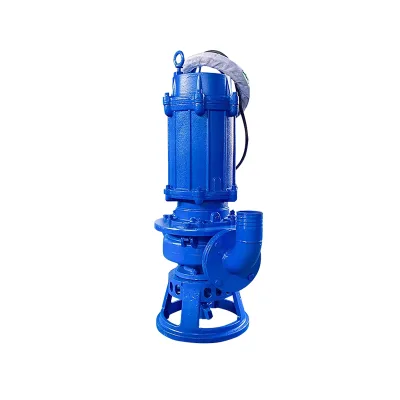
Source Vertical Non-Clogging Submersible Sludge Pump for Mining, Wastewater, and Dredging
Compare 30 Vertical Non-Clogging Submersible Sludge Pump options from Hebei China. Buyers can evaluate models like BP and QSZ with varying heads, flows, and motor types for industrial applications.
Key considerations
Products List


Comprehensive Sourcing Guide
Strategic Sourcing Guide for Vertical Non-Clogging Submersible Sludge Pumps
Procuring vertical non-clogging submersible sludge pumps requires a disciplined approach that balances hydraulic performance with robust mechanical design. These specialized units are engineered to handle abrasive slurries, sewage, and solid-laden liquids in demanding environments. The market offers a diverse array of configurations, ranging from single-stage centrifugal designs to multistage high-pressure units. Buyers must navigate a complex landscape of specifications, including impeller types, shaft orientations, and material compositions, to ensure the selected equipment meets the specific operational demands of their facility. This guide outlines the critical technical, compliance, and commercial factors necessary for a successful procurement strategy.
Technical Specifications and Hydraulic Performance
The core functionality of a vertical non-clogging submersible sludge pump relies heavily on its hydraulic design and mechanical construction. When evaluating potential units, buyers should first examine the impeller configuration. The available market data indicates a variety of impeller types, including open, semi-open, and closed designs. Open impellers are often preferred for sludge applications due to their ability to pass solids without clogging, while semi-open variants offer a balance between efficiency and solids handling. The influent type is equally critical; options range from single-suction to double-suction configurations. Double-suction pumps are generally utilized to balance axial hydraulic forces, which can extend bearing life in high-flow applications.
The working pressure and head requirements define the pump's capability to move fluid against resistance. Specifications observed in the market span from low-pressure pumps with heads between 3-40 meters to high-pressure units capable of reaching 80-110 meters, with some multistage configurations achieving heads up to 300 meters. The flow rate is another primary determinant, with observed ranges extending from 7 cubic meters per hour to 1500 cubic meters per hour. For large-scale operations, capacities exceeding 400 liters per minute are standard. The mounting height and shaft position are also defining characteristics; while many vertical slurry pumps are designed for vertical operation with the shaft positioned vertically, horizontal split pump casings are also available for specific installation geometries. The pump casing itself may be a vertical joint surface design or a horizontal split configuration, influencing maintenance accessibility and structural integrity.
Material Composition and Durability Standards
The longevity of a submersible sludge pump is inextricably linked to the materials used in its construction. Sludge often contains abrasive particles that can rapidly degrade standard materials. The supplied product data highlights the use of Chromium Alloy (Cr Alloy) as a primary material for these pumps. This alloy selection is critical for resisting wear and corrosion in harsh environments. Buyers must verify the specific grade of the chromium alloy and its compatibility with the chemical composition of the sludge being pumped.
Temperature tolerance is another vital material consideration. The operational data suggests that certain high-performance models are rated for temperatures up to +420°C. This capability is essential for applications involving hot sludge or industrial waste streams. Furthermore, the physical condition of the pump upon delivery is a key specification; the market data confirms that these units are typically supplied as "New" equipment. The packaging standards, such as export standard wooden boxes or fumigated wooden cases, are designed to protect the precision-machined components during transit, ensuring that the Cr Alloy surfaces remain free from damage before installation.
Compliance, Certification, and Regulatory Standards
Navigating the regulatory landscape is a fundamental step in the procurement process. International trade and industrial safety require that pumps meet specific certification standards. The observed market data lists a comprehensive array of certifications, including CE, ISO, SGS, TUV, BV, and API610. These certifications serve as third-party validations of the manufacturer's quality management systems and product safety. For instance, the API610 standard is a widely recognized benchmark for centrifugal pumps in the petroleum, chemical, and gas industries, ensuring rigorous design and testing protocols.
Buyers should verify that the specific model they intend to purchase carries the relevant certifications for their region and industry. The data indicates that standards such as Class One and various ISO certifications are present in the product listings. Additionally, the frequency and voltage requirements must align with the local power infrastructure. Observed specifications include 50Hz and 60Hz frequencies, with voltage ratings typically ranging from 380V to 480V. Ensuring that the electrical specifications match the site's power supply is essential to prevent operational failures. The origin of the equipment, often cited as Hebei, China, or generally China, should be documented, as this can influence shipping logistics and tariff implications.
Cost Drivers and Pricing Variables
The pricing of vertical non-clogging submersible sludge pumps is influenced by a multitude of factors, resulting in a wide variance in market costs. The observed price range in the market spans from $165 to $50,000. This significant spread is not arbitrary but reflects differences in power, size, material quality, and customization levels. The power rating, which ranges from 1.1 kW to 250 kW, is a primary cost driver; higher power motors require more robust electrical components and cooling systems. Similarly, the size of the pump, indicated by a range of 2" to 12", directly impacts the amount of raw material required and the complexity of the manufacturing process.
Customization availability is another factor that can elevate costs. While standard models are available, the ability to customize the pump for specific flow rates, head heights, or material requirements adds to the unit price. The Minimum Order Quantity (MOQ) observed is typically 1 unit, which allows for flexibility in procurement but may affect the per-unit cost for very small orders compared to bulk purchases. Buyers should also consider the total cost of ownership, which includes the 12-month guarantee period provided by many suppliers. This warranty coverage reduces the financial risk associated with early-life failures, effectively lowering the long-term cost of the asset.
Typical Applications and Operational Environments
Vertical non-clogging submersible sludge pumps are versatile assets deployed across various industries. Their primary usage includes handling sewage, sludge, and industrial wastewater. The specific work site conditions are crucial; these pumps are designed to operate "Under Liquid," making them ideal for submerged applications in sumps, tanks, and pits. The data indicates their use in condensate, circulating, and slurry pumping scenarios. In irrigation contexts, they are utilized as suction centrifugal pumps, while in industrial settings, they serve as vertical slurry pumps for abrasive mixtures.
The versatility of these pumps is further demonstrated by their ability to handle different influent types. Whether dealing with single-suction requirements for moderate flows or double-suction needs for high-volume applications, the pump must be matched to the specific hydraulic profile of the site. The working pressure requirements also dictate the application; low-pressure pumps are suitable for general drainage, whereas high-pressure pumps are necessary for long-distance transport or lifting fluids to significant heights. Understanding the specific nature of the sludge, including its viscosity and solid content, is essential for selecting the correct impeller type and material composition.
Supplier Evaluation and Quality Assurance
Selecting a reliable supplier is as important as selecting the right pump. Buyers should evaluate suppliers based on their adherence to standards and their track record in the industry. The presence of certifications like CE, ISO, and SGS is a strong indicator of a supplier's commitment to quality. Additionally, the supplier's ability to provide a guarantee, typically 12 months, demonstrates confidence in their product's durability. The packaging standards, such as the use of plywood boxes or fumigated wooden cases, also reflect the supplier's attention to detail and care during the shipping process.
Quality control should be a continuous process throughout the procurement lifecycle. Buyers must verify that the pump models, such as BP, BPR, AZL, or QSZ, meet the specific technical requirements outlined in the purchase order. The consistency of the product origin, whether from Hebei or other regions in China, should be confirmed to ensure supply chain stability. Furthermore, the supplier's responsiveness to customization requests and their ability to provide technical support are critical factors. A supplier that offers clear documentation regarding the pump's specifications, including flow rates, head, and power ratings, is better positioned to support the buyer's operational needs.
Long-Term Procurement and Maintenance Considerations
Sourcing vertical non-clogging submersible sludge pumps is not merely a transactional event but a strategic decision that impacts long-term operational efficiency. The guarantee period of 12 months provides a baseline for reliability, but buyers should also consider the availability of spare parts and the ease of maintenance. The design of the pump, whether it features a vertical joint surface or horizontal split casing, influences the ease of access for routine inspections and repairs.
Buyers should also plan for the lifecycle of the equipment. The material composition, such as Cr Alloy, is selected for durability, but the specific operating conditions will determine the actual service life. Regular monitoring of the pump's performance, including flow rates and head pressure, is essential to detect any degradation early. The ability to customize the pump for specific needs can also extend its useful life by ensuring it is perfectly matched to the application. Finally, understanding the lead times and production schedules of the supplier is crucial for maintaining inventory levels and ensuring continuous operation. By focusing on these long-term factors, buyers can maximize the return on investment and minimize downtime in their sludge handling operations.
FAQs
What certifications do vertical non clogging submersible sludge pumps have?
These pumps typically hold CE, ISO, SGS, TUV, BV, and API610 certifications. Buyers should verify specific model compliance with regional standards like Class One or API610 to ensure safety and quality in industrial applications.
Which impeller types are available for these sludge pumps?
Available impeller designs include open, semi-open, and closed configurations. Open impellers are preferred for handling solids without clogging, while double-suction variants help balance axial forces in high-flow scenarios.
Can these pumps operate under high pressure conditions?
Yes, models exist for both low and high-pressure applications. High-pressure units can achieve heads up to 110 meters, while multistage configurations may reach up to 300 meters for demanding vertical lifts.
What materials are used to construct these pump casings?
Chromium Alloy is the primary material used for construction to resist abrasion and corrosion. This material choice ensures durability when pumping abrasive slurries and withstands temperatures up to +420°C in specific models.
How are these pumps packaged for international shipping?
Units are shipped in export standard wooden boxes, fumigated wooden cases, or plywood boxes. This packaging protects precision components during transit and ensures the equipment arrives in new condition for immediate installation.
What is the minimum order quantity for these pumps?
The minimum order quantity is typically one unit, allowing for flexible procurement. This low MOQ enables buyers to source specific models like BP or QSZ without committing to large bulk orders initially.
Which power ratings are available for these vertical pumps?
Power ratings range from 1.1 kW to 250 kW depending on the model. Buyers can select motors compatible with 380V-480V voltage and 50Hz or 60Hz frequencies to match their site infrastructure.